Bojangles Reimagines Snacking with Bo’s Chicken Rippers
Bojangles launches Bo’s Chicken Rippers in an eight-week pilot, turning bites into a hands-on, sauce-forward experience with interactive, tear-apart slabs.
Apr 16, 2026
Bojangles launches Bo’s Chicken Rippers in an eight-week pilot, turning bites into a hands-on, sauce-forward experience with interactive, tear-apart slabs.
Apr 16, 2026
Photo by Jim Sosengphet on Unsplash
Popeyes teams with One Piece for a limited menu and merch drop, blending bold flavors with anime fandom to boost traffic and loyalty.
Apr 16, 2026
Photo by dedy kurniawan on Unsplash
A close look at Jersey Mike’s rapid expansion, leadership shift, and international push under Blackstone’s ownership.
Apr 16, 2026
Photo by Roberto Catarinicchia on Unsplash
CAVA launches Glazed Salmon with pomegranate glaze from Just Date, pairing seafood with chef-curated bowls and a new loyalty push to broaden Mediterranean flavors.
Apr 15, 2026
Photo by Carol Highsmith's America on Unsplash
Chains fuse Korean, Mexican, and botanical flavors into familiar favorites. Discover the artistry, risks, and strategy behind this culinary renaissance.
Apr 15, 2026
Photo by on Unsplash
GoTo Foods bets on co-branding, digital muscle, and veteran leadership to add 1,400+ locations and reshape multi-brand franchising.
Apr 15, 2026
Photo by Nick Karvounis on Unsplash
Restaurants accelerate growth by treating digital not as a tool, but as a living product under constant optimization.
Apr 14, 2026
Photo by logan jeffrey on Unsplash
Chicken Salad Chick taps Brian Lindley as CDO, aiming for new markets and non-traditional growth. How will this gentle pivot shape the brand’s future?
Apr 14, 2026
This article explains how to evaluate a restaurant franchise by reviewing costs, control, risk, margins, and long-term ownership fit.
Apr 13, 2026
Learn how better QSR inventory control reduces waste, prevents stock-outs, improves food cost accuracy, and protects restaurant profit margins.
Apr 14, 2026
When it comes to running a successful business, having a strong accounting system is essential. Keep reading this article to learn more about restaurant dashboard software.

Running a restaurant can be as tiring as passionate it may sound. From inventory management and handling, multiple suppliers to managing staff, tracking restaurant analytics, and ensuring customers' needs are catered to, restaurant management can be quite challenging.
Restaurant management software can integrate all the operations, displaying all the data in one place.
Restaurant dashboard management software can help you with the following-
1. Track sales-
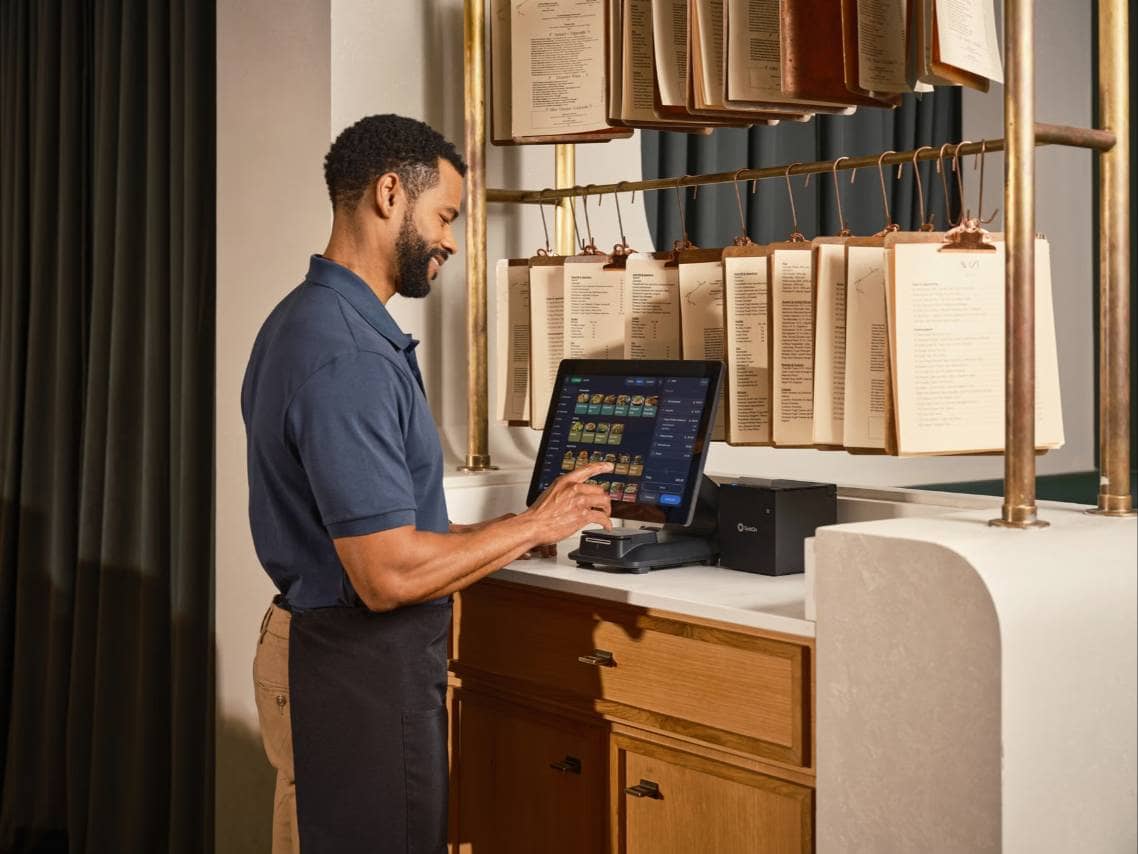
A restaurant is a busy place with several sales points or restaurant POS. It sells food, and drinks and offers entertainment services. In such a case, it becomes difficult for managers to track the separate sales manually.
The dashboard of a restaurant management software displays all the restaurant-related information, like revenue, updates in inventory, rate of conversion, leakage, and more.
In absence of a sales dashboard, it can be difficult for staff to manage the different POS systems and for the team reporting to the accounts department.
A dashboard can help managers know how the sales team is performing and they can announce rewards and increments accordingly.
The inventory managers can go through the restaurant analytics to take insights into the business.
2. Track suppliers-
All restaurants, whether quick-service or full-service restaurants, require hundreds of ingredients from salt and pepper to exotic veggies and chicken, to serve the menu. Varied the ingredients, more the suppliers. In such a case, it is crucial that the restaurant manager has separate, clear records of all the suppliers.
The suppliers' dashboard of a restaurant management software helps restaurants keep track of inventory purchases, compliance documents, inventory to be returned, and more. The suppliers' dashboard can help managers with preparing fresh orders.
It helps the supplies manager with the following-
Name and contact details of the suppliers
Items ordered
Quoted cost
Items received
Items sent
Balance and more
3. Better productivity-
A restaurant has a lot of employees from chefs and waiters to cleaning staff, managers, and more. Manual monitoring has its own limits. Employee dashboard of a restaurant management software enables HR to see if the staff is arriving on time, working for a fixed number of hours or not.
The employee dashboard of restaurant management software helps HRs to track the employee performance and how much compensation they owe them. It even helps the human resource department with the recruitment process of the new staff.
One of the best things about the dashboard is that it can be divided into different departments and maintains a record of the team heads. This allows HR managers to makeshift schedule and appoints a filler in case an employee goes on leave.
4. Cost management-
Since restaurant management software keeps track of all inventory purchases, supplies, revenue, footfall, and employees. These restaurant analytics gives owners a deeper insight into the business. In case of any red areas, the managers can take immediate measures.
5. Customer management-
A restaurant management software like a restaurant pos system can track daily footfall, conversions and customer details. Integrating restaurant pos system with your loyalty program software , enables managers to design discount offers or other special offers accordingly.
4.Cost management-
Since a restaurant management software keeps track of allinventory purchase , supplies, revenue, footfall and employees. These restaurant analytics gives owners a deeper insight of the business. In case of any red areas, the managers can take immediate measures.
5.Customer management-
A restaurant management software like a restaurant pos system can track daily footfall, conversions and customer details. Integrating restaurant pos system with your loyalty program software , enables managers to design discount offers or other special offers accordingly.
1. Single Stop-
The dashboard of your restaurant management system becomes more efficient if it tracks and maintains all information related to your restaurant's real-time changes in inventory, supplier details, sales from menu items, labor costs, and restaurant profit margins. Your dashboard should serve as a single stop for all your restaurant details. So that the managers can access all and any piece of data they like.
2. KPIs for best results-
Every industry and every company has its own KPIs (Key performance Indicators) , which may change from time to time. The dashboard of your Restaurant Management system should allow the managers to modify KPIs applicable to each staff members as per his role and designation. Set only 3 to 4 important criteria to make sure your KPIs do not burden the system.
3.Save food costs-
Food cost is the primary expense of an eatery. Thus, it is important that the dashboard of your Restaurant Management software enables you to run food cost report. This will allow restaurants analyze the top selling dishes , profit margins per dish and more. Consequently, the dashboard can help managers with menu pricing and menu designing.
1. User-friendly-
No matter how versatile the dashboard of your restaurant management software, if it is not easy to use, it can add to the burden.
2. Flexibility
In these constantly changing times, whether running a quick service restaurant or a full service , flexibility to adapt is the key. A dashboard of the Best Restaurant system should be able to support bothonline ordering and offline , accept new payment processing methods and keep pace with the inventory management in real time .
A fully fledged restaurant system includes a lot of features-- from payment processing and point of sale system to inventory management and more. While there are several Restaurant Management systems out, they might not offer a variety of features, when compared to the paid.
For more, read Toast Pos
Like we said, a restaurant management software can help with almost everythingfrom inventory management to tracking individual sales of Food Beverage , from payment processing to designing customer loyalty programs. Even, in imagination it is fearsome to expect a human to replace a software and trust with so many features. Even, if your highly efficient team manage to do all, accuracy is not guaranteed!
A cloud based restaurant management software stores data in the cloud, thus managers can access it from anywhere anytime. Whereas, an on-premise system can requires your presence in the facility for access.
Now, this is subjective. Having a simple or a detailed restaurant management system depends on the needs of your restaurant. The needs may vary depending on the type of your restaurant, if it is a quick service or a full service restaurant.
So, choose as per your needs.