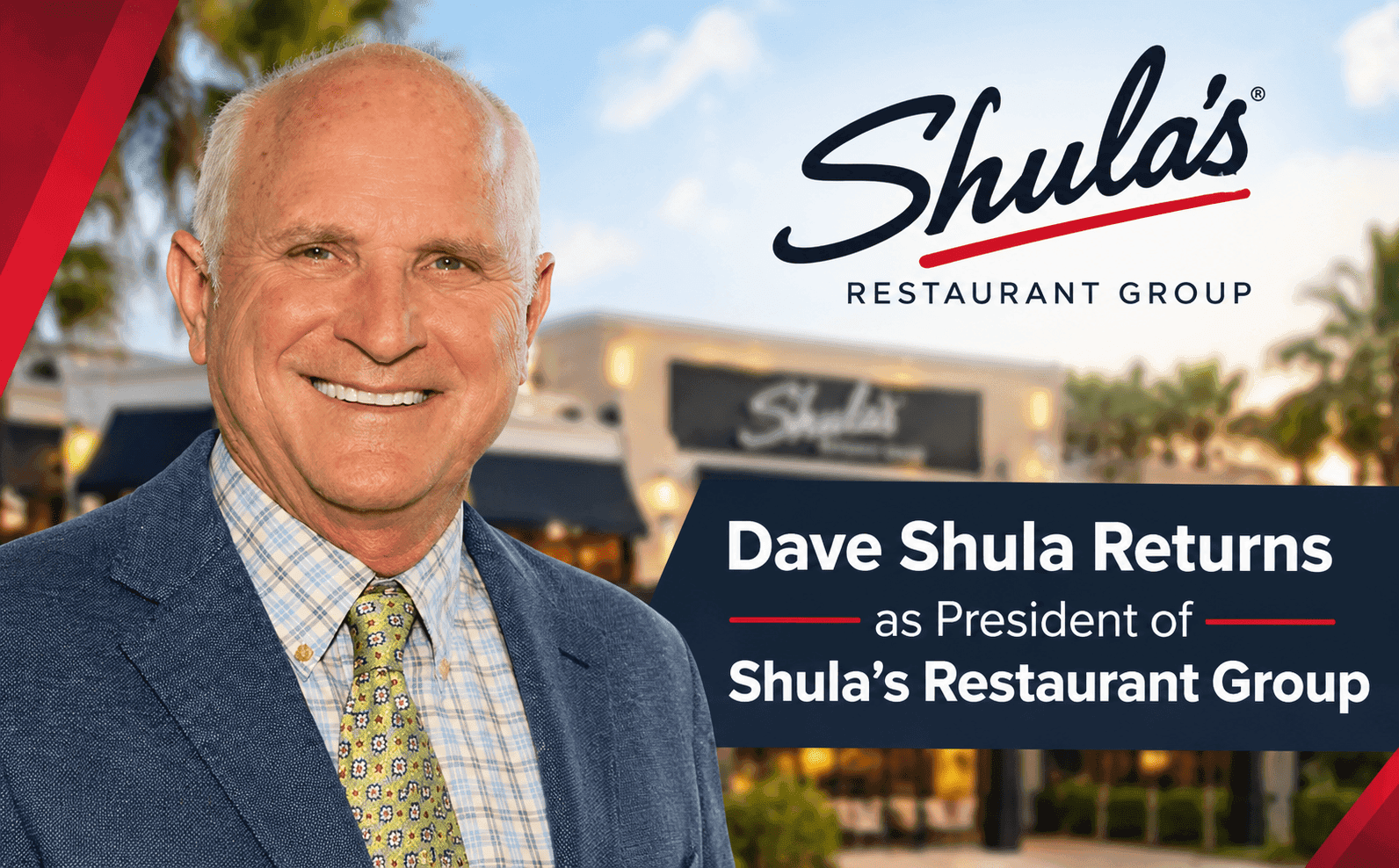
Dave Shula Returns as President of Shula's Restaurant Group
Dave Shula rejoins Shula's Restaurant Group as president, leading growth into Palm Beach Gardens and a 2027 Thomasville, Georgia expansion.
News
Sep 23, 2026
Dave Shula rejoins Shula's Restaurant Group as president, leading growth into Palm Beach Gardens and a 2027 Thomasville, Georgia expansion.
Sep 23, 2026
McDonald's commits $8.5 billion through 2036 to modernize restaurants, boost cash flow by $100,000 per store, and grow chicken and beverage sales.
Sep 23, 2026
WKS Restaurant Group promotes Jay Spongberg to president and COO after he helped grow the company from 65 to 382 restaurants over 16 years.
Sep 23, 2026

Smokey Mo's BBQ names Von Dawson, a Dine Brands veteran, as VP of Franchise Development to lead its Texas expansion strategy.
Sep 23, 2026
.png&w=3840&q=70)
Meritage Hospitality's Chapter 11 filing pulls 5% of Wendy's U.S. stores into bankruptcy, exposing cracks in franchising's bigger-is-safer bet.
Sep 21, 2026
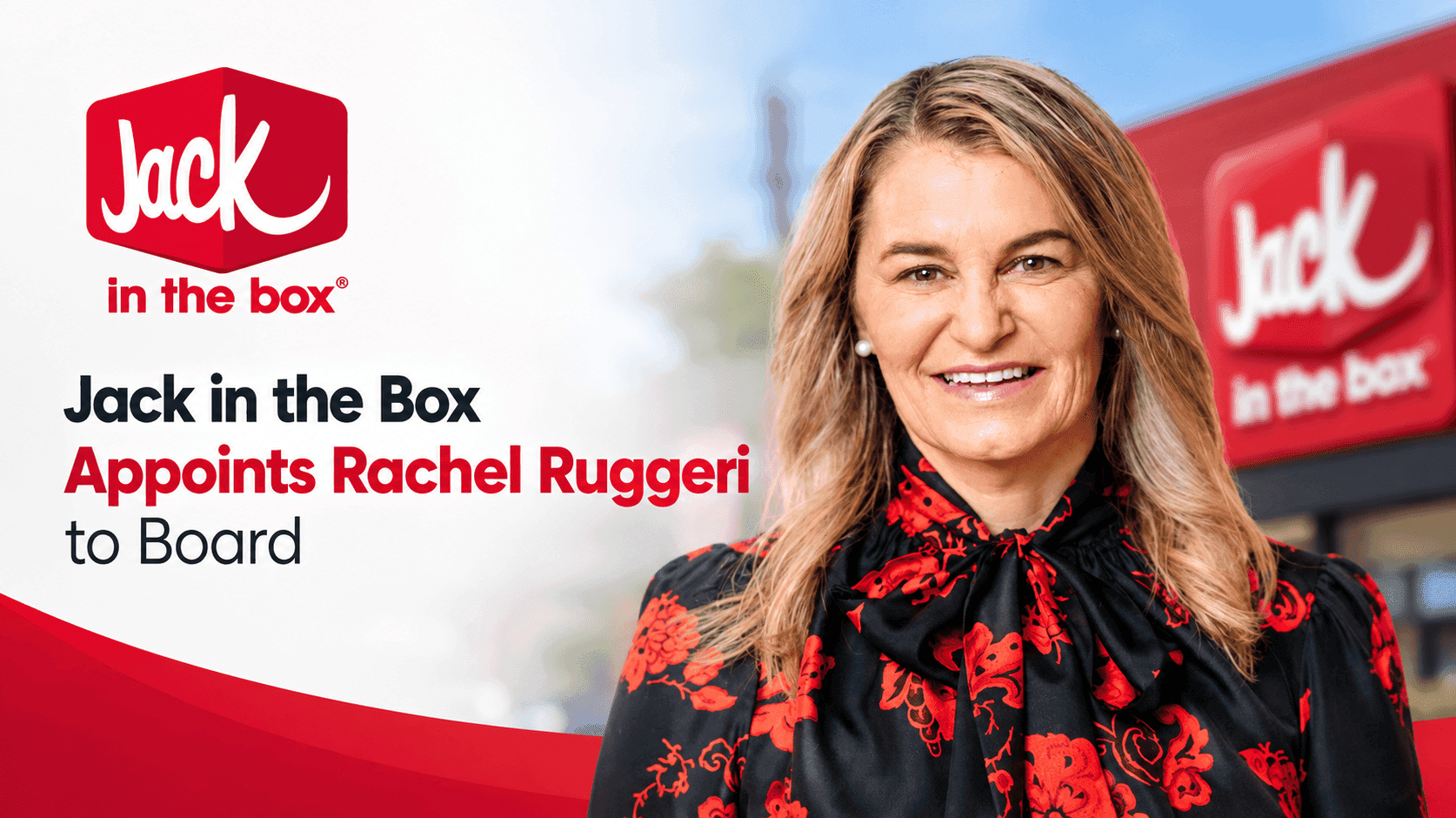
Jack in the Box names Rachel Ruggeri to its board as Michael Murphy retires, amid a CEO transition and deal with investor GreenWood.
Sep 21, 2026
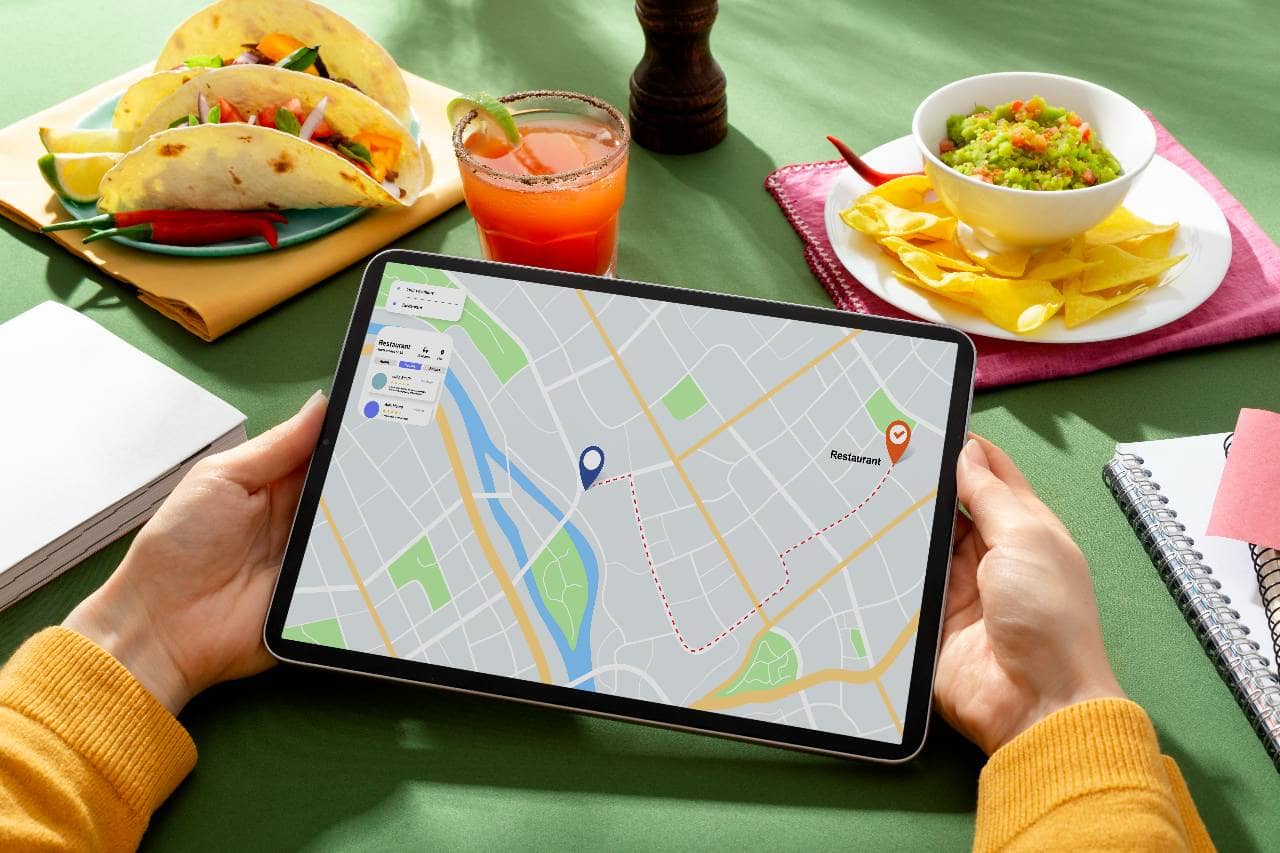
Improve restaurant Google Maps rankings by optimizing your business profile, selecting accurate categories, gathering reviews, adding photos, and strengthening local relevance signals.
Sep 21, 2026

Restaurant inventory tracking helps owners monitor stock, control food costs, reduce waste, improve purchasing, and make informed operational decisions.
Sep 21, 2026
Restaurant owners can significantly reduce restaurant costs by leveraging technology across inventory, labor, procurement, forecasting, and administrative operations for better profit margins.
Sep 18, 2026
Understand how to forecast restaurant revenue and expenses with methods for sales projection, cost scaling, fixed-cost planning, and risk buffering.
Sep 18, 2026

Unlock Exclusive Access To Webinars, Events, And The Latest News For Free!
Inside 449 mystery shops: how mobile order-ahead reshapes QSR speed, satisfaction, and revenue—and where operations still stumble.

Photo by Ryan Collins
Quick service lives in motion, yet the most decisive movement now begins long before a guest arrives. The fourth Emerging Experiences Report, released May 4, 2026 with Intouch Insight, captures a sector remapped by mobile order-ahead, smartphones functioning as “menu boards in pockets.” Across 449 restaurants, the study outlines how order flows, pickup choreography, and human grace notes intertwine to shape satisfaction. With digital channels driving more than 40 percent of chain transactions and off‑premise contributing over 70 percent of revenue at leading brands, the stage is set for a new script: can technology promise precision while service preserves warmth?
Mystery shoppers placed identical orders, a main, a side, and a beverage, customized through each brand’s proprietary app or website to test both drive‑thru and in‑store pickup. Fieldwork ran January–February 2026, mirroring real-world demand: half of visits at lunch, half at dinner, with brief mornings reserved for coffee-led formats. Performance was graded across five dimensions: ordering usability; pickup interaction and logistics; speed; accuracy and quality; and friendliness, personalization, satisfaction. It reads like a service ballet score, tempo, steps, and posture, where a single miscue reverberates through the whole performance.
Demand didn’t arrive as a whisper; it thundered in. A mid‑2025 HungerRush survey found 93 percent of Americans visit a quick‑service or fast‑casual venue at least monthly, yet 40 percent trimmed restaurant visits due to inflation while 16 percent shifted toward QSRs for savings. Order‑ahead has become habit, not novelty: an Ipsos–NRN study reported 65 percent of QSR patrons using it, including nearly 90 percent of those 18–24. Adoption spans generations, 70 percent of customers ages 18–54 placed mobile orders in the prior month, and even 43 percent of those 55–75 embraced the channel in 2024. Cost consciousness met convenience, and the market adapted with remarkable speed.
What’s powering the shift
- Demand for convenience: Digital now fuels over 40 percent of chain transactions; off‑premise formats deliver more than 70 percent of revenue at leading brands.
- Value‑seeking behavior: Economic pressure pushes guests toward predictable price points, with order‑ahead locking in choices before arrival.
- Tech as differentiator: 80 percent of consumers say a brand’s technology influences choice. Voice‑AI remains nascent, 75 percent of users report misunderstandings, keeping the spotlight on interfaces guests can trust.
In an era of abbreviated patience, the winning promise is elegant: fewer decisions on site, fewer delays at handoff, and a receipt that reads exactly as intended.
The study’s discipline is its virtue. Each visit replicated the same order, toggling modifiers and special requests where supported to examine customization and error recovery. Two brands were shopped in drive‑thru, seven through in‑store pickup, each receiving 50 visits for a balanced read across formats and dayparts. The aim was not to catch staff out, but to trace the seam between digital promise and physical proof: does the system steer the guest clearly, does the kitchen receive a faithful ticket, and does the counter meet the moment with deft, unhurried assurance?

That seam revealed where operations sing, and where they stutter. Ordering flows emerged as the prime satisfaction driver, while technical glitches and unclear pickup instructions incited the most displeasure. The test design surfaced friction with precision: was the order ready on time, did signage and lanes minimize hesitation, and did staff confirm accuracy without theater? In essence, the program measured whether each brand could translate digital intent into a tangible, timely bag or tray, free of apology and rich in reassurance.
Punctuality proved pivotal. In one in five shops, orders weren’t ready at the promised time, and satisfaction toppled, from 97 percent when punctual to 76 percent when late. The balm, tellingly, was human: when delays arrived with friendly service, scores held at 80 percent, compared with 61 percent under neutral or cold interactions. Ordering flows cast the longest shadow; a graceful path from cart to counter stabilized the entire experience, while even minor hitches nudged timetables, frayed tempers, and exposed the brittleness of back‑of‑house rhythm.
Where flow was efficient, 87 percent of orders landed on time. Introduce small snags, and that fell to 53 percent; in lagging flows, it slipped to 38 percent. The lesson reads as mise en place for the digital age: simplify taps, clarify lanes, and the kitchen wins minutes it can spend on quality. As Sarah Beckett of Intouch Insight observed, “Mobile ordering has raised customer expectations for consistency at every step after the order is placed.” That word, consistency, is the quiet standard by which busy guests judge a brand’s promise kept or broken.
Digital doesn’t merely smooth service; it sells. Upsell prompts surfaced in 71 percent of order‑ahead transactions, outpacing drive‑thru and on‑premises benchmarks. The backdrop is buoyant: the QSR market tallied $419 billion in 2025 sales, a 4.8 percent year‑over‑year rise, with mobile order‑ahead adoption climbing 28 percent. Infrastructure, too, carries weight. At Chick‑fil‑A, dedicated pickup lanes present at 33 percent of locations trimmed 49 seconds (5:23 versus 6:12) and nudged satisfaction from 97 to a pristine 100 percent, every shop rated friendly. It is the service equivalent of a well‑timed cadence: one deft measure, amplified across the score.
1. Queues and lanes – Prioritize dedicated pickup pathways where volume justifies it; at Chick‑fil‑A, they saved 49 seconds and delivered 100 percent satisfaction.
2. Capacity alignment – Design only works when staffing and flow agree; at Dunkin’, 8 percent of stores with lanes ran 16 seconds slower, a reminder that architecture without orchestration invites drag.
3. Human touch – When lateness met warmth, satisfaction held at 80 percent versus 61 percent under cooler delivery. A smile and a thank‑you are still the least‑cost, highest‑yield upgrades in hospitality.
Profit lives in these micro‑decisions, where seconds saved and gestures offered compound into loyalty.
Some frictions persist, quietly stealing shine. Only 65 percent of locations offered clearly designated pickup areas or lanes, and staff confirmed orders at handoff in just 66 percent of visits. Adoption of arrival‑detection technology remains modest across drive‑thru and in‑store pickup, widening the “digital check‑in” gap just when speed is most scrutinized. Customization is robust, 95 percent of users could modify orders, yet missing special instruction fields still block simple tasks. The study’s scope is intentionally narrow, nine major brands, proprietary channels only, a two‑month window, yet the portrait it paints is rich in operational truths.
The next mile is not about novelty; it is about nerve and nuance. Mobile can compress cycle times and bolster accuracy, yet the advantage accrues to operators who pair operational consistency with human connection. Standardize pickup processes until they are reflexive, invest in detection tech that anticipates arrival, and rehearse frontline behaviors, eye contact, smiles, a concise confirmation, that craft personalized handoffs. As digital absorbs a growing share of demand, those who knit reliable systems to attentive service will define fast food’s most modern luxury: a frictionless minute, delivered with grace.
