Restaurant Location Analysis Checklist
This article explains how location analysis helps restaurant owners evaluate demand, costs, competition, and operational fit before committing to a site.

How Location Drives Traffic, Sales, and Profitability
Choosing a restaurant location is one of the highest-impact decisions an owner will make. Rent, buildout, staffing, marketing, and long-term sales performance are all tied to this one choice. Once a lease is signed or construction begins, the cost of correcting a bad location decision becomes much higher. That is why location analysis should happen before commitment, not after problems start showing up.
Many owners make the mistake of judging a site by appearance alone. A space may look busy, sit on a well-known street, or seem like a good deal based on rent. But a strong restaurant location is not defined by one factor. It depends on whether the site matches the restaurant's concept, customer demand, traffic patterns, access, competition, and operating model. A location that works well for a fast casual lunch brand may fail for a dinner-focused concept. A space with low rent may still underperform if visibility is weak or parking is limited.
This is where location analysis becomes practical. It helps owners move from instinct to evidence. Instead of asking, "Does this space feel right?" the better question is, "Does the data support this location?" Owners need to review whether the surrounding area can generate enough traffic, whether target customers are nearby, whether the business can operate efficiently from the site, and whether projected sales can support occupancy costs.
Define Your Concept and Customer
Before you compare rent, traffic counts, or nearby businesses, stop and define what your restaurant actually needs from a location. This part of the checklist helps you avoid reviewing sites that look promising but do not match your concept, price point, or customer demand.
1. Identify your restaurant model - Decide whether the business is quick service, fast casual, full service, takeout-heavy, delivery-focused, cafe-based, or built around another specialty format. Different models need different types of locations. A quick-service restaurant may depend on convenience and traffic flow, while a full-service concept may need stronger evening traffic and longer guest visits.
2. Clarify your main sales channels - Determine how sales are expected to break down across dine-in, takeout, delivery, drive-thru, catering, or pickup. This matters because each channel creates different location requirements. A delivery-heavy model may need strong residential access, while a dine-in model may depend more on parking, visibility, and surrounding foot traffic.
3. Define your target customer clearly - List the core customer traits that will influence demand. Review age range, income level, household type, work schedule, spending habits, and preferred meal occasions. A lunch-focused office crowd behaves differently from families looking for dinner or late-night customers looking for convenience.
4. Review your expected dayparts - Identify whether the business will rely most on breakfast, lunch, dinner, late night, or weekend traffic. A location that is busy during weekday lunch may still be weak for a concept that depends on dinner and weekend sales.
5. Estimate your average ticket and pricing position - Match your expected average check to the spending power of the surrounding market. Higher-priced concepts usually need stronger income alignment, while lower-ticket concepts often need higher transaction volume.
Before moving forward with any site, ask one direct question- does this location fit how the restaurant will operate and who it is meant to serve? If the answer is unclear, the site needs more review.
Study Demographics and Local Demand
Once your concept and target customer are clear, the next step is to measure whether the surrounding market can actually support the business. This part of the checklist is about demand. A location may look active on the surface, but if the local population, income mix, and day-to-day traffic patterns do not match your concept, sales can fall short very quickly.
1. Review population density in the trade area - Start by looking at how many people live within the area most likely to generate business. For many restaurants, that means reviewing the population within a 1-mile, 3-mile, or 5-mile radius, depending on the concept. A neighborhood cafe may depend on very close local density, while a destination restaurant may pull from a wider area.
2. Check household income and spending power - Compare local income levels to your expected pricing. If your concept depends on premium menu pricing, the surrounding market needs enough households with the ability and willingness to spend at that level. If your menu is value-focused, a broader customer base with steady traffic may matter more than high income alone.
3. Study age groups and household types - Look at whether the local area is made up of students, working professionals, families with children, retirees, or mixed households. Different groups create different dining patterns. Families may drive dinner and weekend traffic, while younger professionals may support lunch, coffee, takeout, or late-night demand.
4. Review daytime population and employment patterns - Do not rely only on residential data. A market with offices, medical buildings, schools, warehouses, or retail centers may generate strong daytime demand even if local residential density is moderate. This is especially important for breakfast and lunch concepts.
5. Watch for growth or decline trends - Check whether the area is adding apartments, offices, retail centers, or major infrastructure. A growing area may create long-term opportunity, while a declining area may weaken demand over time.
The goal is to confirm that the right people, with the right habits and spending patterns, are close enough to support your restaurant consistently.
Measure Traffic, Visibility, and Accessibility
A strong market does not automatically create strong restaurant sales. Even if the surrounding demographics look promising, the site still needs to be easy for customers to notice, reach, and use. This part of the checklist focuses on the physical conditions that influence visits. A location with steady exposure and simple access usually performs better than one that is hidden, difficult to enter, or frustrating to park at.
1. Review vehicle and foot traffic separately - Start by looking at how many people pass the site each day, but do not treat all traffic the same. High vehicle counts can help if drivers can clearly see the restaurant and enter the site easily. Foot traffic matters more in walkable districts, downtown areas, mixed-use centers, and shopping corridors. The key is to match the traffic type to your concept.
2. Check whether the restaurant is easy to see - Visibility affects how often people notice the business and remember it later. Review sightlines from the street, corner exposure, building placement, and whether the storefront is blocked by landscaping, other buildings, or parking layout. A location can sit on a busy road and still underperform if drivers or pedestrians do not see it in time.
3. Evaluate signage opportunities - Signage is part of visibility. Review whether the lease and local rules allow strong exterior signs, monument signs, window graphics, or directional signage. Limited signage can reduce awareness, especially in retail centers with multiple tenants.
4. Test ease of entry and exit - Look at traffic flow, turning access, medians, signalized intersections, and whether customers can enter without confusion. A site can lose visits if reaching it feels inconvenient, especially during peak hours.
5. Review parking and pickup convenience - Count available parking, space turnover, ADA access, and proximity to the entrance. Also check whether takeout, curbside, or third-party delivery drivers can move in and out efficiently.
The easier the site is to see, access, and use, the more likely it is to convert nearby demand into actual visits.
Review Competition and Complementary Businesses Nearby
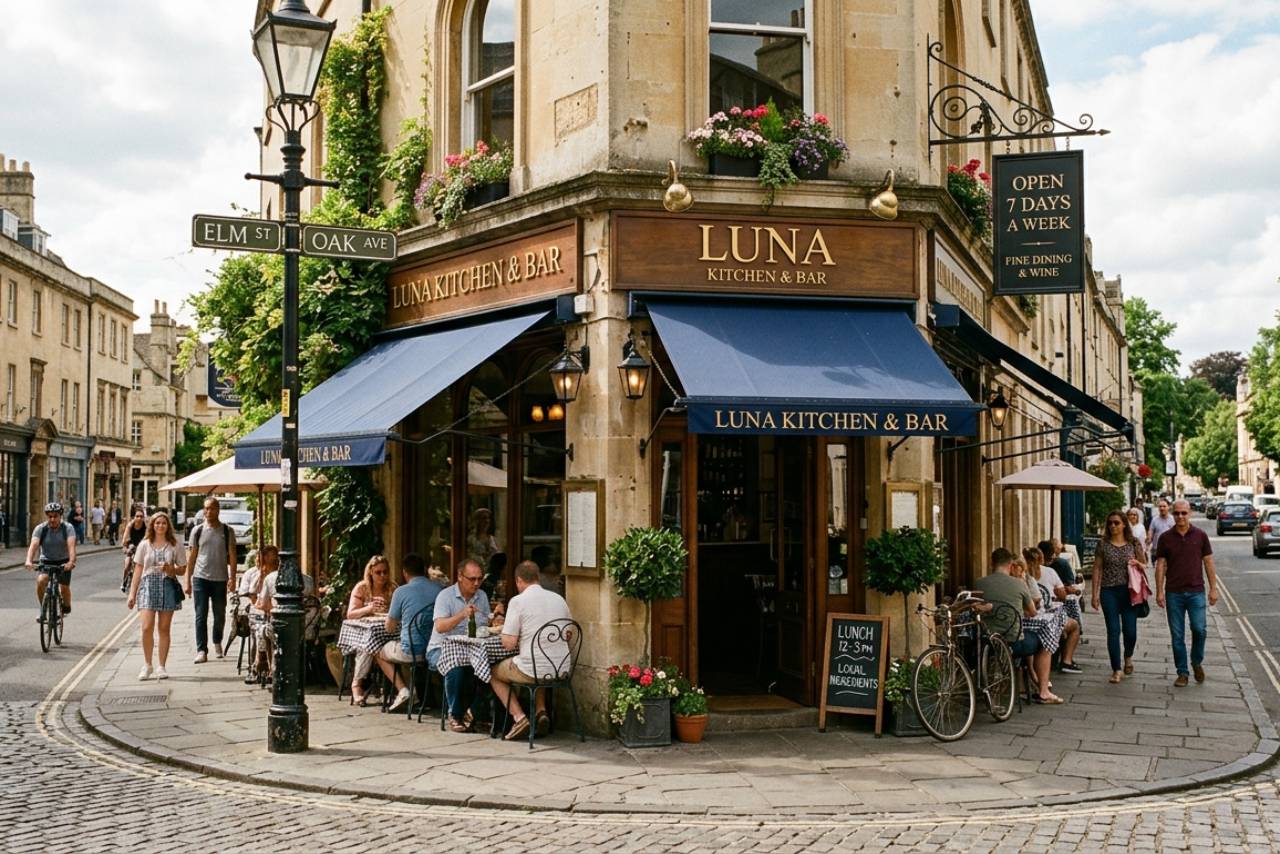
A restaurant does not operate alone. Every location sits inside a larger commercial environment that can either strengthen demand or make growth harder. This part of the checklist helps you understand who else is competing for the same customer and which nearby businesses may help bring more traffic to the area. The goal is not to avoid all competition. It is to determine whether the market is balanced, overcrowded, or supported by the right surrounding activity.
1. Identify direct competitors in the area - Start by listing restaurants that compete with your concept on cuisine, service model, pricing, or daypart. A pizza shop may compete with other pizza brands, but also with fast casual concepts that serve quick, affordable dinner options. Look beyond the exact category and focus on where customers could easily spend the same dollars instead.
2. Measure how saturated the market feels - A busy trade area can still be oversupplied. Review how many similar concepts operate nearby and whether the area already appears crowded in your category. Too many comparable restaurants can divide traffic, increase promotional pressure, and make it harder to stand out.
3. Compare price positioning and customer appeal - Look at whether nearby competitors serve the same spending level and guest expectations. A premium concept in a value-driven corridor may struggle, while a lower-priced concept may not maximize revenue in a market that supports higher checks.
4. Review complementary businesses that can drive visits - Nearby offices, grocery stores, hotels, schools, gyms, entertainment venues, and retail anchors can all support restaurant demand. These businesses may increase lunch traffic, dinner visits, weekend activity, or impulse purchases depending on your concept.
5. Check daypart alignment - A surrounding business mix matters most when it supports your strongest sales periods. Offices may help lunch. Hotels and entertainment can support dinner. Schools or residential growth may support afternoon and weekend demand.
The right location is not just about who competes with you. It is also about whether the surrounding business environment creates enough reasons for customers to be there in the first place.
Evaluate Occupancy Costs and Site Economics
A location may look strong from a traffic and demand perspective, but that does not mean it will work financially. This part of the checklist focuses on whether the site can support healthy margins after rent and other occupancy costs are added to the model. Restaurant owners should not judge a site only by monthly rent. The real question is whether projected sales are strong enough to cover the full cost of occupying the space.
1. Review the full occupancy cost, not just base rent - First check the base rent, but also include common area maintenance charges, property taxes, insurance pass-throughs, utilities, waste costs, and any other recurring site-related expenses. In many locations, the number that matters most is not the advertised rent. It is the total monthly cost to operate from that space.
2. Estimate occupancy cost as a percentage of projected sales - This is one of the most practical ways to test a site. If projected sales are too low relative to rent and related costs, the location may create margin pressure from the start. A site should be evaluated against realistic revenue assumptions, not optimistic best-case numbers.
3. Include one-time startup and buildout expenses - Review the cost of construction, equipment installation, permits, signage, grease traps, plumbing, electrical upgrades, HVAC, and any code-related improvements. A location with moderate rent can still become expensive if the buildout burden is high.
4. Test multiple sales scenarios - Run conservative, expected, and strong sales projections. This helps you see whether the site still works if volume starts slower than planned. A location that only works under aggressive assumptions carries more risk.
5. Review delivery and pickup economics - If off-premise sales matter, include the operational cost of supporting delivery, curbside, or pickup. Poor access, limited staging space, or driver congestion can reduce efficiency and affect profitability.
The goal is to confirm that the business can operate there consistently, absorb normal cost pressure, and still produce healthy returns over time.
Assess Operational Fit for Daily Restaurant Execution
A location can look strong on paper and still create daily operating problems after opening. This part of the checklist focuses on execution. Restaurant owners need to evaluate whether the space can support prep, service, storage, staffing, sanitation, and off-premise flow without creating unnecessary friction. A site that looks attractive from the street may still hurt labor efficiency, ticket times, and guest experience if the layout does not work well.
1. Review kitchen and prep space potential - Ask yourself whether the space can support your menu and service model. Look at kitchen size, line configuration, prep flow, refrigeration placement, dish area, and the ability to separate key tasks. A strong location is less valuable if the kitchen setup limits output or slows service during peak periods.
2. Check storage capacity - Review dry storage, walk-in space, freezer access, and smallwares storage. Limited storage can increase delivery frequency, create clutter, and make inventory harder to manage. This becomes even more important for high-volume concepts or restaurants with broad menus.
3. Evaluate receiving and waste flow - Check where deliveries will arrive, how product will move into storage, and how trash and grease will be handled. Poor receiving access can disrupt operations, while weak waste flow can create sanitation and compliance issues.
4. Assess dine-in, pickup, and delivery movement - Map how guests, staff, and drivers will move through the space. Review entrance placement, queueing, waiting areas, takeout staging, curbside access, and whether delivery drivers can enter without disrupting dine-in service. This is critical for restaurants with mixed sales channels.
5. Review employee functionality - Check employee parking, break space, restroom access, locker or storage areas, and how staff move between stations. A site that creates extra steps or congestion can raise labor pressure over time.
A location should support speed, consistency, cleanliness, and guest convenience without forcing the team to work around design problems constantly.