Restaurant Coupon Marketing Campaign Guide
Plan a profitable Coupon Marketing campaign by choosing the right offer, timing promotions strategically, executing smoothly, and measuring ROI with clean tracking.

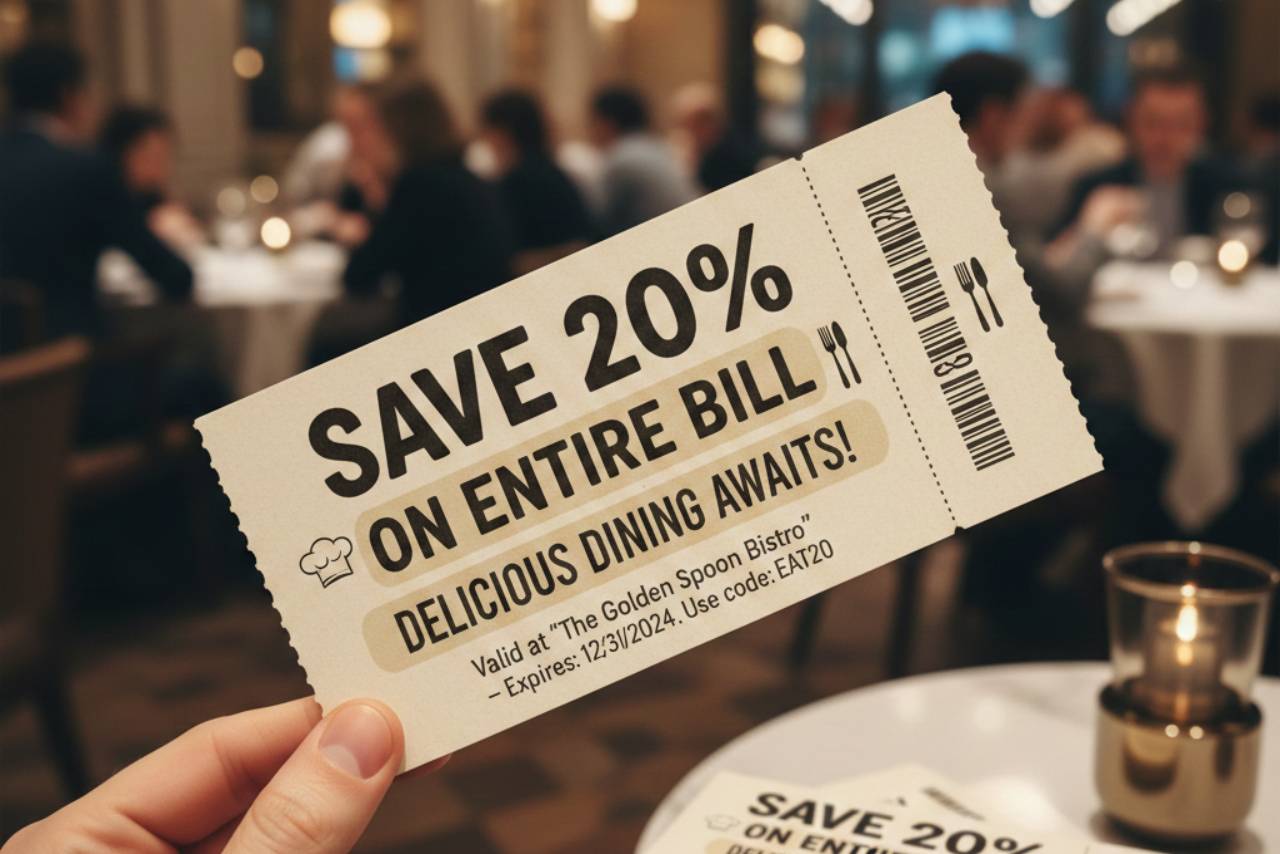
Understanding Coupon Marketing Campaign
A coupon marketing campaign is a planned, trackable promotion that uses a specific offer to drive a specific behavior. That sounds simple, but most restaurant coupon efforts fail because they're treated as random discounts - posted once on social media, applied inconsistently at the register, and never measured beyond "it felt busy." A real campaign has three non-negotiables - a clear goal, a defined offer, and a way to track results.
First, it helps to separate common terms that get mixed together -
1. Coupon - A redeemable offer with rules (code, barcode, QR, or POS button) and an end date.
2. Discount - A price reduction that might not be tracked or tied to a customer action.
3. Promotion - A broader marketing push that may include coupons, bundles, limited-time items, or ads.
4. Loyalty reward - A coupon-like benefit earned through behavior (points, visits, tiers), usually tied to a customer profile.
What a coupon marketing campaign is not is "10% off everything" whenever you're slow. That trains guests to wait for deals, makes staff decisions messy ("Do we honor this?"), and can cut profit far more than it increases sales - especially if your labor and food costs are already tight.
A strong coupon campaign is designed to influence one primary outcome, such as -
1. Trial - getting new guests to place a first order
2. Frequency - increasing repeat visits from existing guests
3. Daypart lift - filling slow hours (weekday lunch, late afternoon, early week)
4. Ticket growth - raising average order value with bundles or add-ons
5. Product mix - nudging guests toward high-margin items
When coupons work, they don't just create a short rush - they create profitable, repeatable behavior you can sustain. That's why the rest of this guide focuses on making coupons intentional - choosing the right offer for the outcome, launching at the right time, and proving ROI with numbers that matter.
Set Your Goal First
Before you decide "BOGO or 20% off," you need to answer a more important question - What do you want this coupon marketing campaign to change? If you skip this step, you'll almost always end up with a generic discount that boosts redemptions but doesn't grow the business in a meaningful way.
Start by picking one primary goal. You can track other metrics, but your campaign should have a single "north star" so the offer, timing, and promotion channels all point in the same direction. Here are the most common restaurant coupon goals (and what they really mean in practice) -
1. Bring in new guests (trial).You want first-time orders, not repeat redemptions. Your coupon should be easy to understand and tied to a first purchase (or a "new customer" audience list if you have it).
2. Increase repeat visits (frequency). This is about getting existing guests to come back sooner. Coupons here work best when they're time-bound ("use within 7 days") or tied to a next-visit reward.
3. Fill slow dayparts (traffic smoothing). If Mondays are dead or lunch is inconsistent, a coupon can shift demand. The offer should be restricted to the daypart you're trying to fix so you're not discounting peak hours you would've sold anyway.
4. Increase average order value (AOV). Instead of discounting the whole ticket, you guide customers toward higher spend- bundles, minimum purchase thresholds, or add-on upgrades.
5. Move a specific category or high-margin item. This works when you know what you want to sell more of - like beverages, sides, desserts, or a new menu item.
Once you choose the goal, define what success looks like using a few simple targets -
Timeframe - Is this a 2-week push, a month-long offer, or a weekend burst?
Audience - New customers, lapsed customers, loyalty members, nearby office workers, etc.
One measurable outcome - redemptions from new guests, lunch transactions Mon-Thu, AOV above $X, return visits within 30 days, and so on.
This step protects you from the most expensive mistake in couponing - discounting sales you would have gotten anyway. When the goal is clear, you can design the coupon to create incremental orders - orders that likely wouldn't exist without the offer - then measure whether the extra profit was worth the discount.
Coupon Types That Work for Restaurants
The best coupon isn't the biggest discount - it's the one that gets the right guests to take the right action without draining your margin. To do that, you need to choose a coupon type that matches your campaign goal. Here are the most effective coupon formats for restaurants, plus when to use each one.
1. BOGO (Buy One, Get One) or "Buy X, Get Y" - Great for boosting transaction volume and getting groups to order more. It can also encourage trial if the "get" item is a popular staple. Use guardrails like equal or lesser value, select items only, or specific dayparts to keep costs predictable.
2. Free Item With Purchase (ex. free fries with any entree, free drink with combo) - This is one of the safest offers because you can choose a high-perceived-value, controlled-cost item. It's strong for first-time guests and repeat visits. Pair it with a minimum purchase ("with $15+ order") to protect AOV.
3. Bundles and Meal Deals (ex. dinner for two, family bundle, lunch combo) - Bundles are ideal when you want to raise ticket size while keeping the offer simple. They also help with speed and consistency because staff knows exactly what's included. Bundles work especially well for takeout and slower dayparts.
4. % Off (ex. 10-20% off) - This is the most common coupon and often the least strategic. It's easy to understand, but it discounts everything - including items you might not need to discount. If you use % off, add controls like minimum spend, category limits, or off-peak only to avoid unnecessary margin loss.
5. $ Off (ex. $5 off $25) - Dollar-off coupons can be more margin-friendly than % off because you can set a spend threshold. They're great for AOV growth and catering-style orders. The key is making the threshold feel achievable, not forced.
6. Add-On or Upgrade Offers (ex. "Add a dessert for $2," "Upgrade to large for $1") - These are excellent for profitability because they steer guests toward incremental items. If your goal is AOV and product mix, add-on coupons often beat broad discounts.
To choose the right offer, match it to your goal -
New guests - free item with purchase, simple bundle, limited BOGO on a controlled item
Repeat visits - next-visit coupon, time-bound reward, add-on deals
Slow dayparts - daypart-only bundle, BOGO on select items, targeted $ off
Higher tickets - $ off $X, bundles, add-ons/upgrades
Finally, set basic guardrails upfront - minimum spend, item exclusions, one per guest, no stacking, and an end date. These aren't "fine print" - they're what keeps a coupon campaign profitable and easy for staff to execute.
Build the Offer the Smart Way
A coupon can be popular and still be a bad deal for you. The goal is to create an offer that feels valuable to the guest while keeping your cost predictable and your profit protected. That starts with a quick reality check- your coupon doesn't discount revenue - it discounts profit. So you need to design it around the items and behaviors that keep profit intact.
Start with simple "promo math"
You don't need complicated spreadsheets to avoid a margin mistake. Ask these three questions -
1. What does the offer actually cost me?
Not the menu price - the cost of food, packaging, and (if relevant) third-party fees.
2. Will this increase the average ticket or just discount it?
A coupon that doesn't lift AOV or traffic is often just giving money away.
3. Will this bring in incremental orders or discount orders I'd get anyway?
If the coupon can be used during peak hours with no restrictions, you're likely discounting your strongest demand.
Engineer the offer around high-margin items
One of the easiest ways to protect margin is to choose coupon structures that push guests toward items that are profitable and operationally easy -
- Use free add-ons that are low-cost but high value to guests (certain sides, fountain drinks, simple desserts).
- Prefer bundles that include at least one high-margin item (beverages, certain appetizers, etc.).
- Use "with purchase" requirements so the coupon doesn't stand alone.
Add guardrails that reduce "coupon pain"
These rules don't make the coupon weaker - they make it sustainable -
- Minimum spend (ex. $5 off $25) to protect ticket size
- Daypart restrictions (Mon-Thu, 2-5 pm) to avoid discounting peak sales
- Item/category limits (select entrees only, excludes premium items)
- One per guest / one per order and no stacking with other discounts
- Limited redemptions (first 500 uses) if you want cost certainty
- Short, clear expiration to create urgency without running forever
Keep it easy for staff to execute
If staff has to "do math" at the register, your campaign will be inconsistent. Build the offer so it's
- One tap in the POS (button or promo code)
- Clearly worded (no confusing exceptions)
- Easy to explain in one sentence
A smart coupon offer is a balance- valuable enough to motivate action, controlled enough to protect margin, and simple enough that your team can apply it the same way every time. That's how you run coupons without turning your restaurant into a discount machine.
When to Launch
Timing is where most coupon marketing campaigns quietly lose money. If your offer runs when guests would have purchased anyway, you're not driving incremental sales - you're just discounting your strongest demand. The goal is to launch coupons when they solve a specific traffic problem - slow days, weak dayparts, seasonal dips, or a temporary demand drop you want to smooth out.
Start with your "slow spots," not your busiest hours
Look at your sales patterns and identify -
- Slow days of the week (often Mon-Wed for many restaurants)
- Off-peak dayparts (mid-afternoon, late night, or lunch depending on concept)
- Weather-sensitive or event-driven swings (local games, school schedules, tourism seasons)
Your best coupon campaigns usually target these windows because the upside is real - you're filling capacity you already pay for (labor, rent, utilities). A coupon used at a slow hour can be profitable even if the discount is meaningful, because it creates revenue you wouldn't otherwise have.
Use daypart rules to avoid "discounting peak"
A simple way to protect profitability is to restrict coupons to the times you actually need help -
- "Valid Mon-Thu only"
- "Valid 2-5 pm"
- "Valid lunch hours only"
- "Not valid on holidays or special events"
This is not just a margin move - it also improves operations. Your kitchen and staff can handle the extra volume when you have capacity, instead of creating chaos during your rush.
Match campaign length to the goal
Short bursts (3-7 days). Great for urgency, new item pushes, or quick traffic lifts.
Standard runs (2-4 weeks). Best for building repeat behavior and collecting enough data to measure results.
Long-running coupons. Use carefully. If guests see the same deal forever, it stops feeling special and can train customers to only buy with a discount.
Think seasonality, not just "we're slow"
Coupons can work well during predictable demand dips -
- Post-holiday slowdowns
- Back-to-school transitions
- Shoulder seasons for tourist areas
- Periods when competitors run heavy promotions (you may need a targeted response)
If you run coupons constantly, guests learn that full price is optional. A better approach is to schedule campaigns intentionally - use them to fix a problem, then pause, evaluate, and adjust. A coupon marketing campaign should feel like a strategic push, not your everyday pricing strategy.
When timing is right, coupons become a tool to smooth demand and grow revenue. When timing is wrong, they become a permanent margin leak.
Where to Promote
A coupon marketing campaign can fail even with a great offer if you promote it in the wrong place - or to the wrong people. The best channels are the ones that (1) reach guests who are likely to redeem, (2) make redemption easy, and (3) let you track results. Think in three buckets- owned channels, in-store channels, and third-party channels.
(1) Owned channels (highest control, usually best ROI)
Owned channels are the assets you control and can use repeatedly without paying per impression.
Email - Great for broader announcements, lapsed customer reactivation, and longer campaigns. Use clear subject lines and one main offer.
SMS - Best for short windows and urgency ("Today only," "Slow Tuesday deal"). Keep it simple and include one link or one code.
Website + Google Business Profile - Put the coupon where intent is highest - people already searching for you. A banner or "Offers" section can convert high-intent visitors.
Social media - Works well when the coupon has a clear visual and easy redemption (QR, code). Avoid burying rules in a long caption.
Tip - If you can, use different promo codes per channel (EMAIL10, SMS10, IG10). That makes tracking performance much easier.
(2) In-store channels (great for repeat visits)
In-store promotion helps you turn existing traffic into future traffic.
Receipts / order confirmations - "Bring this back within 7 days for"
Bag stuffers / table tents - Simple, physical reminders that push the next visit.
QR codes at the counter - Good for capturing phone numbers or directing guests to an offer landing page.
In-store coupons are especially effective for frequency because you're marketing to someone who already chose you once.
3) Third-party channels (use carefully)
These can work, but they often come with trade-offs.
Delivery apps - Coupons can increase visibility and orders, but fees can reduce margins. If you use them, focus on bundles or minimum-spend offers rather than broad discounts.
Local partnerships - Schools, gyms, offices, apartment complexes, hotels - partners can drive new guests cheaply. Provide a unique code for each partner to track.
Match channel to goal
New guests - Google/Maps presence, local partnerships, targeted social posts
Repeat visits - receipts, bag stuffers, email/SMS to past customers
Slow dayparts - SMS + social + in-store signage timed to those hours
Higher tickets - email and website (more space to explain bundles or thresholds)
The key is consistency - promote the same offer, the same rules, and the same redemption method everywhere. When channels are aligned, your campaign feels clear to guests and simple for staff - and your reporting becomes trustworthy enough to measure ROI.
How to Execute
A coupon marketing campaign lives or dies at the point of redemption. If your team isn't sure how to apply it, or if your POS can't track it cleanly, you'll end up with inconsistent discounts, frustrated guests, and useless reporting. Execution is about building a simple system that staff can follow every time - especially during a rush.
Set it up correctly in the POS
Your first priority is making the coupon easy to apply and easy to report on. Aim for -
- A dedicated promo button or promo code (not open discount)
- The offer mapped to the right items/categories (so it applies correctly)
- A reporting tag or promo name you can filter later (e.g., JAN_LUNCH_BUNDLE)
- Clear rules coded in when possible (minimum spend, eligible items, time windows)
The more you can systemize in the POS, the less you rely on staff to remember details.
Create a simple staff workflow
Staff should be able to answer three questions without guessing -
1. When does this apply? (days/times, dine-in/takeout/delivery)
2. What does it include? (eligible items, minimum spend, exclusions)
3. How do I apply it? (button, code, scan, manager approval)
Give your team a one-page "coupon cheat sheet" with -
- The offer in plain language
- The start/end dates
- The restrictions
- The exact POS steps
- One short script (e.g., This coupon is valid Mon-Thu after 2 pm with a $15 minimum.)
Plan for exceptions - before they happen
Every coupon triggers edge cases - "Can I use two?" "Can I stack it with another deal?" "My screenshot is from last month." Decide your rules upfront so staff isn't making it up on the fly.
Common rules that prevent chaos -
- One per guest / one per order
- No stacking with other promos or employee discounts
- No cash value
- No substitutions on free items unless you're okay with the cost
- Manager override policy for rare exceptions (and track overrides)
Add basic fraud controls
Coupon fraud doesn't have to be dramatic to cost you money. Protect yourself with -
- Single-use or limited-use codes (if your system supports it)
- Channel-specific codes (helps identify leaks)
- Expiration dates that are enforced in POS when possible
- Clear "no screenshots" rules only if you can actually enforce them (otherwise, use unique codes instead)
If redemption is confusing, people won't use it - or they'll argue at checkout. Keep the offer and rules short, visible, and consistent across every channel.
Strong execution isn't fancy. It's repeatable. When your POS setup, staff workflow, and coupon controls are tight, you get clean data, fewer disputes, and a campaign you can confidently measure and improve.