Swig Taps New Leadership to Turn 500 Commitments Into Open Stores
Swig elevates Todd Smith to president and appoints Shannon Swenson to chief of franchise partnerships, aligning operations and franchising to convert a 500-unit pipeline and accelerate a compact, drive‑thru model nationwide.

A Reset With National Stakes
Swig is staging a thoughtful pivot from promise to performance. In an "October 7, 2025" update, the company elevated Todd Smith from chief commercial officer to president, widening his remit to supply chain operations, real estate acquisitions, restaurant construction, and expansion strategy. This move threads the needle between site selection and build execution, a balanced way to ensure that decisions on paper match discipline on the ground. Alongside Smith, Swig appointed Shannon Swenson as chief of franchise partnerships to launch a comprehensive U.S. franchising program, signaling that recruitment and support will move in lockstep with construction. With a "500"-unit commitment pipeline in hand, the brand is assembling the scaffolding required to translate intent into openings. The appointments formalize a coordinated scale-up across company-owned and franchised stores, backed by investments in both ownership models. It’s a plan that reads as nourishing for a high-velocity phase: align the ingredients—supply chain, real estate, capital—with capable operators, then plate it with consistency. Analysis: The leadership realignment is meant to operationalize growth—pairing development capacity with market-entry discipline—so Swig can begin converting its "500" commitments into open doors at a national cadence.
From ‘Dirty Sodas’ To Disciplined Scale
Founded in "2010" in St. George, Utah, Swig grew from a single drive‑thru serving "dirty sodas" into "over 120 locations" across "16 states" as of "October 2025." That arc was shaped by majority ownership from Larry H. Miller Company and minority equity from Savory Fund, a combination that provided ballast as the brand moved from novelty to category builder. Industry coverage has described Swig as a breakout concept that blends innovative beverage formats, scarcity-driven marketing, and a curated customer experience to deepen loyalty and fuel expansion. By the mid‑2020s, the company had expanded conservatively to about "40" units before initiating franchising and a wider geographic reach. That early restraint laid a foundation for consistent execution, the kind of measured growth that keeps flavors focused and operations learnable. The present leadership shift marks an inflection, where regional discipline evolves into national scale with control as the guiding spice. Analysis: Swig’s history reflects a careful progression from novelty toward category leadership; the new structure suggests the brand is preparing to scale thoughtfully without losing the deliberate DNA that supported its first "over 120" openings.
Two Leaders, One Playbook
Smith’s expanded remit spans end-to-end development: supply chain continuity, real estate acquisitions, and construction, with a mandate to scout prime locations for company-owned stores. His brief stitches together the farm-to-table of retail—what’s sourced, where it’s set, and how it’s built—so each step feeds the next with fewer handoffs. In parallel, Swenson brings nearly "20 years" in franchise development and previously served as senior vice president of franchise development at Dave’s Hot Chicken, where she helped scale the brand to "360" locations globally, secure "over 1,400" franchise commitments, and contribute to a "billion‑dollar valuation." The pairing forms a dual-leadership structure: Smith drives ground-up execution while Swenson anchors partner selection and franchise support. Complementing this, Swig has formed a dedicated franchise department to proactively sell, support, and guide franchisees from commitment through opening and beyond. It’s a layered, balanced system—a mise en place for operations—designed to reduce friction between corporate buildouts and franchise ramp-up while standardizing outcomes. Analysis: Combining Smith’s build discipline with Swenson’s recruitment pedigree ties development reliability to market velocity, increasing the odds that commitments become consistent, timely openings.
Targets, Cadence, And Ambition
QSR Magazine reporting indicates that Smith projected "54% unit growth" for the year, targeting "nearly 150 open shops" from a "124-unit base," and signaled longer-term potential for "thousands more units." The math sketches a near-term surge paired with an expansive runway. It also frames the core challenge: calibrate speed with consistency so each opening tastes like the last, even as the calendar compresses. Swig’s pipeline supports that tempo. The brand launched multi‑unit franchising in "early 2023" and within six months secured "250 franchise commitments" across "seven markets—Florida, North Carolina, South Carolina, Tennessee, Arkansas, Missouri, and Idaho." That milestone represented the midway mark toward a "500"-unit commitment goal by year-end, and as of "2024" the company holds commitments for "500 franchised units." Swenson’s track record with high-volume conversions offers muscle memory for turning signatures into storefronts, while Smith’s oversight is designed to sequence openings without diluting standards. Analysis: The figures point to a two-stage plan—accelerate now, proliferate later—contingent on the new operating model’s ability to maintain uniform build quality amid a fast-climbing opening count.

The Franchisee Filter And Footprint
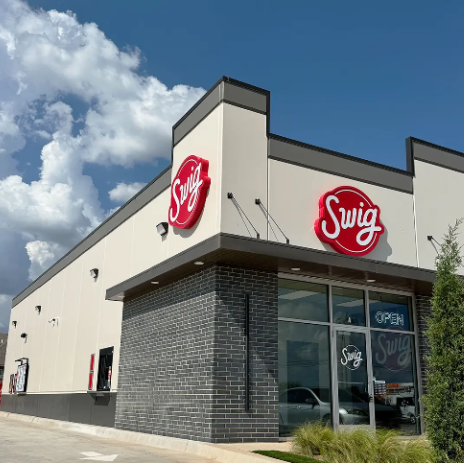
Swig is screening for seasoned operators. Candidates must own and run at least "ten" Quick Service or fast casual franchises in their intended market, maintain "four‑star" average online reviews across their portfolio, and provide positive franchisor references. Franchisees are expected to commit to a minimum of "ten" Swig locations and build at a pace of "two to three units annually." Preferred sites include freestanding or end‑cap drive‑thru formats sized around "870 square feet" to maximize convenience and uniformity. Early results indicate strong demand for these compact units, and coverage has noted that Swig’s small footprint and customizable offerings suggest favorable unit economics. Reporting also highlights that a lean footprint and loyal consumer base have produced high samples of success in new markets. The thesis is balanced and practical: match experienced hands with a repeatable box, then let disciplined schedules compound into a thoughtful national lattice. Analysis: By raising the bar on operator experience and standardizing a small drive‑thru format, Swig is engineering a repeatable recipe, one that aims to keep outcomes predictable as the store count rises.
Gaps That Shape Execution Risk
Some details remain deliberately spare. The materials do not specify a timeline for converting the "500 franchised units" in the pipeline into openings, nor do they outline capital commitments per store, specific training protocols, or market-by-market pacing beyond the initial "seven" markets. It is also not detailed how the balance between company-owned and franchised growth will be allocated quarter by quarter, or how performance feedback loops will inform future site selection. These unknowns are the variables that can sway opening velocity and brand consistency. Without a published cadence, operators and suppliers must rely on the new leadership structure to provide the steady rhythm. The design is promising; the cadence still needs to be played. Analysis: The structure is clear, but the calendar and resource deployment plan are not enumerated, keeping execution risk as the most material factor in the near term.
Aligning Build Rigor With Partner Support
At the heart of Swig’s new operating model is a simple, nourishing idea: bring the build and the people into the same room and keep them there until the ribbon is cut. Smith’s mandate concentrates supply chain continuity, site selection, real estate acquisitions, and construction, so location decisions are made with an eye toward fast, uniform execution. Swenson’s focus on partner selection, commitments, and ongoing guidance ensures franchisees are supported from their first conversation through opening day and beyond. The dedicated franchise department operates as connective tissue, proactively selling, supporting, and guiding franchisees through each milestone. This is a mindful approach to scale—standardize what can be standardized, and invest in touchpoints where judgment matters. In a compact "870 square feet" format, that discipline translates into fast builds, predictable layouts, and customer experiences with a curated feel across markets. Analysis: The mechanics fuse operational reliability with high-velocity recruitment, aiming to reduce friction between corporate buildouts and franchise ramp-up while keeping outcomes consistent.

A Balanced Path To National Presence
Swig’s national push comes into focus as a thoughtful balance of appetite and restraint. The "October 7, 2025" update crystallizes a model in which Smith drives corporate build rigor and Swenson channels franchise momentum, with experienced operators executing a compact, drive‑thru‑first format. With commitments at "500" and leadership citing a horizon of "thousands more units," the brand is speaking to both near-term opening velocity and long-term runway. The lesson is clear: disciplined partner criteria and an efficient box are the sustainable way to scale a curated customer experience. If the company translates its structured selection standards and development processes into predictable openings, Swig can progress from breakout status to a sustained national presence—managing the quality-speed tradeoff that often undermines rapid growth. The path ahead is ambitious, yet the playbook is grounded in a balanced, repeatable design that keeps the brand’s promise intact as the footprint widens. Analysis: The strategy positions Swig to expand while preserving brand standards; success hinges on turning a well-built system and a "870 square feet" model into timely, consistent openings across committed markets.