Wendy’s Bets on ‘Project Fresh’ and ‘Tendys’ to Lift AUV as Closures Loom
Facing a valuation slide and softening comps, Wendy’s coordinates marketing, menu, and operations—launching ‘Tendys,’ resetting its brand under Project Fresh, and pruning its U.S. footprint—to push AUV higher.

A Slide, A Mandate, A Reset
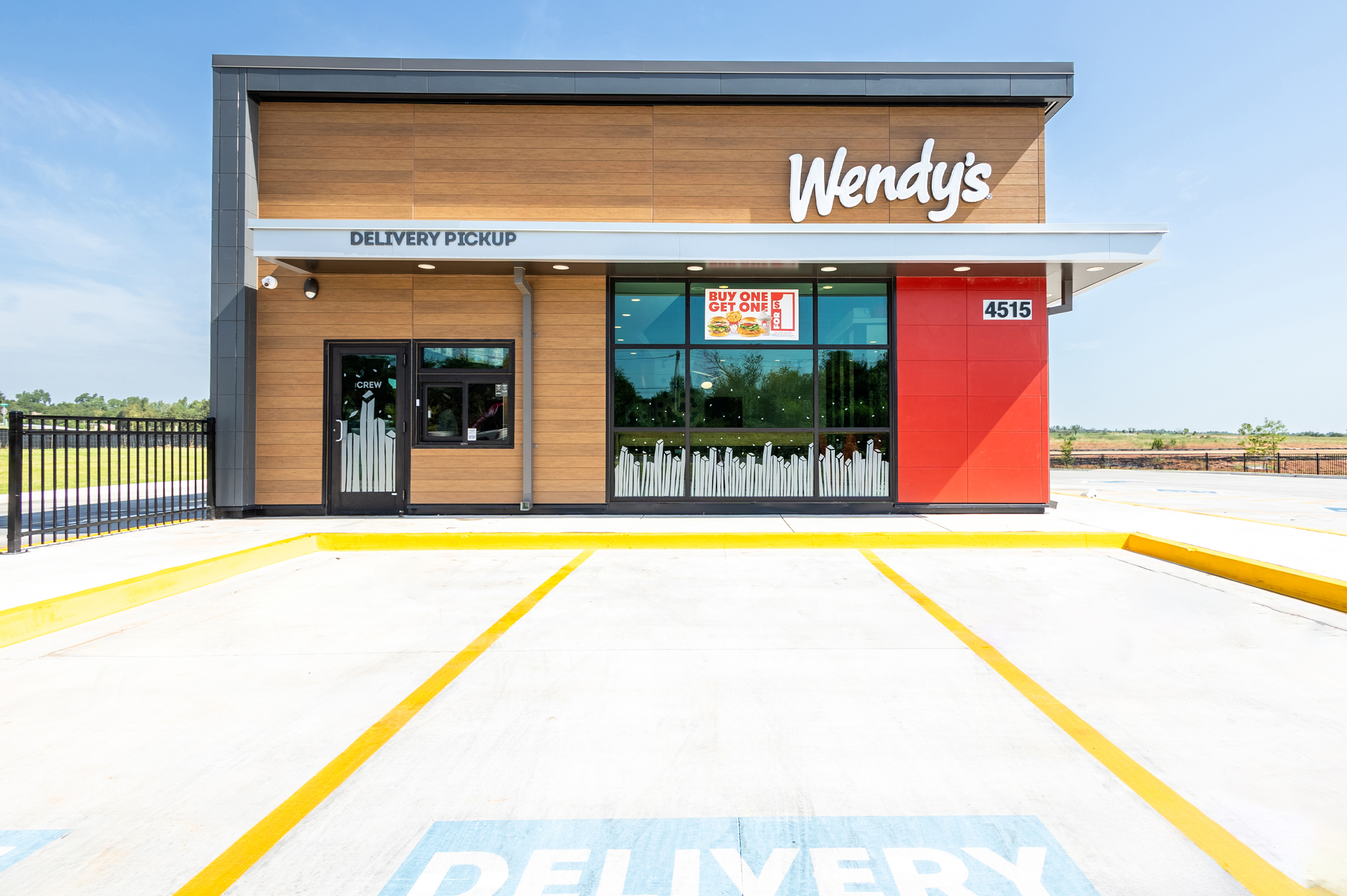
Wendy’s is mapping a reset in the wake of a stock decline of more than 50% since late 2024, treating valuation not as a verdict but as a catalyst for change. Chairman Art Winkleblack framed the charge succinctly: leadership is dissatisfied with where the company trades and intends to “create value for our franchisees, employees and shareholders.” That expression of purpose anchors a plan that feels both disciplined and wide-angled—tuning brand identity, operational rhythm, and the restaurant footprint in concert. The centerpiece is Project Fresh, a brand and marketing overhaul built to elevate average unit volume (AUV) while refreshing the presentation—designed to be as much about clarity as it is about creativity. It arrives alongside a headline menu play, the September 2025 launch of “Tendys,” and a tough but targeted pruning: closing a “mid-single-digit percentage” of roughly 6,011 U.S. restaurants in Q4 2025, following closures executed in 2024. The throughline is a balanced, thoughtfully sequenced plan that looks to tighten execution while giving guests a simpler, more visible reason to choose the brand. Analysis: By explicitly tying valuation concerns to brand discipline, menu focus, and footprint quality, Wendy’s is signaling a coordinated effort to raise unit-level performance rather than a campaign-driven quick fix.
Understanding the AUV Gap
The performance baseline clarifies the stakes. In 2024, AUV stood at about $2.3 million for company-owned units and $2.1 million for franchised restaurants. That outpaced Burger King at $1.6 million and Jack in the Box at $1.9 million, but it trailed McDonald’s near‑$4 million AUV. The brand is neither turning around from the bottom nor perched at the top; it occupies a middle ground with meaningful headroom. That context makes Project Fresh’s emphasis on precision feel grounded. If units are already more productive than some peers, the logical path to lift AUV is to clarify who the brand is talking to and how consistently it shows up, then convert that coherence into throughput and ticket gains. A balanced approach—stricter message discipline paired with system-level operational improvements—aims to be more nourishing to the business than scattershot promotions that kick up noise without building momentum. Analysis: The AUV comparison explains why segmentation and presentation matter: with substantial distance to the category leader, the upside lives in relevance and reliability, not just novelty.
Segmentation, Fewer Messages, Cleaner Lines
Project Fresh formalizes a segmentation-led marketing engine under Creed UnCo, headed by Greg Creed, bringing a CEO-level approach to a problem the company diagnosed clearly: promotional over-saturation had diluted the message. Interim CEO Ken Cook moved to simplify the marketing calendar toward the end of the year to restore clarity—fewer, sharper communications mapped to distinct consumer need states, supported by more consistent brand presentation. In practice, that means fewer competing offers, less clutter, and a more intentional cadence—giving teams a template to execute with consistency while helping guests navigate choices with ease. The intention is not just to look better, but to perform better: disciplined messaging that lifts awareness, aligns with what’s on the menu, and reinforces a brand position customers can recognize at a glance. It is a thoughtful reframing, the kind that tends to be more durable because it is structural rather than seasonal. Analysis: By aligning segmentation with message discipline, Wendy’s is drawing a straight line from marketing architecture to AUV, turning brand clarity into an operational lever rather than a superficial rebrand.
Training, Throughput, And A Rebalanced Budget
The operational plan complements the brand reset with tangible investments where guests feel them: labor optimization, operating hours alignment, enhanced training, upgraded equipment, technology, and process simplification. It’s a toolkit designed to smooth bottlenecks and present a cleaner, more consistent experience—less friction at the counter, more confidence on the line, and a cadence that feels dependable during peak periods. Funding is being rebalanced to support this shift. From a roughly $100 million Build‑to‑Suit program intended to densify underpenetrated areas, $20 million is being redirected this year toward these operational priorities, with additional allocations set for the following year. The company is also working with a financial advisor to identify further capital pools. Notably, international deployment continues, sustaining net unit growth abroad even as domestic operations are tuned—an approach that keeps growth in the mix while U.S. units focus on reliability. Analysis: Redirecting development capital toward training and throughput underscores a belief that present assets can be made more productive—a pragmatic pivot that prioritizes everyday execution over sheer expansion.
Closures To Strengthen What Remains
Wendy’s plans to close a “mid-single-digit percentage” of its approximately 6,011 U.S. restaurants in Q4 2025—potentially around 300 locations—following 240 closures in 2024. Interim CEO Ken Cook indicated the decisions rest on financial performance and customer service shortfalls, with the aim of making remaining restaurants healthier and more appealing. It’s a difficult step, yet it aligns with a quality-over-quantity philosophy: prune where returns falter, concentrate resources where they can compound. The near-term backdrop includes a 4% drop in U.S. same-store sales and a 6% decline in net income to $138.6 million through the first nine months of 2025, even as $5 and $8 value meals helped drive traffic. The strategy is to cushion demand with approachable price points while streamlining the system, so service and product delivery feel steady and balanced. When executed well, such rationalization can be quietly nourishing—removing strain and letting stronger units breathe. Analysis: Trimming underperforming assets concentrates demand and attention, but the payback depends on whether the rebalanced base can translate value traffic into sustained AUV growth.
‘Tendys’ Gives The Message A Flagship
In September 2025, the brand introduced “Tendys” nationwide—crispy, all-white‑meat chicken tenders dressed in seasoned breading—its first major chicken innovation in years. The offer is simple, visible, and designed to work hand-in-hand with a cleaner marketing calendar. The launch also brought six dipping sauces—Wendy’s Signature, Sweet Chili, Scorchin’ Hot, Creamy Ranch, Honey BBQ, and Honey Mustard—plus redesigned packaging with built-in sauce holders, and “Tendy’s”-themed store rebranding in select cities during October. Formats and details are tuned for clarity at purchase: each three- or four-piece order includes two sauces, Kids’ Meals feature a two-piece tender with one sauce, and extras are available for a small fee. Quantitative framing helps guests navigate choices—a three‑piece order includes 420 calories and 33 g of protein. Pricing is straightforward: three pieces at $5.49, four at $7.29, with combos starting at $10.99. The net effect is a thoughtfully structured platform that’s easy for crews to execute and guests to understand, creating a balanced focal point for the refreshed brand voice. Analysis: Pairing a high-appeal item with fewer, clearer promotions aligns operations and marketing, making it easier to deliver consistency that can lift AUV.
Surging Interest, Shortages, And Sustainable Touches
Fans embraced the tender launch quickly, with demand absorbing supply in many locations shortly after rollout, triggering reported shortages. Popularity is a positive signal, though it introduces a new operational test: replenishment rhythm. The brand’s packaging choice extends presentation beyond taste, aligning with the Sustainable Forestry Initiative’s certified sourcing standard—a modest but meaningful nod to resource stewardship that complements a broader push for cohesive branding. Customer feedback loops are also shaping the offer. In December 2025, Wendy’s announced the return of its fan‑favorite Sweet and Sour sauce in spring 2026 after strong social media demand. During a period when same-store sales declined 4% and net income fell 6% to $138.6 million through the first nine months of 2025, value meals at $5 and $8 continued to help drive traffic—evidence that straightforward value and active listening can coexist within a disciplined marketing frame. Analysis: Early demand validates product-market fit, while certified packaging and sauce responsiveness point to a thoughtful blend of sustainability cues and guest-led refinements that can reinforce loyalty.
Metrics, Cadence, And The Path To Recovery
Key variables remain to be proved in the field. How quickly will segmentation-led messaging and a refined brand presentation translate into AUV gains? Can the system set a reliable cadence to replenish “Tendys” as demand settles into a norm? And how will the planned Q4 2025 closures of a “mid-single-digit percentage” of U.S. restaurants shape same-store sales and profitability at the remaining base? The capital plan is active: $20 million redirected from Build‑to‑Suit this year, more expected next year, and a search for additional capital pools under way with a financial advisor. International deployment proceeds in parallel, suggesting net unit growth abroad even as domestic units emphasize process and service upgrades. Success looks like a steady pull toward the near‑$4 million AUV benchmark set by McDonald’s while comps stabilize—evidence that a balanced playbook of message discipline, operational reliability, and footprint quality can be quietly transformative. Analysis: The scorecard will be visible in AUV trajectory and comps; if they move decisively, the reset reads as catalytic rather than defensive.
A Coherent Plate Tells A Better Story
The narrative here is not about a single product or a single promotion; it’s about composition. When a brand’s calendar is simplified, when operations are trained and resourced to execute consistently, and when the footprint reflects where performance is strongest, the guest experience becomes more legible—balanced in pace, nourishing in value, and thoughtful in presentation. “Tendys” gives that story a tangible center, but the real promise lies in how all the elements harmonize. There is a quiet confidence in pursuing fewer, clearer messages and investing behind reliability while listening closely to what guests ask for—be it a sauce returning in spring 2026 or fair value at $5 and $8. If the AUV line bends upward and same-store sales regain footing, it will be because the brand treated marketing, menu, and operations as one carefully composed plate. That is the lesson to watch: coherence is not just good design; it is a strategy for durable growth. Analysis: The coordinated reset underscores a principle that often wins in foodservice: alignment across promise, product, and process is the simplest path to performance.