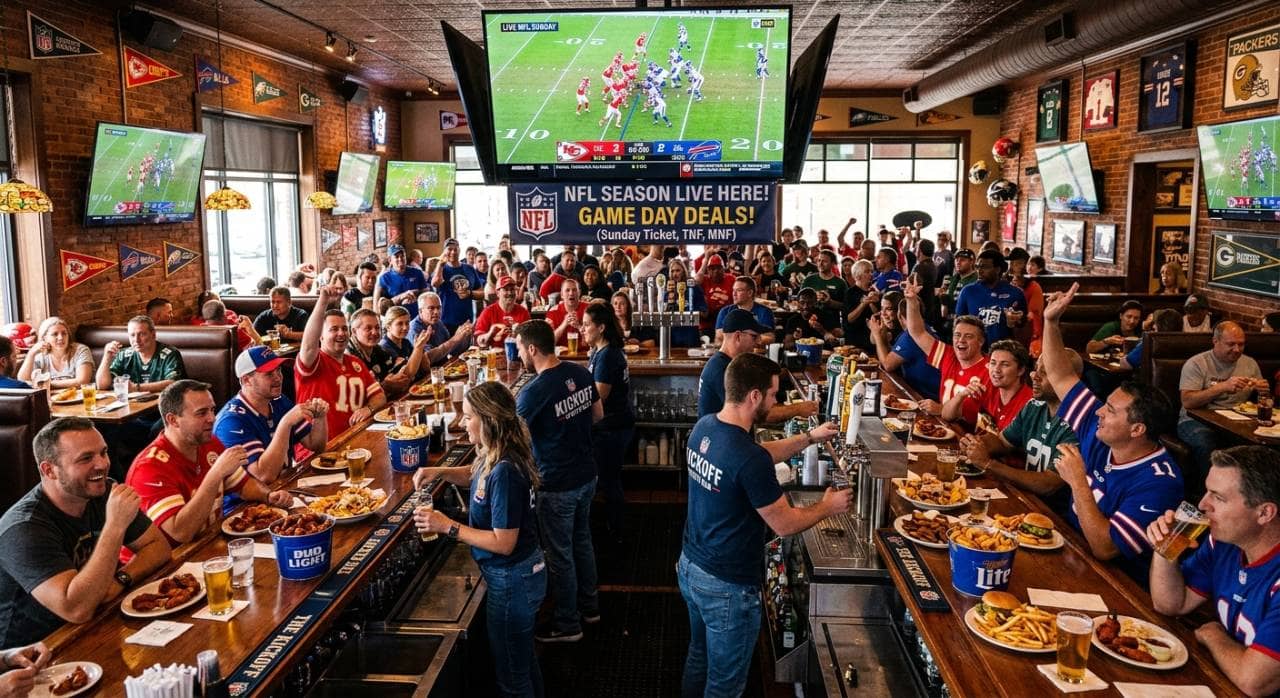
How to Prepare Your Restaurant for the NFL Season
Prepare your restaurant for NFL season with smart menu planning, staffing, marketing, technology, and atmosphere strategies that boost season-long revenue.
Marketing
Sep 9, 2026
Prepare your restaurant for NFL season with smart menu planning, staffing, marketing, technology, and atmosphere strategies that boost season-long revenue.
Sep 9, 2026

Learn how to reduce food waste in restaurants through smarter purchasing, storage, preparation, and service strategies that cut costs.
Sep 9, 2026
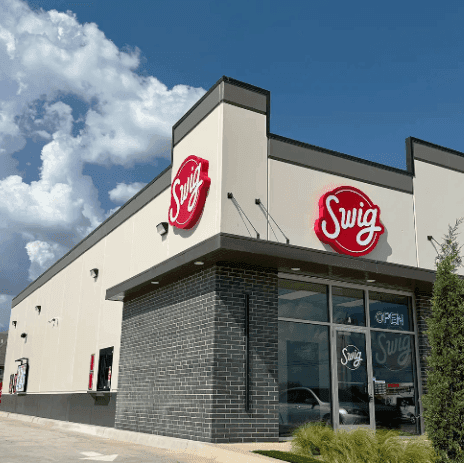
Swig signs franchise agreement for 11 South Denver locations, marking Colorado entry and validating its national expansion strategy.
Sep 8, 2026

Complete guide helping restaurant owners choose essential kitchen equipment - covering cooking, refrigeration, prep, sanitation, ventilation, safety, and long-term maintenance planning.
Sep 7, 2026

QR code menus let restaurants replace paper menus digitally, enabling instant updates, contactless browsing, ordering, and payment through simple smartphone scanning.
Sep 7, 2026

Avoiding common restaurant payroll mistakes - misclassification, tip credit errors, overtime miscalculations - protects businesses from costly penalties, back pay, and compliance risks.
Sep 4, 2026

Learn to calculate par levels for restaurant food, beverages, and packaging inventory, preventing stockouts and waste through proper formulas.
Sep 4, 2026

Caribou Coffee appoints Zane Thomas-Rogers as Chief Operations Officer to strengthen execution across its expanding coffeehouse network.
Sep 4, 2026

Compare the top 10 restaurant POS systems in the USA for 2026. Explore features, pricing, pros, cons, and the best POS options for every restaurant type.
Jul 1, 2026

Learn how to handle restaurant payroll yourself, from calculating hours and wages to managing tips, taxes, and final paychecks.
Sep 2, 2026

Unlock Exclusive Access To Webinars, Events, And The Latest News For Free!
The FTC shields franchisees with new disclosure rules and bans gag clauses, reshaping how fees are presented in food-service networks.

Photo by Tahoe Groeger
In the gleam of kitchen fires and policy hearings, franchising reveals its two faces: the quiet audacity of entrepreneurship and the stubborn fragility that can shadow growth. A wave of complaints from franchisees about undisclosed fees and restrictive contracts has drawn the eye of the Federal Trade Commission. Food and beverage networks form the largest slice of the franchise landscape, lending scale and symbolic weight to the debate. On July 12, 2024, the FTC issued a policy statement that marks a turning point: non-disparagement clauses are illegal and unenforceable. The climate is tense, yet it carries a refined longing for clarity, accountability, and fair play across menus and margins.
Behind the push lies a data-driven audit that has begun to tilt the balance of power. The FTC’s policy framework cites more than 5,000 complaints gathered after a 2023 Request for Information, flagging issues from deceit to opaque fees and supplier kickbacks. The commission’s language foregrounds a troubling dynamic: “The FTC is concerned that franchisees are reluctant or unwilling to discuss or report experiences with franchisors, even if a law violation has occurred.” That very hesitancy, the fear of retaliation, helps sustain practices regulators now seek to curb. The discourse around Dickey’s Barbecue Pit and Subway renewal tensions illustrates how systemic these concerns feel. To broaden its listening, the FTC intends to reopen the comment period through October 10 to gather even more voices.
The data narrates a process in need of light: enforcement now travels with outreach as regulators seek to restore confidence and accountability within the franchise ecosystem. The moment invites a delicate recalibration, where transparency is not a threat but a shared standard that can steady the pace of growth for everyone around the table.

The enforcement push rests on a data-based concern: franchise practices have grown complex enough to demand oversight. Regulatory voices point to a landscape where costs can escalate behind opaque lines and where contract terms can mask outcomes. The narrative is not merely about isolated incidents; it is about a climate in which signals of imbalance, hidden fees, questionable business models, and renewal frictions, become the subject of national discussion. The FTC’s posture is both preventive and corrective, insisting on disclosures that align with a more open dialog between franchisors and owners.
The discussions are not abstract. Dickey’s Barbecue Pit features prominently in complaints, serving as a case study of cost escalations and business-model concerns. A published account notes a troubling pattern: stores marketed at one price may carry costs that diverge sharply from quotes, with the franchisor claiming a large share of the proceeds. An anonymous franchisee describes a cycle of refinancing and sale that ends in heavy losses for successive owners, underscoring the risks that can accompany rapid expansion. Subway renewal disputes further illuminate the friction between brand controls and franchisee viability.
The FTC’s findings have fed a broader public dialogue about governance, accountability, and investor risk. The agency’s focus is not only on the margins of contract but on the long arc of franchise relationships, how information, once guarded, becomes a shared asset that can guide responsible growth.

The rules of engagement are being rewritten. The FTC has issued guidance prohibiting franchisors from charging fees, whether for processing, technology, training, marketing, or property improvements, unless those charges are explicitly disclosed in the initial franchise disclosure documents. The aim is to ban the so‑called junk fees that accumulate post‑investment, a response to a climate where costs can surface with unsettling surprise. Franchising now sits within a framework of explicit boundaries around cost disclosure and contract terms.
At the podium, Lina M. Khan has framed the shift with two potent declarations. “Franchising is a chance for Americans to build a business, but the FTC has heard concerns about how unfair franchisor practices, like a failure to fully disclose fees upfront, go unreported thanks to a fear of retaliation.” She reaffirmed a second principle: “Today the commission is making clear that contractual terms prohibiting franchisees from reporting potential law violations to the government are unfair, unenforceable, and illegal.” The language is precise, but the implication is expansive: disclosure becomes the normal, silence the exception.
The practical consequence is a clarified playing field: franchisors must align their disclosures with enforcement expectations, and contract terms that suppress reporting must be rethought. The regulatory posture signals a broader trend toward transparent governance, rather than punitive precision alone.
The enforcement narrative rests on the lived experiences of franchisees and the industry’s own observations. In the foreground stands Dickey’s Barbecue Pit, frequently cited in complaints as a lens on escalating costs and questionable business models. The reported dynamic, selling stores at prices well above quotes, with the franchisor taking a substantial share, frames a cautionary tale about leverage and leverage’s cost to the network. The ongoing discussions around Subway renewal disputes further illuminate how franchise terms can become flashpoints in investor relations and regulatory oversight.
These narratives anchor the FTC’s outreach as it seeks to balance growth with transparent, accountable practices. The common thread is fear, of retaliation, of hidden costs, of the unknown, but the policy shift invites courage: speak openly, disclose clearly, and build a franchise future that satisfies owners, lenders, and regulators alike.
Industry observers note that this moment sits within a wider dialogue about remodel mandates, contract renewal dynamics, and the practical consequences of cost escalations. The regulatory conversation now intersects with civil actions, arbitration tracks, and associations that advocate for franchisee concerns, creating a multi‑faceted chorus that regulators will continue to listen to.

As enforcement tightens and disclosure expectations rise, the restaurant franchising world abridges toward greater transparency and trust. The policy direction dovetails with a broader movement to strengthen Item 1 disclosures and related documentation, ensuring that prospective owners grasp costs, fees, and obligations before committing capital. Industry watchers anticipate ongoing regulatory updates, continued stakeholder engagement, and a measurable shift in how franchisors structure agreements to avoid punitive or deceptive practices, thereby supporting healthier growth in the food and beverage sector.
The horizon promises a recalibrated ecosystem where transparency is the baseline and shared success is the long-term measure. With public input continuing and regulators refining expectations, the franchise world may flourish under a governance that prizes candor as much as growth.
The texture of tomorrow will be defined by how candid the conversation becomes, and how steadfast the industry is in weaving fair dealing into its most trusted brands.
