
California Penalizes Dickey's for Franchise Disclosure Violations
California shifts to public enforcement strategy against Dickey's for deceptive franchise disclosures, signaling stricter state-level franchise oversight.
Franchising
Sep 10, 2026
California shifts to public enforcement strategy against Dickey's for deceptive franchise disclosures, signaling stricter state-level franchise oversight.
Sep 10, 2026
Paul Brown temporarily steps away from Inspire Brands as Scott Murphy assumes interim CEO role during confidential IPO filing process targeting late 2026.
Sep 10, 2026
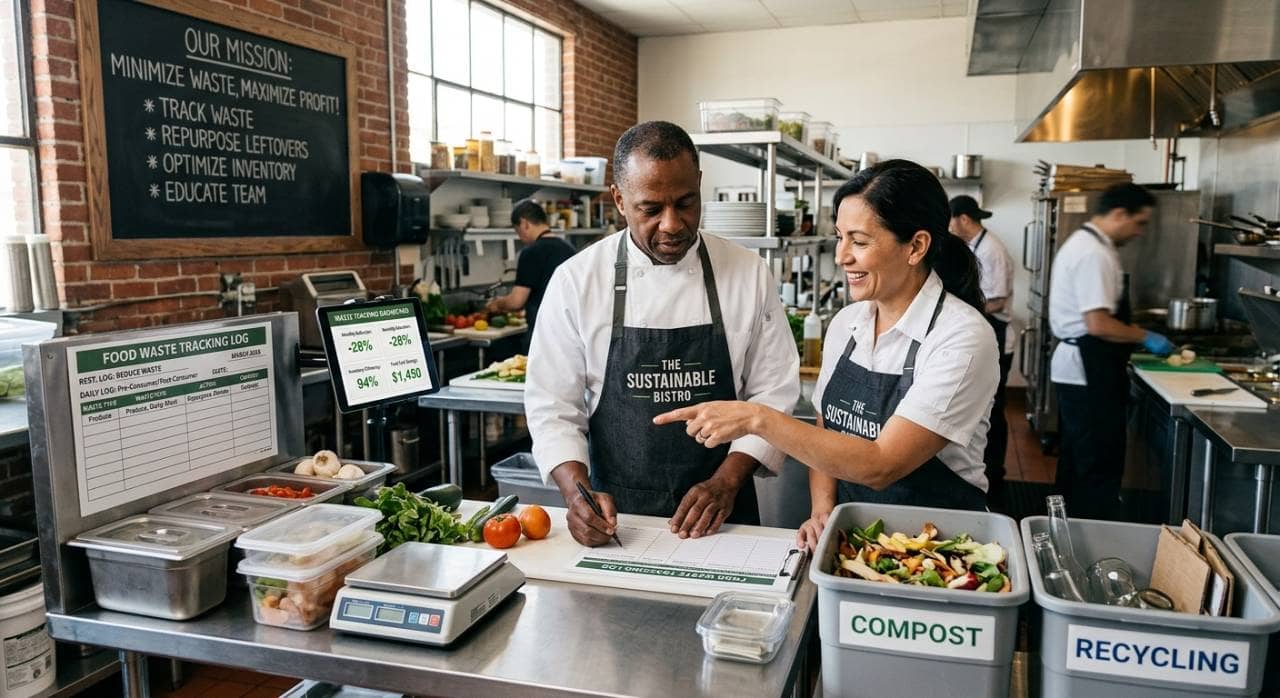
Learn how to reduce food waste in restaurants through smarter purchasing, storage, preparation, and service strategies that cut costs.
Sep 9, 2026
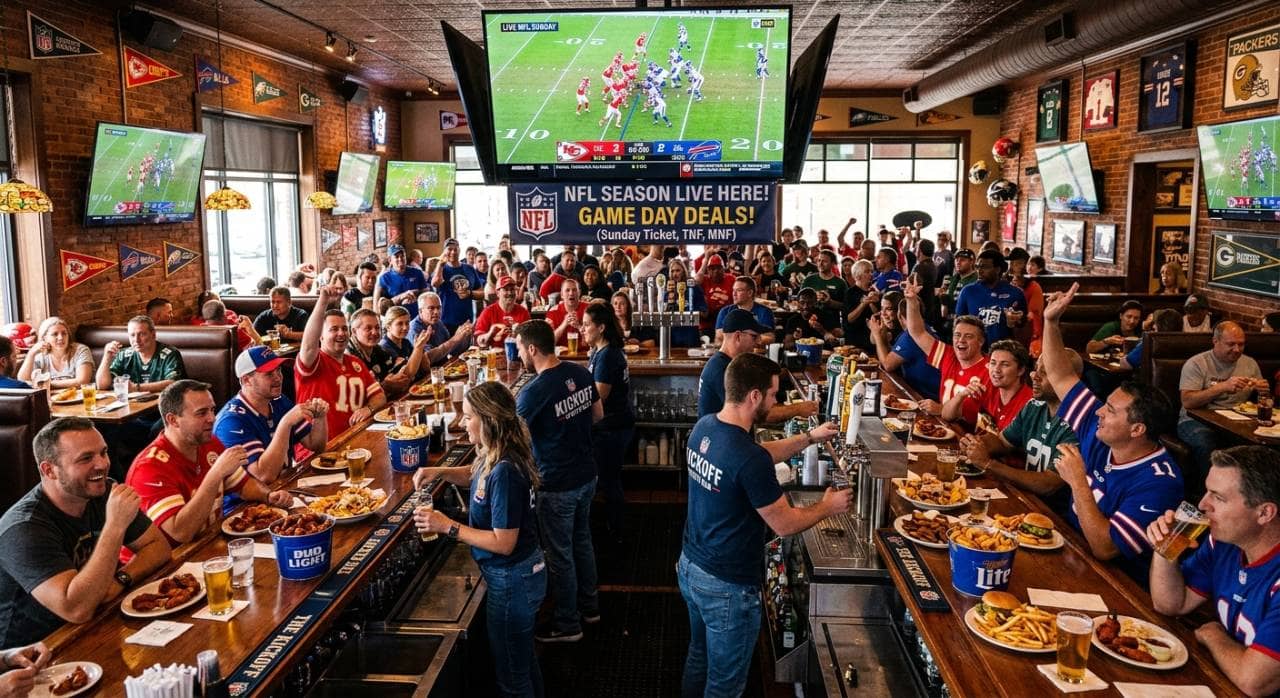
Prepare your restaurant for NFL season with smart menu planning, staffing, marketing, technology, and atmosphere strategies that boost season-long revenue.
Sep 9, 2026
Swig signs franchise agreement for 11 South Denver locations, marking Colorado entry and validating its national expansion strategy.
Sep 8, 2026

QR code menus let restaurants replace paper menus digitally, enabling instant updates, contactless browsing, ordering, and payment through simple smartphone scanning.
Sep 7, 2026

Complete guide helping restaurant owners choose essential kitchen equipment - covering cooking, refrigeration, prep, sanitation, ventilation, safety, and long-term maintenance planning.
Sep 7, 2026

Avoiding common restaurant payroll mistakes - misclassification, tip credit errors, overtime miscalculations - protects businesses from costly penalties, back pay, and compliance risks.
Sep 4, 2026
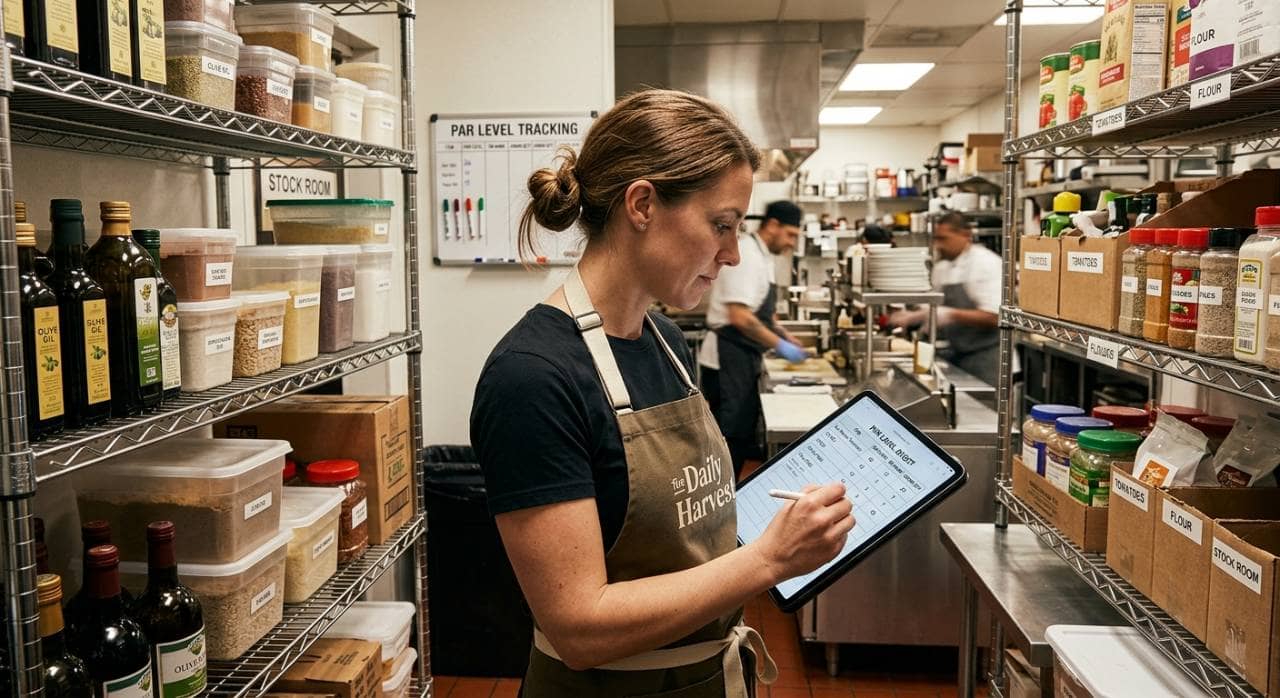
Learn to calculate par levels for restaurant food, beverages, and packaging inventory, preventing stockouts and waste through proper formulas.
Sep 4, 2026
Caribou Coffee appoints Zane Thomas-Rogers as Chief Operations Officer to strengthen execution across its expanding coffeehouse network.
Sep 4, 2026

Unlock Exclusive Access To Webinars, Events, And The Latest News For Free!
Inflation tightens value in quick-service, but CTV and emotion-based targeting offer a path to relevance, loyalty, and visits.

Photo by Adhitya Sibikumar
Inflation tightens the screws on the quick-service promise: speed and affordability. The industry calls it fast-flation, the speed of price pressure pressing menus higher, and it’s not going away. That math shows up on the plate: margins tighten even as operators defend value with sharper promos, smarter bundles, and menu tweaks. Over the past decade, menu prices have surged by 60%, a reality that erodes the traditional bargain of quick meals. Patrons are price-sensitive and trimming their visits; foot traffic trends sag in many markets, and engagement slips for brands that rely on a steady stream of cheap meals. In this climate, measurements must pivot: what actually drives sales and momentum?
Data from the outside world show the pressure in quantifiable terms. The U.S. Bureau of Labor Statistics notes that prices for food away from home rose 3.8% from May 2024 to May 2025, underscoring how dining out has become costlier for households already juggling other inflationary pressures. Yet staying power for the value proposition remains essential; observers describe value as an expected promotional baseline across retail and foodservice. Chains are leaning into simpler value constructs, with industry examples like McDonald’s pursuing affordability through streamlined menu options. Demand, however, is not uniform: some chains push volume with aggressive promotions, others face softer foot traffic than in prior years. Diners are increasingly cooking at home when feasible, complicating the traditional QSR growth engine.
In this climate, the QSR playbook must evolve. The questions are sharp: where can margins be defended without eroding perception of value, and where do brands risk chasing a short-term uptick? The answer will shape menu strategies, store-level execution, and the data that ties promotions to visits.
Under pressure, operators lean into tangible incentives and smarter targeting. Special coupon offers and enhanced loyalty programs remain core tools, but savvy marketers are pushing deeper into data-driven tactics. CTV emerges as a central channel, using the home’s largest screen in a non-skippable environment to reach broad but precise audiences. Industry analyses point to continued double-digit growth in CTV spend, with digital video budgets swelling toward tens of billions of dollars. A landmark MRI-Simmons Cord Evolution study summarized by industry partners shows that 92% of ad-supported OTT viewers visited a QSR in the six months before the survey, illustrating the channel’s potential when emotion and relevance land.
On the business side, the industry expects CTV to be a leading growth engine within digital video budgets. The forecast highlights tens of billions of dollars as a baseline, with double-digit growth year after year. Marketers are integrating CTV into omnichannel plans, pairing promotions with loyalty signals and e-commerce efforts. The result is a more cohesive path to store visits and online orders, even as overall traffic trends vary by brand and region. The lesson is clear: when CTV is paired with value signals and a touch of creativity, the attention gap closes faster than with traditional spots alone.
Emotion-enabled approaches are not magic; they’re a lever that complements broader promotions. The real work remains alignment with data and customer sentiment.
Restaurants are testing the idea that context and emotion can strengthen messaging. In practice, emotion-based targeting shifts away from broad placements toward content that matches hunger and cravings. In a notable case, BrandDiscovery’s technology aligned with ads about appetite, delivering a sharper connection between program mood and brand messaging. Industry coverage describes emotion-based targeting as the most performant CTV strategy for boosting store visits for their QSR clients, with incremental gains in visits and sales. Still, attribution remains imperfect; these gains tend to be incremental rather than a clean, waterfall-like lift.
GenAI-enabled scene-level analysis takes this further. By evaluating the on-screen moment, humor after a funny scene, warmth after a sentimental moment, advertisers deploy ads that feel natural rather than jarring in non-skippable environments. The promise is stronger alignment between mood and message, but practitioners caution that not every campaign will show uniform results. Measurable impact depends on creative quality, careful scene selection, and how well the program integrates with broader data-backed strategies. In practice, emotion-driven CTV campaigns are a powerful lever to complement a robust value and loyalty program, not a stand-alone fix.
So: emotion helps, it doesn’t replace solid pricing discipline.

At the core, GenAI meets in-scene content analysis to read emotion and tailor ads on the fly. Real-time analysis of a program’s emotional context enables ads that mirror the viewers’ mood, humor after a funny moment, warmth after a sentimental beat. Practically, this is a tighter alignment between program mood and brand messaging, especially in non-skippable environments where you can’t rely on a quick skip. Industry reports call this a meaningful evolution of contextual advertising in CTV, with partnerships and pilots showing feasibility and potential.
Implementation, however, isn’t automatic. While the technique promises greater relevance, attribution remains imperfect. Not every campaign delivers a clean lift; the measurable impact is often incremental and depends on creative quality, scene selection, and integration with broader data-backed strategies. Brands must pair these campaigns with disciplined value messaging and loyalty programs to avoid chasing noise. GenAI-enabled scene matching is a tool, use it to sharpen resonance, not to replace testing, measurement governance, and consumer sentiment signals.
The smart move is to weave emotion-aware methods into a broader omnichannel plan.

From a macro perspective, digital video advertising continues to grow, with CTV seen as a central component of the未来 of television marketing. Industry bodies and research firms project continued expansion of CTV share within the broader ad ecosystem, with forecasts historically placing CTV ad spend in the tens of billions of dollars in the near term and climbing toward the mid-to-high forties by the end of the decade. In parallel, the industry is watching for how CTV’s growth interacts with linear TV, retail media, and programmatic buying. Within the restaurant sector, foot-traffic data remain mixed: some chains report resilience in certain segments or markets, while others show continued declines, reflecting the challenge of converting pricing power into sustained visits.
The broader takeaway is that marketers are integrating CTV more deeply into omnichannel plans and using emotion-aware and GenAI-enabled methods to improve relevance, recall, and, ultimately, drive more visits.
Reality check: attribution remains imperfect, and gains tend to be incremental rather than waterfall-proof. The era favors careful testing, governance, and signals from consumer sentiment as promotions meet technology.
Despite early successes, there are clear gaps and uncertainties. Attribution for emotion-based targeting is imperfect, with practitioners noting that the approach yields incremental lift rather than a neatly isolated ROAS metric. In addition, GenAI-driven scene-level matching is still maturing, and there is ongoing debate about its long-term impact on brand safety, measurement standards, and cross-channel consistency. Some data points, such as the MRI-Simmons 2022 finding that a large share of CTV viewers engage with QSR brands within months of exposure, provide compelling signals but may not capture every campaign’s unique context. As the industry learns to balance pricing discipline with the creativity and precision of emotion-based workflows, operators should expect a period of experimentation, with careful attention to measurement governance and consumer sentiment signals.
The takeaway is simple: plan for uncertainty, build in governance, and test relentlessly. The data will improve, but the framework must be disciplined from day one.
In practice, expect a period of experimentation as brands learn how to balance pricing discipline with dynamic, emotion-aware marketing.
For QSRs, the path forward blends disciplined value strategies with innovative, data-driven marketing. Inflation remains a reality, and price sensitivity among diners is unlikely to ease quickly; industry data show continued upward pressure on food-away-from-home prices, even as households seek ways to economize. Yet the rise of CTV, enhanced by emotion-based targeting and GenAI-enabled scene matching, offers a way to reach consumers with more relevant, timely messaging while preserving throughput through loyalty programs and promotions. The most durable outcomes will come from integrated omnichannel plans that marry value-based offers with targeted storytelling and measurement that ties ad exposure to in-store visits, online orders, and long-term brand equity.
In this evolving landscape, QSRs that combine transparent value with scientifically grounded marketing, backed by credible data about reach, relevance, and response, will navigate inflation and emerge with restored momentum.
The bottom line is simple: value, precision, and patience win in a crowded QSR arena.
