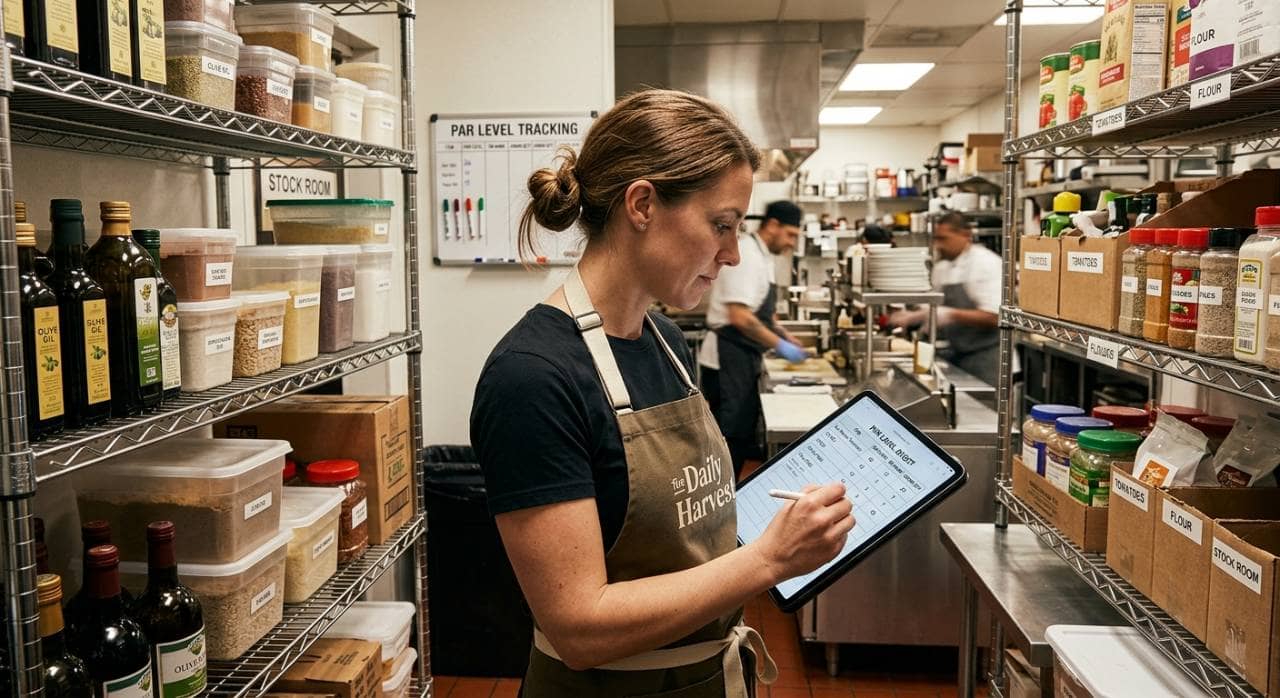
How to Set Par Levels for Restaurant Inventory
Learn to calculate par levels for restaurant food, beverages, and packaging inventory, preventing stockouts and waste through proper formulas.
Back Office
Sep 4, 2026
Learn to calculate par levels for restaurant food, beverages, and packaging inventory, preventing stockouts and waste through proper formulas.
Sep 4, 2026
Caribou Coffee appoints Zane Thomas-Rogers as Chief Operations Officer to strengthen execution across its expanding coffeehouse network.
Sep 4, 2026

Compare the top 10 restaurant POS systems in the USA for 2026. Explore features, pricing, pros, cons, and the best POS options for every restaurant type.
Jul 1, 2026

Learn how to handle restaurant payroll yourself, from calculating hours and wages to managing tips, taxes, and final paychecks.
Sep 2, 2026
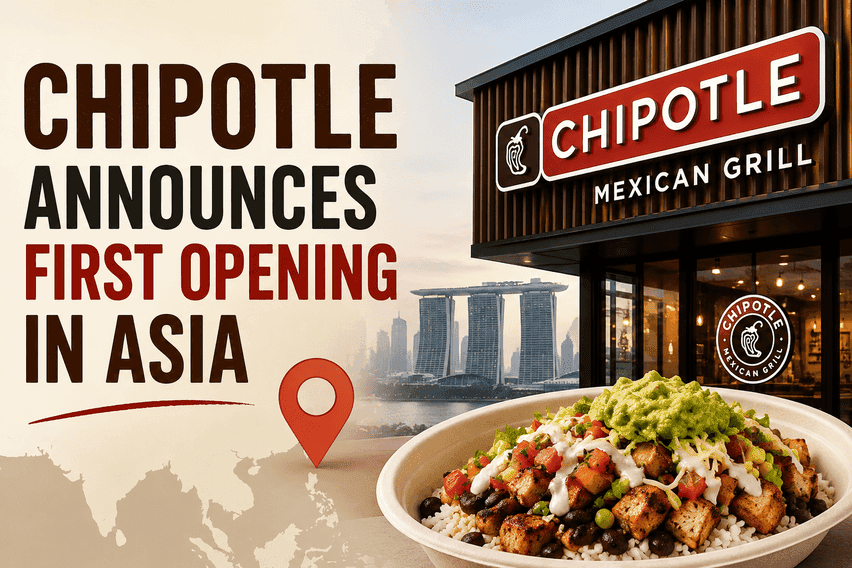
Chipotle makes its highly anticipated entry into Asia with a Seoul opening, partnering with Sangmidang Holdings and setting a template for future international growth.
Sep 2, 2026
7 Brew has acquired 73 former Salad and Go locations, surpassing Dutch Bros with a $143M bid, signaling a major shift in the competitive landscape for drive-thru brands.
Sep 2, 2026

Restaurant labor management helps owners optimize staffing, control labor costs, improve productivity, monitor overtime, and maintain efficient restaurant operations.
Sep 2, 2026
Brooklyn Water Bagel launches its first campus eatery at Nova Southeastern, signaling strategic growth and fresh potential for multi-unit operators seeking new market wins.
Sep 2, 2026
Angry Chickz enters Illinois with its signature hot chicken concept and ambitious plans for Midwest expansion, setting the stage for new franchise opportunities and community engagement.
Sep 2, 2026
Learn how to calculate restaurant cost of goods using inventory, purchases, COGS percentage, variance reviews, and regular tracking for profitability.
Aug 31, 2026

Unlock Exclusive Access To Webinars, Events, And The Latest News For Free!
Learn how to calculate menu price by analyzing ingredient costs, labor, overhead, demand, and contribution margin for stronger restaurant profits.
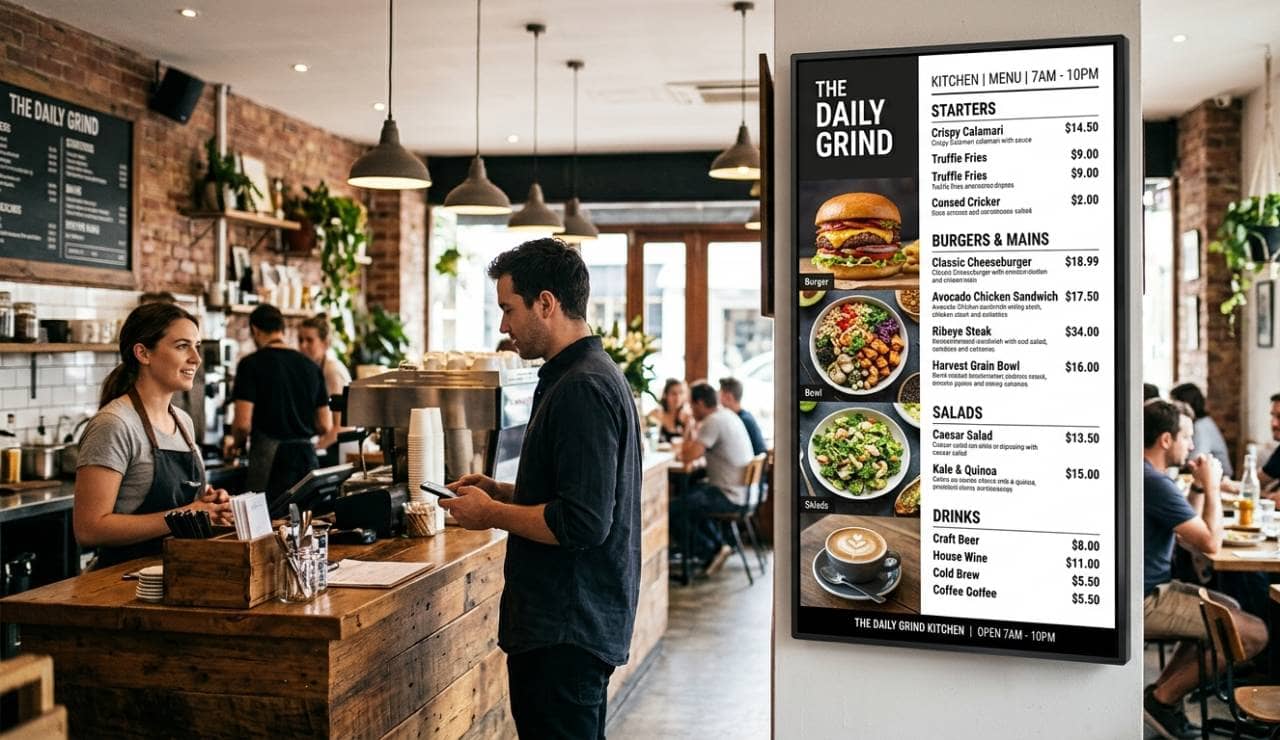
Menu pricing is one of the most important profit decisions a restaurant owner makes. Every menu price affects revenue, food cost, labor cost, and customer perception. If prices are too low, the restaurant may stay busy but keep less profit. If prices are too high, customers may reduce orders or choose another restaurant. For example, if a burger sells for $12 and costs $4 in ingredients, the food cost percentage is about 33%. That may seem reasonable, but the real margin can shrink once prep time, toppings, packaging, waste, and overhead are added. If the same burger can sell for $14 without reducing demand, the restaurant earns $2 more per order. At 1,000 orders per month, that creates $2,000 in additional monthly revenue before other cost changes. Popular items need the closest attention. If a high-volume entree is underpriced by $1 and sells 2,500 times per month, the restaurant misses $2,500 each month, or $30,000 per year. Strong menu pricing helps owners protect margins, review item profitability, and make better decisions about recipes, portions, and price adjustments.
The first step in calculating the right menu price is knowing the true ingredient cost of each item. Many restaurant owners estimate this number too quickly by looking only at the main ingredient. But a menu item is rarely just one cost. A burger may include the patty, bun, cheese, lettuce, tomato, onions, sauce, fries, seasoning, oil, garnish, and packaging for takeout orders. If any of those costs are missing, the menu price may be based on incomplete data. A simple way to calculate ingredient cost is to break the recipe into exact portions. For example, if a 10-pound case of chicken costs $45, each pound costs $4.50. If one sandwich uses 6 ounces of chicken, the chicken cost per sandwich is about $1.69 because 6 ounces equals 0.375 pounds. If the bun costs $0.55, sauce costs $0.20, toppings cost $0.40, and fries cost $0.85, the total ingredient cost becomes $3.69 before waste, seasoning, or packaging. That number matters because small errors can become expensive at scale. If the restaurant underestimates the cost of an item by only $0.50 and sells 2,000 orders per month, that equals $1,000 in unplanned cost. Over 12 months, the pricing mistake can reduce profit by $12,000 on one item. Restaurant owners should also include yield loss. If a case of produce costs $30 but 15% is lost during trimming, spoilage, or waste, the usable cost is higher than the invoice price suggests. The same applies to proteins that shrink during cooking. If a raw portion weighs 8 ounces but cooks down to 6 ounces, the restaurant is paying for the full 8 ounces even though the guest receives less. To get a more accurate ingredient cost, owners should track - 1. Invoice price - what the restaurant pays for each product. 2. Unit cost - the cost per ounce, pound, slice, cup, or piece. 3. Recipe portion - how much of each ingredient goes into one item. 4. Yield loss - trimming, shrinkage, spoilage, or waste. 5. Add-ons - sauces, sides, garnishes, condiments, and packaging. For example, an entree may appear to cost $5.25 based on the main ingredients. But after adding sauce, garnish, side items, cooking loss, and packaging, the real cost may be closer to $6.10. If the restaurant uses a 30% target food cost, that difference changes the base menu price from $17.50 to $20.33. This is why accurate ingredient costing is the foundation of menu pricing. Before owners decide whether an item should sell for $12, $15, or $20, they need to know what it actually costs to make. Without that number, every price decision becomes a guess.

After calculating the true ingredient cost, the next step is to use food cost percentage to create a base menu price. Food cost percentage shows how much of the selling price is spent on ingredients. It is one of the most common pricing tools because it helps restaurant owners connect recipe cost to menu profitability. The basic formula is - Menu Price = Item Food Cost / Target Food Cost Percentage For example, if a pasta dish costs $4.80 to make and the restaurant wants a 30% food cost, the base menu price would be - $4.80 / 0.30 = $16.00 This means the item would need to sell for about $16.00 to keep ingredient cost at 30% of the selling price. If the same item were priced at $14.00, the food cost percentage would increase to about 34%. That difference may look small, but it reduces the money left to cover labor, rent, utilities, insurance, software, repairs, and profit. Food cost percentage becomes more important when owners look at volume. If a dish is underpriced by $2.00 and sells 1,500 times per month, the restaurant misses $3,000 in monthly revenue. Over a year, that equals $36,000 from one item. For high-volume items, even a small pricing gap can have a major impact on profitability. However, the formula should be used as a starting point, not the final answer. Different menu categories often need different target food cost percentages. For example, beverages, desserts, and appetizers may have lower food cost percentages, while steak, seafood, and premium entrees may run higher. A steak entree may have a 40% food cost but still generate a strong dollar profit if the selling price is high enough. Restaurant owners should also compare food cost percentage with contribution margin. An item that costs $3.00 and sells for $10.00 has a 30% food cost and leaves $7.00 after ingredients. An item that costs $12.00 and sells for $30.00 has a 40% food cost but leaves $18.00 after ingredients. The second item has a higher food cost percentage, but it creates more gross profit per sale. This is why menu pricing should not depend on one number alone. Food cost percentage helps owners set a pricing floor, but the final menu price should also consider sales volume, prep time, customer demand, perceived value, and profit dollars.
Food cost is the starting point for menu pricing, but it does not show the full cost of selling an item. A dish may have a low ingredient cost and still be expensive to produce if it requires extra prep time, skilled labor, special equipment, packaging, or multiple service steps. This is why restaurant owners should look beyond ingredients before setting the final menu price. For example, two menu items may each have a food cost of $4.00, but they may not create the same profit. A grab-and-go sandwich may take 2 minutes to assemble, while a made-to-order entree may take 12 minutes of kitchen time. If labor costs are not considered, both items may be priced the same way even though one uses much more employee time. Labor can quietly change item profitability. If a kitchen employee earns $18 per hour, the labor cost equals $0.30 per minute. An item that takes 10 minutes of labor adds about $3.00 in labor cost before ingredients, overhead, or profit. If that item also costs $5.00 in ingredients, the restaurant already has $8.00 in direct cost before rent, utilities, software, insurance, and payment fees are included. Packaging is another cost that restaurant owners should calculate carefully, especially for takeout, delivery, and catering. A dine-in entree may only need a plate and silverware, but a delivery order may require a container, lid, bag, sauce cups, napkins, utensils, labels, and tamper-resistant packaging. If packaging adds $0.75 per order and the restaurant sells 3,000 takeout orders per month, that equals $2,250 in monthly packaging cost. If menu prices do not account for that cost, delivery and takeout orders may look profitable while producing weaker margins. Overhead also affects pricing. Rent, utilities, repairs, equipment leases, cleaning supplies, POS systems, online ordering tools, insurance, payroll taxes, and credit card processing fees all need to be paid from the money left after each sale. A menu item does not need to carry all overhead equally, but the menu as a whole must generate enough gross profit to cover these fixed and variable expenses. Restaurant owners can use a simple cost review before finalizing a menu price - 1. Ingredient cost - What does the recipe cost per portion? 2. Labor time - How many minutes does the item require to prep, cook, plate, and package? 3. Packaging cost - Does the item need containers, bags, cups, labels, or utensils? 4. Service model - Is it dine-in, takeout, delivery, catering, or drive-thru? 5. Overhead support - Does the price leave enough margin to help cover operating expenses? For example, if an item has $5.50 in ingredients, $2.40 in estimated labor, and $0.80 in packaging, the direct cost is already $8.70. If the item is priced at $12.00, the restaurant has only $3.30 left before overhead and profit. That may not be enough. But if the same item is priced at $16.00, the restaurant has $7.30 left after direct costs, giving the item a stronger chance of supporting the business. The right menu price should reflect the full cost of getting the item from the kitchen to the customer. When owners include labor, packaging, and overhead in the pricing process, they get a more realistic view of profitability and avoid pricing items too low based only on food cost.
Food cost percentage is useful, but it does not tell the full story of menu profitability. Restaurant owners also need to review contribution margin, which shows how many dollars are left after ingredient cost is removed from the selling price. This number matters because restaurants pay bills with profit dollars, not percentages. The formula is simple - Contribution Margin = Menu Price - Food Cost For example, if a sandwich sells for $14.00 and costs $4.20 to make, the contribution margin is- $14.00 - $4.20 = $9.80 That means each sale leaves $9.80 before labor, packaging, overhead, and profit. If the restaurant sells 1,000 of those sandwiches per month, the item creates $9,800 in contribution margin before other costs. This is where food cost percentage can sometimes be misleading. A menu item with a lower food cost percentage is not always the most profitable item. For example, a chicken wrap that sells for $12.00 and costs $3.00 to make has a 25% food cost and leaves $9.00 in contribution margin. At first, that looks strong because the food cost percentage is low. Now compare that with a salmon entree that sells for $28.00 and costs $10.50 to make. The food cost percentage is 37.5%, which is higher than the chicken wrap. But the salmon entree leaves $17.50 in contribution margin. Even though the salmon has a higher food cost percentage, it produces $8.50 more in gross profit per sale. Sales volume also changes the decision. If the chicken wrap sells 800 times per month, it generates $7,200 in contribution margin. If the salmon entree sells 300 times per month, it generates $5,250. In this example, the wrap creates more total margin because it sells more often. This is why owners should review both margin per item and total margin by sales volume. A strong pricing review should answer three questions - 1. How much profit does this item create per sale? This helps owners understand the dollar value of each order. 2. How often does the item sell? A lower-margin item may still be valuable if it sells at high volume. 3. Does the item support the menu's overall profit goal? Some items attract customers, some drive margin, and some may need a price, portion, or recipe adjustment. For example, if a popular entree has a contribution margin of $8.00 and sells 2,000 times per month, it generates $16,000 in monthly contribution margin. If the owner increases the price by $1.00 and demand stays steady, the item can generate an additional $2,000 per month. Over a year, that one adjustment could add $24,000 in revenue before other cost changes. Contribution margin gives restaurant owners a clearer view of what each menu item actually does for the business. Food cost percentage helps set the base price, but contribution margin helps owners decide which items deserve better placement, which prices need to change, and which recipes may be holding back profit.

After calculating food cost, labor, packaging, overhead, and contribution margin, restaurant owners need to compare the menu price against customer demand and the local market. A calculated price may look correct on paper, but the final decision still depends on whether customers see the item as worth the price. For example, if an entree costs $6.00 to make and the restaurant uses a 30% target food cost, the base menu price would be $20.00. That price may work in a full-service restaurant with table service, strong atmosphere, and generous portions. But the same price may feel too high in a quick-service setting where customers expect faster service and lower average checks. This is why pricing should match the restaurant's concept, service model, and customer expectations. Competitor pricing can also help owners understand the market, but it should not be copied blindly. A nearby restaurant may sell a similar chicken sandwich for $13.00, but its costs may be completely different. It may use a smaller portion, lower-cost ingredients, cheaper rent, fewer employees, different supplier contracts, or a different service model. If another restaurant can profit at $13.00, that does not mean every restaurant can. Customer demand is just as important as competitor pricing. If an item sells consistently, receives positive feedback, and has strong repeat orders, it may have room for a small price increase. For example, raising the price of a high-demand item from $15.00 to $16.00 may not change customer behavior if the item is viewed as valuable. If the restaurant sells 1,200 orders per month and demand stays steady, that one-dollar increase can add $1,200 in monthly revenue. However, price increases should be tested carefully. If the same increase causes sales to fall from 1,200 orders to 950 orders, the restaurant needs to review whether the higher price helped or hurt total contribution margin. A higher menu price does not always mean higher profit if the item loses too much volume. Restaurant owners should evaluate menu prices using four practical questions - 1. Does the price match the customer's expected value? Guests compare price to portion size, quality, presentation, service, speed, and experience. 2. Does the price fit the restaurant type? A casual dining restaurant, fast casual concept, fine dining restaurant, cafe, food truck, and delivery-only kitchen may all need different pricing strategies. 3. Is the item priced competitively without ignoring internal costs? Competitor prices can provide context, but the restaurant's own cost structure should guide the final decision. 4. Does sales data support the price? Owners should review item sales, repeat purchases, check averages, modifier sales, and customer complaints after a price change. For example, if a pasta dish sells for $18.00, costs $5.40 to make, and sells 900 times per month, it generates $11,340 in monthly contribution margin before other costs. If the price increases to $19.00 and sales only drop to 875 orders, the contribution margin may still improve. But if sales drop to 700 orders, the price increase may reduce total margin even though each individual sale looks more profitable. The right menu price should protect profit while still feeling fair to the customer. Restaurant owners need to understand what their guests are willing to pay, how competitors are positioned, and how each price change affects sales volume. When pricing decisions combine cost data with demand data, owners can avoid both underpricing and overpricing their menu items.
Not every menu item should be priced the same way. A restaurant may use one pricing formula as a starting point, but the final price should reflect the item's category, sales volume, contribution margin, prep time, customer demand, and role on the menu. Appetizers, entrees, desserts, beverages, specials, catering items, and delivery items often need different pricing strategies because they do not carry the same costs or customer expectations. For example, a beverage may cost $0.75 to produce and sell for $4.00, creating a food cost percentage of 18.75% and a contribution margin of $3.25. An entree may cost $8.00 to produce and sell for $24.00, creating a food cost percentage of 33.3% and a contribution margin of $16.00. The beverage has a lower food cost percentage, but the entree produces more profit dollars per sale. Both items can be valuable, but they should not be judged by the same pricing target. Sales performance also helps restaurant owners decide where price adjustments make the most sense. A high-volume item with a strong repeat purchase rate may be able to support a small price increase. If a popular lunch item sells 2,000 times per month, a $0.50 increase can add $1,000 in monthly revenue if demand stays steady. Over a year, that small adjustment can add $12,000 before other cost changes. Low-performing items need a different review. If an item has high ingredient cost, slow sales, and long prep time, raising the price may not solve the problem. The owner may need to adjust the recipe, reduce the portion, replace expensive ingredients, improve menu placement, or remove the item entirely. A dish that sells only 80 times per month may not justify complex prep if it also creates waste and slows down the kitchen. Menu category should also guide pricing decisions. Appetizers may need to support sharing and impulse ordering. Entrees need to carry enough margin to support the main meal period. Desserts may need strong visual appeal and simple execution. Beverages often help improve check average. Delivery items may need higher pricing because packaging, platform commissions, and order handling can reduce margin. Restaurant owners can review each category using practical questions - 1. Which items sell the most? High-volume items deserve close pricing attention because small changes can have a large financial impact. 2. Which items produce the most contribution margin? These items may deserve better menu placement, stronger descriptions, or server recommendations. 3. Which items have rising ingredient costs? Items with unstable costs may need more frequent price reviews or recipe adjustments. 4. Which items slow down the kitchen? Prep-heavy items may need higher prices if they use more labor than the menu price reflects. 5. Which items perform better through delivery or takeout? Off-premise items should account for packaging, order accuracy, travel quality, and third-party fees. For example, if a restaurant sells 1,500 appetizers, 2,200 entrees, 700 desserts, and 3,000 beverages each month, each category affects profitability differently. A $1.00 increase on a low-demand dessert may have limited impact, but a $0.50 increase on a high-volume beverage or entree modifier may create meaningful revenue without changing the customer experience very much. When restaurant owners review prices by category and sales performance, they can protect margins, improve menu balance, and make pricing decisions that match how customers actually order.
Calculating the right menu price is not a one-time task. Restaurant costs change constantly, so menu prices need a regular review system. Ingredient prices rise and fall, labor costs increase, portions may drift, supplier contracts may change, packaging costs can grow, and customer demand can shift by season. If restaurant owners only review prices once a year, they may miss small cost increases that slowly reduce profit. A strong menu pricing review starts with a consistent schedule. At minimum, owners should review food cost and menu performance every month. High-cost ingredients, such as beef, seafood, dairy, eggs, produce, and cooking oil, may need weekly tracking because supplier prices can change quickly. If an item depends on an ingredient that increases from $3.00 per pound to $3.75 per pound, that is a 25% cost increase. If the menu price stays the same, the item's margin becomes weaker with every sale. Portion control should also be part of the review system. Even if the menu price is correct, profit can disappear when portions are inconsistent. For example, if a recipe calls for 6 ounces of protein but the kitchen regularly serves 7 ounces, the restaurant is giving away an extra ounce per order. If that protein costs $8.00 per pound, the extra ounce costs $0.50 per plate. At 1,000 orders per month, that portioning mistake adds $500 in monthly cost, or $6,000 per year. Restaurant owners should also compare expected cost to actual cost. If a recipe is supposed to cost $5.25 per portion but inventory usage shows the real cost is closer to $5.90, something needs to be reviewed. The issue may be waste, theft, spoilage, over-portioning, supplier price increases, incorrect recipes, or poor prep controls. Without this comparison, owners may think the menu price is protecting profit when the actual operation is telling a different story. A practical menu pricing review system should include - 1. Monthly food cost review - Compare recipe costs, invoice prices, and actual inventory usage. 2. Supplier price tracking - Watch for price changes on high-volume and high-cost ingredients. 3. Portion audits - Check whether employees are following recipe cards and portion standards. 4. Sales mix review - Identify which items sell the most and which items produce the strongest contribution margin. 5. Waste tracking - Review spoilage, prep waste, returned items, and overproduction. 6. Labor and prep review - Look for items that take too much time compared with the profit they create. 7. Delivery and packaging review - Confirm that off-premise prices account for containers, bags, utensils, labels, and platform costs. 8. Price change testing - Track sales volume before and after price changes to see whether demand stays stable. For example, if a restaurant increases the price of a popular entree from $18.00 to $19.00, the owner should review sales after the change. If monthly sales stay close to 1,200 orders, the increase may add about $1,200 in monthly revenue before other cost changes. But if sales fall sharply, the owner should compare the new contribution margin against the lost volume before deciding whether to keep the increase. The best menu pricing systems are simple, repeatable, and based on real data. Restaurant owners do not need to change prices every week, but they do need to know when costs are moving, when margins are shrinking, and when customer demand is changing. When menu pricing becomes part of the regular operating rhythm, owners can protect profitability instead of reacting after margins have already declined.
