5 Signs Your QSR Inventory Process Is Costing You Money
Learn how better QSR inventory control reduces waste, prevents stock-outs, improves food cost accuracy, and protects restaurant profit margins.

How Inventory Drives Profit Problems
For many QSR owners, inventory problems do not appear as inventory problems at first. They show up as tighter margins, rising food costs, more shortages, extra waste, and more manager time spent fixing issues behind the scenes. That is what makes weak inventory control so expensive. The financial damage often appears before the process problem is clearly identified.
Inventory affects nearly every part of daily operations. It determines what you can sell, what needs to be prepped, what must be reordered, and how much cash is tied up in product sitting in storage. When inventory is not tracked accurately, small mistakes can quickly become costly. A missed count, wrong unit measure, late invoice entry, or poor par level can all create larger problems over time.
In QSR operations, where margins are already narrow, even small inefficiencies matter. Over-ordering increases spoilage and waste. Under-ordering creates stock-outs, emergency purchases, and lost sales. Inaccurate counts make food cost harder to trust, which leads to slower and weaker decisions.
A strong process improves visibility, reduces waste, supports better ordering, and protects margins. A weak one quietly creates repeated losses that add up fast.
Sign 1. You Keep Running Out of Key Items
One of the clearest signs that your QSR inventory process is costing you money is when key items keep running out. This is not just an inconvenience. It is a direct operational and financial problem.
In a QSR environment, high-volume items must be consistently available. When a core ingredient, packaging item, sauce, side, or beverage component is missing, the impact spreads quickly. Orders get delayed, substitutions increase, staff have to stop and troubleshoot, and customers may leave without buying what they came for. In some cases, the sale is reduced. In other cases, the sale is lost completely.
Frequent stock-outs usually point to a deeper control issue. In most cases, the problem is not that demand is impossible to predict. It is that the inventory process lacks discipline somewhere in the chain. Counts may be inaccurate. Pars may be outdated. Usage may not be reviewed often enough. Deliveries may not be checked correctly. Ordering may be based more on habit than on actual depletion patterns.
This creates avoidable costs in several ways -
1. Lost sales - If a product is unavailable, customers cannot buy it. In a fast-service environment, there is rarely time to recover that lost demand.
2. Emergency purchasing - Last-minute buying often means paying more, buying from the wrong supplier, or sending managers to source items manually.
3. Operational disruption - When teams stop to handle shortages, service slows down and execution becomes less consistent.
4. Forecasting errors - Repeated stock-outs make it harder to tell whether sales trends reflect true demand or simply limited availability.
A healthy inventory process should help your team stay ahead of demand, not react after items are already gone. That means your counts need to be reliable, your par levels need to reflect actual sales patterns, and your ordering decisions need to be tied to current data rather than assumptions.
If stock-outs are happening regularly, the issue is not just that you need more product. The real issue is that your system is failing to protect availability. And when availability is unstable, revenue becomes unstable too.

Sign 2. Ordering More Than You Actually Need
Over-ordering is one of the most common - and most expensive - inventory problems in QSR operations. It often feels like a safer option than running out, but in reality, it quietly drains cash and increases waste.
When inventory levels are higher than actual usage, product sits longer than it should. In a fast-moving environment, that leads directly to spoilage, expired items, and quality degradation. What does not get used gets thrown away, and every discarded item is a direct hit to your food cost.
Over-ordering typically points to gaps in how inventory decisions are being made. Instead of relying on accurate counts and recent usage trends, orders are often based on guesswork, habit, or a desire to "play it safe." Managers may round up quantities, ignore what is already on hand, or compensate for past stock-outs by ordering more than necessary.
This creates several operational and financial issues -
1. Increased waste and spoilage - Perishable items have a limited shelf life. Excess inventory increases the likelihood that product will expire before it is used.
2. Cash tied up in unused inventory - Money spent on excess stock is money that cannot be used elsewhere in the business, whether for labor, maintenance, or growth.
3. Storage pressure and disorganization - Overfilled coolers and storage areas make it harder to rotate product properly, increasing the risk of shrink and missed items.
4. Reduced visibility into true usage - When inventory levels are inflated, it becomes harder to identify real consumption patterns, which weakens future ordering accuracy.
A strong inventory process should allow you to order with confidence - not caution. That means knowing exactly what you have on hand, how quickly it is being used, and how much you actually need before the next delivery cycle.
If your team consistently orders more than necessary, the issue is not just excess inventory. It is a lack of precision in how ordering decisions are made. And without that precision, waste becomes part of your normal operating cost.
Sign 3. Food Cost Numbers Keep Moving Without a Clear Reason
When food cost fluctuates without a clear explanation, it is often a sign that your inventory process is not reliable. In a controlled operation, food cost should move for understandable reasons - price changes, promotions, menu shifts, or seasonality. If it moves unpredictably, something in your tracking or execution is off.
Inaccurate inventory data is one of the main causes. If counts are inconsistent, incomplete, or rushed, your ending inventory value becomes unreliable. That directly impacts your food cost calculation. Even small counting errors can create noticeable swings when multiplied across multiple items and reporting periods.
There are several common drivers behind this issue -
1. Inconsistent counting methods - Different managers may count differently, use different units, or estimate instead of measuring. This creates variation in reported inventory levels.
2. Missing or delayed invoice entries - If purchases are not recorded accurately or on time, your cost of goods sold will not reflect reality.
3. Untracked waste and shrink - Product that is spoiled, over-prepped, or lost is often not recorded properly, which inflates theoretical margins and distorts actual performance.
4. Portion inconsistency - If teams are not following portion standards, actual usage will not match expected usage, making variance harder to identify.
The biggest risk here is not just inaccurate numbers - it is decision-making based on those numbers. When food cost cannot be trusted, it becomes difficult to identify real problems, adjust pricing, control waste, or manage purchasing effectively. Teams end up reacting to noise instead of acting on clear signals.
A strong QSR inventory process creates stability in your reporting. It ensures that food cost reflects what is actually happening in the store, not what the system estimates or what the team assumes. Without that stability, cost control becomes guesswork - and guesswork is expensive.
Sign 4. Managers Spend Too Much Time Counting and Rechecking
When managers spend too much time counting inventory, recounting items, fixing numbers, or checking paperwork, the cost goes beyond labor hours. It also pulls attention away from the floor, the team, and the customer experience.
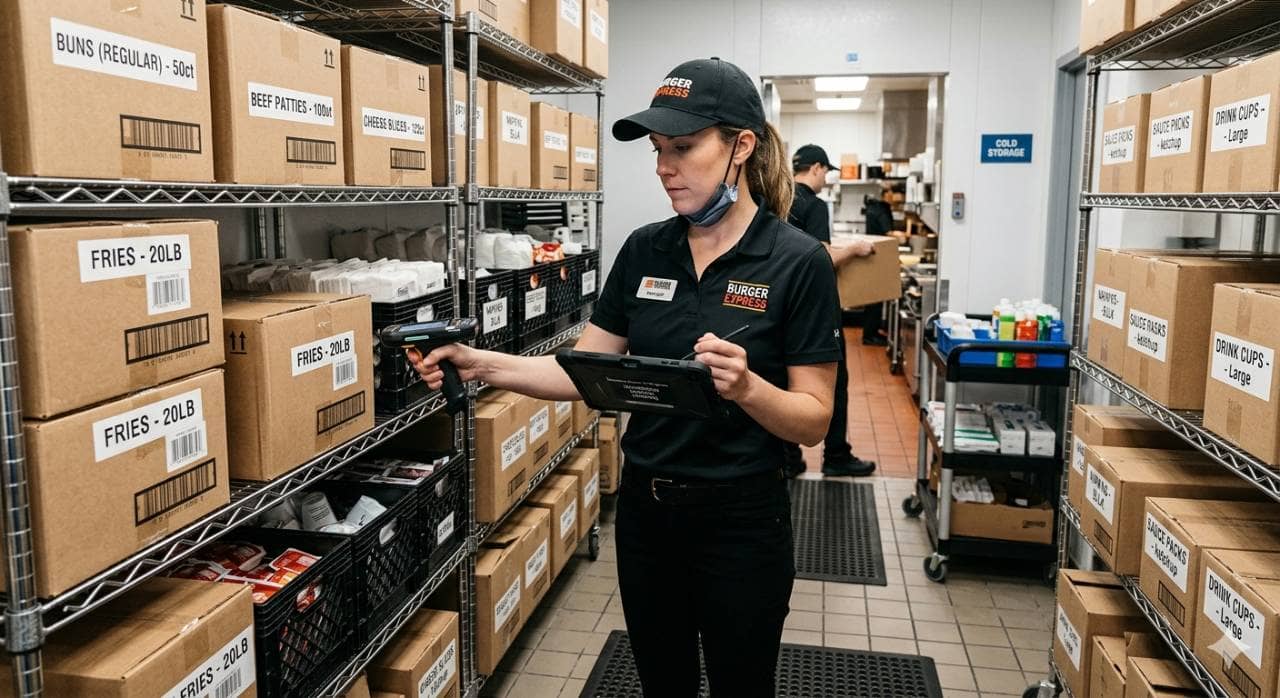
In many QSRs, inventory becomes inefficient not because people are unwilling to do it, but because the process itself is too manual, too repetitive, or too inconsistent. Counts may be done on paper, transferred later into another system, checked again because numbers do not look right, and then reviewed a third time when food cost reports do not match expectations. That kind of workflow creates duplicate work without creating better control.
This becomes expensive in several ways -
1. Higher management labor cost - Time spent fixing inventory issues is time not spent coaching staff, monitoring service, or improving execution.
2. Delayed reporting - If counts take too long to complete or verify, ordering and cost decisions are made later than they should be.
3. More room for error - The more times data is written down, transferred, or rechecked manually, the more opportunities there are for mistakes.
4. Reduced operational focus - Managers stuck in the back office are less available to manage throughput, guest issues, and team performance during active shifts.
A well-run inventory process should be structured, repeatable, and efficient. Managers should know what to count, how to count it, when to count it, and where the information goes next. The goal is not just to finish inventory faster. The goal is to create a process that produces accurate numbers without consuming unnecessary time.
If your team is constantly recounting, correcting, and chasing down missing information, the issue is not just that inventory takes too long. It is that the process is not built for consistent execution. And when inventory takes too much time to manage, it ends up costing money twice - once in labor, and again in weaker operational control.

Sign 5. Different Shifts Report Different Inventory Results
When different managers, shifts, or locations report different inventory results for the same process, that is a major warning sign. Inventory only helps you control costs when the data is consistent. If the numbers change depending on who counts, when they count, or where they count, the process is not giving you reliable visibility.
This problem is common in QSR operations because inventory routines often depend too heavily on individual habits. One manager may count partial cases one way, while another estimates them differently. One shift may weigh product accurately, while another uses visual judgment. One location may follow count schedules closely, while another completes them late or skips steps entirely. The result is inconsistent data that makes it difficult to compare performance or trust what the numbers are saying.
That inconsistency creates real cost pressure -
1. Unreliable ordering decisions - If on-hand counts are not measured the same way, stores will over-order or under-order based on inaccurate starting points.
2. Poor multi-unit visibility - Owners cannot compare locations fairly when count methods, units, and routines are different from store to store.
3. Weaker variance tracking - It becomes harder to tell whether a variance reflects real waste, theft, over-portioning, or simply inconsistent counting.
4. Lower accountability - When the process is not standardized, it is difficult to identify whether the issue is execution, training, or system design.
A strong QSR inventory process should produce the same result no matter who performs it. That requires clear count procedures, standard units of measure, defined count times, and manager training that removes guesswork from the process. Inventory should run on a system, not on personal interpretation.
If your stores or shifts are reporting different answers to the same inventory question, the issue is not just inconsistency. It is a lack of operational standardization. And without standardization, inventory data stops being a management tool and becomes just another unreliable report.
What Strong QSR Inventory Should Control
A strong QSR inventory process is not just about knowing what is on the shelf. It is about creating control across purchasing, usage, and reporting so that every decision is based on accurate, timely data.
At a practical level, your inventory process should help you control five core areas -
1. Inventory Accuracy - Counts should reflect what is actually in the store - consistently. That means standardized counting methods, clear units of measure, and disciplined routines that eliminate guesswork.
2. Ordering Precision - You should be able to order based on real usage and current on-hand levels, not assumptions. This reduces both stock-outs and over-ordering, helping you keep inventory lean without risking availability.
3. Food Cost Stability - When inventory data is reliable, food cost becomes predictable. You can identify real changes - like supplier price increases or portion issues - without second-guessing the numbers.
4. Waste and Variance Visibility - A strong process makes it easier to track what is being lost and why. Whether it is spoilage, over-prep, or shrink, you should be able to spot patterns and take action quickly.
5. Operational Efficiency - Inventory should not slow your team down. The process should be structured enough that managers can complete counts efficiently and spend more time running the operation instead of fixing data.
When these controls are in place, inventory shifts from being a reactive task to a proactive system. Instead of chasing problems after they appear, you prevent them by having clear visibility into what is happening in real time.
For QSR owners, this is where real efficiency comes from. Not from counting more often, but from building a process that produces accurate information, supports better decisions, and keeps operations consistent across every shift and location.