Customer Service Training Topics Every Restaurant Should Cover
Restaurant owners can standardize guest experiences by using customer service training covering brand standards, communication, menu knowledge, pacing, recovery, and safety.

Overview
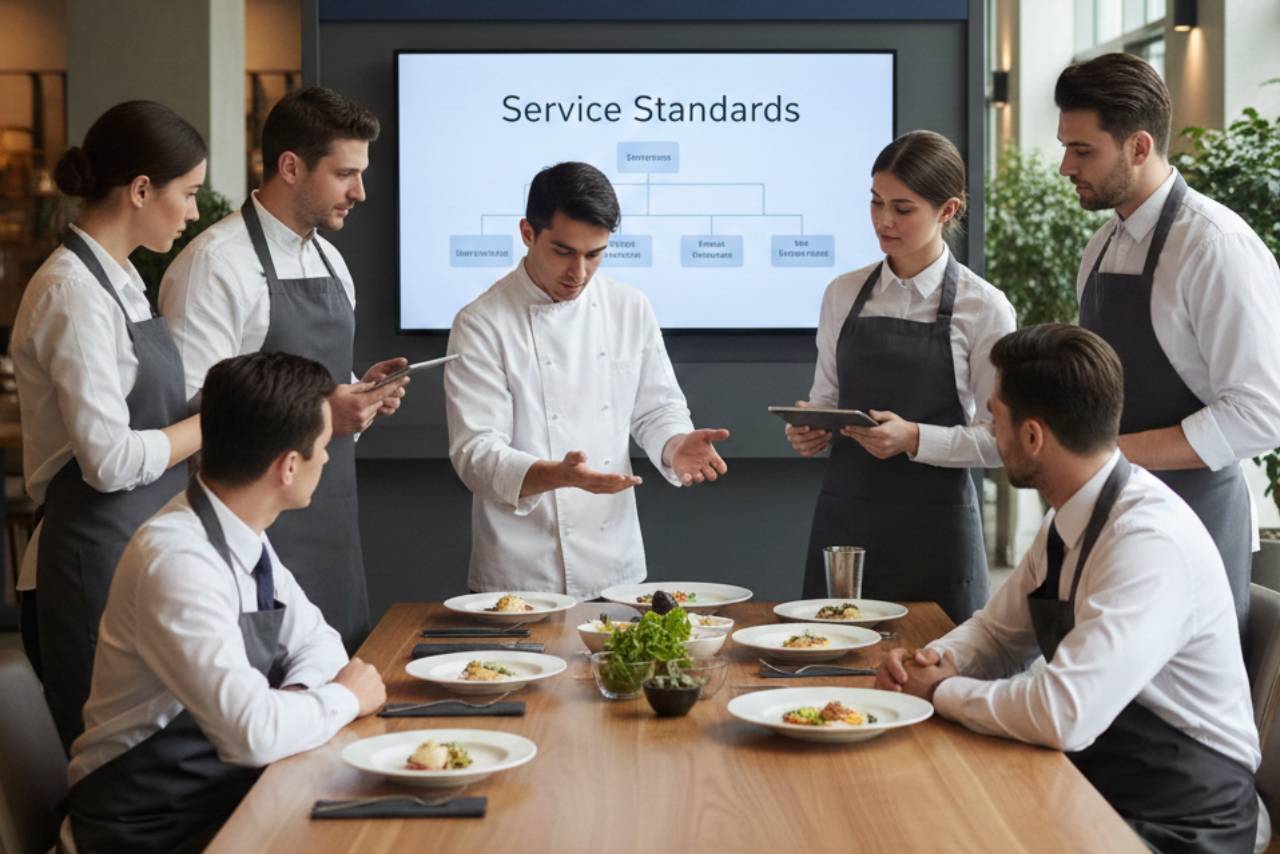
Customer service training in a restaurant isn't a motivational speech about "being friendly." It's a repeatable set of standards that tells your team exactly what great service looks like - on a slow Tuesday and during the Saturday dinner rush. When it's done right, service becomes consistent because the expectations are clear, measurable, and teachable. You're not hoping someone "has it." You're building it into how the restaurant runs.
In practical terms, customer service training covers the full guest experience - how quickly guests are greeted, how accurately orders are taken, how issues are handled, how often tables are checked, and how the meal is closed out. It also defines role ownership. For example, who makes eye contact first when a guest walks in? Who gives wait-time updates? Who watches for refills? Who does the two-bite check? When everyone knows the answers, service stops being random.
Brand Standards and First Impressions
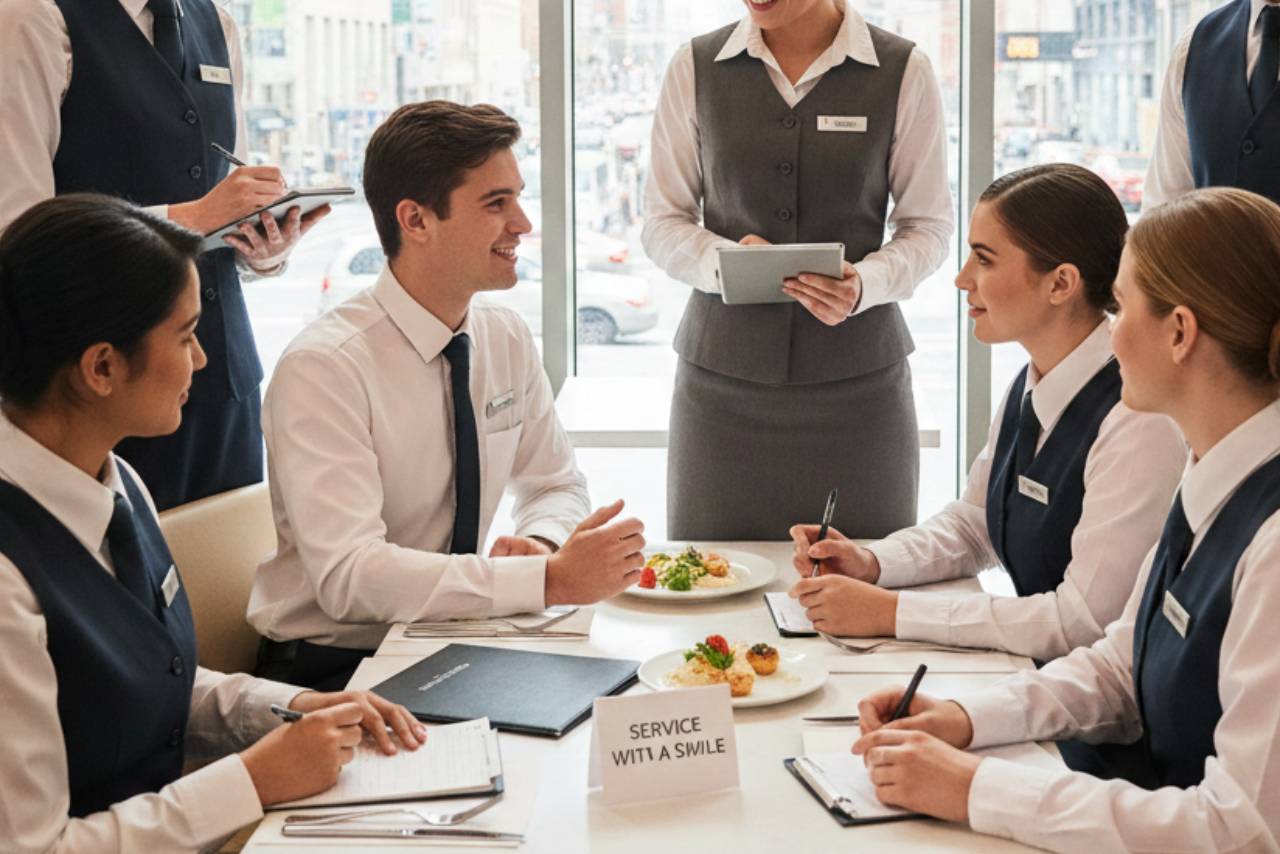
First impressions in a restaurant aren't just about being polite - they're about making guests feel oriented, welcomed, and confident that they picked the right place. That starts with brand standards, which are the "non-negotiables" your team can execute the same way every shift. If you don't define them, every employee invents their own version of service, and the guest experience becomes inconsistent fast.
Begin by mapping the first five minutes of the guest journey - (1) Arrival (2) Greeting (3) Wait/seat (4) First touch (5) First order step. Then turn that journey into clear expectations. For example, define how quickly guests should be acknowledged when they walk in (even if the host is busy) - eye contact, a smile, and a quick "Hi - be right with you." That two-second acknowledgment reduces frustration more than almost anything else. If there's a wait, decide what "good" looks like- guests get an estimated wait time, how often updates happen, and what language you want used (avoid vague phrases like "soon" or "just a few minutes").
Brand standards also include the tone of service. Are you casual and fun, calm and upscale, fast and efficient, or high-energy? Your team should know what that sounds like in real words. Give them examples of phrases that match your style, plus phrases you don't want (anything defensive, dismissive, or overly informal). This matters because guests don't just judge the food - they judge how the restaurant makes them feel.
Finally, set role-based standards for appearance and readiness - clean uniform, name tag (if used), notepad/pen, menu knowledge basics, and "heads up" posture. The goal is simple - when a guest walks in, they should immediately feel like the restaurant is prepared for them. That's what turns first-time visitors into regulars.
Communication and Team Handoffs
Most service problems aren't caused by a rude employee - they're caused by broken communication. A guest experiences that breakdown as "slow," "confusing," or "they forgot us," but behind the scenes it's usually a missed handoff, an unclear expectation, or a message that never made it from one station to another. That's why communication training should be treated as a core customer service topic, not a "soft skill."
Start with the basics your team can practice every shift - repeat-back and confirm. Servers should repeat the order highlights (especially modifiers, temps, allergens, sides, and timing requests) before sending it. Hosts should confirm party size, seating preferences, and estimated wait times out loud so the guest hears certainty. If you run food, train runners to announce the dish clearly ("Chicken teriyaki, no sesame") and confirm it lands with the right guest when needed. These small habits prevent remakes and reduce the awkward "who ordered what?" moment that makes service feel sloppy.
Next, define your FOH - BOH handoff rules. If you have an expo, train the cadence, what gets called out, what gets acknowledged, and what requires a stop-and-confirm (allergies, re-fires, missing items). If you don't have a formal expo, decide who owns checking the window and who communicates delays. Guests don't mind waiting as much as they mind not being informed - so train the team on when to update tables and what language to use ("Your entrees are taking a little longer than usual; I'll check on them and keep you posted").
Shift changes are another common failure point. Create a simple handoff checklist - open tabs, table status, comps, special requests, and any guest who's unhappy or waiting on a fix. If you train this as a required step - not optional - guests stop falling through the cracks.
Finally, teach escalation and professionalism - what staff can solve independently (refills, small fixes, quick remakes) versus what requires a manager (major complaints, intoxication concerns, harassment issues). Strong communication makes service feel effortless, because guests never see the internal chaos - they only see a team that's coordinated and confident.
Menu Knowledge and Suggestive Selling
Menu knowledge is one of the fastest ways to make service feel "professional" instead of "order-taking." Guests can tell immediately when a server or cashier understands the menu, can answer questions confidently, and can guide them toward a good choice. Your customer service training should define exactly what knowing the menu means - because it's more than memorizing ingredients.
Start with a minimum menu knowledge standard for each role. Hosts should know basic menu categories and common guest questions ("Do you have gluten-free options?" "Are there kid items?" "How spicy is that?"). Servers and cashiers should know - top sellers, portion sizes, prep style (fried vs grilled), common modifiers, and what dishes take longer. Managers should know the menu at a deeper level so they can support allergy questions and handle complaints without guessing.
Allergens and special requests need a dedicated training block. Staff don't need to be dietitians, but they must know the difference between "I don't like onions" and "I have an onion allergy," and they must know the correct response, don't promise - verify. Train a simple phrase like, "Let me confirm with the kitchen so we get this right," and make it a standard. This protects guests and prevents your team from improvising in a high-risk area.
Then teach suggestive selling as helping the guest decide, not pushing expensive items. A simple framework works well -
1. Ask. "Are you in the mood for something lighter or more filling?"
2. Match. Identify 1-2 items based on their answer.
3. Recommend. Give a confident, short reason ("It's our most popular," "It's quick," "It pairs well with...").
Also train the timing of suggestions. The best moment to recommend an add-on is when it improves the meal (a side, a sauce, a drink pairing), not as a random upsell. And keep it genuine - two strong suggestions are better than ten weak ones.
Finally, standardize how to confirm modifiers to prevent mistakes - repeat the order with key details, make eye contact, and confirm any unusual request. Accurate, confident menu guidance builds trust - and when guests trust your team, they spend more, complain less, and come back more often.
Speed, Timing, and Table Management
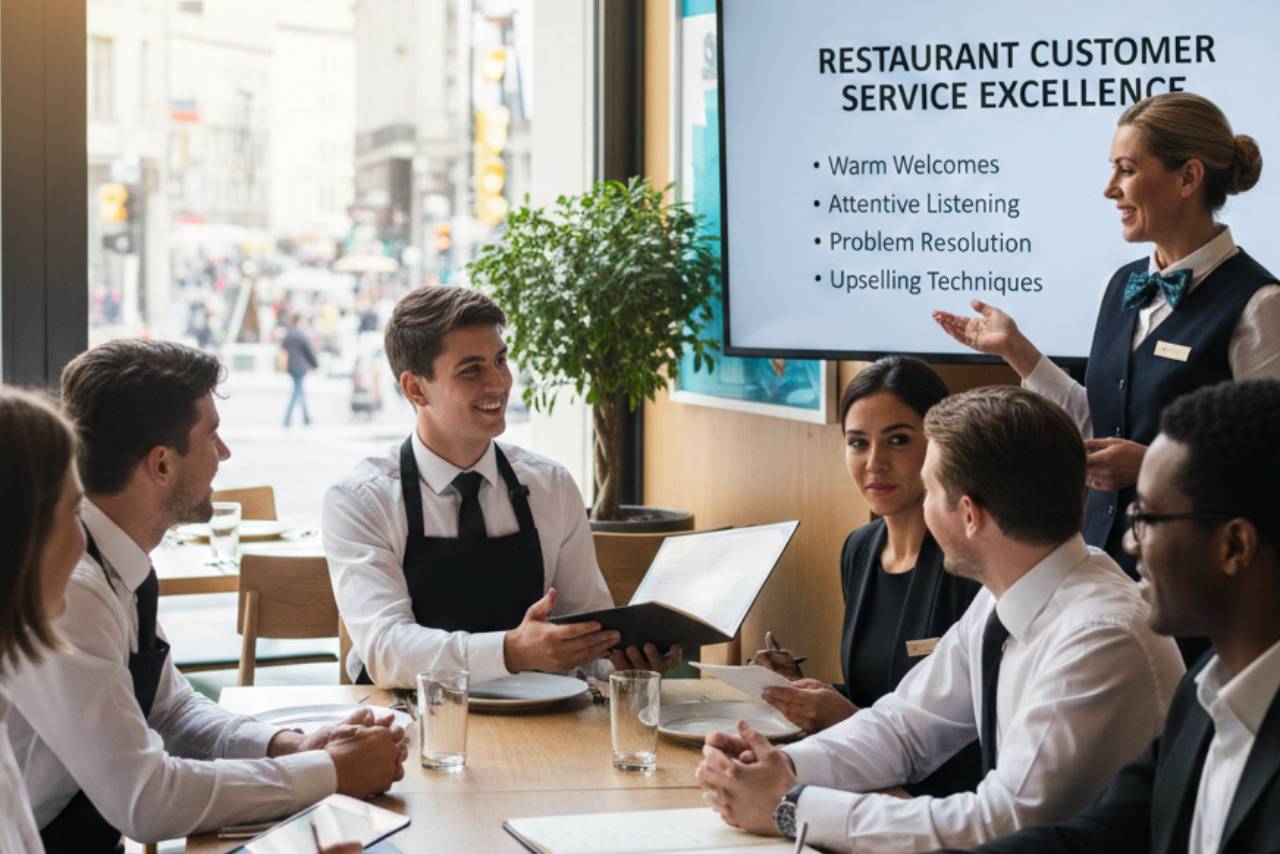
Speed is one of the most misunderstood parts of customer service. Guests don't always need everything to be fast - they need it to feel controlled, intentional, and communicated. A well-paced experience can still take time, but it shouldn't feel like the restaurant forgot them. That's why timing and table management must be trained as a system, not left to "common sense."
1) Define pace-of-service standards - Start by setting clear expectations for key moments- greeting time, drink order timing, first table touch, refills, check-ins after food drops, and check delivery. These don't need to be rigid, but they should be consistent enough that new employees know what good looks like. For example- greet within one minute, first check-back within two minutes after the food hits, refill before the glass is empty. Standards like these prevent the biggest service complaints- slow starts and disappearing servers.
2) Train what to do - Guests usually tolerate delays if they're acknowledged early. Teach staff to update proactively using confident language - "Your entrees are taking a bit longer than usual; I'm checking on them now and I'll keep you posted." Train what not to say too - avoid "I don't know," "The kitchen is slammed," or blaming other team members. The goal is to keep the guest informed without creating anxiety.
3) Teach prioritization - When it's busy, staff need a simple mental checklist. A useful rule is, (1) Acknowledge (2) Accuracy (3) Urgency. Always acknowledge guests quickly, protect order accuracy, then move with visible urgency. Even a five-second touch at a table ("I see you - I'll be right back with waters") can prevent a negative review.
4) Align hosts, servers, and managers - Table management breaks down when the host seats too fast, sections are uneven, or servers aren't ready. Train a seating rhythm- balance covers across sections, pause seating when the kitchen is overloaded, and use waitlist quotes that match your real capacity. Managers should be trained to step in and control flow when the room starts outpacing the line.
The last five minutes can ruin the whole visit if payment is slow or confusing. Train best practices - confirm split checks early, repeat payment requests, return cards quickly, and close with a genuine goodbye. Fast, clean checkout leaves guests with a final impression of competence - and that's what they remember when deciding whether to come back.
Handling Mistakes, Complaints, and Angry Guests
Mistakes happen in every restaurant. What separates a "never again" guest from a loyal regular is how your team responds when something goes wrong. Complaint handling isn't a personality trait - it's a trained process. When staff know exactly what to say, what to do, and when to involve a manager, issues get resolved faster and with less drama.
1) Train a simple service recovery model - Give your team a repeatable flow - (1) Listen (2) Apologize (3) Solve (4) Confirm (5) Follow up. Listening means letting the guest finish without interrupting or getting defensive. Apologizing doesn't mean admitting fault - it means acknowledging the experience ("I'm sorry this wasn't right"). Solving means offering clear next steps. Confirming is making sure the guest agrees with the fix. Following up is a quick return to verify the solution landed.
2) Create "approved responses" - Most complaints fall into predictable buckets - food is wrong, food is cold, order is late, table isn't clean, noise is too high, or a staff member was short. Train 1-2 example phrases for each bucket so employees aren't improvising under stress. Consistency matters here - guests feel more confident when the response is calm and professional.
3) Clarify what staff can fix vs what requires a manager - A big reason complaints escalate is hesitation. Define what frontline staff can do immediately (refire an item, replace a side, remake a drink, move a table when possible) and what must be escalated (allergy incidents, intoxication concerns, harassment, major comps, threats, or repeated issues). The faster the right person owns the problem, the faster it resolves.
4) Set guidelines - Without guidelines, every employee makes a different call - leading to inconsistency and higher costs. Establish a simple decision tree - when to remake, when to replace, when to offer an alternative, and when a discount is appropriate. Train staff to frame solutions clearly ("We can remake it immediately, or I can bring you a different option that's faster - what would you prefer?"). Giving choices helps guests feel respected.
The key is to keep tone neutral and helpful. Train staff to avoid phrases that inflame ("That's not our fault," "I can't do anything," "You should have told us earlier"). Replace with ownership language ("Let me take care of that," "Here's what I can do right now," "Thank you for letting us know"). When your team stays composed, most "angry guest" situations shrink quickly - and your restaurant's reputation benefits immediately.
Safety, Compliance, and Guest Trust
Customer service isn't only about being friendly - it's also about making guests feel safe. The fastest way to lose trust is to be careless with allergies, alcohol service, accessibility, or payment handling. These topics should be part of customer service training because guests experience them as "service quality," even when they're really operational and compliance issues.
1) Food safety and allergy protocol - Train a clear rule - if a guest mentions an allergy, it becomes a process, not a preference. Staff should know how to respond without guessing- acknowledge, verify with the kitchen, and confirm the final plan back to the guest. Teach the basics of cross-contact risk (shared fryers, shared prep surfaces) in plain language so staff don't overpromise. The goal is consistency - every employee handles allergy-related questions the same safe way.
2) Alcohol service basics - If you serve alcohol, train ID checks as a standard operating habit - when to card, what's acceptable ID, and how to spot obvious issues. Also train respectful refusal language that keeps staff safe and calm. Employees should know when to call a manager, how to avoid arguing, and how to keep the interaction discreet. This protects your license and prevents volatile situations from spilling into the dining room.
3) Accessibility and respectful guest support - Guests with disabilities should never have to "fight" for a normal experience. Train respectful behaviors - speaking directly to the guest (not only to companions), offering help without assuming, keeping aisles clear, and handling seating requests with care. Even simple habits - like not blocking pathways with highchairs or bus tubs - signal that your restaurant is organized and considerate.
4) Privacy, payments, and guest data handling - Train staff to treat payment information and receipts as sensitive. Cards should be returned promptly, receipts should not be left visible, and any issue with a charge should be escalated quickly and professionally. If you capture guest contact info (waitlist, loyalty, catering), train employees not to share it casually and to follow your restaurant's basic privacy practices.
Service teams deal with difficult guests sometimes, and your training should make it clear - employees deserve a safe workplace. Train what to do if a guest is inappropriate, threatening, or harassing - who to notify, what language to use, and how management will back them up. When staff feel protected, they're more confident and consistent with guests - and that confidence reads as great service.
How to Teach, Test, and Reinforce These Topics
A list of customer service topics doesn't improve service unless your team can actually learn and repeat them under pressure. The strongest restaurants treat training like a system - clear expectations, consistent practice, simple testing, and ongoing reinforcement. The goal isn't perfect employees - it's consistent execution.
1) Build an onboarding flow - Break training into phases instead of dumping everything on day one. Day 1 should cover essentials - brand standards, guest greeting, basic menu orientation, allergy "verify, don't promise," and how to ask for help. Week 1 expands into role-specific skills (POS flow, table touches, complaint recovery, pacing). The first 30 days should include coaching check-ins, skill milestones, and a clear definition of what "ready" means.
2) Use the right training methods - Service is performance plus timing, so reading a handbook isn't enough. Use a mix of -
- Shadowing (watch the job done well)
- Role-play (practice tough scenarios like complaints and wait-time updates)
- Checklists (reduce memory load during busy shifts)
- Micro-quizzes (menu, allergens, policies)
- Pre-shift huddles (one focus point per shift)
Role-play is especially valuable because it trains tone, confidence, and wording - exactly what guests notice most.
3) Teach managers how to coach in the moment - Training lives or dies by coaching. Managers should correct quickly, privately, and clearly - what happened, what the standard is, and what to do next time. Avoid long lectures mid-shift. The best coaching is specific and immediate ("Greet within 30 seconds - if you're busy, acknowledge and set an expectation").
4) Define milestones - Make expectations measurable. Examples - demonstrate the greeting standard, pass a menu basics check, complete an allergy protocol scenario, handle a complaint role-play using the recovery model, and complete a shift-change handoff correctly. When employees know what they're working toward, training becomes faster and fairer.
Service quality slips when training stops. Build lightweight reinforcement - weekly feedback from managers, monthly refresh topics, and a simple way to capture recurring issues (common comp reasons, remake patterns, review themes). When you treat training as ongoing maintenance, your guest experience becomes stable - and that stability is what drives repeat business.