How to Prepare for a Restaurant Health Inspection
Use daily routines, temperature control, sanitation systems, clear labeling, and organized records to stay ready for any restaurant health inspection.


What a Health Inspector Is Looking For
A health inspection is a structured check for the risks that most often lead to foodborne illness and unsafe conditions. When you understand what inspectors are trained to look for, your prep becomes a lot simpler because you're focusing on the same priorities they are.
In most restaurants, inspectors evaluate three big areas - food safety controls, employee practices, and facility sanitation. Food safety controls are the backbone. That means keeping foods out of the temperature danger zone, following safe cooling and reheating steps, preventing cross-contamination between raw and ready-to-eat foods, and using approved sources and storage methods. Inspectors also look for proof that these controls are happening consistently - usually through your habits and your logs.
Employee practices are another major focus because people are often the "weak link" without clear routines. Inspectors pay attention to handwashing, glove use, illness policies, and whether staff understand basic safety rules (like using clean utensils, not wiping hands on aprons, and keeping drinks in approved containers away from prep areas). If a hand sink is blocked, missing soap, or used for dumping drinks, it's a red flag.
Finally, facility sanitation matters because a dirty or poorly maintained space creates ongoing risk. Inspectors check cleanliness of food-contact surfaces, sanitizer setup, dishwashing processes, pest prevention, waste handling, and general maintenance like floors, drains, and storage. Think of the inspection as a snapshot of your everyday operation. The best strategy is to build an operation that looks "inspection-ready" on a random Tuesday - not just after a panic clean-up.
Know the Most Common Violations
If you want the fastest way to prepare for a health inspection, start by eliminating the issues that show up over and over again. Most violations fall into a handful of categories - meaning you can prevent a large percentage of problems by tightening a few routines.
1. Time and temperature control is one of the biggest. Inspectors commonly find cold foods not held cold enough, hot foods not held hot enough, and cooling done too slowly. This often happens when staff don't verify product temps (they assume), when pans are too deep, when food is packed too tightly in the walk-in, or when hot holding is treated like warming instead of holding at a safe temperature. If you do nothing else, make temperature checks non-negotiable and easy to complete.
2. Next is cross-contamination. Common mistakes include raw chicken stored above produce, shared cutting boards, raw and ready-to-eat foods handled with the same gloves, and utensils being used across stations without washing or sanitizing. Even a clean kitchen can fail here if the flow is messy. Storage order and clear station rules fix most of this.
3. Handwashing and glove use is another frequent problem area. Inspectors will watch behavior, not just check sinks. If hand sinks are blocked, missing soap/paper towels, or staff are skipping handwashing between tasks, it will get noticed quickly. The simplest solution is to keep sinks accessible and stock-checked every shift.
Then there's sanitation - dirty food-contact surfaces, sanitizer buckets that aren't at the right concentration, and wiping cloths used incorrectly. Add in labeling and date marking, chemical storage, pest evidence, and trash handling, and you've got the core prep map. Treat these categories as your weekly audit checklist - because if you control these, most inspections go smoothly.
Build Your Daily Routine
The biggest difference between restaurants that panic before an inspection and restaurants that stay calm is simple - a daily routine that catches issues early. Health inspection prep isn't a one-time deep clean - it's a set of repeatable checks that keep your kitchen ready on any shift, any day.
Start with a 10-15 minute opening walk-through led by a manager or shift lead. This is not a vague "looks good" lap. It should be the same core checks every day - hand sinks stocked and accessible, sanitizer set up and tested, all cold units reading at safe temps, hot holding started correctly, and prep areas clean and organized. If your operation uses logs, opening is when you make sure they're ready and easy to complete (clipboards in the right place, thermometers working, test strips available).
Next, build two quick mid-shift checkpoints - one around the start of your rush and one after the rush. These are the moments when standards slip - gloves get reused, labels get skipped, and towels end up everywhere. A good checkpoint includes- verify sanitizer concentration, spot-check a few product temps (not just cooler air temp), confirm raw items are stored correctly, and make sure wiping cloths are stored properly.
Then lock in a closing reset. The goal is that the next opening shift starts clean, labeled, and organized. Closing should include - discard expired or unlabeled food, label and date anything saved, store food in the correct order, empty trash and clean waste areas, and clean and sanitize food-contact surfaces. If you consistently reset at close, you reduce the chance of being caught off guard by a surprise visit.
The final piece is clear ownership. Don't assign "the team" to do inspection prep. Assign specific roles - who checks sinks, who checks temps, who checks labels, who tests sanitizer, and who signs off. When responsibilities are clear, compliance becomes routine - not a scramble.
Lock In Food Safety Controls
If inspectors could only check one thing, it would probably be time and temperature control, because it's directly tied to foodborne illness risk. The easiest way to stay inspection-ready is to treat temperature control like a daily operating standard - not a "when we remember" task.
First, make sure you have the right tools and that they work. You need reliable probe thermometers (ideally more than one), sanitizing wipes or alcohol swabs for the probe between uses, and a simple method for calibration checks. A thermometer that's off by a few degrees can turn "safe" food into a violation, so build calibration into your weekly manager routine.
Next, focus on the three most common trouble spots - cold holding, hot holding, and cooling. Cold holding problems usually come from overfilling reach-ins, storing warm product directly in the cooler, or relying on the unit display instead of checking actual food temps. Train staff to spot early warning signs - condensation buildup, doors left open, product packed too tight, or a cooler that "struggles" during rushes.
Hot holding problems happen when food is placed into holding equipment before it's properly heated, or when lids are left off and temps drop. Hot holding is for maintaining temperature - not cooking. Make it standard to verify the temp of the food going into holding, not just the equipment setting.
Cooling is where many kitchens get dinged because it's easy to do "mostly right" but still too slow. Use shallow pans, don't stack deep containers, allow airflow, and avoid covering hot food tightly until it cools enough. If you use a cooling log, make it practical - include the food item, start time, target checkpoints, and initials.
Finally, reheating should be treated as a controlled process, not guesswork. Reheat quickly, verify with a probe thermometer, and only then move food into hot holding. When you combine clear procedures with easy logs and regular spot checks, you reduce both risk and inspection stress.
Prevent Cross-Contamination and Allergen Mistakes
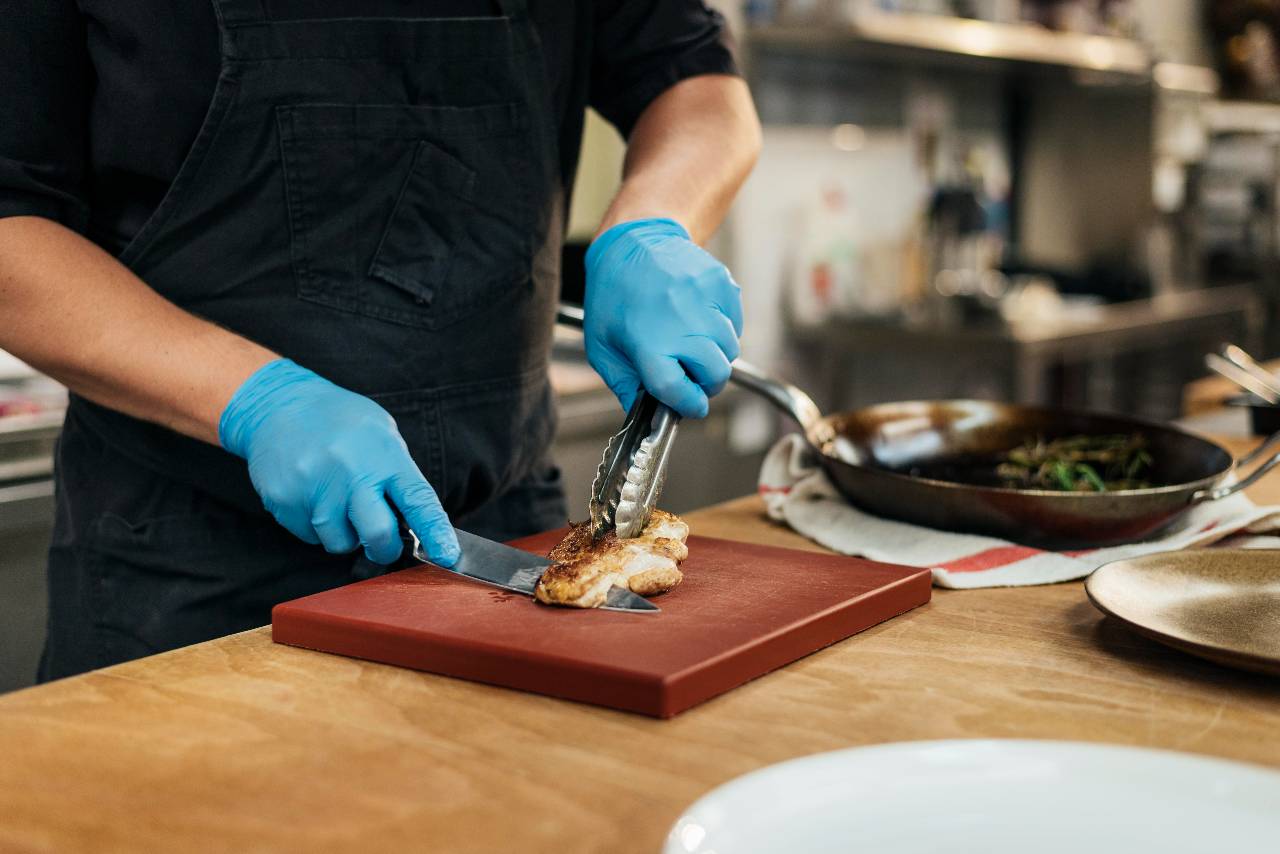
Cross-contamination can happen even in a kitchen that looks clean. Inspectors pay attention to how food moves through your operation - how you store it, prep it, and serve it - because one small mistake (raw chicken above produce, the same gloves touching raw and ready-to-eat food) can create a serious risk.
1) Storage Order - In every cooler, store ready-to-eat foods and produce above raw items to prevent drips or spills onto food that won't be cooked again. Use clear shelf labels or zone markers so the right place is obvious to every employee, not just your best line cook.
2) Create a simple prep flow - The rule is straightforward- handle (1) raw food (2) clean and sanitize (3) then touch ready-to-eat food. Use color-coded cutting boards and utensils if you have them, but the real key is the habit of swapping tools and wiping down surfaces before switching tasks. If space is tight, schedule raw prep first, then reset the station before moving to ready-to-eat items.
3) Control towels, wiping cloths, and sanitizer use - Wiping cloths can spread contamination quickly when they're used everywhere. Keep cloths stored in sanitizer between uses, test sanitizer strength on schedule, and replace cloths often - especially during rush periods when standards slip.
4) Use a clear, repeatable allergen routine - Allergen safety doesn't need to be complicated - it needs to be consistent. When an allergen order comes in - wash hands, change gloves, use clean utensils, and work on a cleaned surface (or a dedicated area if possible). Keep allergen ingredients clearly labeled and organized so staff don't grab the wrong container in a hurry.
When these rules become normal daily behavior, you're not "prepping for inspection." You're running a safer kitchen that naturally holds up under inspection.
Sanitation That Holds Up Under Inspection
Sanitation is where many restaurants lose points because they "clean," but don't consistently clean and sanitize the right things at the right frequency. Inspectors will look for visible cleanliness, but they also look for systems - how you sanitize food-contact surfaces, how you wash dishes, and whether your process is consistent across shifts.
1) Separate "cleaning" from "sanitizing" - Cleaning removes grease, crumbs, and food residue. Sanitizing reduces germs after the surface is clean. If you sanitize a dirty surface, it doesn't count. Train your team with one plain rule - clean first, sanitize second, and let it air dry.
2) Make sanitizer setup measurable - Sanitizer buckets and spray bottles should be at the correct concentration, and the only way to prove that is with test strips. Build a routine - set up sanitizer at open, test it at open, and re-test at least once mid-shift (more during heavy volume). If the sanitizer is too weak, it's a compliance problem. If it's too strong, it can be a safety issue and can damage surfaces.
3) Food-contact and high-touch surfaces - Inspectors don't just care about the back wall of the walk-in. They notice cutting boards, prep tables, slicers, can openers, ice scoops, soda nozzles, and handles/buttons that get touched all day. Create a simple schedule - "wipe and sanitize every X minutes" for prep areas and "after every use" for shared equipment.
4) Tighten your dishwashing process - Whether you use a dish machine or a 3-compartment sink, your process has to be consistent. For a 3-compartment sink, staff should know the sequence and basics - wash, rinse, sanitize, then air dry. For dish machines, keep the area clean, confirm the machine is running correctly, and make sure staff aren't short-cutting by skipping steps when it gets busy.
5) Add a weekly deep-clean plan - Grease buildup, dirty drains, dusty vents, and neglected corners are common inspection notes because they show lack of control over time. Assign weekly tasks by station (not "someone will do it") and rotate responsibilities so nothing gets ignored.
When sanitation is routine and measured, your kitchen looks consistent - and consistency is what inspections reward.
Facility and Paperwork
Even if your food handling is solid, inspections can go sideways when the facility has obvious gaps or you can't quickly produce the records that prove your process. Think of this section as the "show your work" part of passing a health inspection.
1) Keep hand sinks inspection-ready - Hand sinks are one of the first things inspectors notice because they're tied directly to employee hygiene. Every hand sink should be unblocked, easy to access, and fully stocked with soap, paper towels (or an approved dryer), and hot/warm running water. Avoid using hand sinks for dumping drinks, storing tools, or rinsing containers - those habits are easy to spot and usually lead to violations.
2) Make the facility look maintained - Inspectors pay attention to the basics - clean floors, walls, and ceilings; working lighting; clean vents; and problem areas like drains that smell or collect buildup. If a cooler gasket is torn, a ceiling tile is stained, or there's standing water near a prep area, it signals ongoing risk. You don't need renovations - just a maintenance routine and quick fixes when issues show up.
3) Build simple pest prevention into daily operations - Most pest issues start with access and food sources. Keep doors closed or properly screened, store food off the floor, clean behind equipment on a schedule, and keep dumpster areas tidy with lids closed. If you use a pest control company, keep service documentation easy to find.
4) Create an "inspection binder" - When an inspector asks for proof, you should be able to pull it in seconds. Common items include permits/licenses, food safety training documentation, temperature logs, cleaning schedules, pest control reports, and equipment service records. Use a single binder or digital folder with clear tabs so any manager can find what's needed.
5) Tighten labeling for food and chemicals - Unlabeled containers are a classic violation because inspectors can't verify what something is or how old it is. Make labeling simple- date mark prepared foods, label all spray bottles and chemical containers, and ensure stored foods are covered and in approved containers when required.
If you keep your facility "walk-through ready" and your records organized, you remove a major source of inspection stress - searching for proof while the inspector is watching.