Is Your Restaurant Meeting ADA Compliance Standards?
Understand ADA compliance in restaurants by learning which areas matter most and how owners can create a more accessible experience.

The Operational Importance of ADA Compliance
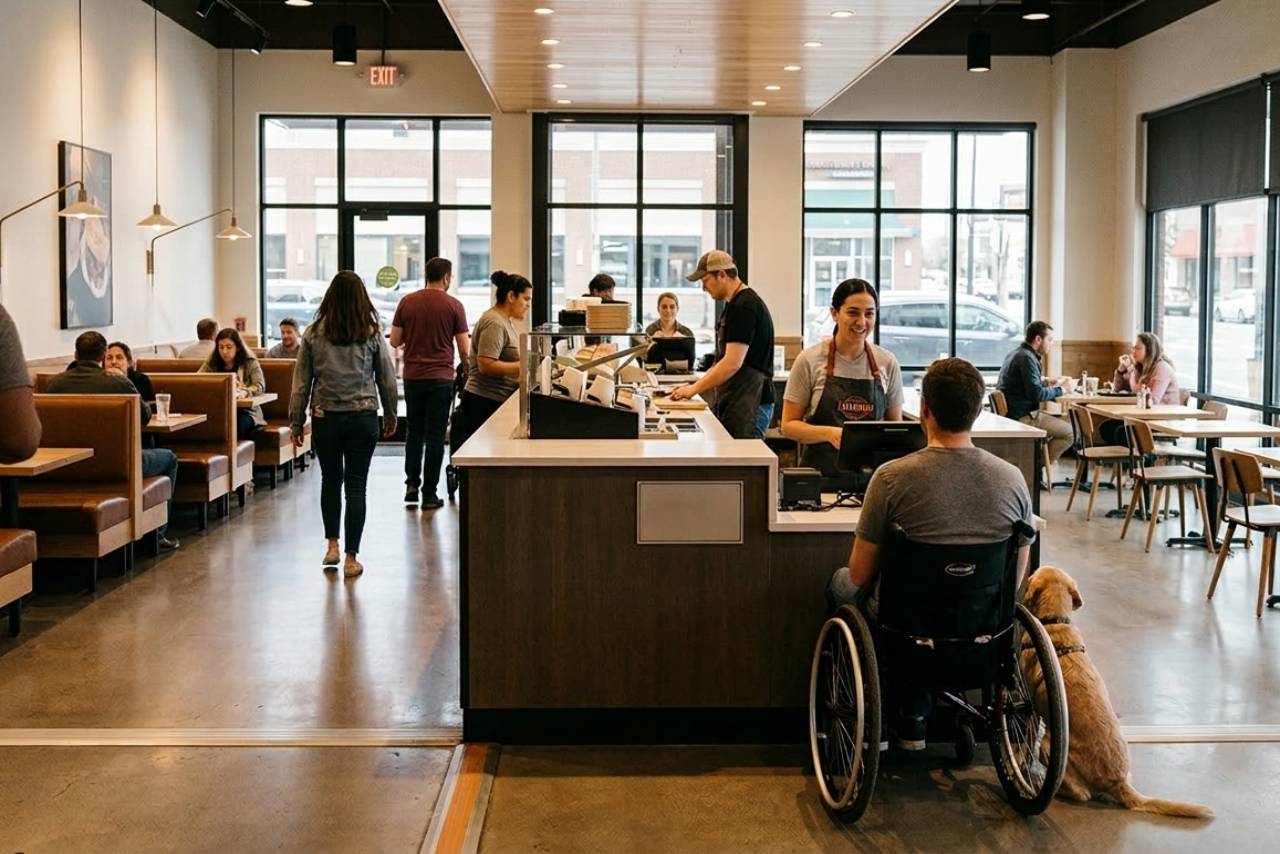
ADA compliance is important because it directly affects whether guests can enter the restaurant, move through the space, use key facilities, place orders, and enjoy the same level of service as everyone else. For restaurant owners, that makes ADA compliance both a legal responsibility and a day-to-day operational standard.
At a practical level, accessibility influences the full guest experience. A customer may face barriers before they even sit down. The parking area may be difficult to use. The front entrance may be hard to navigate. Tables may be too tightly arranged. Counters, restrooms, or pickup areas may not offer enough space or proper access. Even when these problems are unintentional, they can still create real obstacles for guests and expose weaknesses in how the business is set up.
There is also a clear business reason to pay attention. When a restaurant is easier to access, it is easier to serve more people well. Guests notice when a space feels welcoming, functional, and respectful of their needs. On the other hand, accessibility barriers can create frustration, slow service, increase staff intervention, and damage the guest experience before the meal even begins.
What ADA Compliance Covers in a Restaurant
ADA compliance in a restaurant covers much more than whether a wheelchair can fit through the front door. That is one part of accessibility, but it is not the full picture. For restaurant owners, ADA compliance should be understood as a broader standard that affects how guests access, move through, and use the business from start to finish.
In practical terms, ADA compliance touches nearly every part of the guest journey. It can apply to parking areas, sidewalks, entrances, doorways, host stands, waiting areas, dining rooms, service counters, restrooms, and outdoor seating. It can also affect self-service areas such as beverage stations, pickup shelves, condiment counters, and payment points. Each of these spaces should be reviewed not only for design, but for actual usability during normal operations.
This is important because accessibility barriers often show up in everyday details. A walkway may technically exist, but furniture placement may narrow it too much. A table may be available, but reaching it may be difficult during busy hours. A counter may work for some guests, but not all. In many restaurants, the issue is not one major flaw. It is a series of smaller barriers that add up and make the overall experience harder to navigate.
Restaurant owners should also remember that ADA compliance is not limited to physical layout alone. It can also involve how the business communicates and provides service. Guests need a fair opportunity to order, ask questions, receive assistance, and use restaurant services without unnecessary difficulty. That means accessibility should be reviewed through both a facility lens and an operations lens.
The key takeaway is simple. ADA compliance is not about checking one box or fixing one doorway. It is about understanding how the entire restaurant functions for different guests. Owners who look at accessibility across the full operation are in a much better position to identify risks, improve usability, and create a more consistent guest experience.
Entrances, Parking, and Paths of Travel
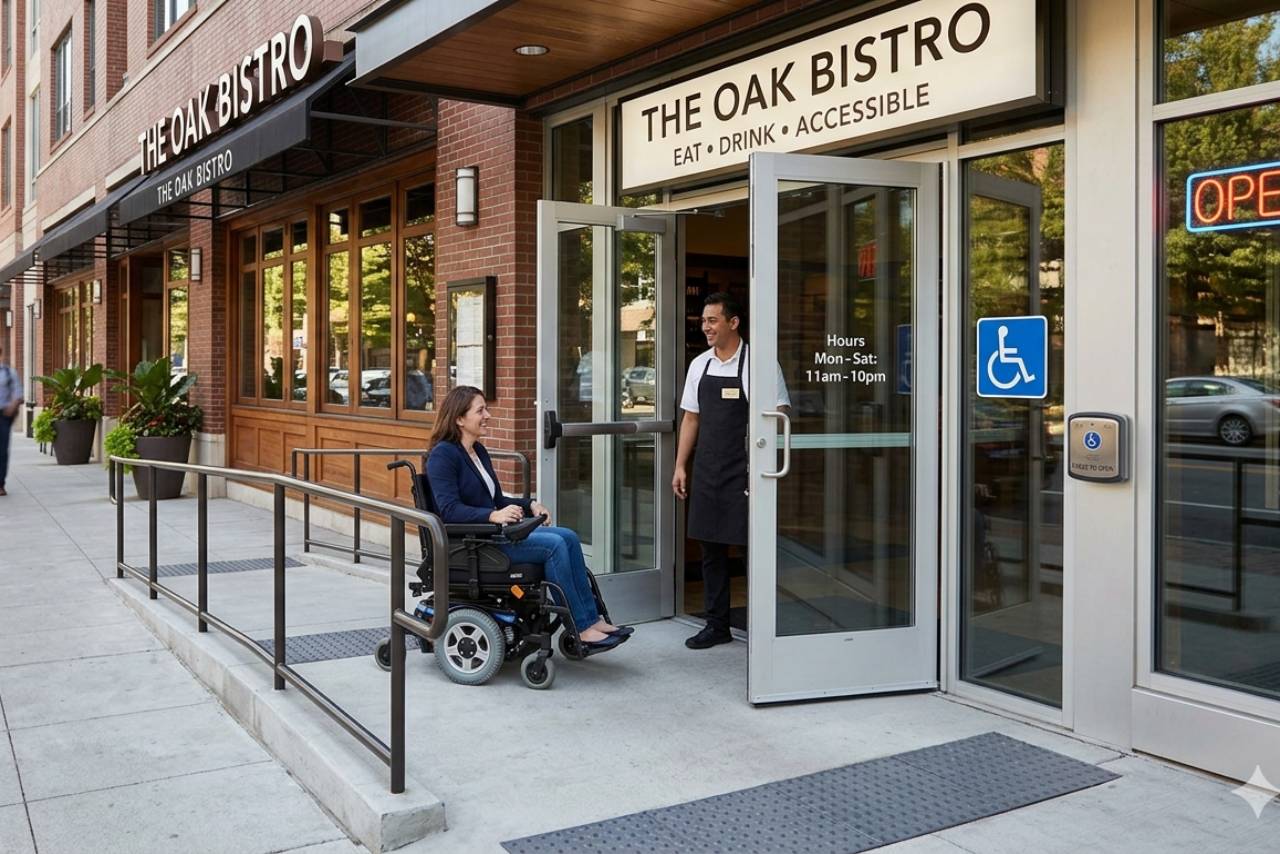
ADA compliance often starts before a guest ever reaches the table. For restaurant owners, that means accessibility should be reviewed from the moment a customer arrives on the property, not just once they enter the building. Parking access, the entrance, and the route through the restaurant all affect whether a guest can move through the space safely, comfortably, and independently. Even when the restaurant's layout seems functional, small barriers in these areas can create major access problems.
1. Parking - Accessible parking is one of the first areas owners should check. It is not enough to simply have a marked accessible space. The space also needs to be usable in practice. Owners should pay attention to location, visibility, surface condition, and whether access aisles are kept clear. If a guest cannot safely exit their vehicle or move from the parking area toward the building, the restaurant is already creating an obstacle before service begins.
2. Entrances - The entrance is another high-priority area. Doors that are too heavy, narrow entry points, raised thresholds, or limited maneuvering room can all make access more difficult. In many restaurants, the main issue is not just the doorway itself, but the objects placed around it. Signs, benches, planters, and promotional displays can reduce clearance and make the entry less usable during normal business hours.
3. Paths of Travel - Once inside, guests need a clear and practical route to key parts of the restaurant. This includes the host stand, dining room, service counter, restroom, and pickup areas. Tight furniture spacing, crowded waiting areas, stacked supplies, or temporary clutter can all interfere with access. A path may look open during setup, but become difficult to navigate once the restaurant is busy.
Restaurant owners should remember that accessibility is not only about design. It is also about daily operations. A space that works on paper can become nonfunctional when walkways are blocked or fixtures are moved. Regular walkthroughs help owners spot issues early and maintain a more accessible guest experience.
Dining Areas, Service Counters, and Seating Access
Dining room accessibility affects more than comfort. It affects whether guests can fully use the restaurant in a practical, independent, and respectful way. For restaurant owners, this means ADA compliance should be reviewed not only at the entrance, but throughout the places where guests sit, order, wait, and interact with staff. A restaurant can have an accessible front door and still create major barriers inside if the dining area and service points are not set up well.
1. Dining Area Layout - The overall floor plan plays a major role in accessibility. Guests should be able to move through the dining room without struggling around tightly placed tables, chairs, or decorative fixtures. In many restaurants, the problem is not the original design but how the space changes during daily operations. Extra chairs, high chairs, bussing stations, and temporary displays can narrow clear routes and make the dining area harder to navigate.
2. Accessible Seating - Accessible seating should feel like part of the normal guest experience, not an afterthought. Owners should make sure seating options are available in usable locations and are integrated throughout the dining area where possible. A guest should not feel limited to one inconvenient table simply because the rest of the layout is too restrictive. Good accessibility planning supports both equal access and a better overall service experience.
3. Service Counters and Guest Interaction Points - Counters are another area owners should review closely. This includes cashier stations, host stands, pickup counters, and payment areas. If these spaces are difficult to reach or use, guests may need more staff assistance than necessary. Owners should think about how guests place orders, ask questions, receive food, and complete transactions.
4. Self-Service Areas - Self-service stations such as beverage counters, condiment bars, utensil stations, and pickup shelves should also be considered. These are often overlooked, but they are part of the guest experience. If a guest cannot comfortably reach or use these areas, access is limited even if the rest of the restaurant seems functional.
In short, dining room accessibility is about usability. Owners should review how the layout works in real conditions, not just how it looks on paper.
Restroom Accessibility and Common Problem Areas
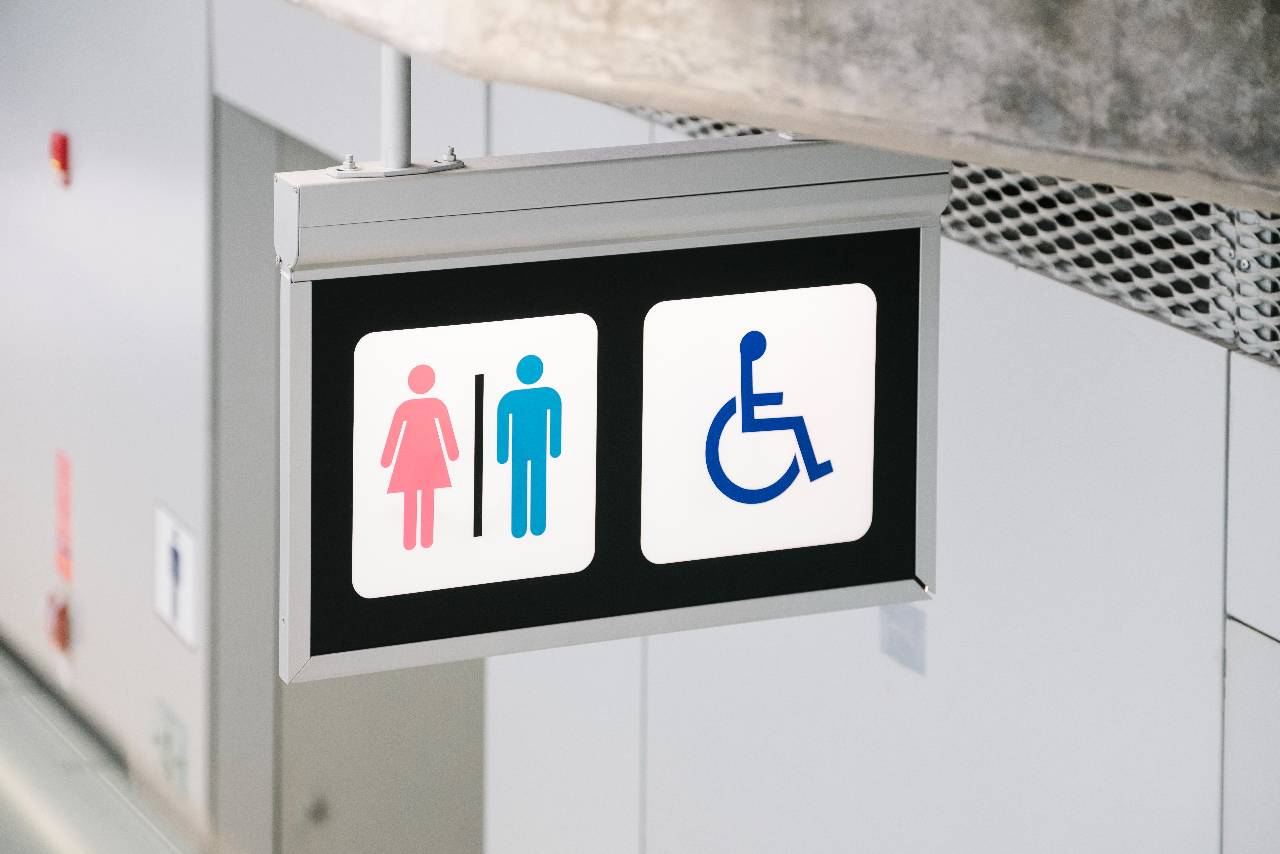
Restrooms are one of the most important areas to review when discussing ADA compliance in a restaurant. Even if the entrance, dining room, and service counter are accessible, the guest experience still falls short if the restroom is difficult to enter, navigate, or use. For restaurant owners, restroom accessibility is not a minor detail. It is a core part of whether the space works for guests in a practical and respectful way.
1. Entrance and Door Access - The restroom door and entry area are often the first problem points. A door may be too heavy, the clearance may be too tight, or the approach may be blocked by nearby furniture, trash bins, or cleaning tools. In some restaurants, the hallway leading to the restroom becomes a barrier because supplies or equipment are stored there during service. Owners should look at the full approach, not just the restroom itself.
2. Interior Space and Maneuverability - Once inside, guests need enough space to move comfortably. Tight layouts can make turning, positioning, and using fixtures much more difficult. A restroom may technically include the right elements, but if the layout feels cramped in actual use, accessibility problems remain. This is especially common in older buildings or smaller restaurant spaces where restroom design was not planned with accessibility in mind.
3. Fixtures and Usability - Owners should also review sinks, grab bars, mirrors, soap dispensers, paper towel units, and other restroom fixtures. If these are placed too high, too low, or in awkward positions, they can reduce usability. The issue is often not one major failure, but several smaller design choices that make the restroom harder to use overall.
4. Daily Conditions and Maintenance - Restroom accessibility is also affected by operations. Overflowing trash, broken fixtures, slippery floors, or poorly placed cleaning supplies can quickly turn an otherwise usable restroom into a problem area. That is why accessibility checks should be part of regular facility walkthroughs.
For restaurant owners, restroom compliance should be reviewed with the same seriousness as guest seating or service flow. It is one of the clearest places where accessibility either works well or breaks down.
Service Practices, Staff Training, and Everyday Operations
ADA compliance is not only about ramps, doorways, and restroom layouts. It also depends on how the restaurant delivers service every day. A space may look accessible on paper, but the guest experience can still break down if employees are not trained to respond appropriately, communicate clearly, or support access in a respectful way. For restaurant owners, that makes staff behavior and daily operating practices an important part of ADA compliance.
1. Staff Awareness Matters - Employees are often the first point of contact for guests. Hosts, cashiers, servers, and managers all play a role in how accessible the restaurant feels in practice. Staff should understand that accessibility is not about making assumptions or treating guests differently. It is about helping ensure that all guests can use the restaurant's services with dignity and without unnecessary barriers.
2. Respectful Communication - How staff communicate matters just as much as what they do. Employees should know how to speak directly to the guest, listen carefully, and avoid creating awkward or dismissive interactions. They should also understand that a guest may need time, space, or a slightly different service approach. Respectful service is often what turns a potentially frustrating situation into a smooth one.
3. Service Animals and Accommodation Situations - Restaurant teams should also be prepared for common ADA-related situations, especially those involving service animals. Confusion in these moments can lead to poor guest experiences and unnecessary mistakes. Owners should make sure staff understand the basic rules, what questions are appropriate, and how to respond calmly and professionally.
4. Everyday Operations Can Create Barriers - ADA compliance can also be affected by routine operating decisions. A clear walkway can become blocked by delivery boxes. A usable table can become inaccessible when extra chairs are added. A pickup area can become difficult to navigate during rush periods. These are not always design failures. They are often daily execution issues.
For restaurant owners, the key point is simple - accessibility must be supported by operations, not just architecture. Training staff and reviewing daily service practices helps ensure the restaurant remains usable, respectful, and consistent for all guests.
Digital Accessibility and the Modern Guest Experience
For restaurant owners, ADA compliance is no longer limited to the physical building. Guests now interact with restaurants through websites, digital menus, online ordering systems, reservation platforms, mobile apps, and QR code experiences. If those tools are difficult to read, navigate, or use, accessibility problems can begin long before a guest arrives at the restaurant. That is why digital access has become an important part of the overall guest experience.
1. Your Website Is Part of the Guest Journey - A restaurant website often serves as the first point of contact. Guests use it to check hours, review menus, find locations, make reservations, and place orders. If key information is difficult to access, the restaurant may be creating barriers at the very beginning of the customer journey. Owners should think of the website as an operational tool, not just a marketing asset.
2. Online Ordering and Reservations Need to Be Usable - Digital convenience only works when guests can complete tasks without confusion or frustration. Online ordering systems, reservation tools, and payment pages should be easy to navigate and understand. If a guest cannot move through these steps clearly, the restaurant risks losing business while also creating an inconsistent service experience.
3. Digital Menus and QR Code Systems Should Be Reviewed - Many restaurants now rely on digital menus, tablet-based ordering, and QR code access. These systems may improve speed and reduce printing costs, but they can also create access challenges if they are not designed carefully. Owners should review whether guests can reasonably access menu details, pricing, and ordering information through these tools.
4. Accessibility Should Be Part of Ongoing Operations - Digital accessibility is not a one-time technical issue. Menus change, platforms update, and new features get added over time. Owners should periodically review their digital systems the same way they review their physical space.
The main takeaway is simple - accessibility now includes both the restaurant itself and the technology guests use to interact with it. For owners, digital usability is part of providing equal access, better service, and a more complete restaurant experience.