California Penalizes Dickey's for Franchise Disclosure Violations
California shifts to public enforcement strategy against Dickey's for deceptive franchise disclosures, signaling stricter state-level franchise oversight.
Franchising
Sep 10, 2026
California shifts to public enforcement strategy against Dickey's for deceptive franchise disclosures, signaling stricter state-level franchise oversight.
Sep 10, 2026
Paul Brown temporarily steps away from Inspire Brands as Scott Murphy assumes interim CEO role during confidential IPO filing process targeting late 2026.
Sep 10, 2026

Learn how to reduce food waste in restaurants through smarter purchasing, storage, preparation, and service strategies that cut costs.
Sep 9, 2026
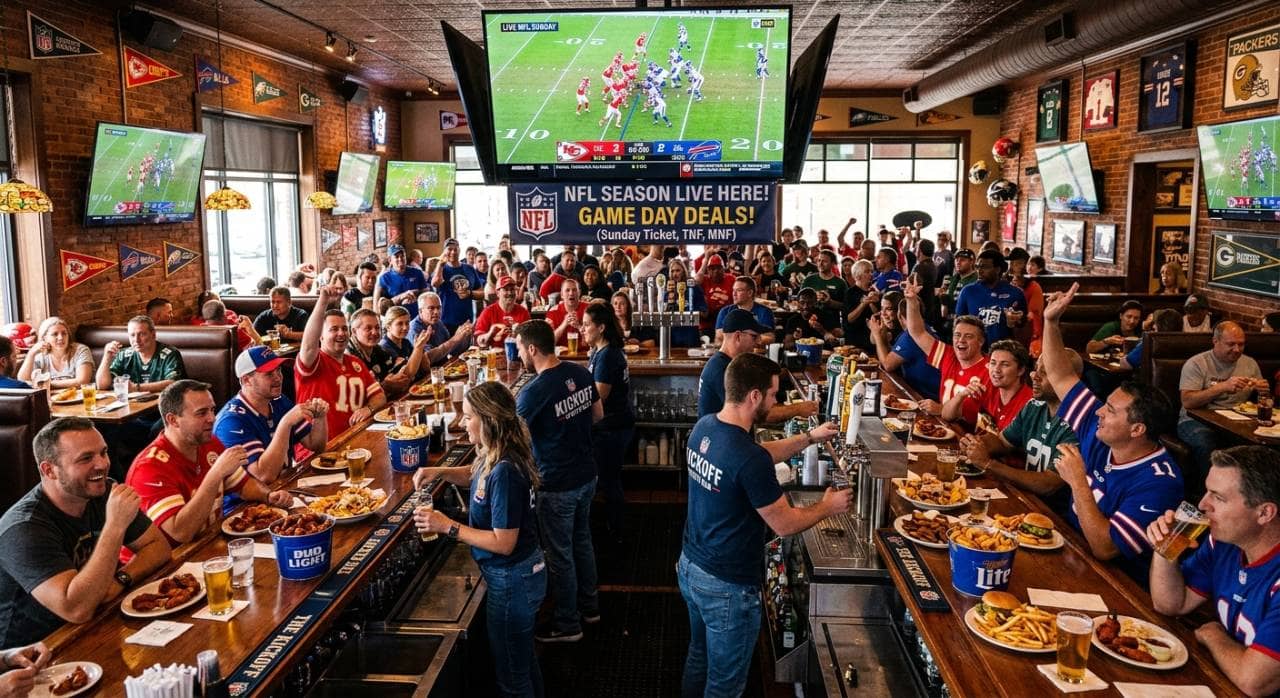
Prepare your restaurant for NFL season with smart menu planning, staffing, marketing, technology, and atmosphere strategies that boost season-long revenue.
Sep 9, 2026
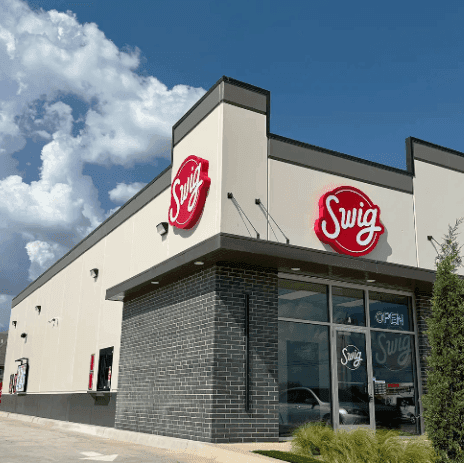
Swig signs franchise agreement for 11 South Denver locations, marking Colorado entry and validating its national expansion strategy.
Sep 8, 2026

QR code menus let restaurants replace paper menus digitally, enabling instant updates, contactless browsing, ordering, and payment through simple smartphone scanning.
Sep 7, 2026

Complete guide helping restaurant owners choose essential kitchen equipment - covering cooking, refrigeration, prep, sanitation, ventilation, safety, and long-term maintenance planning.
Sep 7, 2026

Avoiding common restaurant payroll mistakes - misclassification, tip credit errors, overtime miscalculations - protects businesses from costly penalties, back pay, and compliance risks.
Sep 4, 2026

Learn to calculate par levels for restaurant food, beverages, and packaging inventory, preventing stockouts and waste through proper formulas.
Sep 4, 2026

Caribou Coffee appoints Zane Thomas-Rogers as Chief Operations Officer to strengthen execution across its expanding coffeehouse network.
Sep 4, 2026

Unlock Exclusive Access To Webinars, Events, And The Latest News For Free!
Maryland's Franchise Reform Act signals a broader shift in franchise governance as states reimagine protections, disclosures, and fast-track reviews, shaping the path for franchise growth.

Photo by Pascal Bernardon
Across the United States, a quiet revolution is taking shape in the language of business regulation. A wave of state-level moves to rewrite franchise rules is recalibrating the old contract between franchisor and franchisee for an era of speed, data, and global brands. In Maryland, the drama unfolded with unusual clarity: the Franchise Reform Act advanced through the Senate on a flawless 45-0 vote and sailed past the House by 118-8. This is not merely a statute but a signal that oversight must finally stride ahead of commerce:
At the heart of the Maryland moment is a conviction that regulating rules should reflect how business operates today, while preserving the protections that have long underpinned fair play. The leading claim comes from Beidle, who chairs the Senate Finance Committee, describing the aim as a path toward a more efficient, more accessible franchise ecosystem. The reform frame foregrounds practical improvements in disclosures, enhanced franchisee associations rights, and real-time handling of issues, while also inaugurating a fast-track review program for FDDs under the purview of the Securities Commissioner. The sponsor’s own words ring through the halls: “a first step in a larger goal of fully overhauling and reforming the franchise process in Maryland.”
If the spell holds, this is a blueprint that pairs speed with accountability, asking regulators to move with the pace of the market while preserving the guardrails that keep transactions transparent and fair. Maryland’s apparatus, once merely aspirational, begins to take shape as real changes move from paper to practice. And as the state tucks these changes into implementation, observers in other jurisdictions watch how the balance is struck between ambition and governance.

In Maryland itself, the bill’s changes reset levers of leverage and predictability. The reforms grant franchisees the right to join associations and to pursue legal action under defined conditions, signaling a recalibrated relationship with landlords of the brand. Equally significant is the extension of the statute of limitations, from the prior three years to the later of five years after grant or two years after operations begin, aligned with annual renewal cycles. The package also formalizes a fast-track review for FDD renewals, a matter of tempo as much as law.
Taken together, these changes are designed to strengthen franchisee leverage, improve disclosure integrity, and accelerate regulatory processing without compromising oversight. In practical terms, the enactment affects filing timelines, expands rights to pursue remedies, and ties renewal cycles to the cadence of each franchise’s calendar. The law also requires ongoing reporting on the fast-track program’s effectiveness, ensuring regulators can adjust the pace without sacrificing accountability.
Ultimately, the act reads as a careful calibration: more power where it matters, but with guardrails that keep the system honest and legible. For franchisees, the message is clear: a pathway toward negotiation, not a tactic of delay. For franchisors, it is a pledge that growth can proceed with clarity, even as the rules evolve.
Franchising thrives on a promise: transparent growth, balanced expansion, and operational clarity. The International Franchise Association (IFA) has watched Maryland’s moves with guarded optimism, while signaling concern about other states’ approaches to non-compete provisions. Industry voices remind lawmakers that reforms must safeguard brand integrity and long-term viability even as protections sharpen. In nearby Virginia, a separate bid to ban non-compete clauses in franchise agreements drew bipartisan support, highlighting how one policy choice can divide stakeholders and ignite policy battles.
Matthew Kagel, who leads state and local relations at the IFA, cautions that wholesale post-term non-compete bans could disrupt daily operations if not tailored to the franchising model. The clash reflects a larger tension: how to shield franchisees without undermining the uniformity and predictability brands rely on. The debate, echoed in other states, shows a policy ecology where reform is both opportunity and challenge, and where timing may prove as decisive as intention.
The IFA and its proponents argue that reforms must balance franchisee protections with the realities of brand consistency and long-term franchise viability.
So far, the conversation is less about a single statute and more about a shared ambition: to harmonize rights and responsibilities without stifling growth. The result is a dialogue that will shape how quickly concepts move from the drafting table to the street, where franchisees lend their voices to the ledger, and where regulators translate intention into enforceable practice.

Maryland is not alone in rethinking franchise governance. On the East Coast, Vermont has pursued a more incremental approach, seeking to establish a framework for potential future regulation and noting the need for more information before extending rules to non-compete provisions. Arizona has seen proposals to cap termination rights and protect franchisee associations, though the IFA cautions about the policy’s traction in a familiar cycle of advocacy and opposition. And in California, regulators have already moved on a 2024 reform package targeting franchise brokers and third-party sellers with mandatory registration and tighter sale rules, even as funding and phase-in timelines raise questions about when the rules take full effect.
Taken together, these developments sketch a regional mosaic: a patchwork that prizes local priorities while nudging toward greater standardization wherever possible. Vermont’s caution, Arizona’s termination-right protections, and California’s broker registrations reflect distinct concerns, yet the arc is shared: more information, more transparency, and a governance culture that can be measured, audited, and compared across borders.
From this mosaic, one lesson is clear: a national franchise future will likely emerge not as a single statute but as a choreography of coordinated states, each teaching the next how to balance leverage with accountability.

As the regional movement matures, franchise policy holds both invitation and warning: greater protections and clearer association rights can widen ownership and attract capital, while a sprawling landscape of rules tests the ability of national operators to stay compliant across jurisdictions. The IFA’s ongoing advocacy and lawmakers’ experiments will shape not only the pace of expansion but also the quality of governance that underpins trust in the franchising ecosystem.
Practical hurdles loom large: California’s reforms show that funding constraints can delay enforcement, complicating multi-state compliance for national operators. Maryland’s fast-track renewal pilot, due to launch in early 2026, with renewals due by February 1, 2026, offers a test bed for speed and scrutiny. The long road ahead will require robust, state-by-state compliance programs and robust record-keeping to honor the EEAT principle of trust through transparent, verifiable processes.
Taken as a whole, the reform narrative invites growth with discipline: a future where franchise systems scale with clarity, where governance is as refined as a tasting menu, and where states learn from one another without surrendering local discretion.