Restaurant Inventory Management Best Practices

Restaurant inventory management protects margins with consistent counting, recipe controls, par levels, and technology that reduces waste and shortages.

Updated On Published

Why Inventory Is a Profit Lever

Restaurant inventory management is one of the fastest ways to protect cash, control food cost, and keep service smooth. When inventory is messy, everything gets harder - managers over-order "just in case," prep gets inconsistent, popular items run out mid-shift, and invoices creep up without anyone noticing. Even small gaps - like inconsistent portioning, missed waste, or a few unrecorded transfers - stack up into real margin loss by the end of the month.

Top operators treat inventory like a repeatable system, not a once-a-month chore. They build clean item lists, standardize how products are received and counted, and tie inventory to recipes, pars, and ordering rules. The goal isn't perfection - it's visibility and consistency. When you can trust your on-hand numbers and understandwhy usage changes, you can act quickly - adjust pars, spot theft or over-portioning, reduce spoilage, and stop guessing on ordering.

build-a-clean-inventory-foundation-1767829453-6319.png

Build a Clean Inventory Foundation

If restaurant inventory management feels chaotic, it's usually not because counting is hard - it's because the setup is inconsistent. Top operators treat inventory like a system, starting with a clean foundation that makes accuracy automatic. When your item list, storage layout, and count units are standardized, you spend less time "fixing" numbers and more time making decisions that protect profit.

Start by building one master inventory list that everyone uses. Use consistent item names (no duplicates or shorthand variations), and assign a clear category for each product (proteins, produce, dry goods, paper, cleaning, alcohol, etc.). Add the basics that prevent costly errors - vendor, pack size, and purchase unit (case, bag, bottle, each). This matters because most inventory confusion comes from mismatched units - counting "each" while purchasing by the case, then guessing conversions during ordering or costing.

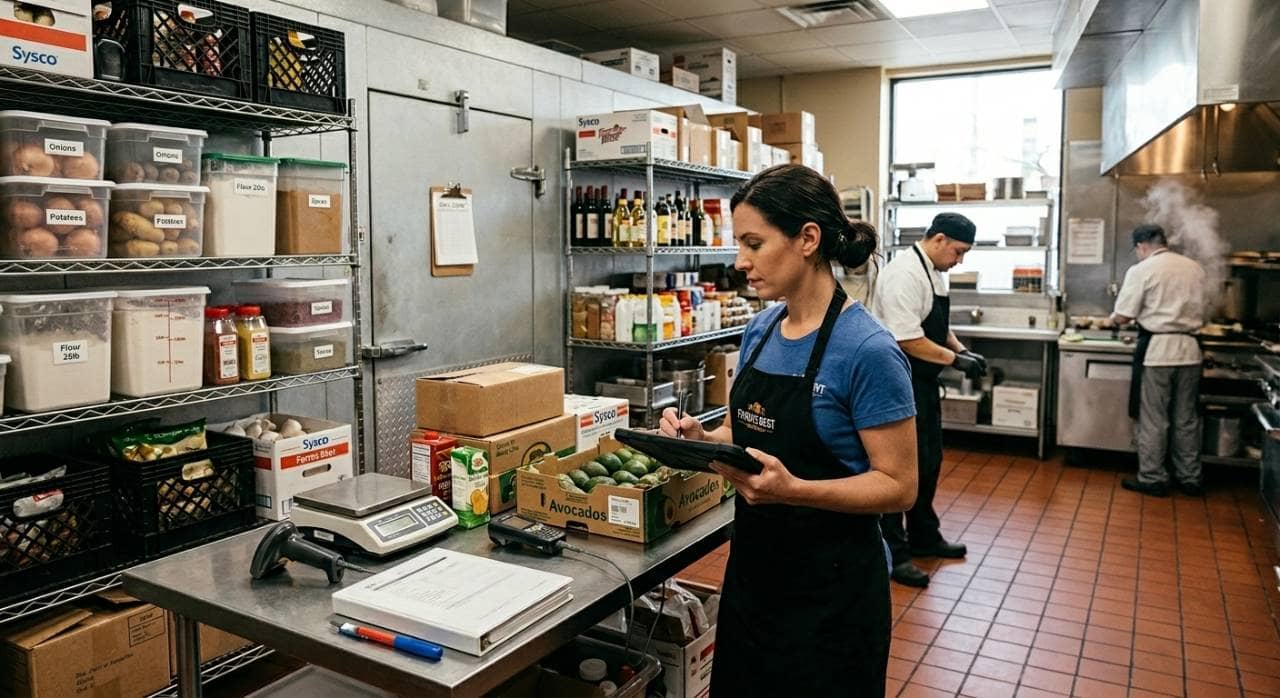
Next, lock down your environment. Standardize storage locations and label shelves by zone so products have a "home." When items drift between stations or get stored wherever there's space, counts get missed and managers compensate by over-ordering. A simple, repeatable layout - dry storage grouped by category, the walk-in organized by shelf zones, and high-volume items kept in predictable spots - makes counting faster and more reliable.

Finally, make your counting rules consistent. Align count units with how you buy and how you use items in recipes. Decide whether an item is counted by case, pound, bottle, or each - and keep it the same every time. For partial cases, use a clear, repeatable method (like tenths of a case or a quick conversion reference). The real win is consistency- when different managers count the same shelf, they should land on the same number. That's how inventory stops being a monthly scramble and becomes a dependable control tool.

Standardize Recipes, Portions, and Yield

A clean inventory setup only becomes valuable when your kitchen produces consistent results. That's why top operators obsess over three things that directly affect inventory accuracy - standardized recipes, portion control, and yield. Without them, your counts may be "correct," but your usage will still look unpredictable - because the kitchen is consuming product inconsistently.

Start with standardized recipes for every core menu item, not just your signature dishes. Each recipe should clearly define ingredients, exact quantities, prep method, and the final portion size. When recipes live in someone's head, portion sizes drift, substitutions happen without documentation, and your theoretical usage (what you should have used) never matches what actually disappeared from the shelf. Standard recipes create the baseline that makes inventory math meaningful.

Next, tighten portion control. Even small over-portioning adds up fast - especially on proteins, cheese, oils, and alcohol. Use tools that make portioning easy during a rush- scales, spoodles, scoops, ladles, and pre-portioned containers. The goal is not to slow the line down; it's to remove "guessing." When portions are repeatable, inventory depletion becomes predictable, food cost becomes stable, and ordering becomes easier.

Then, account for yield and trim loss - because not every pound you buy becomes a pound you sell. Proteins, produce, and prepared items often have meaningful loss during trimming, cooking, or spoilage. Track yield for high-cost items (like chicken, steak, seafood, avocados, and leafy greens) and make sure your recipe quantities reflect usable product, not raw purchase weight. If you ignore yield, you'll constantly feel like inventory is "missing" when it's actually being lost in normal prep.

Finally, build a habit of updating inventory anytime the menu changes. New menu items mean new ingredients, new prep batches, and new portion expectations. When recipes, portions, and yield are standardized - and kept current - inventory stops being a monthly surprise and becomes a reliable tool to control cost and keep product available.

Set Par Levels and Ordering Rules

Top operators don't "order by feel." They build par levels and ordering rules that keep product available without tying up cash in the walk-in. The difference matters because overbuying creates a chain reaction- crowded storage, higher spoilage risk, more waste, messier counts, and less visibility into what's actually moving. Strong par systems create control - even when sales fluctuate.

Start by setting par levels for each key item based on three inputs - sales velocity, vendor lead time, and storage capacity. Velocity is how fast the item moves (daily or weekly usage). Lead time is how long it takes to receive product after ordering. Storage capacity is the reality check - if you don't have space to store it properly, you shouldn't be buying it. A practical way to think about it is- par should cover you through the next delivery window plus a small buffer for demand swings, not "two weeks of everything."

Next, use an order-to system instead of just a minimum on-hand. With order-to, you decide the target amount you want on the shelf after delivery, then calculate the order based on what you currently have. This prevents the common mistake of ordering the same "usual" quantities regardless of current inventory. It also makes ordering easier to delegate, because the system guides the decision instead of relying on one person's memory.

Add guardrails to prevent mistakes in real life. Set clear minimums and maximums on high-cost and high-waste items (proteins, dairy, produce, alcohol). Build rules for "special situations," like holiday spikes, local events, or promo weeks. Also define what qualifies as an emergency order and who can approve it - because frequent emergency ordering is usually a sign your par levels, counts, or receiving process are broken.

Finally, make ordering consistent and reviewable. Pick fixed order days and cutoff times, confirm who owns ordering by category, and require basic receiving discipline (checking invoice quantities, noting substitutions, logging price changes). When pars and ordering rules are structured, you reduce overbuying, shrink waste, and stop burning cash on inventory that isn't turning.

make-counting-fast-accurate-and-predictable-1767829453-8774.png

Make Counting Fast, Accurate, and Predictable

Inventory counting shouldn't be a once-a-month scramble - it should be a routine that keeps your numbers trustworthy and your ordering confident. Top operators use counting to prevent surprises, not to explain them after the fact. When counts are consistent, you reduce over-ordering, catch problems sooner, and make food cost easier to manage week to week.

A strong approach is to use a layered cadence. Do frequent spot counts on high-cost, high-risk items like proteins, cheese, fryer oil, and alcohol - these categories can swing margins quickly. Then use weekly cycle counts to rotate through the rest of your inventory in manageable chunks. Finally, a monthly full count can serve as a reconciliation checkpoint, but it shouldn't be the only time you look at inventory.

Process consistency is what makes counting fast. Count the same way every time - same route, same storage zones, same item order. When products have assigned "homes" and shelves are labeled, counters spend less time searching and more time counting accurately. Choose a consistent time window when product movement is low (after close, before prep, or during a quiet period) so numbers aren't changing mid-count.

Accuracy improves when you remove guessing. Standardize how you count partial cases and open containers using a simple rule (tenths of a case, inner packs, or quick conversion references). For key items, add a lightweight verification step - a second count, manager check, or quick cross-check against expected on-hand - to prevent one rushed mistake from skewing your variance review. And don't ignore context -capture short notes for anything unusual (substitutions, damaged product, unrecorded transfers, mislabeled items) so variances are explainable and fixable.

When counting is repeatable, it becomes a control tool, not paperwork. Reliable counts create reliable ordering, cleaner variances, and fewer costly surprises.

Control Waste, Transfers, and High-Risk Items

Even with clean counts and solid par levels, inventory can still "leak" if you don't control three areas that quietly drive variance - waste, transfers, and high-risk products. Top operators don't just track these issues - they build simple rules that make them hard to ignore. The result is fewer surprises on inventory day and far more predictable food cost.

Waste is the first major leak. If waste isn't recorded, it doesn't disappear - it shows up later as unexplained variance. The best practice is to track waste by item, quantity, dollar impact, and reason (overproduction, spoilage, expiration, incorrect prep, comped orders, returned dishes, or dropped product). This turns waste into something you can manage. When you can see which items are being wasted and why, you can adjust pars, change prep routines, improve labeling/FIFO, or retrain portioning. Even better, waste logs create accountability without turning into a blame game - it becomes an operations feedback loop.

Transfers are the second leak, especially in multi-station kitchens or multi-unit operations. Product moving from one location to another must be treated like a transaction. A simple transfer process - what moved, how much, from where to where, who approved it, and when - prevents double-counting and stops one location from absorbing another location's usage. This is also important for commissaries, catering operations, or any restaurant that shares prep across concepts.

Finally, high-risk items need tighter controls because they're expensive and easy to mismanage. Alcohol, proteins, premium toppings, specialty sauces, and grab-and-go products often drive the biggest dollar variances. Tight control doesn't mean slowing service - it means using practical guardrails - secure storage, limited access, clear portion tools, counted returns, and more frequent spot counts. When you combine waste tracking, transfer discipline, and extra control on high-risk items, inventory variance becomes smaller, easier to explain, and much easier to fix.

Turn Inventory Data Into Action

Inventory only helps if it drives decisions. Top operators treat inventory like a weekly management tool - not an accounting chore. A count is just the starting line; the real value comes from using the numbers to identify what changed, why it changed, and what you're going to do about it before margins slip.

The most useful habit is comparing actual usage to what you would expect based on sales, recipes, and portions. When actual usage is higher than expected, something is pulling product out of the building without showing up in sales. When it's lower, you may have counting errors, missed invoices, incorrect units, or a recipe/portion setup issue. Either way, variance becomes a diagnostic, not a mystery.

Instead of chasing every small swing, focus your attention where it matters. Review the top variance items by dollars, not just by units. A small count mistake on salt doesn't matter; a consistent variance on chicken, cheese, cooking oil, or alcohol does. The best teams quickly sort variance into a few common causes- over-portioning, unrecorded waste, receiving errors, price/pack changes, untracked comps/discounts, transfers that weren't logged, theft, or counting mistakes. Once you know which bucket you're in, the fix becomes straightforward.

Patterns matter more than one bad week. Repeated variance on the same items is a process problem - not random noise. That's why top operators track trends across multiple counts and watch for "quiet" changes that create margin erosion. Vendor price increases and pack size changes are big ones; they can throw off ordering assumptions and recipe costing even if your team is doing everything the same.

To keep inventory actionable, high-performing restaurants run a short, consistent review cadence. A simple weekly variance review turns data into assignments - adjust pars, tighten portion tools, retrain prep, improve receiving checks, lock down high-risk storage, or fix how transfers and waste are recorded. When inventory consistently leads to clear actions, it becomes a control system that protects profit - not just a spreadsheet that explains what already happened.

Use Inventory Technology to Stay Consistent

The fastest way to lose control of inventory is trying to manage it with memory, scattered spreadsheets, and "we'll fix it at month-end" - counting. The easiest way to stay consistent is to use inventory technology to standardize the work - so receiving, counting, costing, and ordering all follow the same rules no matter who is on shift. When the system is consistent, your on-hand numbers become reliable, variance becomes explainable, and managers stop guessing.

Here are the core ways top operators use inventory technology (think of these as your "buckets") -

1. Digital Receiving - Tech-driven receiving helps teams confirm what actually arrived - not what was expected. You can log substitutions, short shipments, and invoice discrepancies in the moment. Many systems also flag price changes or pack-size changes, which are common reasons food cost quietly creeps up. When receiving is structured, inventory starts clean and stays cleaner.

2. Mobile Counting by Location - Counting tools that guide staff shelf-by-shelf reduce missed items and double-counting. Standardized count sheets and enforced units/conversions remove the "interpretation" that causes inconsistent results (especially with partial cases and open containers). Some platforms highlight unusual variances while you count, so you can re-check high-dollar items immediately.

3. Recipe + Sales Integration - The real power comes when inventory connects to recipes and sales data. That's how you compare what you should have used (based on portions and sales) versus what you actually used (based on counts and purchases). This makes it easier to pinpoint the source of variance - over-portioning, unlogged waste, recipe setup issues, or theft risk - without guessing.

4. Smarter Ordering - Good systems support ordering with suggested quantities based on pars, current on-hand, lead times, and recent sales trends. This prevents overbuying, reduces stockouts, and protects cash flow. It also makes ordering easier to delegate because the logic is visible and repeatable, not locked in one manager's head.

5. Multi-Unit Controls and Audit Trails - For multi-location operators, technology keeps item catalogs consistent, controls permissions, tracks transfers, and creates audit trails. That means fewer "mystery variances," cleaner accountability, and less chaos when managers change or locations operate differently.

If you want, I can now wrap the article with a short conclusion that summarizes the best practices and gives a simple weekly cadence owners can follow.