Serving Etiquette for Fine Dining Restaurants
This article shows how serving etiquette supports fine dining service by improving timing, table management, staff discipline, and guest comfort.

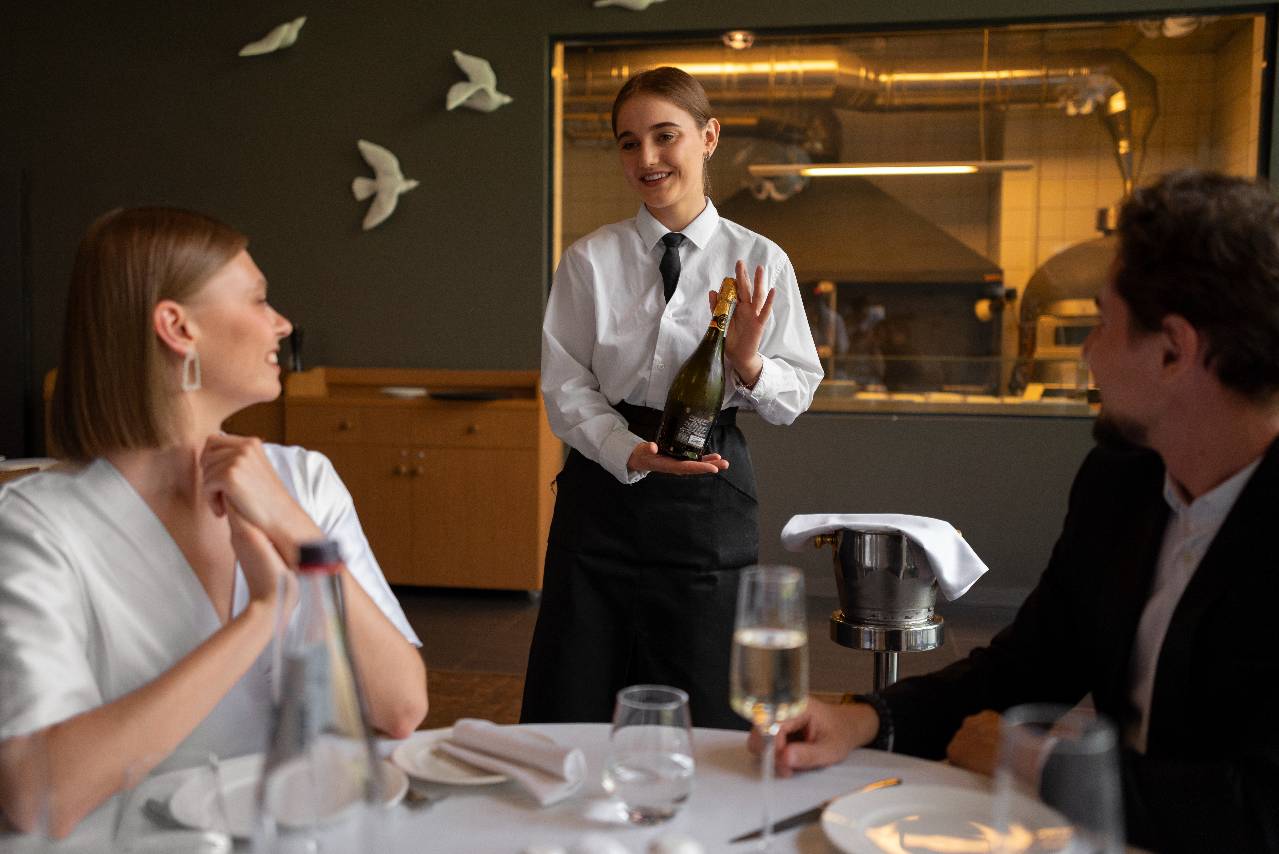
The Core Principles of Fine Dining Serving Etiquette
Fine dining serving etiquette is not about being extra polite or overly formal. It is a structured system of service standards that ensures every guest receives a consistent, controlled, and high-quality experience.
In a typical restaurant, service can vary depending on the server, the shift, or how busy the floor is. In fine dining, that variability is not acceptable. Guests expect the same level of precision every time - regardless of who is serving or how full the dining room is. That consistency is what defines true serving etiquette.
At its core, fine dining service is built on three operational principles -
1. Precision in Execution - Every movement has a standard. How a server approaches the table, where they stand, how they place a plate, and when they speak are all intentional. This reduces confusion, prevents errors, and creates a seamless experience for the guest.
2. Control of Timing - Service is paced, not rushed. Courses should flow in a way that feels natural, with no long gaps and no overlap. Poor timing leads to cold food, crowded tables, and a disjointed experience.
3. Consistency Across the Team - Guests should not notice differences between servers. Whether it is a weekday or a busy weekend, the service standard should remain the same. This requires clear training, defined steps, and ongoing reinforcement.
For restaurant owners, this means serving etiquette is not a "soft skill." It is an operational system that directly impacts ticket times, table turns, guest satisfaction, and overall revenue. Without clear standards, service becomes reactive. With them, it becomes predictable, efficient, and scalable.

First Impressions Start Before the First Interaction
In fine dining, the guest experience does not start when the server speaks - it starts the moment the guest walks in and sees the floor team. Before a single word is exchanged, guests are already forming expectations about service quality.
This is why first impressions must be treated as a repeatable standard, not left to individual personality.
1. Appearance Sets the Baseline - Uniforms should be clean, pressed, and consistent across the team. Grooming standards - hair, nails, and overall presentation - must be clearly defined and enforced. In fine dining, even small inconsistencies signal a lack of control. Guests often associate appearance with how seriously the restaurant takes its operations.
2. Posture and Presence Communicate Professionalism - Servers should stand upright, avoid leaning, and remain attentive to the room. Hands should be controlled - not in pockets or crossed. These small details communicate readiness and confidence without saying anything. A composed presence reassures guests that service will be smooth and organized.
3. Immediate Acknowledgment Matters - Guests should never feel ignored. Even if a server cannot approach the table immediately, eye contact or a subtle nod signals awareness. This reduces uncertainty and sets the tone for attentive service.
4. Calm, Controlled Energy Sets Expectations - Fine dining is not rushed or chaotic - even during peak hours. The floor team should move with purpose but without urgency. Fast, erratic movement creates stress for guests. Controlled pacing signals that the operation is under control.
For restaurant owners, this is where consistency begins. If first impressions vary by shift or by employee, everything that follows becomes harder to standardize. Strong serving etiquette starts with visual and behavioral cues that are immediately noticeable - and immediately repeatable.
Table Approach and Positioning Rules
How a server approaches and positions themselves at the table directly impacts the guest experience. In fine dining, this is not left to instinct - it is standardized to reduce disruption, improve flow, and maintain a sense of control.
1. Approach Quietly and Intentionally - Servers should never "arrive suddenly" at a table. The approach should be smooth, visible, and timed appropriately - ideally during a natural pause in conversation. Heavy footsteps, rushed movement, or abrupt interruptions break the dining experience and make service feel unrefined.
2. Use Correct Serving and Clearing Positions - As a general rule, food is served from the left and cleared from the right whenever possible. This reduces cross-over movement and prevents servers from reaching across guests. While not every situation allows perfect positioning, the goal is to follow a consistent pattern that minimizes disruption.
3. Avoid Reaching Across Guests - Reaching across the table is one of the most noticeable service mistakes. It interrupts conversations, invades personal space, and creates an unpolished experience. Servers should reposition themselves or walk around the table instead of cutting through guest space.
4. Maintain Proper Distance and Awareness - Servers should stand at an appropriate distance - not too close, not too far. Standing too close can feel intrusive, while standing too far can make communication awkward. Awareness of guest body language is critical to adjusting positioning in real time.
5. Move With Control, Not Speed - Efficiency is important, but speed should never come at the expense of control. Quick, uncontrolled movements lead to spills, dropped items, and inconsistent service. Controlled movement ensures accuracy and reinforces a sense of professionalism.
For restaurant owners, standardizing table approach and positioning reduces variability across the team. It also improves service efficiency by creating predictable movement patterns - making it easier for staff to work together without confusion or overlap.
Order Taking - Precision, Knowledge, and Control
In fine dining, taking an order is not just a transaction. It is a service moment that shows whether the floor team is prepared, attentive, and fully in command of the experience. If this step is rushed or inconsistent, problems usually appear later in the meal.
1. Menu Knowledge Must Be Exact - Servers should know every dish well enough to explain ingredients, cooking methods, portion details, and major allergens with confidence. Guests in fine dining often ask more detailed questions, and hesitation weakens trust. Strong menu knowledge also supports better recommendations and smoother upselling.
2. Listening Matters More Than Talking - A polished server does not interrupt, guess, or rush the guest through the order. They listen carefully, let the table finish speaking, and confirm details only when needed. This reduces mistakes and helps guests feel taken seriously.
3. Clear Communication Prevents Downstream Errors - Special requests, allergies, coursing preferences, temperature requests, and substitutions must be captured accurately. One missed detail at the table can turn into a remake, a delay, or a disappointed guest. In operational terms, accuracy at order entry protects kitchen flow and service timing.
4. Guidance Should Feel Helpful, Not Pushy - Fine dining guests often want direction, but not pressure. Servers should be able to recommend dishes, pairings, or pacing in a calm and confident way. The goal is to guide the experience, not dominate it.
5. Control of the Table Starts Here - Order taking also sets the pace of service. When servers understand the table's preferences early, they can better coordinate coursing, beverage timing, and kitchen communication.
For restaurant owners, this is a training priority because order quality affects more than guest satisfaction. It impacts ticket accuracy, kitchen efficiency, waste, table timing, and revenue. In fine dining, a well-taken order is one of the clearest signs that service standards are truly in place.
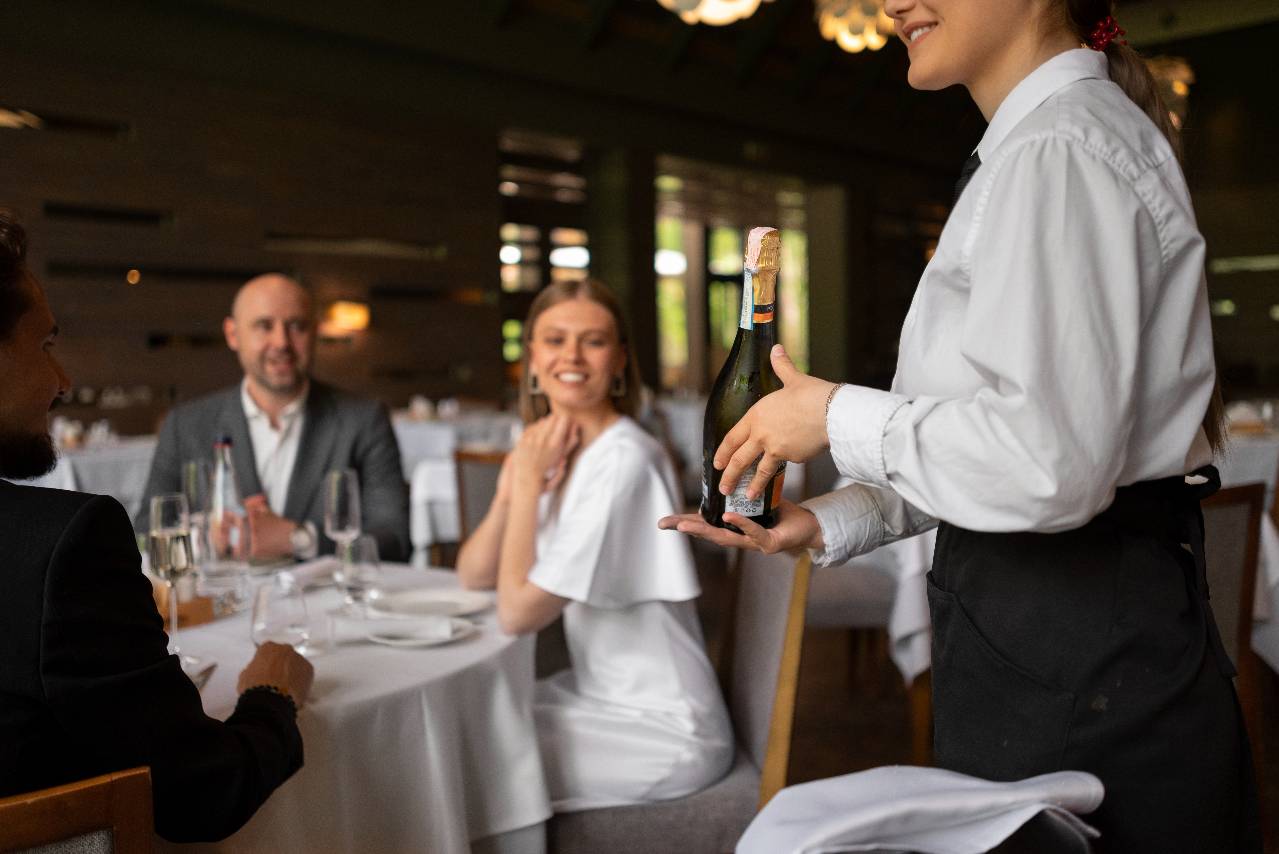
The Choreography of Serving Food and Beverages
In fine dining, serving food and beverages should feel smooth, quiet, and coordinated. Guests should not notice the mechanics of service. They should simply experience a meal that moves at the right pace and feels professionally managed from start to finish.
1. Every Delivery Should Follow a Clear Sequence - Servers should know exactly who is served first, how plates are placed, and how the table is completed without confusion. Inconsistent plate placement or hesitation at the table makes service feel disorganized. A clear serving order helps the team move with confidence.
2. Synchronization Matters at the Table - When possible, guests at the same table should be served together, especially during main courses. One guest eating while another waits changes the feel of the experience. Fine dining service should make the table feel unified, not fragmented.
3. Plate Placement Must Be Controlled - Plates should be placed gently, from the correct side whenever possible, and aligned neatly in front of the guest. Servers should avoid unnecessary reaching, awkward hand movement, or noisy dish handling. These details may seem small, but guests notice them immediately.
4. Beverage Service Should Be Quiet and Timely - Water, wine, and other beverages should be monitored closely without constant interruption. Empty glasses should not sit too long, but guests should also not feel hovered over. Beverage refills are part of service flow, not a separate task.
5. Timing Between Courses Must Feel Intentional - The gap between courses should feel paced, not random. If courses arrive too quickly, the table feels crowded. If they arrive too slowly, energy drops and guests become impatient. Strong communication between the floor and kitchen is what protects this timing.
For restaurant owners, this section of service is where etiquette becomes highly visible. It affects guest comfort, course flow, and the overall perception of quality. When food and beverage service is choreographed well, the restaurant feels polished, disciplined, and worth the premium experience.
Guest Interaction - Professional, Attentive, and Non-Intrusive
In fine dining, guest interaction is not about being overly friendly or constantly present. It is about being available at the right moments, while allowing guests to enjoy their experience without interruption. This balance is what separates polished service from average service.
1. Be Present Without Hovering - Servers should remain aware of the table at all times, but not linger unnecessarily. Standing too close or checking in too frequently makes guests feel watched. At the same time, disappearing for long periods creates frustration. The goal is controlled visibility.
2. Use Subtle Check-Ins - Instead of interrupting conversations, servers should look for natural pauses - such as after the first few bites or between courses - to check on the table. Simple, concise questions are enough. Long or repeated interruptions disrupt the dining flow.
3. Read the Table and Adjust - Not every table wants the same level of interaction. Some guests prefer conversation and recommendations, while others want minimal engagement. Servers should observe tone, body language, and pacing, then adjust accordingly. This adaptability is a key part of fine dining etiquette.
4. Keep Communication Clear and Focused - Language should be polite, professional, and to the point. Overly casual language or unnecessary commentary weakens the experience. Guests expect confidence and clarity, not filler conversation.
5. Stay Composed Under Pressure - Even during busy periods or when issues arise, servers must remain calm and controlled. Guests should never feel internal stress from the operation. Maintaining composure protects the overall experience, even when challenges occur behind the scenes.
For restaurant owners, guest interaction is where service quality becomes most noticeable. It directly impacts guest satisfaction, reviews, and return visits. When interaction is standardized - not left to personality - it becomes easier to train, measure, and improve across the entire team.
Clearing, Resetting, and Maintaining Table Standards
In fine dining, clearing and resetting the table should feel just as polished as serving the meal. Many service teams focus heavily on food delivery, but guests also notice how the table is maintained between courses. If used plates sit too long, crumbs build up, or the table looks cluttered, the experience starts to feel less controlled.
1. Clear at the Right Time - Servers should never remove plates too early or leave them too long after a guest is finished. Timing matters. Clearing too soon makes guests feel rushed. Clearing too late makes the table feel neglected. Staff should watch for visual cues and confirm discreetly when needed.
2. Clear Quietly and Systematically - Used dishes, flatware, and glassware should be removed with minimal noise and minimal interruption. Reaching across guests, stacking loudly at the table, or moving too quickly breaks the tone of fine dining service. A calm, practiced clearing pattern keeps the experience smooth.
3. Keep the Table Visually Clean - Crumbs, spills, empty glasses, and unused items should not stay on the table longer than necessary. The table should look organized at every stage of the meal. This visual cleanliness reinforces the feeling of quality and attention to detail.
4. Reset With Purpose Between Courses - Each new course should arrive to a table that is properly prepared for it. That may include replacing flatware, adjusting glassware, or clearing unnecessary items. Resetting is not just cleanup. It is preparation for the next part of the guest experience.
5. Maintain Standards Until the Meal Ends - Service standards should not drop once the main course is served. Guests continue evaluating the experience through dessert, coffee, and departure.
For restaurant owners, this is where discipline matters. Strong clearing and resetting habits protect pacing, presentation, and guest comfort. They also help the floor team maintain order during busy service without making the room feel rushed or chaotic.
Payment, Departure, and the Final Impression
In fine dining, service does not end when the last plate is cleared. The payment process and guest departure are part of the experience, and they should feel just as controlled and professional as the rest of the meal. A strong final impression can reinforce everything the restaurant did well. A weak one can undo it.
1. Present the Check at the Right Time - The check should never be dropped too early, as this can make guests feel pushed out. At the same time, it should not take too long once it is requested. Fine dining service requires good timing and awareness. The guest should feel accommodated, not rushed or forgotten.
2. Keep the Process Discreet and Smooth - Payment should be handled quietly and efficiently. Servers should avoid making the transaction feel overly transactional. In an upscale setting, the process should feel like a natural close to the meal, not an abrupt shift in tone.
3. Stay Professional Through the Last Interaction - Service standards should remain high until the guest fully leaves the restaurant. Tone, body language, and attentiveness still matter at this stage. A rushed handoff after payment can make the experience feel unfinished.
4. End With Genuine Courtesy - A clear thank-you, a polite farewell, and a professional closing interaction help leave the guest with a positive final memory. This is especially important because guests often remember the beginning and the end most clearly.
5. Treat Departure as an Operational Standard - Owners should not assume strong service will naturally carry through to the end. The final minutes should be trained just like greeting, order taking, and table service.
For restaurant owners, this stage affects return visits, word-of-mouth, and overall brand perception. Fine dining guests are not only paying for food. They are paying for a complete experience. That experience should still feel polished in the final moments.