Taco Bell Centralizes Leadership to Accelerate Global Expansion and Digital Scale
Taco Bell aligns brand, marketing, digital, legal, and international teams under a unified structure to export U.S.-proven innovation, value, and loyalty playbooks while targeting a tripling of its international store base.

A Unified Table Is Set
Taco Bell is reshaping its leadership bench to align brand, marketing, digital, legal, and international strategy as the rapidly growing chain prepares to triple its international store count. The company is elevating long-time and recent leaders to centralize decisions across brand equity, product velocity, loyalty, digital channels, and international growth—bringing the moving pieces into a single, thoughtfully arranged system designed to travel well. The goal is clear: translate a U.S.-proven mix of innovation and digital performance into a balanced, nourishing playbook for overseas markets. In practice, the reorganization consolidates global brand direction, U.S. marketing, digital infrastructure, international momentum-building, and legal governance under one command to accelerate new-unit development and maintain consistency. Rather than rely on ad hoc replication, the structure aims to harmonize the brand’s voice, pace of product development, and technology tools so that expansion feels measured, not rushed, and mindful of the guest experience. It’s a carefully composed approach, crafted to keep the integrity of what works while adapting to new contexts. Analysis: The leadership reset is a direct response to current momentum and future ambitions, with the explicit aim of scaling U.S. innovation and digital performance into international expansion while preserving brand consistency.
Who’s Steering The Shift?
Montgomery, a near-decade veteran and curator of domestic success through Live Más Live events, celebrity partnerships, and menu innovations such as Cantina Chicken and the Decades menu, steps into the chief brand officer role to oversee worldwide brand strategy. Her remit is to translate the U.S. innovation engine into a global cadence, keeping the brand’s identity cohesive while giving markets room to resonate. The baton for U.S. marketing passes to Restrepo, who succeeds Montgomery after two years leading product pipeline and brand marketing, credited for spearheading major innovations including the Cheesy Street Chalupas. On the digital side, Mathews—a "2022" recruit with deep expertise in digital channels and loyalty systems—previously helped grow Taco Bell’s digital sales to "more than $6 billion". His remit now expands globally, signaling confidence in a digital playbook that has delivered outsized results in the United States. Durini retains the international CMO title while taking on strategy for building brand momentum across markets, and Davis, the chief legal officer since "2018" and head of the Taco Bell Foundation since "2020", is charged with steering development of the rapidly expanding international store base. Together, these appointments "centralize decision-making around brand equity, product velocity, loyalty, digital channels, and international growth." Analysis: The roles align proven operators with their strengths—global brand stewardship (Montgomery), U.S. execution (Restrepo), digital scale (Mathews), international momentum (Durini), and governance (Davis)—to replicate U.S. success in a coordinated, thoughtful way.
Technology As The Spine
Under the new structure, the innovation engine remains anchored in the U.S. under Restrepo, while Montgomery adapts this engine globally—linking product, partnerships, and campaigns to local needs from a unified strategy seat. The digital layer is designed to travel in lockstep. Mathews’ elevation extends a proven model across markets, explicitly building on a $6 billion-plus foundation and aiming to port mobile ordering, loyalty, and operational tools to new geographies with fidelity and speed. The broader Yum! Brands ecosystem provides scaffolding for this thoughtful scale. Digital orders—supported by the AI-powered "Byte by Yum!" platform—bring together ordering, menu, inventory, pricing, and loyalty into one system. The Context reports digital system sales reached a "record $10 billion" and digital mix climbed to "approximately 60 %", a signal that technology is now a core channel rather than an optional side. The "Byte by Yum!" platform consolidates critical functions for "nearly 25,000 restaurants", creating a standardized backbone Taco Bell can leverage as it adds units and opens markets. Analysis: Strategy (Montgomery) connects to market execution (Restrepo, Durini), enabling tech (Mathews, "Byte by Yum!"), and guardrails (Davis) in a way that can scale without fragmenting the brand or the guest experience.
Value That Travels
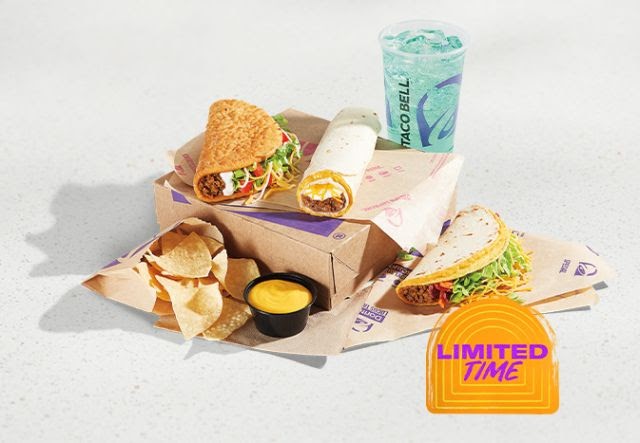
Evidence that the formula resonates is visible in recent quarters. Taco Bell U.S. delivered "5 %" same-store sales growth in the fourth quarter of 2024, outpacing industry peers, as value-led marketing and menu innovation drew cost-conscious diners into the mix. The "$5 Luxe Carvings Box" is a pointed example—a value play that "whet demand" among budget-sensitive consumers while keeping the brand’s flavor of innovation front and center. Promotional variety and menu breadth have "spurred imitators" and reinforced a value-forward posture within the quick-service arena. When price, novelty, and digital ease intersect, the outcome is a customer journey that feels balanced: spend is mindful, choices are distinctive, and ordering is seamless. That harmony is precisely what a scalable international playbook requires—consistent levers that meet universal needs while allowing for local nuance. Analysis: A tight loop between compelling price points, distinctive menu items, and digital engagement is lifting traffic and sales, creating tangible proof points for the model Taco Bell intends to export.
Momentum, Measured
A sequence of results frames the restructuring. In the fourth quarter of 2024, Taco Bell U.S. same-store sales increased "5 %", international system sales excluding foreign exchange rose "10 %", and the brand opened "186" new restaurants in the quarter. For full-year 2024, U.S. system sales grew "8 %", international system sales rose "6 %", and U.S. same-store sales increased "4 %"—a combination that suggests wide relevance and operational readiness. The trend continued into 2025. In the second quarter, same-store sales growth held at "4 %" globally, system sales expanded by "6 %", and international sales—excluding FX—grew "11 %". By the third quarter of 2025, Taco Bell system sales rose "9 %" (excluding FX) with same-store sales up "7 %", while digital system sales reached a "record $10 billion" and the digital mix steadied at "approximately 60 %". Such pacing points to a model drawing energy from multiple sources—same-store gains, new units, and a deepening digital relationship with guests. Analysis: The brand is not leaning on a single lever; consistent comparable growth, new-restaurant additions, and a rising digital mix mark a diversified, resilient growth engine.
Where It Sits In The Portfolio
Within Yum! Brands’ broader lineup, Taco Bell’s consistency stands out. In Q4 2024, same-store sales growth at Pizza Hut and KFC lagged, while Taco Bell’s value-driven marketing and diversified menu pushed sales ahead. Here again, the "$5 Luxe Carvings Box" offers a concise expression of how sharp pricing can meet customer needs while sustaining brand momentum. At the same time, Yum’s digital strategy is consolidating into scale infrastructure. Digital orders are now "more than half" of total orders across the portfolio, underpinned by "Byte by Yum!"—a single system merging ordering, menu, inventory, pricing, and loyalty for "nearly 25,000 restaurants". This alignment is mirrored in Taco Bell’s appointments: Mathews’ remit expands to global digital, Durini’s to international brand momentum, and Davis’ to the development of the expanding store base. The connective tissue is a shared technology stack that helps good ideas move faster across borders. Analysis: Taco Bell is positioned as a growth engine whose tactics and technology can radiate outward within Yum, with the shared digital backbone enabling quicker, more consistent rollout of proven plays.
What’s Not Yet Written
Ambition is unmistakable—tripling the international store count—but the timeline, geographies, capital path, and market sequencing are not specified. The materials outline who is accountable and what levers are centralized, yet the choreography by region remains beyond view. For international menus, the context references U.S.-driven items like Cantina Chicken or the Decades menu, but does not detail how these will be localized across regulatory, supply chain, or taste environments. There is likewise no disclosure of country-level digital adoption rates, localized loyalty structures, or integration milestones for "Byte by Yum!" beyond its reach to "nearly 25,000 restaurants". Governance mechanisms for balancing global brand consistency with local autonomy are not described beyond the emphasis on centralized decision-making. The strategy reads clean; the test will be how quickly the digital, legal, and brand frameworks adapt to local realities in a way that keeps the experience coherent and cost-effective. Analysis: The path is defined at the macro level, but execution success will hinge on adaptability to local conditions, a factor not enumerated in the available details.
A Balanced Blueprint
Taco Bell’s leadership reorganization marries brand innovation, value, and digital infrastructure into a single operating thesis for global growth. Montgomery is set to steward worldwide brand strategy; Restrepo concentrates on U.S. momentum; Mathews extends the digital playbook across markets; Durini builds international brand heat; and Davis supplies the governance needed to stand up a rapidly growing store base. Recent markers—"5 %" U.S. same-store sales in Q4 2024, "186" new restaurants that quarter, and a digital mix at "approximately 60 %" by Q3 2025—suggest both demand and operational scale. The lesson is practical and measured: centralize the essentials, keep the pace of product innovation steady, price with care, and deploy technology where it simplifies choice. That approach feels thoughtfully composed—the corporate equivalent of a plate where every component supports the other. If these sales and digital metrics persist, the unified system promises a path to tripling the international footprint while preserving brand equity, minimizing friction, and keeping value front and center for guests. Analysis: A disciplined, centralized model—anchored by value, digital reach, and brand cohesion—offers a clear, scalable framework for expansion that can hold its shape across borders.