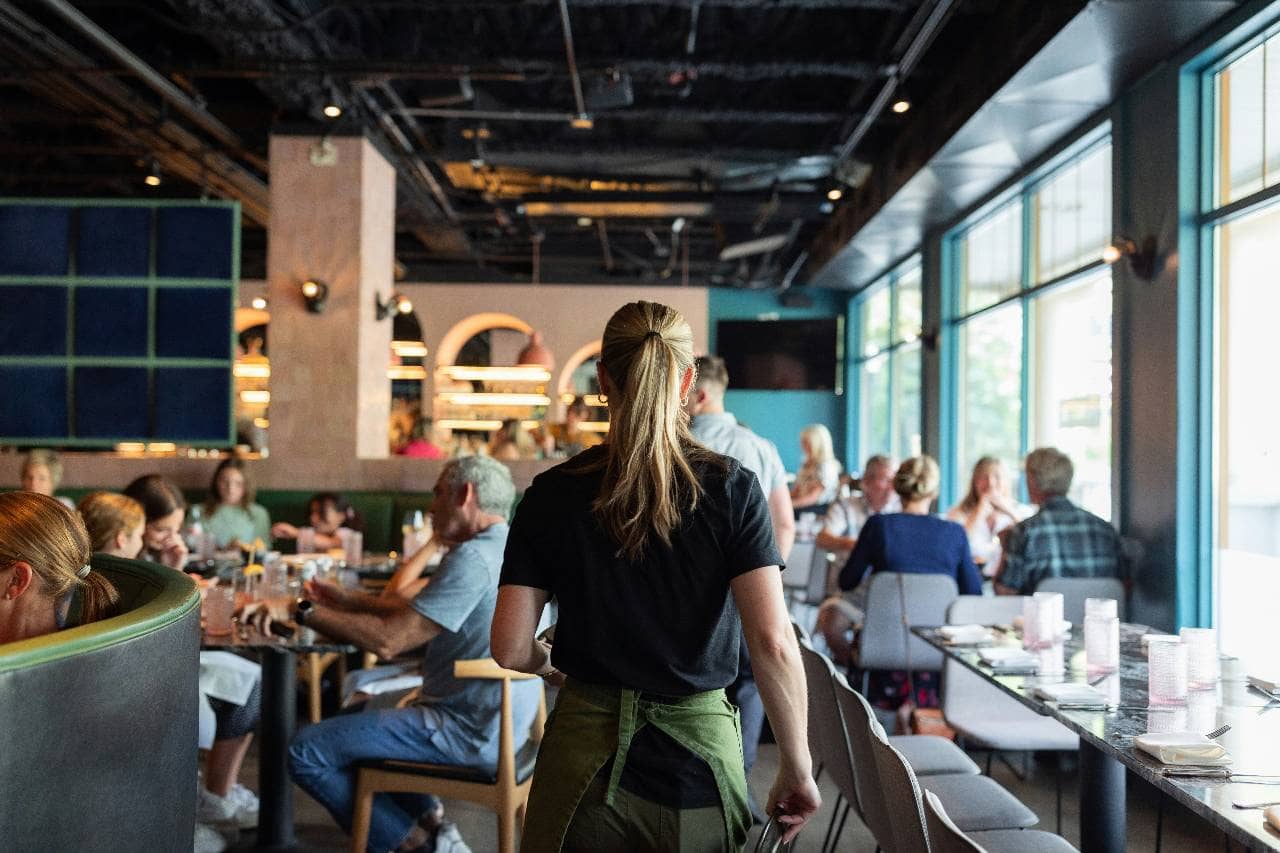
How to Get More Yelp Reviews for Your Restaurant
This guide explains how restaurants can gain more Yelp reviews by improving service, managing profiles, and encouraging honest guest feedback.
Wingstop has officially launched Club Wingstop, a new loyalty program designed to improve guest frequency and same-store sales through points accumulation, exclusive flavor access, merchandise drops, and high-profile experiential rewards including NBA tickets and a WWE SummerSlam suite.
AI helps restaurants forecast inventory needs by improving ordering, reducing waste, planning prep, preventing stockouts, and controlling food costs.
Qdoba has closed a $435 million whole business securitization, using the proceeds to refinance existing debt at a lower cost and free up capital to fund its push toward 2,000 locations, restaurant remodels, digital makelines, and broader technology upgrades.
Restaurant owners need a detailed startup loan plan that explains funding needs, credit strength, collateral, projections, and repayment ability.
A restaurant website should convert visitors into orders by improving menus, photos, reviews, direct ordering, branding, tracking, and guest engagement.
Sweetgreen has hired Cindy Olsen, formerly of Chipotle, as its new chief strategy officer a newly created role designed to bring strategic discipline and long-term value creation to a chain navigating its steepest same-store sales decline since going public in 2021.
From Chicken Salad Chick's largest multi-unit deal in its history to Black Sheep Coffee's U.S. debut in Miami Beach, here's a look at the latest franchise development agreements making waves across the country and beyond.
Church's Texas Chicken has appointed Kevin Nemeth, a digital transformation veteran with experience at Popeyes, TD Bank, and L'Oréal, as its new executive vice president and chief commercial officer a role focused on connecting brand, digital, loyalty, menu strategy, and restaurant execution into a unified commercial approach.
GLP-1 meds, wearables and strength training are reshaping fitness franchises as brands blend digital, boutique and big-box strategies for growth.
Unlock Exclusive Access To Webinars, Events, And The Latest News For Free!
Food safety is an important aspect of your kitchen and your everyday cooking practices. Here are three steps you can take to create your own food safety plan.

Food business is quite sensitive. Even your slightest mistake can cost your customers their health and you can lose your business! To ensure safety of their customers, food establishments have to follow certain guidelines, like a food safety plan.
As per the US FDA, a food safety plan is a set of primary documents in a preventive controlsfood safety system to identify the food safety hazards , consequently minimizing the risk of foodborne illness or injury. It prescribes the measures and methods to be followed by the operators of the food establishments during manufacturing, processing , packing and holding food.
These guidelines ensure to reduce the risk of any food safety hazard . Food safety plans have to be in written.
Now, who develops food safety plans ? Well, there are preventive controls qualified individual (PCQI) to help you with developing a food safety plan. As per the FDA, a PCQI is a person with the education, training, or experience (or a combination of these) to develop and apply a food safety system .
With everything online these days, the US FDA has come with an e-tool Food Safety Plan Builder (FSPB) to help food establishment owners design their own food safety plans .
As per the US FDA, the Food Safety Plan Builder assists the users through the following-
1. Facility Information
2. Preliminary Steps
3. Good manufacturing practices and prerequisite programs
4. Hazard Analysis & Preventive Controls Determination
5. Process Preventive Controls
6. Food Allergen Preventive Controls
7. Sanitation Preventive Controls
8. Supply-Chain Preventive Controls
9. Recall Plan
10. Reanalysis of Food Safety Plan
11. Food Safety Plan Report
12. Signature
13. Recordkeeping Procedures
14. Important Contacts
15. Supporting Documents
A food safety plan requires a set of documents. As per the United States Food And Drug Association (US FDA), the following documents are required-
1. Hazard Analysis
This is the very step of the Food Safety Plan. A hazard analysis of all food ingredients and manufacturing or process steps is conducted.
This helps to identify whether there is any possibility in a food manufacturing or food processing unit of hazard that requires preventive controls. These include natural occurring hazards as well as those done purposely. For instance adulteration of food for higher profit margins.
The hazard analysis has to be written even where there is no hazard that requires preventive control is identified.
In case, the hazard analysis identifies any hazard that needs preventive control in the unit, other documents are required-
a) Preventive Controls to ensure food manufactured or processed is safe for consumption-
Process controls
Food allergen controls
Sanitation controls
Supply chain controls
Recall plan
Other controls depending on the nature of the food facility
b) Procedures for monitoring the implementation of these preventive controls depending on the nature of the preventive control and its usage in the food establishment.
c) Corrective action plan for the specific safety hazard
d) Verification procedure appropriate to the nature of the preventive control and its role in food safety system.
The Food Safety Plan, in a layman's language, basically includes
1. Identification of safety hazard
2. Preventive Control
3. Corrective actions
The food safety plan might sound a bit technical, but can be of great help. Now let us tell you the three easy most steps to ensure healthy kitchen and food. They are-
Cooking and storage temperatures play an important role in ensuring Food Safety for consumers.
Cooking food at the right temperature helps kill pathogens, making it safe for consumption. Cooking temperature varies from food to food.