Top Scams Every Restaurant Owner Should Know About
In this article, you'll learn how to recognize and prevent the top scams hitting restaurants - BEC, fake invoices, utility shutoff threats, gift card impersonation, and review extortion - using fast verification and clear approval rules.

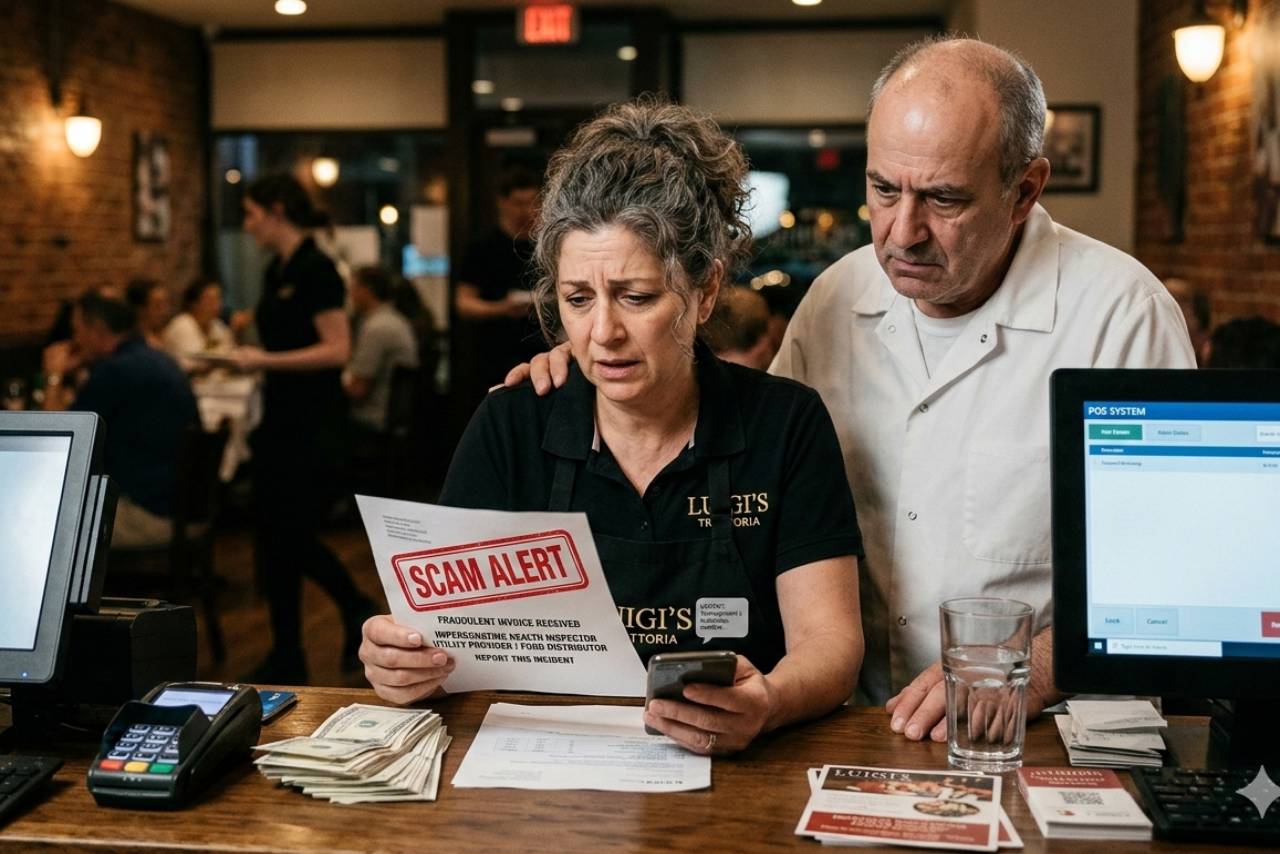
Why Restaurants Are a Prime Target for Scammers
Restaurants are built for speed. You're balancing guests, labor, food, vendors, and cash flow - often at the same time, and often with slim room for error. Scammers know that. They don't win by being clever; they win by catching a busy team member in a rushed moment and pushing them to "just handle it."
Here's why restaurants (especially multi-unit groups) get targeted so heavily -
1) High invoice volume + constant vendor communication
Restaurants process a steady stream of invoices - food, beverage, linen, pest control, repairs, utilities, delivery platforms, equipment leases. When you see dozens (or hundreds) of charges each week, a fake invoice or "updated banking info" request can blend into the noise. The more moving parts you have, the easier it is for one bad request to slip through.
2) Multiple people can initiate purchases or payments
In many operations, more than one person can request a payment, approve a purchase, or provide vendor details - GMs, assistant managers, office admins, AP teams, sometimes even shift leads. That flexibility keeps the restaurant running, but it also creates opportunity for "authority + urgency" scams like boss impersonation and gift card fraud. If roles aren't crystal clear, scammers will target the easiest link in the chain.
3) Urgency is baked into the business model
A restaurant can't "pause" service for a verification step when the line is out the door or the kitchen is in the weeds. Scammers intentionally strike during pressure points - lunch rush, dinner rush, weekends, end-of-month closes, and holidays. Utility shutoff scams work because they weaponize a real fear - no power means no business - and demand immediate action.
4) Staff turnover and rapid onboarding increase risk
Many restaurants hire frequently and promote quickly. That's normal. But it can mean newer team members don't yet know the "how we do things" rules - who can approve payments, what a real utility call sounds like, what vendors you actually use, or what the escalation path is when something feels off. Scammers love new employees because they're trying to be helpful and prove they can handle responsibility.
5) Restaurants have valuable data and fast-moving money
It's not just cash. Scammers may be after vendor payments, payroll data, employee personal information, tax documents, or login credentials. Business email compromise (BEC) is especially dangerous because it can result in large losses quickly when a payment gets redirected. Law enforcement has repeatedly warned that BEC is among the most financially damaging types of cyber-enabled fraud, largely because the transactions look "normal" until it's too late.
You need simple controls that work in a real restaurant environment. Most scams succeed for one reason - someone acted before they verified. The goal of this article is to make verification fast, repeatable, and realistic - so your team can protect the business without slowing down operations.
Scam 1. Business Email Compromise (BEC) and Vendor Payment Redirection
Business Email Compromise (BEC) is one of the most expensive scams restaurants face because it doesn't look like a scam. It looks like business as usual. A scammer either spoofs an email address (creates one that looks nearly identical) or compromises a real inbox (vendor, manager, finance contact), then sends a believable request that triggers money movement.
In restaurants, BEC usually shows up in a few repeatable ways -
1) "We updated our bank details - please pay future invoices here."
This is the classic vendor payment redirection. The email might reference real invoices, real vendor names, and real project details (like a repair, equipment order, or regular food delivery). If AP or a manager updates the vendor's banking info without verifying, the next payment goes straight to the scammer.
2) "Urgent invoice - need payment today to avoid fees or service disruption."
Scammers rely on the fact that restaurant teams are juggling dozens of priorities. They use urgency language ("today," "final notice," "we'll place the account on hold") to bypass normal approvals.
3) "Send me employee data" (W-2s, direct deposit info, SSNs, payroll files).
Some BEC attempts aren't about payment - they're about data theft for identity fraud or future attacks. This is especially common when someone impersonates an owner, GM, or finance leader.
Red flags to train for -
- Slightly off email domains (extra letters, swapped characters)
- Reply-to addresses that don't match the sender
- Bank changes requested via email only
- Pressure to bypass your normal process ("I'm in a meeting - just do it")
- Attachments or links you weren't expecting
Practical prevention that actually works -
1. Call-back verification - confirm any bank change using a known phone number (from your vendor file, not the email).
2. Two-person approval for vendor master file changes and wires/ACH adds.
3. No email-only changes to payment instructions - ever.
BEC is dangerous because it exploits trust. Your best defense is making "verify first" a non-negotiable rule.
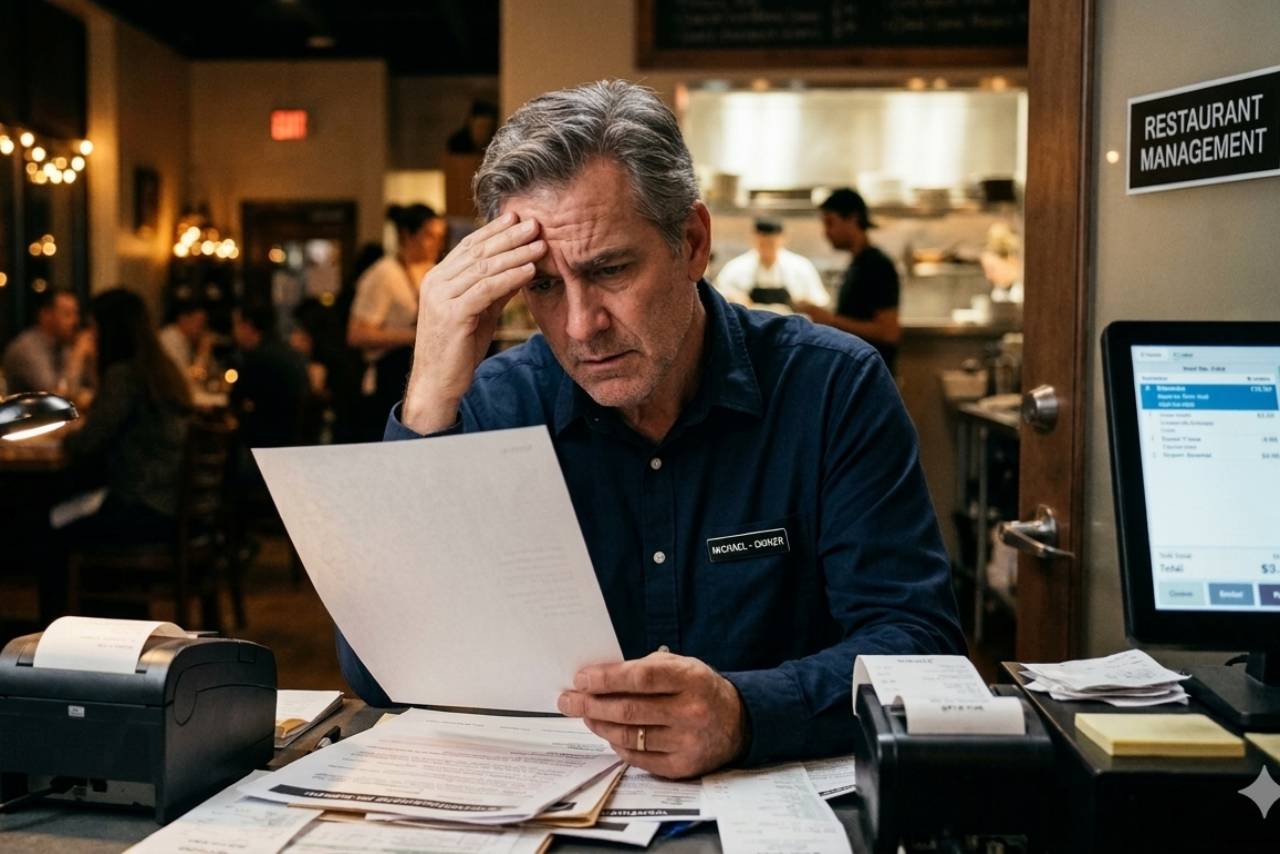
Scam 2. Fake Invoice and Unordered Merchandise Scams
Fake invoice scams work because they exploit a real operational truth- restaurants process a lot of invoices, and the pace is relentless. When your team is managing ordering, receiving, repairs, and vendor calls across busy shifts, a "normal-looking" bill can slip through - especially if multiple people touch purchasing or accounts payable.
There are two common versions of this scam, and both are designed to look routine -
1) Phony invoices that look legitimate
A scammer sends an invoice that appears to be from a real service provider - linen, pest control, hood cleaning, POS support, kitchen repairs, marketing services, even "directory listings." The invoice may include official-looking logos, formatting, and terms like "Net 15" or "Past Due." The goal is simple - get a quick payment before anyone questions whether the vendor is real or whether the service ever happened.
2) Unordered merchandise + pressure to pay
This one is more aggressive. The scammer sends an "order confirmation" or claims a manager approved a purchase. Then merchandise arrives (often low-value, generic items) and the business is hit with follow-up calls demanding payment. In multi-unit operations, this can be especially confusing - one store assumes another ordered it, or someone signs for delivery just to keep the day moving. Once there's a package and paperwork, scammers use that to create guilt, urgency, and confusion.
Why restaurants are vulnerable
- High invoice volume makes it hard to spot what doesn't belong.
- Shift handoffs create gaps ("I thought you ordered it").
- Multiple approvers can blur accountability.
- Busy periods lead to "just pay it so we can move on."
Red flags to train for
- No purchase order (PO) number or manager authorization
- Vague line items ("services rendered," "admin fees," "annual renewal")
- Vendor name similar to a real vendor but slightly different
- Invoices sent to a generic email (or suddenly to a new contact)
- Calls that push immediate payment by wire, gift card, or unusual methods
Practical controls that prevent most losses
1. Require a PO or written approval for every non-recurring vendor charge
2. Use a basic 3-way match. PO - receiving/proof of service - invoice
Maintain an approved vendor list and centralize new vendor setup
3. Give stores a simple rule - If you didn't order it, you don't pay it - and escalate to finance before responding
These scams thrive on chaos. A few consistent checks turn chaos into control.
Scam 3. Utility Shutoff Scams
Utility shutoff scams are a classic restaurant trap because they weaponize your biggest fear - losing power or gas in the middle of service. Scammers know a restaurant can't operate without electricity, refrigeration, ventilation, hot water, or a working POS. So they create a high-stress moment and push your team into paying before they verify.
How the scam typically works
A caller claims they're from your electric, gas, or water provider. They'll often use a confident script and may reference general details like your business name, address, or "account status." Then they deliver the threat - "You're past due. If we don't receive payment in the next 30-60 minutes, we'll disconnect service." The timing is intentional - lunch rush, dinner rush, a weekend, or when the GM is busy and a newer manager is covering.
Payment instructions are the giveaway. Scammers usually demand immediate payment via methods that are hard to reverse - prepaid cards, gift cards, wire transfer, or a third-party payment app. They may refuse to provide official documentation, avoid standard billing channels, or get aggressive when questioned.
Why it works on restaurants
1. Urgency - "Shutoff" feels catastrophic and immediate.
2. Stress - Teams are more reactive during rush periods.
3. Decentralized authority - Store-level leaders may feel responsible to "fix it" quickly.
4. Fear of escalation - Nobody wants to call the owner during service with "the power's getting shut off."
Red flags your team should know
- They demand payment right now and won't allow verification
- They won't provide an account number, service ticket, or callback reference
- They ask for unusual payment methods (gift cards, crypto, payment apps)
- The caller becomes hostile, threatens employees personally, or tries to keep you on the line
- They insist you cannot hang up or contact the company because the order is already in motion
A simple verification process that works in real life
1. Never pay during a call. End the call calmly.
2. Call the utility back using a known number (bill, website, vendor list - never the number the caller gives).
3. Check your account status directly through your normal portal or billing contact.
4. Escalate - if a shutoff threat is real, it should be handled by a designated role (GM/finance), not whoever answered the phone.
Utility shutoff scams succeed when fear beats process. Your defense is a short, repeatable script - Hang up, verify, escalate.
Scam 4. Gift Card / Boss Impersonation Scams
Gift card scams are painfully common in restaurants because they're built around two pressures your team feels every day, respect for authority and the need to move fast. The scammer doesn't need access to your systems or invoices - they just need one employee who wants to be helpful, doesn't want to get in trouble, and is busy enough to comply.
How it usually happens
A staff member gets a text, email, or call that appears to be from the owner, regional manager, GM, or finance leader. The message is short and urgent -
- "Are you free? I need a quick favor."
- "I'm in a meeting - can you buy gift cards for employee rewards/vendor thanks?"
- "Send me the card numbers and PINs as soon as you have them."
- "Don't tell anyone yet - it's a surprise / confidential."
Because many operators manage multiple locations and communicate on the go, the request sounds plausible. Scammers will also spoof phone numbers or use display names that look legitimate. Once the employee sends the gift card codes, the scammer drains them immediately. In most cases, the money is unrecoverable.
Why restaurants are especially vulnerable
1. Distributed teams - Not everyone knows exactly how leadership communicates.
2. Shift coverage - A new manager may be trying to prove they can handle things.
3. High trust culture - "Do the right thing and help the team" is a core value in hospitality - scammers exploit that.
4. Busy environment- People comply quickly to avoid disrupting service.
Red flags to train for
- Any request for gift cards, especially with urgency
- Requests to send codes, photos, or PINs
- "I can't talk right now - just do it"
- "Don't tell anyone" or "keep this between us"
- Communication from an unusual channel or at unusual hours
- Spelling/wording that doesn't match the real leader's tone
Practical prevention that works
1. Policy - Gift cards are never purchased for business needs without documented approval. If it's real, it can wait for the proper process.
2. Verification rule - Any request involving money, credentials, or sensitive data must be confirmed via a second channel (call the leader using a known number, not the one in the message).
3. Role clarity - Define exactly who can approve non-standard purchases - and post it where managers can see it.
4. Scripts for staff - Give employees a safe default response -
- "I can't do that without confirming. I'm calling you back on your main number to verify."
This scam is beatable. The key is removing the social pressure. Make verification the norm - not a sign of distrust.
Scam 5. Online Review Extortion and Reputation Ransom
Online review extortion is one of the most restaurant-specific scams because it targets what drives traffic - your public reputation. The scammer's leverage is simple - if they can scare you into believing a wave of negative reviews will hurt sales, they can pressure you into paying to "make it stop."
How the scam typically works
A scammer posts (or threatens to post) a fake one-star review, then follows up by phone, email, or direct message with a demand. Sometimes they claim to be a customer, sometimes a "review management company," and sometimes they pretend to be the platform itself. The message is usually direct -
- "Pay $X and we'll remove the review."
- "Give us gift cards and we won't post more."
- "If you don't respond today, we're posting reviews on all your locations."
They might also threaten to report you for health or labor issues, or claim they have "proof" of misconduct. The goal is emotional - get you to act out of fear and embarrassment, not facts.
Why this works on restaurants
- Reviews are highly visible, and a single bad review can feel personal.
- Operators know rating drops can impact conversion - especially for new customers.
- Multi-unit brands worry about copycat damage across locations.
- The scam requires no technical access - just intimidation.
Red flags
- The reviewer demands money, gift cards, or off-platform payment
- The complaint is vague, generic, or doesn't match your operation (wrong menu items, wrong location details)
- They claim they can "guarantee removal" or have special access to the platform
- They escalate quickly, "Pay today or we'll post 10 more reviews"
- They contact multiple stores with the same script
What to do instead (a practical playbook)
1. Don't pay. Paying signals you're willing, and it often escalates.
2. Document everything. Save screenshots, usernames, timestamps, emails, voicemails, and phone numbers.
3. Report through official channels. Use the review platform's reporting tools for harassment/extortion and impersonation.
4. Respond publicly if needed - calmly and briefly. Example approach, acknowledge, invite them to contact you directly through your official channels, and avoid arguing. This protects your brand without rewarding the scammer.
5. Standardize ownership of responses. One person/team should manage review escalations so stores don't react emotionally or inconsistently.
A data-driven reality check - a single fake review is rarely fatal, but reacting impulsively can be expensive. Treat review extortion like any other fraud attempt - verify, document, and route it through a consistent process.
Simple Controls That Prevent Most Losses
Most restaurant scams succeed for one reason - someone acted before verifying. The good news is you don't need a complex security program to shut down the majority of fraud attempts. You need a few simple controls that match real restaurant workflows - fast, repeatable, and easy to teach.
1) Make "Stop and Verify" a written rule (and keep it short)
Create one policy that applies to every location - Any request involving money movement, vendor banking changes, gift cards, payroll info, or employee data must be verified through a second channel. The policy matters because it removes judgment calls. When staff feel pressured, they can point to the rule.
2) Separate the roles - request, approve, pay
Even in a small operation, try to avoid one person doing all three steps. A basic separation reduces risk dramatically -
- Store requests (invoice, service, payment need)
- Manager/finance approves
- AP/payroll executes payment or data release
If your team is small, use a two-person rule for the highest-risk actions- vendor bank changes, wires/ACH adds, and urgent exceptions.
3) Lock down vendor "master file" changes
Bank updates are a common loss point. Treat vendor banking changes like you would treat a password reset -
- Only a designated role can update vendor payment details
- Require a call-back using a known number from your vendor list (not from the email)
- Require two-person approval for changes and for first payments to new accounts
- Keep a simple log of changes (who requested, who verified, when)
4) Require proof before payment (PO / receiving / invoice match)
A lightweight "3-way match" prevents fake invoices and unordered merchandise -
- A PO or written approval exists
- The item/service was received (or service confirmed)
- The invoice matches what was approved
If you can't do full matching for every spend category, apply it to the highest-risk ones - repairs, marketing, IT, and any "new vendor" invoice.
5) Give staff scripts that work during a rush
Training isn't just "watch out for scams." It's specific language employees can use when pressured -
- "I can't process that without verification. I'm calling back on the number we have on file."
- "We don't pay utilities or invoices during a live call."
- "We do not purchase gift cards for business requests."
6) Standardize escalation paths by scenario
Make it obvious who to contact for -
- Utility shutoff threats
- Vendor bank change requests
- Gift card requests
- Review extortion
When escalation is clear, fewer people improvise - and scammers lose their advantage.
These controls are simple on purpose. In restaurant operations, the best protection is the one your team can execute every day, even when it's slammed.