

.png&w=3840&q=70)




Cava Posts Strong Q1 Results While Fast Casual Rivals Struggle
Cava outpaced every major fast casual competitor in Q1 2026 with nearly 10% same-store sales growth, while Sweetgreen and Wingstop posted some of their worst quarterly results on record.

Cava Stands Out in a Difficult Quarter for Fast Casual
While much of the fast casual segment had a rough start to 2026, Cava had a different story to tell. The Mediterranean chain posted same-store sales growth of 9.7% during the first quarter, driven by a 6.8% increase in customer traffic. It's the brand's strongest comparable sales performance since Q1 2025, when it recorded 10.8% growth and it came at a time when peers like Sweetgreen and Wingstop were reporting some of their worst quarterly numbers to date. Off the back of those results, Cava raised its full-year same-store sales guidance from an earlier projection of 3% to 5% growth up to a new range of 4.5% to 6%.
A Value Proposition That's Resonating Across Income Levels
One of the more notable aspects of Cava's Q1 performance is where the growth is coming from. Despite charging more than most fast food options, the chain has kept its price increases below the consumer price index by more than 50% a deliberate move that CFO Tricia Tolivar said is connecting well with guests. Tolivar noted that Cava is seeing particularly strong performance among lower-income customers, describing the brand as building a bridge in what she called a K-shaped economy one where higher and lower earners are having very different financial experiences. The chain is also posting consistent results across age groups and geographic regions, suggesting the appeal isn't limited to any single customer segment. CEO and co-founder Brett Schulman pointed to the structural strength of the business as the driving force behind the numbers, noting that the results came despite being measured against already-strong prior year comparisons.
New Openings and a Refreshed Store Design
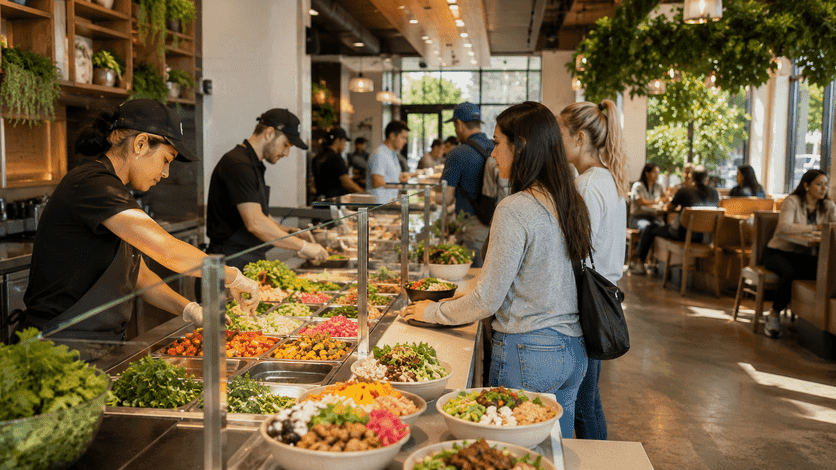
Cava opened 20 net new units during the quarter, entering new markets including Cincinnati, St. Louis, and Columbus, Ohio. The chain expects to open between 75 and 77 locations over the full year. Every new store opened in Q1 was built under the Project Soul design format, which features warmer tones, greenery, softer seating, and a more welcoming overall environment. In 2025, only some locations carried these design elements now it's the standard for all new builds. Early feedback from both customers and employees has been positive, and Tolivar noted the connection between a better work environment and better guest experience, saying a happy team member ultimately leads to a healthier bottom line.
Building the Team Behind the Growth
Cava is also investing in the people side of its expansion. The chain launched its Flavor Your Future initiative in October, which is focused on developing future leaders from within the organization. Alongside that, Cava introduced a new assistant general manager role designed to build a deeper bench of operators who are ready to step into general manager positions as new restaurants open. The dual focus on leadership development and store-level experience reflects a broader understanding that sustainable growth in restaurants depends as much on people as it does on real estate and menu.
Menu Innovation Taking Center Stage
On the food side, Cava expanded its menu in April with the addition of glazed salmon the brand's first seafood offering. The item, which features pomegranate, dates, and molasses flavors, took nearly two years to develop and has already received strong early feedback from both guests and staff. Tolivar described the launch as a key milestone, noting that menu innovation is central to sustaining guest demand over time. The chain is also in the testing phase for garlic roasted shrimp, currently being trialed in New Jersey, Nashville, and Eastern Tennessee. Cava is using its stage-gate process to evaluate how both customers and team members respond before making any decision about a broader rollout.
What Cava's Quarter Signals for the Broader Industry
Cava's Q1 results are worth paying attention to beyond just the brand itself. At a time when consumer spending pressure is affecting traffic across much of the restaurant industry, Cava is growing visits and raising guidance. Its approach controlled price increases, consistent value messaging, strong unit economics, and deliberate expansion offers a useful contrast to peers that are struggling with the same economic environment. For restaurant operators and industry watchers, the takeaway is straightforward - brands that have built a clear identity, maintained price discipline, and invested in both their people and their physical environment are finding ways to grow even when conditions aren't easy.