Crumbl’s New Tech Leadership - Lessons for Restaurants
As Crumbl names a new CTO amid major leadership changes, restaurant operators should pay attention to how technology impacts growth and stability in today’s market.
Jul 10, 2026
As Crumbl names a new CTO amid major leadership changes, restaurant operators should pay attention to how technology impacts growth and stability in today’s market.
Jul 10, 2026
OpenTable’s new Gold Tables unlocks high-value guests for restaurants, rewarding frequent diners with exclusive booking opportunities and perks while strengthening guest loyalty.
Jul 10, 2026
Clean Eatz reports robust Q1 growth for 2026, driven by a multi-stream business model and nationwide franchise expansion - key insights for restaurant leaders.
Jul 10, 2026
The Melt debuts in San Francisco International Airport's Harvey Milk Terminal 1, signaling expansion and timely lessons for restaurant operators hungry for growth in the fast-casual space.
Jul 9, 2026
Qdoba is accelerating its presence in the Western and Southern US with bold new franchise agreements set to add over 110 restaurants. See what this growth means for restaurant operators.
Jul 9, 2026
Learn how social media marketing helps restaurants share food, promote offers, build engagement, measure performance, and turn followers into customers.
Jul 8, 2026
Jersey Mike’s plans an IPO, showcasing sharp growth and franchise strength - a move with ripple effects for restaurant owners watching industry trends.
Jul 2, 2026
Hot Dog on a Stick, under new ownership by Amazing Brands, targets expansion and modernization after bankruptcy. Find out what this means for restaurant owners and how the iconic brand is reinventing itself.
Jul 9, 2026
This guide helps prepare your restaurant for match-day crowds with profitable menus, smart scheduling, strong promotions, seating, and follow-up plans.
Jul 8, 2026
Denny’s brings on restaurant industry veteran Aaron Howard as COO to spearhead turnaround strategy Project Grand Slam and revitalize operations and franchise profitability.
Jul 8, 2026
Red Robin's restaurant-level margins climbed to their highest point in five years during Q1, with CEO David Pace pointing to meaningful adoption of ChatGPT among managers as a contributing factor in the chain's improving operational performance.

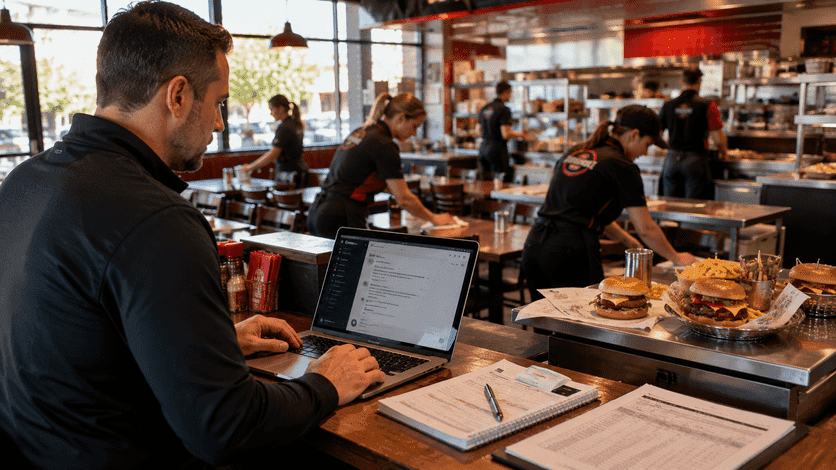
Red Robin had a solid first quarter, and the casual-dining chain wasn't shy about naming one of the reasons why. CEO David Pace credited meaningful adoption of ChatGPT among the chain's restaurant managers as a contributor to improved operational efficiency making Red Robin one of the more direct examples in the industry of a chain tying AI tool usage to actual financial results. Restaurant-level margins reached 14.8% in Q1, up 50 basis points from the prior period and the highest the chain has posted in five years. Labor cost savings of 130 basis points driven by leaner scheduling were a significant part of that improvement, alongside a 1% increase in average check. But Pace made a point of singling out the role AI tools played for managers who have embraced them.
Smashburger rolled out a version of ChatGPT across the company last fall, and according to Pace the uptake has been particularly strong among managing partners. The chatbot is being used to help with employee scheduling, food cost management, and other day-to-day operational tasks that typically consume significant time and mental bandwidth for store-level leaders. Pace described the technology as helping shine a light on opportunities for those managers a way of surfacing insights and inefficiencies that might otherwise go unnoticed in the daily grind of running a busy restaurant. The implication is that managers who are using the tool are making better, faster decisions in areas that directly affect the bottom line. He also suggested there's more runway ahead. Adoption isn't yet universal across the system, and Pace said the company is actively working to extend comfort with the technology to more managers hinting that the operational gains seen so far could grow as usage expands.
The AI push sits within Red Robin's larger turnaround plan, called First Choice, which covers four areas - driving traffic, improving finances, refreshing restaurants, and building a culture of ownership among employees under the banner of winning together. Technology and AI are specifically tied to that last pillar. Pace framed the company's approach to technology as a constant challenge to the status quo an effort to find ways to reduce friction, enhance capabilities, and differentiate the brand in a competitive casual-dining environment. That framing positions AI not as a cost-cutting tool but as part of a broader effort to run the business better at every level.
Red Robin is still in turnaround mode after a prolonged stretch of traffic declines, and the Q1 numbers reflect a chain making gradual progress rather than a sudden reversal. Traffic was down 1.6% year over year, but that was the chain's best result on that metric in three years. Same-store sales fell 0.6%. The direction is improving, even if the absolute numbers still show a brand working its way back. The market responded positively to the earnings report. As of Thursday afternoon, Red Robin's stock was up more than 21% since the results were announced Tuesday a signal that investors see the operational improvements as meaningful, even if full recovery is still a work in progress across the 500-unit chain.
Red Robin's ChatGPT rollout is part of a broader pattern of restaurant chains putting AI tools directly into the hands of employees rather than deploying them purely in back-office or corporate functions. Burger King introduced an AI assistant called Patty earlier this year, designed to coach staff through their headsets during service. Freddy's Frozen Custard has given employees access to an AI-powered knowledge base that functions as an always-available operating manual. The results across the industry aren't uniform, however. Starbucks recently abandoned an AI inventory management system after less than a year following reliability issues flagged by store employees. The contrast between Red Robin's positive experience and Starbucks' reversal illustrates that AI implementation at the restaurant level is highly dependent on the specific use case, the quality of the tool, and how well it fits into existing workflows.
What makes Red Robin's Q1 story notable isn't just that the chain is using ChatGPT plenty of businesses are experimenting with AI tools. What stands out is that Pace connected the technology directly to specific financial outcomes on an earnings call, putting a number on the contribution rather than speaking in general terms about innovation and future potential. That kind of accountability is relatively rare in how restaurant chains talk about their technology investments. It sets a precedent for how AI adoption could and perhaps should be evaluated not by how sophisticated the tool is, but by whether it demonstrably moves the metrics that matter. For operators across the industry watching how AI investments play out in practice, Red Robin's Q1 offers one of the more concrete data points available so far.