How to Build Your Restaurant Back Office Software Stack
Learn how to build a restaurant back office software stack that improves efficiency, integrations, reporting, cost control, and scalability overall.
Back Office
Aug 21, 2026
Learn how to build a restaurant back office software stack that improves efficiency, integrations, reporting, cost control, and scalability overall.
Aug 21, 2026

Clear operating procedures help restaurants manage opening, closing, food preparation, sanitation, guest service, inventory, staffing, and routine operational reviews effectively.
Aug 21, 2026

Starbucks is making strategic staffing changes, laying off 200+ workers as it restructures operations and prepares for future growth in southern and eastern regions.
Aug 21, 2026
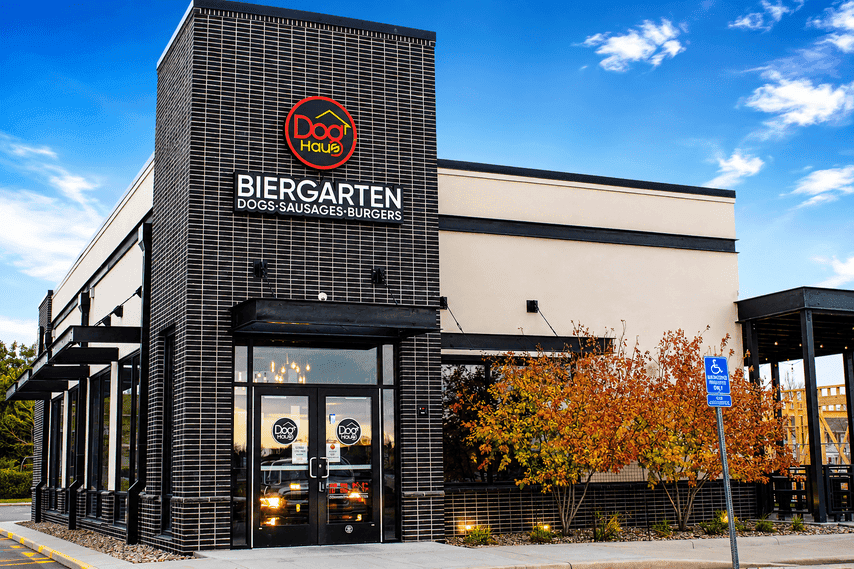
Dog Haus appoints James Field as chief marketing officer and promotes CJ Ramirez to chief experience officer, setting the stage for innovative brand growth and franchisee success in the national restaurant scene.
Aug 21, 2026
Learn how to open a restaurant with no experience by planning your concept, budget, location, team, operations, and successful launch.
Aug 19, 2026
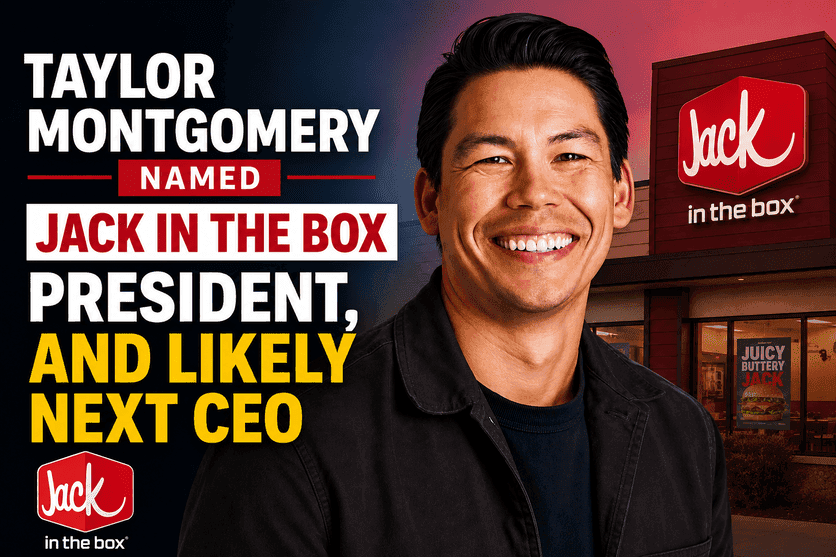
Taco Bell’s Taylor Montgomery has been appointed as President of Jack in the Box, positioning him to take over as CEO within a year - signaling major shifts for the QSR brand's future.
Aug 20, 2026
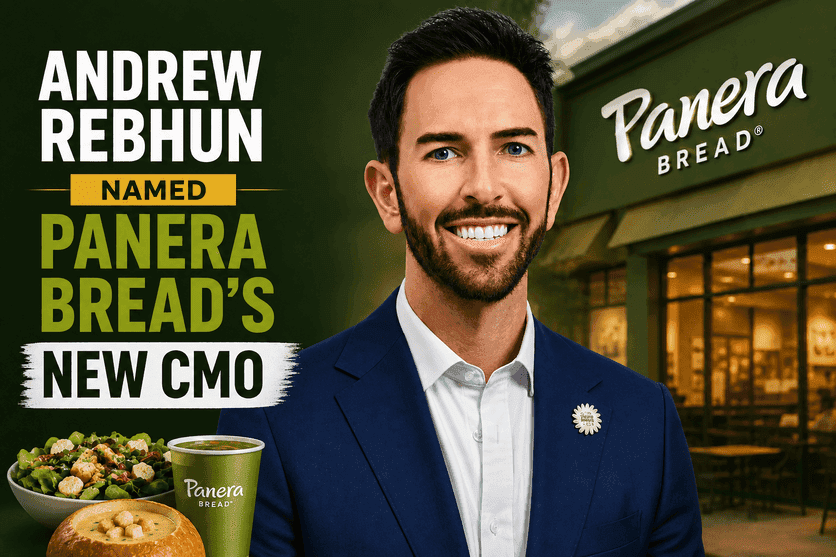
Panera Bread welcomes Andrew Rebhun as Chief Marketing Officer, succeeding Mark Shambura. Learn about his background at CAVA, El Pollo Loco, and McDonald's.
Aug 20, 2026

Payroll advances help restaurant owners give hourly employees earlier access to earned wages while maintaining accurate records, policies, and compliance.
Aug 19, 2026

Explore the main types of ordering technology restaurants use to improve accuracy, speed, payments, customer convenience, and operational efficiency daily.
Aug 17, 2026

Learn the eight essential steps of the restaurant payroll process, from tracking hours and calculating wages to payments and recordkeeping.
Aug 17, 2026

Unlock Exclusive Access To Webinars, Events, And The Latest News For Free!
Barre3 CEO Sadie Lincoln outlines a women-first, self-funded growth strategy as the brand expands franchises, posts rising AUVs, and enters Chile.

Photo by Risen Wang
At the inaugural Franchise Times Fitness Finance & Growth Conference in Chicago on May 20, 2026, Barre3 CEO Sadie Lincoln staked the brand’s next chapter on a simple idea: listen to “her.” That is how the company refers to the Barre3 class member whose needs shape every decision. Lincoln said tracking competitor moves still matters, but the team obsesses over actual and potential consumers rather than wellness influencers.
That focus, paired with two decades of self-funded discipline, has guided measured expansion that includes 39 net new franchise studios since 2023 and a February 2026 launch in Santiago, Chile. The timing meets a buoyant market. The boutique fitness sector was valued at USD 38.05 billion in 2025 and is projected to reach USD 39.78 billion in 2026, reflecting sustained demand for specialized, community-driven workouts according to Global Growth Insights.

Lincoln and her husband, Chris, co-founded Barre3 in 2008 and chose to remain fully self-funded, using cash flow to finance each phase of growth. The concept broke from traditional barre, Pilates, and yoga by centering programming on women’s physiology and emerging insights into female fitness psychology. That instinct aligned with consumer behavior.
According to Exercise.com, women are statistically more likely to attend studios focusing on barre, Pilates, and yoga compared to male counterparts. The company’s unwavering capital discipline has since supported the opening and conversion of dozens of studios without outside investment, a model that keeps the feedback loop between client, operator, and headquarters remarkably tight.

Under the hood, the franchise economics tell a steady story. Last year, average unit volume reached $432,575 across 145 reporting franchisee studios, a 9 percent year-over-year increase per Barre3’s 2026 Franchise Disclosure Document. Two-room studios led the pack with a $716,108 AUV, up 10 percent, while single-room formats averaged $416,019, a 9 percent rise.
The brand paired organic openings with selective acquisitions that accelerated market entry: 2023’s purchase of The Barre Code with over 30 studios, a 2024 buyout of Barre Centric’s three New York studios, and a 2025 acquisition of Studio Barre’s 11 locations. The franchise model requires a $50,000 entry fee and 6 percent recurring royalties according to Fitt Insider, a fee structure positioned to compete with peers. To build for scale, Lincoln elevated Emerald Lopez to president last summer to apply a dedicated playbook for growth, freeing Lincoln to focus on brand strategy and stakeholder support.

Lincoln’s own role has shifted with the system’s needs. “The biggest learning has been when to fire myself and let go and focus on where I can uniquely serve the company the best I can.” She described a mental image of franchisees, many of them women investing life savings and relentless energy into client experience, and asked whether she remained the best person to guide the company. “I want to bring someone in who has a playbook for growth,” she said, explaining her decision to hire Lopez.
On the wave of collaborative acquisitions that followed pandemic closures, Lincoln added, “It honestly was reactive that way and very relational in talking to these three distinct owners,” signaling how peer support among women-owned studios helped convert complementary brands into the Barre3 system. The wider sector is tilting in their favor. At the conference, industry observers noted that while traditional big-box gyms saw moderated growth expectations, boutique studios continue to hold up well among the higher-spend, more engaged consumer cohort. In-person group exercise revenue reached $12.9 billion in 2023, and boutique fitness franchises topped 2,800 units nationwide. Personalized trends from cycle syncing to snack-sized workouts are steering consumers to studios that honor women’s physiological cycles and limited time, the very terrain where Barre3 listens most closely.

By the numbers, momentum is shifting toward franchisees. The 2026 Franchise Disclosure Document shows 39 net new studios joined the network since 2023, contributing to a system-wide footprint that exceeds 200 predominantly women-led locations. Company-owned studios reported an AUV of $783,918, a modest 2 percent decline year-over-year, a contrast to franchisee gains that hint at where performance is building. International growth gained a foothold in February 2026 with Barre3’s first South American franchise in Santiago, Chile, in partnership with entrepreneurs Claudia Dienemann and Romina Rodríguez, following a December 1, 2025 announcement.
Questions still trail the expansion. A self-funded model preserves control but may constrain capital availability for those who want to move faster than cash flow allows. The integration of diverse brand acquisitions raises consistency concerns across markets and invites scrutiny on whether high-AUV two-room studio performance can be replicated internationally.
Tracking performance beyond initial conversion and maintaining robust support for a 100 percent women franchisee base requires ongoing data transparency, a current gap in publicly available disclosures that could affect projections of sustainable scale. For operators studying the playbook, the cues are clear enough. Prioritize the member’s voice, build systems that reward measured growth, and recruit leadership with a repeatable plan.
Barre3 is applying that formula while the global boutique fitness market expands toward USD 39.78 billion in 2026. The next checkpoints are concrete: early results in Santiago, continued outperformance of two-room formats, and clearer reporting across the converted banners. If the brand keeps “her” in focus, the path ahead looks both disciplined and inviting, the kind of growth story that feels good from the front desk to the balance sheet.