Boddie-Noell to Open 31 Scooter’s Coffee in NC, VA
Hardee’s giant Boddie-Noell inks 31-unit Scooter’s Coffee deal for NC and VA, leveraging drive-thru growth and local roots with rollout over 12–18 months.
May 15, 2026
Hardee’s giant Boddie-Noell inks 31-unit Scooter’s Coffee deal for NC and VA, leveraging drive-thru growth and local roots with rollout over 12–18 months.
May 15, 2026
Wingstop turns match weeks into a multi-sensory festival, aligning bold pop-ups with World Cup energy to build brand affinity and measurable momentum.
May 15, 2026
Dirty soda chain Swig is expanding into Colorado through a 10-unit franchise deal, riding a consumer beverage trend that's catching the attention of major QSR players nationwide.
May 15, 2026
Learn how to develop a memorable restaurant brand identity that stands out in a crowded market, attracts loyal customers, and drives repeat business with actionable strategies and affordable tools.
May 15, 2026
The parent company behind Dunkin', Buffalo Wild Wings, and Arby's has filed for an IPO a move that could reshape how Wall Street views the restaurant sector.
May 15, 2026
Papa Johns has teamed up with Alphabet's Wing for drone delivery of its new sandwich lineup in parts of Charlotte marking the first partnership of its kind between Wing and a national QSR brand.
May 15, 2026
A warm, expert-led look at McDonald’s Q1 results, menu makeover, and the refranchise question shaping its growth.
May 14, 2026
A reflective look at Habit Ranch, its immersive desert activation, and what it signals for brand loyalty and mindful, experiential dining.
May 14, 2026
Cousins Maine Lobster pilots a fried-seafood concept in Louisville, expanding through franchising while preserving premium sourcing and guest experience.
May 14, 2026
A warm look at how restaurant scheduling apps and AI are reshaping labor, compliance, and margins from cafés to franchises.
May 14, 2026
Unlock Exclusive Access To Webinars, Events, And The Latest News For Free!
Learn the restaurant-tested strategy for using Instagram and TikTok. Discover exactly how to generate real foot traffic—and revenue—with actionable steps for 2026.

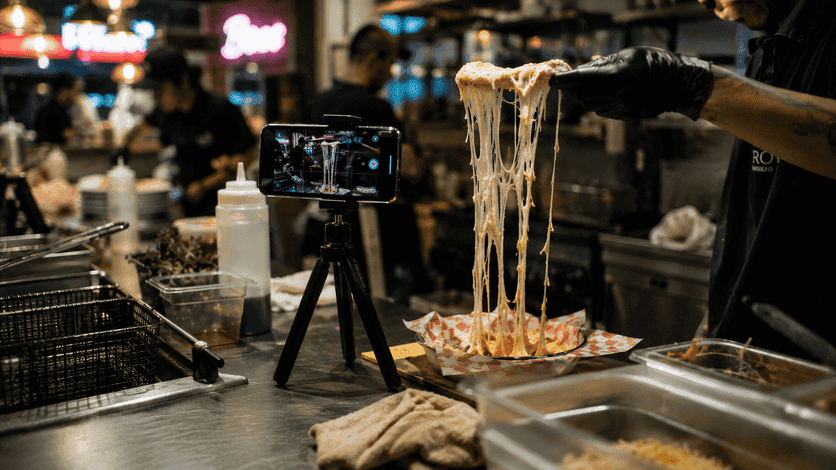
You are standing in the kitchen on a Friday afternoon. The prep is done, the line is set, and you decide to take a quick video of your lead line cook pulling a massive, perfectly melted mozzarella stick apart. You spend twenty minutes trying to find the right trending audio, post the video to your social accounts, and wait. On one app, the video gets 350 views and two comments from your cousins. On the other app, it hits 15,000 views in three hours.
You feel a rush of adrenaline. You went viral! But then, Saturday night rolls around, and your dining room is exactly as full as it was last week. Not a single new face walked through the door because of that video.
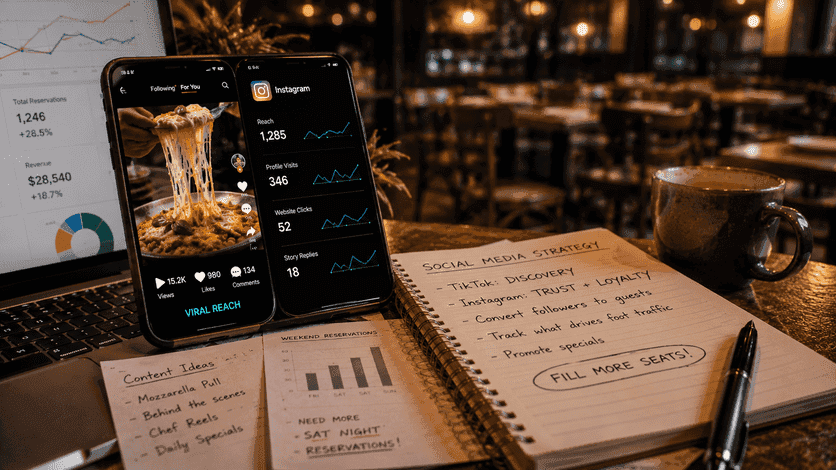
This is the ultimate frustration for independent operators. You are burning your limited time trying to be a part-time videographer, but the metrics aren't translating into revenue. To stop wasting time, we have to answer the golden question - Instagram vs. TikTok - Which Platform Drives More Foot Traffic for Restaurants in 2026?
The short answer is that they both do, but they act as entirely different stages of your marketing funnel. Let’s break down exactly how to leverage these platforms without needing a corporate marketing budget, and build a system that turns passive scrollers into paying guests.
You are not selling software; you are selling a sensory experience. Diners eat with their eyes long before they look at a menu's price point. However, the way people use social media to find food has radically shifted over the last few years.
People no longer open Google Maps first when they are hungry. Gen Z and Millennials open social apps and type "best late night tacos near me" directly into the search bar. Social media has become a hyper-local search engine.
But user intent varies wildly by app. If you treat your TikTok account exactly like your Instagram account, you will fail on both. One platform is built for massive, top-of-funnel discovery (getting strangers to know you exist), while the other is built for bottom-of-funnel retention (turning one-time visitors into fiercely loyal regulars). Understanding this difference is how you drastically lower your customer acquisition cost and pack your dining room.
To decide where to put your energy, you have to understand the underlying psychology of the user on each app.
TikTok - The Local Discovery Engine
TikTok’s algorithm in 2026 is terrifyingly good at location-based targeting. It knows exactly what city your user is standing in. TikTok is the ultimate top-of-funnel discovery tool. Users open this app to be entertained by strangers.
The Vibe - Raw, unpolished, and fast-paced. High production value actually hurts you here. A shaky smartphone video of your chef explaining why he uses a specific local farm for his tomatoes will dramatically outperform a slick, slow-motion commercial.
The Goal - Viral local reach. You want a user three miles away to see a chaotic, fun behind-the-scenes video of your kitchen and think, "Whoa, where is that?"
Foot Traffic Impact - Massive spikes for specific menu items. If a specific dish goes viral locally on TikTok, you will sell out of it by 7 - 00 PM.
Instagram - The Digital Menu and Trust Builder
If TikTok is how they find you, Instagram is how they verify you. When a user sees your restaurant on TikTok or hears about it from a friend, their immediate next step is to search for your handle on Instagram. They use your grid to answer critical questions - Is this place nice enough for an anniversary? Are the cocktails craft or dive-bar style? Does the food actually look like the viral video?
The Vibe - Aesthetic, reliable, and community-driven. Your Instagram feed serves as your modern website. It requires a modern, clean, and professional UI aesthetic.
The Goal - Building a loyal community. You utilize Instagram Stories to post daily specials, run polls, and share user-generated content (reposting guests who tag you).
Foot Traffic Impact - Consistent, predictable reservations. Instagram drives your regulars to come back a third or fourth time because you stay top-of-mind.
Do not try to guess what kind of videos the local algorithm wants. You need to reverse-engineer success.
Identify the top local food influencers in your city, or find highly successful restaurant accounts in a neighboring market. Pull the links of their top 100 most-watched videos. Using extraction tools, pull the actual audio transcripts from these videos.
Once you have the raw text, run those 100 transcripts through an open-source Large Language Model (like Llama 3.3 or Gemma) and ask the AI to analyze the patterns. What exact words do they use in the first three seconds to hook the viewer? What is the pacing? Do they start with a question or a bold statement? By analyzing the literal transcripts of top performers, you can script your own authentic videos using proven frameworks rather than staring at a blank screen.
As an independent operator, you cannot spend thirty hours a week writing captions and formatting posts. You need an automated workflow.
Record your chef talking about a new dish for three minutes. Run that raw audio through a transcription tool like Castmagic. Then, set up an automated pipeline that takes that raw text and pushes it to an LLM. Prompt the AI to rewrite the transcript into distinct social media posts. To keep your data organized for your content calendar, ensure your prompt explicitly dictates that the complete data of the social media post will divide according to the sub heading like instagram, linkdin etc in the LLM output.
Now, string this together with a workflow automation tool like n8n. You can automatically push these perfectly categorized captions directly into a master Google Sheet. When it is time to build your weekly schedule, use the "Get row(s) in sheet" node to pull the approved captions and send them directly to your scheduling tool or your management team's Slack channel for final review. You just turned a three-minute audio clip into a week's worth of multi-platform content with zero manual data entry.
Getting 10,000 views on a video means absolutely nothing if you drop the ball on the final click. When a hungry user clicks the "link in bio" on your profile, what do they see?
If they hit an outdated page that takes five seconds to load and features a tiny PDF menu that they have to pinch-and-zoom to read, you just lost the sale. Your digital landing page must operate flawlessly.
Prioritize an "editorial-style" layout. Think of it like a high-end food magazine - massive, edge-to-edge photography of your dishes, plenty of negative space, and a sleek, sophisticated design. To keep the interface clean and drive the user to the single most important action (booking a table or ordering online), ensure your developer modifies the site CSS so that it can neglect the hyperlink text if it is found in Title
A fatal flaw in restaurant social media marketing is obsessing over follower counts and total views. If 50,000 people in London watch your video, but your restaurant is in Chicago, your revenue will not increase by a single dollar.
Here are the metrics that actually correlate to restaurant foot traffic -

You do not need an expensive ad agency. Equip your management team with these accessible tools -
When deciding on Instagram vs. TikTok - Which Platform Drives More Foot Traffic for Restaurants in 2026, your benchmarks should look like this -
Do not let content creation paralyze you. Stop overthinking the production value and start publishing. Pin this checklist to your back office door and execute it this week -