How to Set Up and Optimize Your Restaurant Google Business Profile
Optimize your restaurant google business profile with accurate details, posts, Q&A, attributes, reviews, and tracking to increase visibility and orders.
May 6, 2026
Optimize your restaurant google business profile with accurate details, posts, Q&A, attributes, reviews, and tracking to increase visibility and orders.
May 6, 2026
A strong restaurant brand comes from clear values, consistent experiences, visual identity, customer focus, digital presence, and trusted service.
May 5, 2026
Clopen shifts may seem efficient, but they reduce rest, increase fatigue, and harm employee performance. Learn how back-to-back shifts impact morale, productivity, and retention and how better scheduling can improve team well-being and business outcomes.
May 6, 2026
Overloading top employees may boost short-term results but leads to burnout and turnover. Learn warning signs, business impact, and how to balance workloads effectively.
May 5, 2026
Discover operational insights, business strategies, and customer experiences drawn from Cappys Cafe in Newport Beach. Learn how this iconic breakfast and lunch spot thrives through community connection, technology, and unique hospitality.
May 5, 2026
Struggling with employee retention? Learn how unpredictable scheduling drives turnover and what you can do to create a more stable workforce.
May 4, 2026
Photo by on Unsplash
GoTo Foods blends seven iconic brands to push snacking as a growth engine, expanding dayparts, off-premise channels, and co-branding.
May 3, 2026
Mark Graff steps in as CFO to anchor Red Robin's First Choice turnaround with disciplined financial leadership.
May 3, 2026
Photo by Graphe Tween on Unsplash
Doinita Leahu redefines hospitality leadership with practical training, mentorship, and people-first systems guiding Vicious Biscuit’s growth.
May 3, 2026
Explore high-traffic Texas markets where restaurants can succeed by matching concepts, customer behavior, visibility, and daily demand.
Apr 30, 2026
A strong restaurant brand comes from clear values, consistent experiences, visual identity, customer focus, digital presence, and trusted service.

Restaurant branding is not just a logo, a color palette, or a catchy name. Those details matter, but they are only part of the larger picture. A strong restaurant brand is the feeling customers have when they think about your business. It is the experience they remember after they leave, the reason they choose you over another restaurant, and the value they attach to your food, service, and atmosphere.
This is why two restaurants can sell similar food at very different prices. One restaurant may charge $20 for a burger and have customers happily pay for it, while another struggles to sell a burger for $12. The difference is not always the ingredients alone. Often, the difference is the brand. Customers are willing to pay more when they believe the experience is worth more. That experience may include the restaurant's story, design, service, menu presentation, lighting, music, staff uniforms, packaging, and overall atmosphere.
For restaurant owners, branding should be treated as an operational strategy, not just a marketing project. Every customer touchpoint sends a message. The way your menu looks, the tone of your social media posts, the cleanliness of your dining room, the speed of service, and the way employees greet guests all shape how people perceive your restaurant.
A strong brand creates consistency. Customers know what to expect, and that trust makes them more likely to return. It also helps your restaurant stand out in a crowded market where many businesses are competing for attention. When your brand is clear, customers understand who you are, what you offer, and why your restaurant is worth choosing.

A strong restaurant brand starts with knowing what your business stands for. Before choosing colors, designing a logo, or posting on social media, restaurant owners need to define the values that guide the business. These values shape how the restaurant makes decisions, treats customers, trains employees, builds menus, and responds when problems happen.
Core values should go deeper than simple statements like "good food" or "great service." Those are expected. A stronger brand value explains what makes your restaurant different. Do you stand for speed and convenience? Family comfort? Premium ingredients? Local sourcing? Hospitality first? Cultural authenticity? Fun and creativity? Your values should help customers understand why your restaurant exists and why they should care.
It is also helpful to define your "anti-brand." This means being clear about what your restaurant is not. For example, a fast-casual brand may decide it is not formal, slow, or complicated. A premium dining brand may decide it is not cheap, rushed, or generic. Knowing what you are not helps protect the brand from confusing decisions later.
Here are a few questions restaurant owners can ask -
1. What do we want customers to feel when they visit? This could be comfort, excitement, trust, energy, relaxation, or convenience.
2. What standards will we never compromise? This may include food quality, cleanliness, service speed, hospitality, consistency, or ingredient sourcing.
3. What type of customer do we want to attract? Your values should connect with the people most likely to believe in your concept.
4. What do we refuse to become? This helps you avoid copying competitors or making brand decisions that weaken your identity.
When your core values are clear, your restaurant becomes easier to understand and easier to remember. Customers are more likely to connect with a brand that has a clear point of view. Over time, those customers can become loyal supporters because they are not just buying a meal; they are buying into what your restaurant represents.
A strong restaurant brand needs more than a menu. It needs a story customers can understand, remember, and connect with. People are naturally drawn to stories because stories create emotion. They explain why a business exists, what problem it is trying to solve, and why customers should care.
For restaurant owners, a brand story does not need to be dramatic or complicated. It simply needs to be honest and clear. Maybe the restaurant was built around family recipes. Maybe the owner wanted to bring a missing food concept to the community. Maybe the goal was to create a faster lunch option for busy workers, a welcoming place for families, or a premium dining experience that feels special without feeling intimidating.
A strong brand story usually includes three parts -
1. The Problem - What gap, frustration, or need inspired the restaurant? This could be a lack of authentic food in the area, poor service in similar concepts, limited healthy options, or a missing place for people to gather.
2. The Journey - What challenges did the owner or team face while building the business? Sharing the effort behind the restaurant makes the brand feel more human and relatable.
3. The Solution - How does the restaurant solve that problem for customers today? This is where the story connects directly to the guest experience, from the menu and service style to the atmosphere and overall promise.
Your story should show up throughout the business. It can influence menu descriptions, website copy, social media posts, staff training, packaging, and even the way employees talk about the restaurant. When the story is clear, customers are not just visiting another place to eat. They are participating in something with meaning.
A clear brand story also makes marketing easier. Instead of only promoting discounts or new items, the restaurant can communicate a deeper reason to visit. Customers remember businesses that make them feel connected. When your story is consistent and believable, it helps turn first-time guests into repeat customers and repeat customers into loyal advocates.
A strong restaurant brand is not built for everyone. One of the biggest branding mistakes restaurant owners make is trying to appeal to every possible customer. When the target audience is too broad, the brand becomes unclear. The menu tries to satisfy too many preferences, the design feels generic, the marketing becomes scattered, and the customer experience loses focus.
Identifying your ideal customer helps you make better decisions. Instead of guessing what people want, you can build the restaurant around a clear customer profile. This does not mean other people cannot visit your restaurant. It simply means your brand is designed around the customers most likely to value your concept, return often, and recommend you to others.
Start by asking who your restaurant is really for. Is it for busy professionals who need a fast lunch? Families looking for convenience and comfort? Young customers who value trendy, social, and "Instagrammable" environments? Health-conscious guests who care about ingredients? Sports fans who want energy, screens, and group seating? Each customer type expects a different experience.
Restaurant owners should look at a few key details -
1. Customer lifestyle - Understand how your ideal customer spends their day. Are they ordering during work breaks, dining after school events, meeting friends at night, or looking for weekend experiences?
2. Customer values - Identify what matters most to them. This may be speed, price, quality, atmosphere, convenience, portion size, service, nutrition, or social experience.
3. Customer behavior - Know where they spend time online and offline. Some customers discover restaurants through Google, reviews, and maps. Others rely more on Instagram, TikTok, local recommendations, or delivery apps.
4. Customer expectations - Match your brand experience to what they want. A quick-service customer may expect clear menus, fast ordering, and easy pickup. A social dining customer may expect strong decor, music, lighting, and shareable menu items.
The more clearly you understand your ideal customer, the easier it becomes to shape your restaurant brand. Your menu, pricing, design, service style, website, promotions, and social media should all speak to that customer. When people feel like a restaurant was built for them, they are more likely to remember it, return to it, and become loyal supporters of the brand.

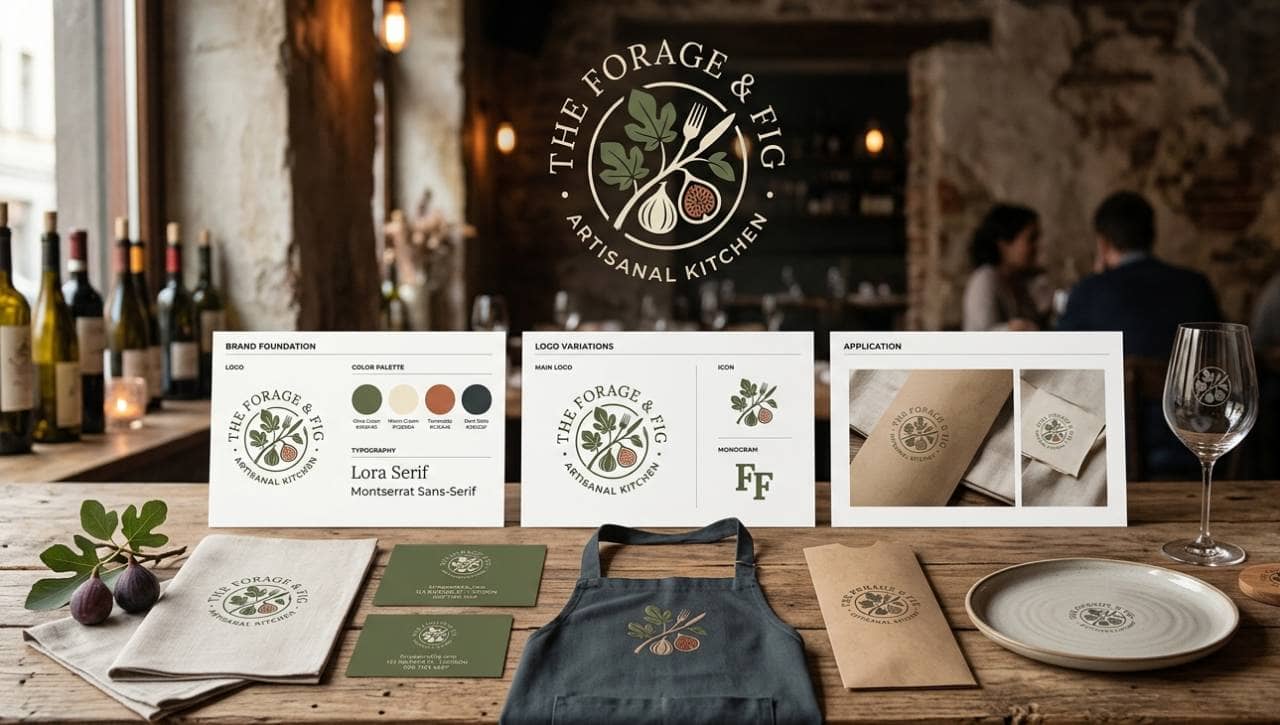
Once you know your values, story, and ideal customer, the next step is turning that strategy into something customers can see and recognize. This is where visual identity comes in. Your visual identity includes your logo, colors, fonts, menu design, signage, packaging, uniforms, website style, social media graphics, and even the way your restaurant looks from the street.
Visual identity matters because customers often form opinions before they taste the food. A clean, professional design can make the restaurant feel more trustworthy. A bold and modern design can make it feel energetic and trendy. A warm and simple design can make it feel comfortable and family-friendly. Every design choice sends a message.
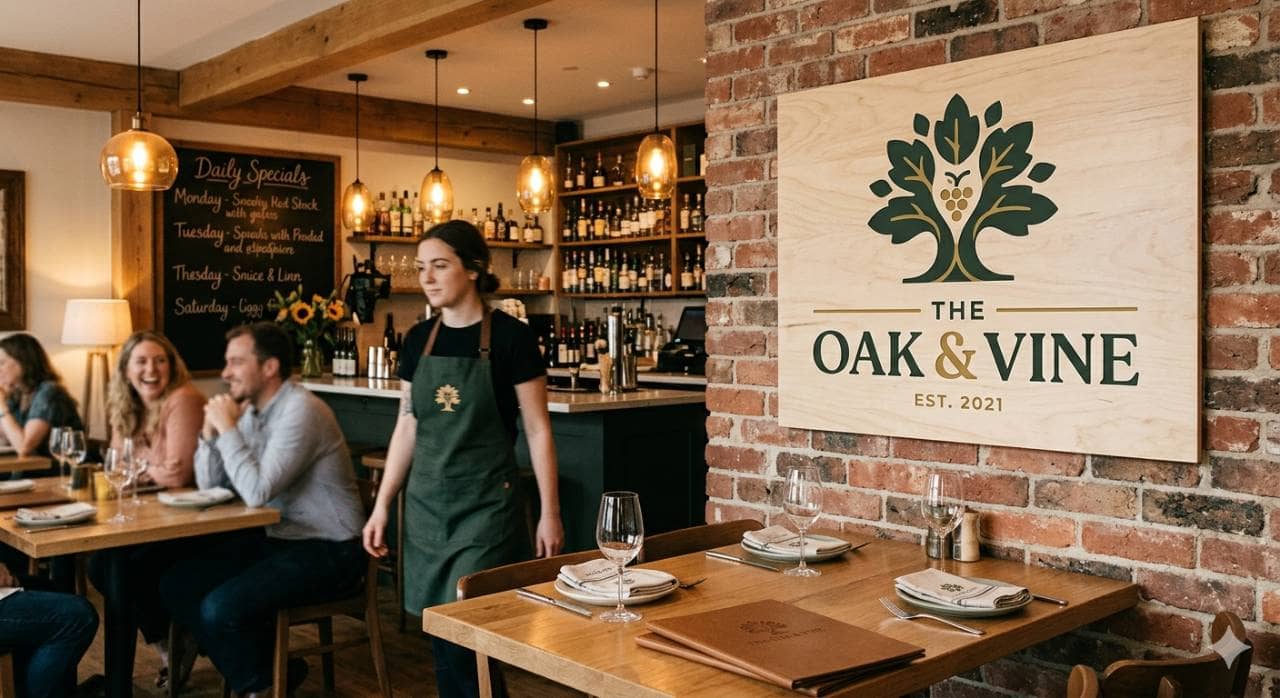
Restaurant owners should not choose visuals only because they look nice. The design should match the brand experience you want to create. For example, a premium steakhouse may use darker colors, elegant fonts, soft lighting, and polished menu design to communicate quality. A fast-casual burger restaurant may use brighter colors, simple signage, and easy-to-read menus to communicate speed and convenience.
Your visual identity should include a few key elements -
1. Logo and brand mark - Your logo should be easy to recognize and flexible enough to work on signs, menus, packaging, uniforms, websites, and social media.
2. Colors and fonts - Colors and typography should reflect the personality of your restaurant. They should also be consistent across every platform.
3. Menu design - Your menu should be clear, organized, and easy to read. It should also guide customers toward the items you want to sell most, especially high-margin or signature products.
4. Signage and packaging - Signs, bags, boxes, cups, labels, and takeout materials should reinforce the brand even after the customer leaves the restaurant.
5. Interior details - Lighting, wall decor, furniture, music, uniforms, and table settings should support the same feeling your brand promises.
A strong visual identity makes your restaurant easier to remember. It also creates consistency, which builds trust. When customers see the same look and feel on your website, menu, storefront, packaging, and social media, the brand feels more complete and professional. Over time, those repeated visual cues help customers recognize your restaurant faster and connect it with a specific experience.
A strong restaurant brand is not only built through visuals. It is built through the full customer experience. From the moment a guest sees your restaurant online, walks through the door, places an order, receives their food, and leaves, every step shapes how they feel about your brand.
This is why restaurant branding must go beyond marketing. A customer may like your logo, but if the service is slow, the dining room feels uncomfortable, or the food presentation does not match the brand promise, the experience becomes inconsistent. Strong brands are built when the customer experience supports the message you are trying to communicate.
Restaurant owners should think through the experience from the customer's point of view -
1. First impression - What does the customer see first? This could be your storefront, website, online menu, social media page, delivery listing, or host stand. The first impression should immediately communicate the type of experience customers can expect.
2. Ordering experience - The ordering process should match your brand. A quick-service restaurant should make ordering fast, clear, and simple. A full-service restaurant should make the process feel guided, welcoming, and personal.
3. Atmosphere - Lighting, music, seating, layout, temperature, smell, and noise level all influence how customers feel. A casual family restaurant may need comfort and space, while a trendy social concept may need energy, design, and photo-friendly details.
4. Service style - Staff behavior is one of the strongest parts of the brand. Employees should understand the tone of the restaurant. Should service feel fast and efficient, warm and conversational, polished and professional, or fun and casual?
5. Food presentation - The way food is plated, packaged, labeled, or served should support the brand. A premium brand needs presentation that feels worth the price. A convenience-focused brand needs packaging that travels well and makes eating easier.
For restaurant owners, this is where branding becomes operational. Training, cleanliness, speed of service, menu flow, table layout, packaging, and employee communication all become part of the brand. A strong restaurant brand is created when every detail works together to deliver the same message consistently.
Your restaurant brand does not only live inside your dining room. For many customers, the first experience with your brand happens online. Before they visit, they may search your restaurant on Google, look at your website, check your menu, scroll through photos, read reviews, or view your social media pages. If your digital presence is weak, outdated, or inconsistent, customers may form a negative impression before they ever walk through the door.
A strong digital brand presence helps customers understand who you are quickly. They should be able to find your menu, location, hours, ordering options, photos, and brand personality without confusion. This is especially important because many customers make dining decisions from their phones. If your website is difficult to use on mobile, your menu is hard to read, or your online information is outdated, you may lose potential guests to a competitor.
Restaurant owners should focus on these key areas -
1. Mobile-friendly website - Your website should be easy to navigate on a phone. Customers should not have to zoom in, search too long, or click through too many pages to find basic information. Your menu, address, hours, phone number, reservation link, and online ordering link should be simple to access.
2. Consistent online listings - Your Google Business Profile, delivery app listings, review sites, and social media pages should all show the same information. Incorrect hours, old menus, or outdated photos can frustrate customers and damage trust.
3. High-quality photos - Photos help customers imagine the experience before they visit. Use clear images of your food, dining area, drinks, packaging, team, and atmosphere. The photos should match the brand you want to communicate, whether that is premium, casual, fun, family-friendly, fast, or modern.
4. Social media voice - Your social media content should sound and feel like your restaurant. A playful brand may use humor and behind-the-scenes content. A premium brand may focus on polished food photography and elegant messaging. A community-focused brand may highlight staff, guests, events, and local partnerships.
5. Online reviews and reputation - Reviews are part of your brand because they show how customers describe your restaurant. Responding professionally to both positive and negative reviews shows that you care about the guest experience. It also gives future customers confidence that the business is active and attentive.
Your digital presence should feel connected to the in-person experience. If your restaurant looks energetic online but feels dull in person, customers may feel misled. If your website promises premium service but your photos, menu, and reviews do not support that promise, the brand becomes weaker.
A strong online presence makes your restaurant easier to discover, understand, and trust. When your website, photos, listings, reviews, and social media all tell the same story, customers are more likely to choose your restaurant with confidence.

A strong restaurant brand is not built from one great logo, one good social media post, or one well-designed menu. It is built through consistency. Customers trust restaurants when they know what to expect every time they interact with the business. That consistency should appear across the food, service, design, messaging, pricing, website, social media, packaging, and overall guest experience.
Consistency matters because it reduces confusion. If your restaurant presents itself as premium online but feels casual and unorganized in person, customers may question the value. If your social media is playful but your staff experience feels cold, the brand feels disconnected. If your menu, signage, and packaging all look different, the restaurant becomes harder to recognize and remember.
For restaurant owners, brand consistency should be managed like an operating standard. It is not only a marketing responsibility. It should be part of training, daily execution, customer service, menu updates, and leadership decisions.
Here are the areas that need the most consistency -
1. Brand message - Your restaurant should communicate the same core promise everywhere. Whether customers visit your website, read your menu, see an ad, or talk to an employee, they should understand what your restaurant stands for.
2. Visual identity - Colors, fonts, logo usage, menu layout, signage, uniforms, packaging, and social media graphics should follow the same visual direction. This makes your restaurant easier to recognize.
3. Customer service - Staff should understand the tone of the brand. A family-friendly restaurant should feel welcoming and patient. A fast-casual concept should feel efficient and clear. A premium brand should feel polished and attentive.
4. Food quality and presentation - Customers should receive the same quality and presentation each time they order. Inconsistent portions, plating, packaging, or taste can weaken trust quickly.
5. Digital and physical experience - The online experience should match the in-store experience. Photos, descriptions, pricing, hours, ordering links, and promotions should be accurate and aligned with what customers actually receive.
When customers know what your brand promises and experience that promise repeatedly, they are more likely to return. Over time, consistency turns a restaurant from a place people try once into a brand they trust, remember, and recommend.
Building a strong restaurant brand takes intention. It starts with defining your values, telling a clear story, knowing your ideal customer, creating a recognizable identity, designing the customer experience, strengthening your digital presence, and keeping everything consistent. When each part works together, your brand becomes more than a name. It becomes a reason customers choose you over the competition.