How to Calculate Cost of Goods Sold for a Restaurant
Learn how to calculate restaurant cost of goods using inventory, purchases, COGS percentage, variance reviews, and regular tracking for profitability.
Accounting
Aug 31, 2026
Learn how to calculate restaurant cost of goods using inventory, purchases, COGS percentage, variance reviews, and regular tracking for profitability.
Aug 31, 2026

Explore restaurant technology trends in 2026, including AI, automation, digital ordering, workforce tools, connected kitchens, personalization, and profitability strategies today.
Aug 28, 2026
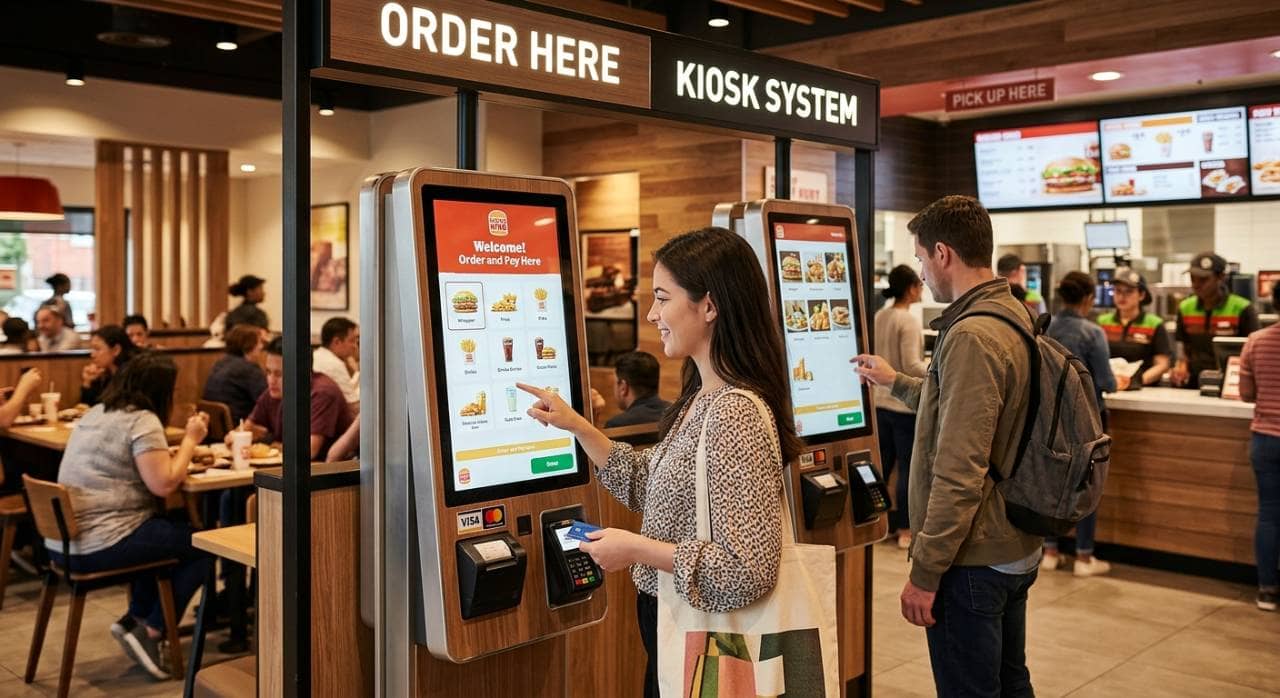
Understand how to evaluate a Kiosk system using key criteria including features, POS integration, hardware, pricing, customer experience, and support.
Aug 31, 2026

Learn the startup costs of opening an ice cream shop, including rent, equipment, renovations, permits, inventory, labor, marketing, and reserves.
Aug 28, 2026

A restaurant P&L statement reveals sales, expenses, and profits, helping owners manage costs, improve margins, and plan finances more effectively.
Aug 26, 2026

Learn practical ways to reduce labour costs through smarter scheduling, forecasting, productivity, cross-training, automation, overtime control, and performance monitoring strategies.
Aug 26, 2026
RaceTrac has appointed Jill Pemberton as chief financial officer, succeeding Karla Ahlert, who moves into the newly created role of chief administrative officer.
Aug 26, 2026
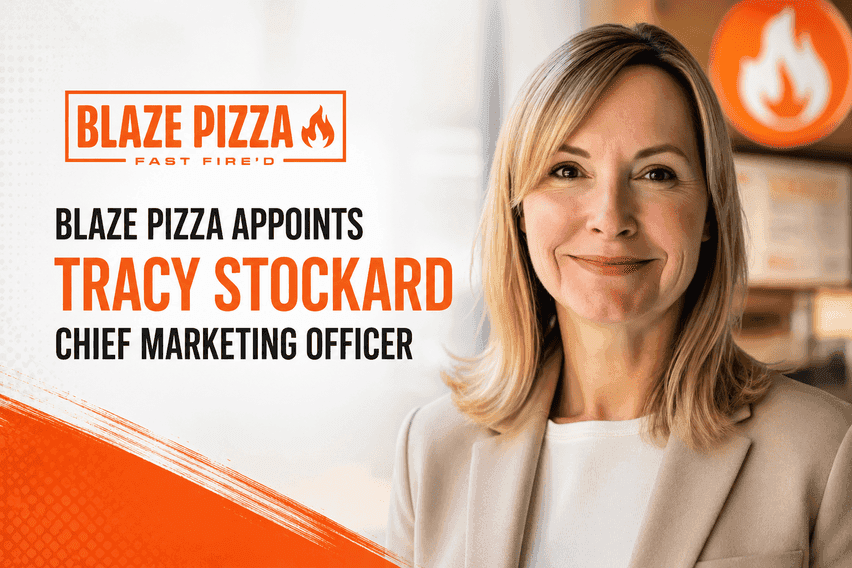
Blaze Pizza welcomes Tracy Stockard as Chief Marketing Officer, bringing decades of brand and franchise experience to drive strategic growth and guest engagement.
Aug 25, 2026

Create a practical restaurant marketing plan by setting goals, targeting customers, choosing channels, budgeting wisely, scheduling campaigns, and measuring results.
Aug 24, 2026

Levain Bakery appoints Lorna Sommerville and Taya Stenson as co-CEOs, blending operational and marketing expertise to power national expansion and innovation while staying rooted in its brand values.
Aug 25, 2026

Unlock Exclusive Access To Webinars, Events, And The Latest News For Free!
Not all AI is worth your money. Here is what restaurant owners should actually invest in right now and what to ignore until the technology matures.
The word artificial intelligence has become impossible to avoid in the restaurant industry. At every trade show, in every vendor pitch, and across every hospitality publication, AI is being positioned as the solution to nearly every operational challenge a restaurant faces from food waste to staffing to customer experience. Some of that enthusiasm is warranted. A lot of it is noise. The honest reality is that AI in the restaurant industry exists on a wide spectrum right now. On one end, there are genuinely mature, proven tools that are already delivering measurable returns for independent restaurants and small chains. On the other end, there are expensive, overhyped products that are still years away from being practical for most operations. The difference between a smart technology investment and a costly distraction often comes down to knowing which is which. This guide cuts through the marketing language and focuses on what restaurant operators actually need to know - where AI is delivering real value today, where it is not yet ready for prime time, and how to evaluate any new tool before committing your budget.
To understand what is worth investing in, it helps to understand why AI adoption in restaurants is accelerating at this particular moment. Three forces are converging simultaneously. First, the cost of AI technology has dropped dramatically over the past several years, making tools that were once exclusive to enterprise chains accessible to independent operators. Second, the persistent labor challenges facing the industry high turnover, rising wages, and ongoing recruitment difficulty have created genuine operational pressure to find technology solutions that reduce dependence on headcount for repetitive tasks. Third, the volume of data that modern restaurant operations generate through POS systems, reservation platforms, online ordering, and inventory software has reached a point where human analysis alone cannot extract meaningful patterns fast enough to act on them. AI thrives in exactly this environment - large datasets, repetitive decision-making, and operations where speed and consistency matter. The restaurant kitchen, as it turns out, is full of those conditions.
Inventory and Food Cost Management This is the area where AI is delivering the most consistent, quantifiable returns for restaurants of all sizes and it is the category most operators should consider first. AI-powered inventory management tools analyze your historical sales data, factor in variables like day of week, weather, local events, and seasonal trends, and generate purchasing recommendations that are measurably more accurate than manual forecasting. The practical result is less over-ordering, less spoilage, and tighter food cost control. Platforms like Winnow, Waste Not, and BlueCart use machine learning to track what is being thrown away, identify patterns in food waste, and recommend adjustments to prep quantities and ordering volumes. Winnow, which uses a camera and scale system to log discarded food in real time, has reported that restaurants using its platform cut food waste by an average of 50 percent within the first year. At a time when food costs represent 28 to 35 percent of revenue for most restaurants, that is not a marginal improvement it is a structural shift in profitability. For independent restaurants already using a modern POS and inventory system, this is the most straightforward entry point into AI-driven operations. The data infrastructure is likely already in place. The ROI is clear and relatively fast. Labor Scheduling and Workforce Optimization Scheduling is one of the most time-consuming administrative tasks in restaurant management, and it is one where AI tools have matured considerably. AI-powered scheduling platforms analyze historical sales patterns alongside factors like reservation volume, local events, and weather forecasts to generate staffing recommendations that are significantly more accurate than experience-based estimates alone. Tools like 7shifts, HotSchedules, and Sling now incorporate predictive scheduling features that reduce both overstaffing which inflates labor cost and understaffing which degrades service quality and accelerates employee burnout. Some platforms also incorporate employee availability, compliance requirements, and budget thresholds directly into the scheduling algorithm, reducing the back-and-forth that makes manual scheduling so labor-intensive. For a restaurant spending 30 to 35 percent of revenue on labor, even a two to three percentage point improvement in scheduling efficiency represents meaningful bottom-line impact. These tools are well-established, reasonably priced for the value they deliver, and relatively simple to integrate with existing payroll and POS systems. AI-Powered Reservation and Table Management Front-of-house operations are a second area where AI is generating demonstrable value. Modern reservation platforms like SevenRooms, Resy, and OpenTable have incorporated AI features that go well beyond basic booking management. These systems now analyze guest history, dining preferences, visit frequency, and average spend to provide servers and managers with context before a guest even arrives. A returning guest who always orders the tasting menu and prefers a quiet corner table can be recognized and accommodated automatically. A guest who left a complaint on their last visit can be flagged so a manager can personally check in. On the yield management side, AI tools can dynamically adjust table availability and reservation windows based on predicted demand similar to how airlines manage seat inventory. For restaurants operating at high volume, this capability can meaningfully increase covers per service without adding physical capacity. The investment required here scales with the size and complexity of your operation. For a high-volume independent restaurant or a small chain, the revenue uplift and guest experience improvement justify the platform cost. For a lower-volume neighborhood restaurant, a simpler reservation system may still serve the purpose without the AI layer. Voice AI for Phone Reservations and Ordering One of the more practical and immediately deployable AI applications for restaurants is voice AI for handling inbound phone calls. This is particularly relevant for restaurants that take a high volume of phone reservations or orders and find that staff time is regularly consumed managing calls during peak service hours. Tools like Slang.ai and Popmenu's AI phone answering feature can handle reservation inquiries, answer questions about hours and menu items, and take to-go orders without requiring a staff member to pick up the phone. Calls that require human judgment are escalated automatically. For restaurants losing reservations to voicemail during a busy Saturday dinner service, this is a concrete and relatively affordable solution. Pricing for most voice AI tools falls in the range of a few hundred dollars per month a justifiable cost if it recovers even a handful of missed reservations or orders per week.
Fully Automated Cooking Equipment Robotic kitchen equipment burger-flipping robots, automated fry stations, AI-guided cooking systems generates significant media coverage and vendor excitement. For most independent restaurants and small chains, it is not a practical investment in the current market. The capital cost of robotic kitchen systems remains extremely high, the equipment requires specialized maintenance, and the menu flexibility is still limited. These systems work in highly standardized, high-volume environments think quick-service chains producing thousands of identical units per day. In a kitchen producing diverse, made-to-order dishes, the return on investment simply does not hold up at current price points and capability levels. This category is worth monitoring over the next three to five years as costs come down and the technology matures. It is not worth budgeting for today in most independent operations. AI-Generated Menu Design Several platforms now offer AI tools that claim to optimize menu design based on profitability data, customer preference modeling, and behavioral psychology. The underlying concept using data to inform menu engineering decisions is sound and worth pursuing. But the fully automated AI menu design tools currently on the market are largely repackaging principles that experienced operators already apply manually, at a cost that does not match the incremental benefit. Menu engineering is valuable. Using your POS data to identify high-margin, high-popularity dishes and promote them strategically is something every restaurant should be doing. You do not necessarily need an AI platform to do it your existing POS reporting often provides enough information to make informed decisions with a spreadsheet and an hour of analysis. Predictive Customer Sentiment Analysis A growing number of platforms offer AI tools that scrape review sites and social media to analyze guest sentiment and surface operational insights. In theory, knowing that guests are consistently mentioning slow service on Friday nights or praising a specific dish on Yelp before you read every review manually is useful. In practice, most independent restaurants and small chains do not generate enough review volume for predictive sentiment analysis to deliver statistically meaningful insights. The signal-to-noise ratio is not favorable at lower volumes. A thoughtful manual review of your Google, Yelp, and TripAdvisor feedback on a monthly basis will deliver comparable insight without the platform cost. This is a category worth revisiting as your review volume grows, or if you operate multiple locations where aggregating sentiment data across sites becomes genuinely complex.
The restaurant technology market is crowded with vendors making ambitious claims. Before committing budget to any AI-powered product, apply a consistent evaluation framework. Start with the problem, not the solution. Identify a specific operational challenge you are trying to solve food waste, scheduling inefficiency, missed reservations and evaluate tools against that specific need. Resist the temptation to invest in AI because it sounds impressive or because a competitor has adopted it. Ask for outcome data from comparable operations. A vendor should be able to provide case studies from restaurants of a similar size, cuisine type, and volume to yours. Generic ROI claims are not sufficient. You want to know what a restaurant with 80 covers and a similar labor structure actually experienced after six months. Understand the integration requirements before signing anything. The most common source of AI implementation failure in restaurants is not the technology itself it is the failure to integrate cleanly with existing POS, inventory, and payroll systems. Clarify exactly what the onboarding process involves, what data connections are required, and what ongoing technical support looks like. Request a trial period. Reputable AI vendors with confidence in their product will offer a meaningful trial window. If a vendor is resistant to a trial or pushes aggressively toward a long-term contract before you have seen results, treat that as a significant warning sign. Finally, calculate the full cost of ownership. The subscription or licensing fee is rarely the complete cost. Factor in staff training time, integration costs, any required hardware, and the internal management time required to maintain the system. AI tools that require significant ongoing human oversight to function correctly are not delivering the efficiency gains they promise.
Restaurants that have adopted AI tools selectively focusing on inventory management, scheduling, and reservation optimization rather than chasing every new product are reporting measurable improvements in three key areas. Food cost reduction of five to fifteen percentage points is achievable within the first year when AI-powered inventory and waste tracking tools are implemented properly and staff are trained to use the output consistently. Labor cost efficiency improvements of two to four percentage points are common among restaurants using predictive scheduling platforms, primarily through more accurate staffing relative to actual demand. And revenue per cover increases of eight to twelve percent have been reported by high-volume restaurants using AI-powered reservation and table management systems to optimize seating yield. These are not universal guarantees results vary significantly based on implementation quality, staff adoption, and the baseline efficiency of your existing operations. But they represent realistic benchmarks for what a thoughtful, targeted AI investment can deliver in a working restaurant environment.
Use this to make a clear-eyed assessment of where AI fits in your operation right now -
The restaurant operators who will benefit most from AI are not the ones who adopt every new tool earliest. They are the ones who identify their most pressing operational challenges, evaluate technology against those specific needs with discipline, and implement selectively in areas where the ROI is clear and the technology is proven. AI in the restaurant kitchen is not a single decision. It is a series of targeted investments made over time, each one evaluated on its merits and its fit with your specific operation. The tools that are worth your money right now inventory management, scheduling optimization, reservation intelligence, voice AI are already delivering real returns for restaurants that have implemented them thoughtfully. The rest can wait until the technology earns its place. Want more technology guidance and operational strategies built specifically for independent restaurants and small chains? Explore the full resource library at RestaurantAssociation.com/technology and subscribe to the newsletter for practical insights delivered to your inbox every week.