How POS Systems Transform Restaurant Inventory Management
Discover how POS-based inventory management helps restaurants reduce food waste, control costs, and gain real-time visibility into stock levels for smoother daily operations.
Jun 15, 2026
Discover how POS-based inventory management helps restaurants reduce food waste, control costs, and gain real-time visibility into stock levels for smoother daily operations.
Jun 15, 2026
AI drive-thru ordering helps restaurants improve speed, accuracy, upselling, labor efficiency, and customer flow by using daily measurable operational data.
Jun 15, 2026
Domino's Pizza has expanded its popular 'Best Deal Ever' promotion to include Parmesan Stuffed Crust at no extra charge, offering any pizza with any crust and toppings for just $9.99, available through July 26.
Jun 15, 2026
A profitable cafe starts with audience building, data-driven location choices, smart financial planning, AI support, strong systems, and community-focused marketing.
Jun 15, 2026
Krispy Kreme has unveiled its Summer Seasonal Collection, featuring two new doughnuts, returning fan favourites, and two limited-time Lemonade Chillers- available from June 16 for a limited time at participating US locations.
Jun 15, 2026
Outback Steakhouse is rolling out a limited-time Father's Day menu from June 17–21, featuring bold new steak and surf-and-turf dishes plus an exclusive gift card promotion running through June 21.
Jun 15, 2026
On the Border has closed all of its company-owned restaurants just over a year after being acquired out of bankruptcy by Pappas Restaurants, leaving only five franchised US locations and one in South Korea still operating.
Jun 15, 2026
Explore how Descanso in Costa Mesa brings Mexico’s vibrant street food culture into a refined, full-sensory dining experience. Discover operational strategies, business insights, and the nuanced approach to customer interaction, menu design, and staff training that define their concept of elevated Mexican cuisine.
Jun 15, 2026
PE is rolling up franchise supplier platforms like IFPG and Fastlane, blending brokers, marketing, and AI to scale development and reshape pricing.
Jun 14, 2026
World Central Kitchen's Food Is Life brings free chef-crafted bites to World Cup watch parties, turning fan energy into hunger relief across U.S. host cities.
Jun 14, 2026
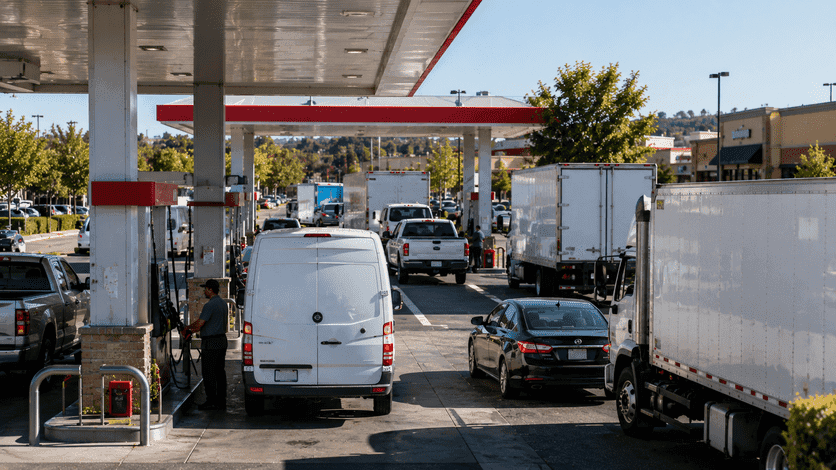
Fuel costs are emerging as one of the more unpredictable financial pressures facing quick-service restaurant operators running through supply chains, delivery economics, and consumer spending behavior in ways that are harder to anticipate and manage than traditional cost inputs like food and labor.

Quick-service restaurant operators have spent the past several years managing a familiar set of rising costs food, labor, and occupancy chief among them. Those pressures haven't gone away. But another cost is beginning to make its presence felt across the industry in ways that deserve closer attention - fuel. Most QSR operators don't track fuel as a direct line item the way they track food cost percentage or labor hours. That's partly because the impact is indirect fuel doesn't show up in a single, obvious place on the P&L. Instead it runs through multiple parts of the business simultaneously, often in ways that are easy to miss until the cumulative effect starts compressing margins in ways that are difficult to explain. Understanding where fuel costs show up and how quickly they can move is the first step toward managing them more deliberately.
The most straightforward impact of rising fuel prices is on distribution and supply chain costs. When gasoline and diesel prices increase, so does the cost of moving ingredients, packaging, and supplies from suppliers to restaurants. Those increases typically show up as freight surcharges on supplier invoices a cost that hits the P&L even when underlying food commodity prices haven't changed. Delivery is a second and increasingly significant pressure point. Off-premises ordering remains a meaningful portion of QSR revenue, and the economics of each delivery order are directly tied to fuel costs. When those costs move higher, the already-thin margins on delivery orders can tighten quickly, turning what looked like incremental revenue into a net drag on profitability if the pricing structure doesn't account for the shift. Unlike food costs, which tend to move gradually in response to commodity markets and supplier negotiations, fuel prices can change quickly and without much warning. That speed of movement is what makes fuel a different kind of management challenge than most operators are accustomed to dealing with.
To make this concrete, consider what rising fuel costs actually look like for a multi-unit operator running a mix of suburban and highway locations. As prices climb, freight surcharges start appearing on supplier invoices. Delivery costs edge upward. Driver availability may become less consistent as the economics of gig-based delivery shift. Each of these changes, taken individually, might not seem dramatic. But together they create compounding pressure, particularly on high-volume items where pricing is already tight combo meals, chicken orders, family bundles. The margin on each of those orders was calculated at a certain cost structure, and when fuel moves that structure without a corresponding price adjustment, profitability erodes. The response most operators reach for is a combination of selective menu price increases, pulling back on lower-margin promotions, tightening inventory management, and deferring nonessential capital spending. The challenge is that fuel's volatility means these aren't one-time adjustments operators may need to revisit them frequently, which shortens the planning horizon and demands a level of financial agility that many restaurant businesses aren't structured to deliver consistently.
Rising fuel costs don't just affect the operator side of the equation. Consumers notice when gas prices go up because gasoline is one of the most visible household expenses they encounter regularly. According to the U.S. Bureau of Labor Statistics, the average American household spent approximately $2,400 on gasoline in 2024 roughly 3% of total annual household spending. Even relatively modest increases in fuel prices influence consumer behavior in ways that directly affect restaurant traffic. People consolidate errands and dining trips to reduce driving. Cost-sensitive customers lean toward lower-priced menu items or seek out promotions. Some reduce dining-out frequency altogether, particularly for restaurants that require a dedicated trip rather than being conveniently located on an existing route. For QSR operators, these behavioral shifts can show up as softer traffic, lower average check sizes, or increased sensitivity to value messaging all at the same time that the operator's own costs are rising. That combination is what makes fuel-driven pressure particularly difficult to navigate compared to a cost increase that affects only one side of the equation.
The defining characteristic of fuel costs compared to food or labor is speed and unpredictability. Food costs tend to move in response to seasonal patterns, commodity futures, and supplier contract cycles that operators can partially anticipate. Labor costs shift with minimum wage legislation and hiring conditions that change on a more predictable schedule. Fuel can move significantly in a matter of days in response to geopolitical events, refinery disruptions, or shifts in global demand that have nothing to do with the restaurant business. That unpredictability shortens the planning horizon for operators and places a premium on flexibility. Businesses that have locked themselves into rigid pricing structures, heavy promotional commitments, or capital-intensive expansion plans are less able to respond quickly when fuel costs shift the cost structure underneath them. Practical responses include being more targeted and surgical with pricing adjustments rather than implementing broad menu price increases that can alienate value-conscious customers. Better inventory control reduces waste and the frequency of costly emergency supply orders. Tighter labor scheduling improves efficiency and reduces the labor cost per transaction. Maintaining adequate liquidity on the balance sheet rather than deploying all available cash into growth or capital improvements preserves the ability to absorb cost volatility without being forced into reactive decisions at the worst possible moment.
The broader lesson from fuel cost volatility is one that applies to cost management in general - operators who build financial discipline into their normal operating rhythm are better positioned to handle unexpected cost pressures than those who only respond when a problem becomes unavoidable. That means tracking fuel-related costs freight surcharges, delivery economics, consumer traffic patterns with the same rigor applied to food and labor. It means building scenario planning into the budgeting process that accounts for fuel price movement in both directions. And it means maintaining the operational flexibility to adjust pricing, promotions, and capital timing without disrupting the core guest experience that drives traffic in the first place. Fuel is one part of a QSR operator's cost structure. But it has become a part with immediate, wide-ranging impact that reaches from the supply chain through the customer's decision about whether to make the drive at all. Operators who understand that full picture and build their financial and operational practices around it will be better equipped to protect their margins when the next price spike arrives.