




.png&w=3840&q=70)




How to Reduce Restaurant Kitchen Ticket Times
Improve kitchen ticket times with practical strategies for better preparation, smoother workflows, stronger communication, smarter staffing, and effective restaurant technology.

Learn How Ticket Time Works
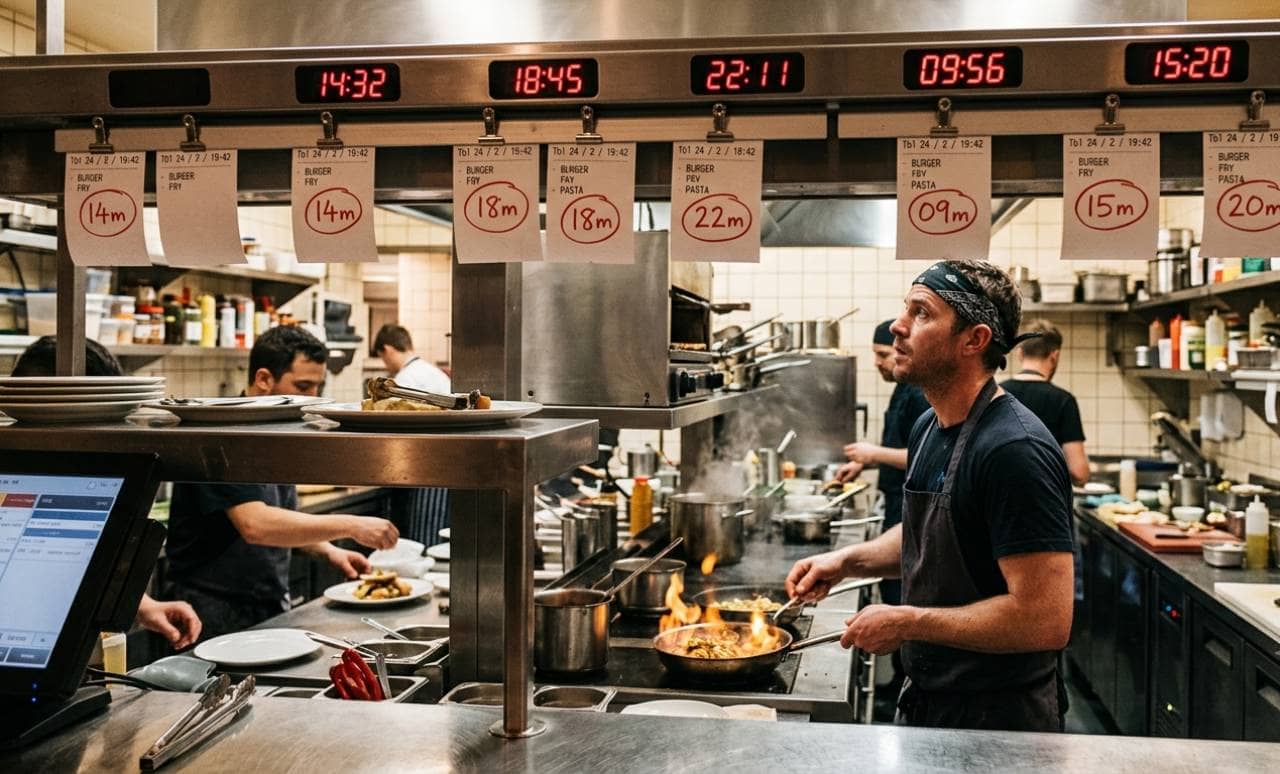
Kitchen ticket time measures how long it takes a restaurant kitchen to complete an order after it is submitted. Depending on how a restaurant tracks orders, the timer may begin when the order reaches the POS or kitchen display system and end when the food is marked complete or ready for service. For restaurant owners, ticket time is an important operational metric because it shows how efficiently the kitchen converts incoming orders into completed meals. When ticket times consistently increase, it can indicate problems with staffing, food preparation, kitchen workflow, equipment, order volume, or communication between stations. For example, suppose an order enters the kitchen at 7.05 p.m. and is completed at 7.20 p.m. The kitchen ticket time for that order is 15 minutes. Tracking hundreds of orders over time allows owners to calculate averages and determine whether certain periods, stations, or menu items are creating delays. Owners should avoid relying only on one restaurant-wide average. Ticket times should be reviewed by daypart, order channel, menu item, and shift. A kitchen may average 12 minutes throughout the day but regularly reach 20 minutes during the Friday dinner rush. Similarly, dine-in orders may move quickly while delivery orders create congestion at particular stations. Long ticket times can affect more than kitchen performance. Guests may wait longer for meals, tables can remain occupied longer, delivery orders may be delayed, and employees may feel greater pressure during busy periods. Restaurant owners should establish ticket-time targets that balance speed with food quality, accuracy, safety, and consistency. Once owners understand how ticket time works and where it changes throughout service, they can begin identifying the specific causes of delays.
Measure Your Current Ticket Times
Before reducing kitchen ticket times, restaurant owners need to understand how long orders currently take to complete. Establishing a clear baseline makes it easier to identify problem periods, compare performance over time, and determine whether operational changes are actually improving kitchen speed. Start by calculating the average ticket time for a specific period - Average Ticket Time = Total Time to Complete All Orders / Number of Orders For example, if 20 orders require a combined 300 minutes of production time, the average kitchen ticket time is 15 minutes per order. However, a restaurant-wide average does not always reveal where delays are occurring. Owners should break ticket-time data into smaller categories, including - 1. Daypart - Compare breakfast, lunch, dinner, and late-night service. 2. Day of the week - Identify whether weekends or specific weekdays consistently produce longer waits. 3. Order channel - Compare dine-in, takeout, online ordering, drive-thru, and third-party delivery orders. 4. Menu item - Identify dishes that regularly take longer to prepare than others. 5. Kitchen station - Review whether grill, fry, saute, pantry, or other stations frequently hold up orders. Owners should also track the percentage of orders that exceed their target ticket time. For example, a restaurant may average 14 minutes per ticket but still have a significant number of orders taking more than 20 minutes. These outliers can reveal operational issues that an average alone may hide. POS systems and kitchen display systems can make this process easier by recording timestamps for when orders are entered, started, and completed. Reviewing this information by hour or shift can help owners pinpoint exactly when kitchen performance begins to decline. The goal of this step is to create a measurable ticket-time baseline. Once owners know when, where, and how often delays occur, they can focus their improvement efforts on the parts of the kitchen that have the greatest impact on order speed.
Identify Kitchen Bottlenecks
Once restaurant owners understand their current ticket times, the next step is to determine exactly where delays are happening. A kitchen bottleneck occurs when one station, process, employee, piece of equipment, or menu item slows down the rest of the order flow. Start by reviewing which tickets consistently take longer than expected. Look for patterns instead of isolated incidents. For example, if orders containing grilled entrees regularly take five minutes longer than other tickets, the grill station may be creating a bottleneck. If delays happen only during the dinner rush, the issue may be related to staffing levels or production capacity rather than the menu itself. Restaurant owners should evaluate several common sources of delays - 1. Slow kitchen stations - One station may receive more orders than it can handle during peak periods. 2. Insufficient prep - Employees may need to stop cooking to portion ingredients, refill containers, or retrieve products. 3. Equipment limitations - A small fryer, oven, grill, or preparation area can restrict how many orders the kitchen can produce at once. 4. Complex menu items - Dishes with multiple components or long cook times can hold up an entire ticket. 5. Poor communication - Unclear modifications, missing items, or weak coordination between stations can lead to rework and delays. Owners should also observe the kitchen during busy service periods. Watch how orders move from the POS to individual stations and eventually to the pass or expo area. Pay attention to where tickets begin to accumulate. For example, if the grill can complete 20 items per hour while incoming demand requires 30 items per hour, that station does not have enough capacity to keep pace. Orders will continue to build until demand slows. The objective is to find the specific constraint causing the delay, rather than simply telling employees to work faster. Once bottlenecks are clearly identified, owners can make targeted changes to workflows, staffing, preparation, equipment, or menu processes.
Kitchen Layout and Workflow
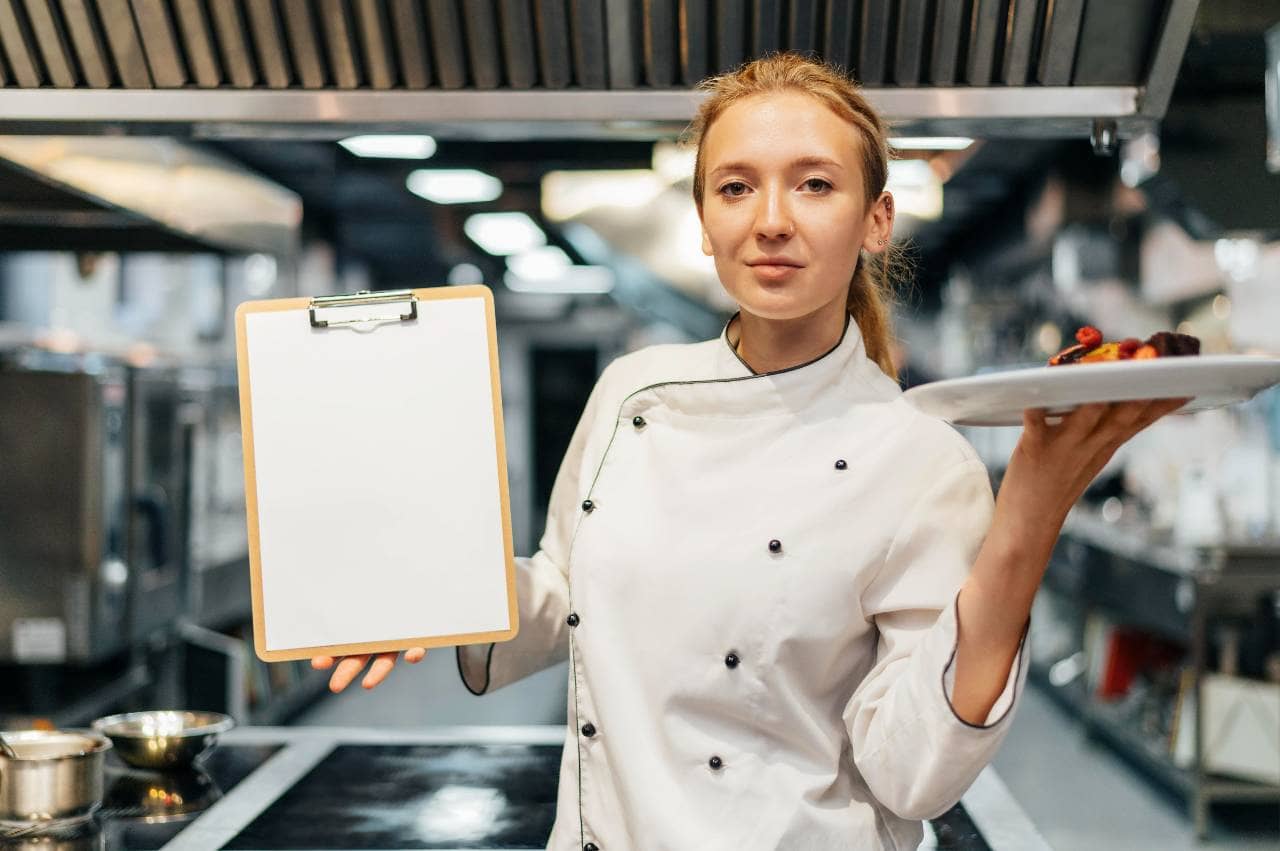
Kitchen ticket times can increase when employees spend too much time walking between stations, searching for ingredients, sharing equipment, or waiting for another task to be completed. Improving the physical layout and workflow can reduce these delays without requiring employees to simply work faster. Start by mapping how each order moves through the kitchen. Track the path from the moment a ticket appears to the time the completed dish reaches the expo station. Look for unnecessary movement, repeated steps, or areas where employees frequently cross paths. Restaurant owners should focus on several areas - 1. Position ingredients near the point of use. Frequently used ingredients, utensils, pans, and containers should be within easy reach of the employees who need them. 2. Reduce unnecessary movement. If a cook takes 20 extra seconds to retrieve ingredients for each order and prepares 60 orders during a shift, that adds up to 20 minutes of avoidable movement. 3. Separate high-volume stations. Grill, fry, saute, salad, and assembly stations should have enough space to operate without employees repeatedly blocking one another. 4. Place shared equipment strategically. Equipment used by multiple stations should be positioned where employees can access it without creating congestion. 5. Create a clear order flow. Food should move logically from preparation to cooking, assembly, quality checks, and pickup without repeatedly traveling across the kitchen. Owners should also evaluate the expo area. Finished components can sit unnecessarily when there is no clear process for assembling complete orders. Assigning responsibility for coordinating tickets can help ensure that all components reach the pass at approximately the same time. The goal is to reduce seconds of wasted movement across hundreds of daily tasks. Small workflow improvements can add up quickly. A kitchen that saves just 15 seconds across 200 orders eliminates approximately 50 minutes of unnecessary activity during the day. A well-organized kitchen allows employees to spend more time preparing food and less time walking, waiting, searching, or correcting workflow problems.
Strengthen Prep and Station Readiness
Even a well-designed kitchen can experience long ticket times when employees enter service without enough ingredients, tools, or prepared components. Strong prep and station readiness help prevent cooks from stopping during peak periods to complete tasks that should have been handled before orders began arriving. Start with accurate prep lists based on expected demand. Historical sales data can help restaurant owners estimate how much of each ingredient or component will be needed for a particular shift. For example, if a restaurant typically sells 80 burgers during Friday dinner service, the kitchen should prepare enough patties, toppings, sauces, and sides to support that expected volume without excessive overproduction. Owners should also establish clear par levels for high-use ingredients. Par levels define how much product each station should have ready before service begins. These levels can be adjusted based on day of the week, seasonality, promotions, reservations, or expected order volume. A pre-shift station check should confirm that employees have - 1. Ingredients portioned and accessible. High-volume items should be prepared and stored where cooks can reach them quickly. 2. Tools and equipment ready. Knives, utensils, cutting boards, pans, thermometers, and other essential equipment should be clean and available. 3. Backup inventory nearby. Refill containers and frequently used ingredients should be accessible without requiring long trips to storage areas. 4. Clear station responsibilities. Employees should know who is responsible for cooking, assembling, restocking, and communicating shortages. Owners can also track how often stations run out of prepared ingredients during service. If a fry station has to stop three times each night to portion additional product, that recurring interruption should be treated as a prep-planning problem. The goal is to have each station fully prepared before peak demand begins. Better mise en place reduces interruptions, keeps cooks focused on active orders, and helps the kitchen maintain more consistent ticket times as order volume increases.
Optimize Staffing for Peak Demand
Kitchen ticket times often increase when staffing levels do not match order volume. A kitchen that performs well during slower periods can quickly fall behind when too many orders arrive at once and there are not enough employees positioned at high-demand stations. Restaurant owners should start by comparing historical sales and order-volume data with labor schedules. Identify the hours when ticket counts rise most sharply and determine whether staffing increases at the same time. For example, if order volume typically begins climbing at 6.00 p.m., adding employees at 6.30 p.m. may be too late to prevent a backlog. Staffing decisions should also consider where employees are assigned, not just how many people are working. A kitchen may have enough total employees while still experiencing delays because the grill, fry, or assembly station is understaffed. Owners should focus on several areas - 1. Schedule around demand patterns. Use sales forecasts, reservations, historical order data, promotions, and local events to anticipate busy periods. 2. Staff high-volume stations appropriately. Assign additional support where ticket volume is most likely to build. 3. Use staggered start times. Bring employees in before peak demand so stations are prepared before order volume increases. 4. Cross-train kitchen employees. Employees who can work multiple stations can be reassigned when one area becomes overloaded. 5. Plan for order-channel demand. Dine-in, takeout, delivery, and online orders may all reach the kitchen simultaneously and should be included in staffing forecasts. Managers should also compare labor deployment with ticket-time performance. If average ticket time increases from 12 minutes to 19 minutes whenever hourly order volume exceeds a certain level, the restaurant has identified a point where additional labor or a different station setup may be necessary. The objective is not simply to schedule more employees. It is to place the right employees at the right stations before demand peaks, helping the kitchen maintain consistent production as order volume changes.
Order Flow and Kitchen Communication
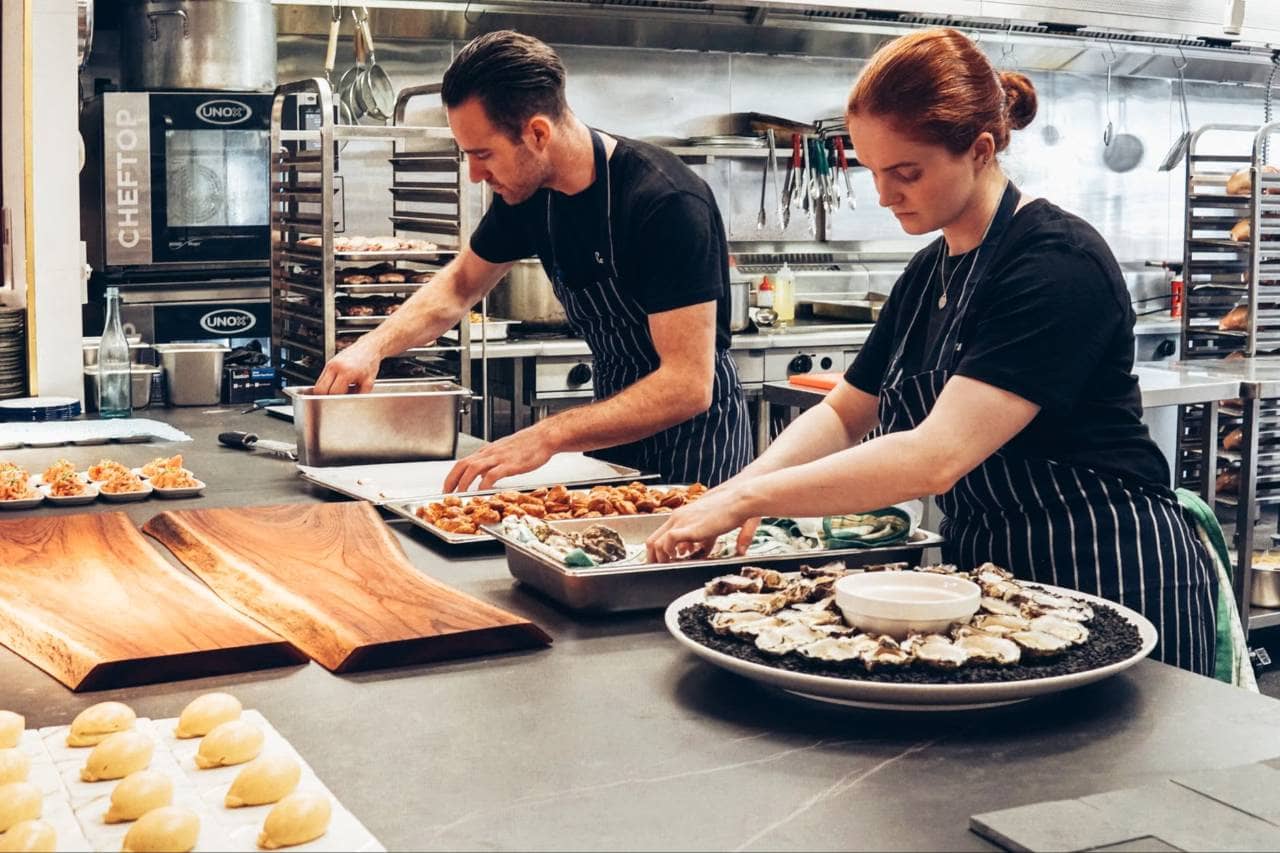
Even when stations are fully staffed and prepared, ticket times can increase when orders move through the kitchen inefficiently. Poor communication between front-of-house employees, kitchen staff, and different order channels can create duplicate work, missed modifications, delayed items, and confusion over which tickets should be completed first. Restaurant owners should create a clear and consistent order flow from the moment an order is entered to the moment it is ready for pickup. Each employee should understand how tickets are routed, who is responsible for each item, and how completed dishes are coordinated at the expo station. Start by reducing unnecessary verbal communication. When employees repeatedly call out orders, modifications, or priorities during busy periods, important details can be missed. POS systems and kitchen display systems can help ensure that each station receives the same accurate order information. Owners should also standardize how the kitchen handles - 1. Order modifications. Allergies, substitutions, removals, and special requests should be displayed clearly so cooks do not have to stop and confirm details. 2. Order prioritization. Establish rules for handling dine-in, takeout, delivery, and online orders when they arrive simultaneously. 3. Station coordination. Different components of the same ticket should be timed so they finish as close together as possible. 4. Expo communication. One person should oversee completed tickets during busy periods, check accuracy, and identify missing items before orders leave the kitchen. Restaurants should also monitor how often orders are remade because of incorrect preparation or communication errors. Every remake adds extra production time and can delay other tickets waiting behind it. For example, if a kitchen processes 150 orders during dinner and just 5% require a remake, that means roughly eight additional orders must be produced while the kitchen is already busy. The goal is to create an order system where information moves as efficiently as the food itself. Clear routing, standardized communication, and defined responsibilities can reduce confusion and help employees complete tickets faster and more accurately.
Use Technology to Reduce Kitchen Ticket Times
Technology can help restaurant owners reduce ticket times by improving order visibility, automating communication, and giving kitchen teams better information during busy periods. One of the most useful tools is a kitchen display system (KDS). Instead of relying on printed tickets, a KDS can route orders directly to the correct station, display preparation timers, highlight modifications, and show which tickets have been waiting the longest. This makes it easier for cooks and managers to prioritize orders and coordinate multiple stations. Restaurant owners can also use technology to improve several parts of the kitchen workflow - 1. Automate order routing. POS and KDS integrations can send grill items to the grill station, fried items to the fry station, and cold items to the appropriate prep area automatically. 2. Monitor ticket-time alerts. Systems can flag orders that are approaching or exceeding target preparation times so managers can intervene before delays grow. 3. Combine multiple order channels. Integrating dine-in, takeout, online ordering, and delivery orders into one system can reduce duplicate entry and prevent orders from being overlooked. 4. Use sales forecasting tools. Historical sales data can help predict demand, allowing managers to plan staffing and prep levels before peak periods begin. 5. Analyze kitchen performance. Reporting tools can show average ticket times by hour, menu item, station, and order channel, helping owners identify recurring bottlenecks. For example, reporting may show that one menu item averages 18 minutes while similar dishes average 12 minutes. Owners can then examine the recipe, preparation process, equipment needs, or station workload to determine why that item takes longer. Technology should support the kitchen rather than complicate it. Restaurant owners should focus on systems that reduce manual communication, improve order accuracy, and make delays easier to identify in real time. When technology connects ordering, production, staffing, and reporting, managers gain greater control over kitchen performance and can make faster decisions that help keep ticket times under control.