







Google's New Dining Lists Puzzle Restaurants
Google Maps launched Fan-Favorite Dining Lists and Ask Maps, reshaping restaurant discovery, but left operators without clear rules to follow.

A New Kind of Ranking Lands on Google Maps
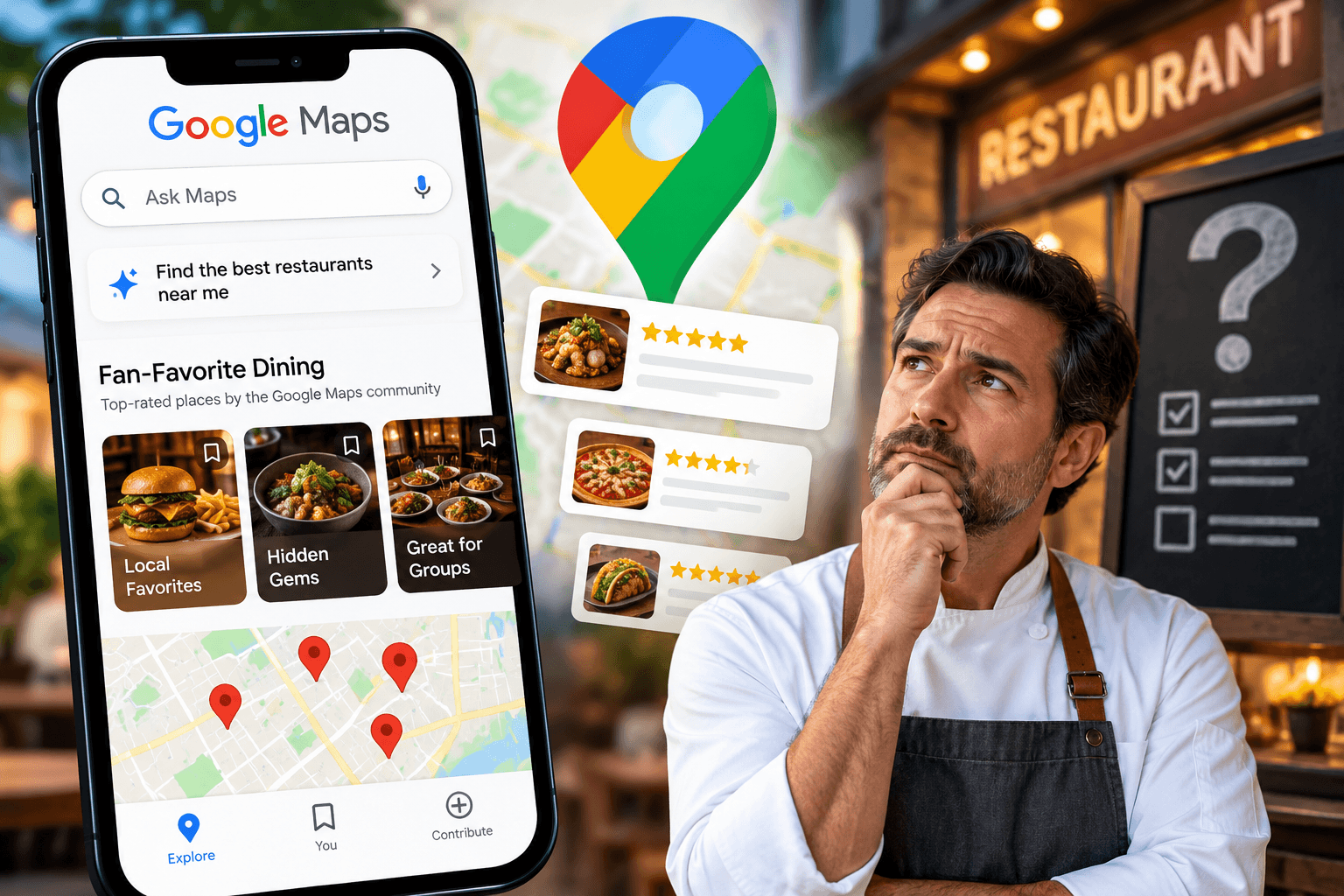
Katz's Delicatessen didn't need an algorithm to tell New Yorkers it matters. Yet on October 8, 2026, that's exactly what happened: Google Maps named it, along with Pequod's Pizza in Chicago, The Pink Door in Seattle, and Schwartz's Deli in Montréal, among the most-navigated-to restaurants in its first-ever Fan-Favorite Dining Lists.
The feature spans ten cities, Atlanta, Chicago, London, Melbourne, Montréal, New York, San Francisco, Santiago, Seattle, and Tokyo, and it signals something quieter but more consequential than a list of good restaurants. Google is rebuilding how people decide where to eat, and it isn't explaining how the new system actually works.
Why Navigation Requests Now Matter as Much as Reviews
The lists don't rely on star ratings, which is itself a departure worth sitting with. Google says it draws on customer reviews, ratings, and aggregated requests for directions to surface a mix of destination restaurants and budget-friendly neighborhood spots, organized through a browsable hub by city and dining category.
The design borrows more from a curated guide than a search engine results page. That's a meaningful shift for an industry that has spent a decade optimizing for star counts and review volume, and it suggests Google sees foot traffic, measured through navigation requests, as a signal just as valuable as what customers type into a review box.
The Rules Depend on Which Language You Read
Here's where the story gets complicated. Google's Japanese-language announcement lays out specific eligibility rules: restaurants must have been open at least six months, and chains with five or more locations need not apply. The English-language version mentions none of this.
Whether that's an oversight or a deliberate, market-specific policy that Google simply hasn't disclosed to English-speaking markets remains an open question, and Google hasn't answered it. Nor has the company explained how heavily reviews, ratings, and direction requests are weighted against each other, or confirmed that any particular Business Profile update can nudge a restaurant toward inclusion. Independent operators are left holding a genuine opportunity, new visibility on a platform millions of diners already trust, without a playbook for earning it.
Conversational Search Puts Menu Accuracy on the Line
The same day brought a second tool, Ask Maps, which lets diners search conversationally rather than by restaurant name or cuisine type. Google's own examples, crispy smashburgers paired with milkshakes, or fall desserts at restaurants with outdoor seating, hint at how granular these queries can get.
The tool parses photos, reviews, and menus to match natural-language requests to actual restaurants, and unlike the Fan-Favorite lists, it isn't boxed into ten cities. Any restaurant with strong photo, review, and menu content can theoretically surface, regardless of location. Google has also wired Ask Maps into delivery ordering through partners including Uber Eats, Toast, and Square, which means a diner's craving can travel from search bar to doorstep without ever touching a restaurant's own website. That convenience raises the bar for menu accuracy considerably: a vague or outdated menu listing no longer just confuses a browsing customer, it potentially removes a restaurant from consideration entirely.
What the Matcha Spike Actually Tells Operators
Google's October 8 trend report layered a third dimension onto the launch, tracking food mentions across Maps reviews and finding that matcha posted double-digit growth in mentions across nearly all ten cities.
That's a striking number, but Google itself is careful to frame it as a measure of conversation volume, not sales. Review chatter can spike well ahead of actual demand, or it can fade without ever translating into orders. An operator reading that matcha data point would do well to weigh it against internal sales figures, guest requests, ingredient costs, and kitchen capacity before committing shelf space to it. A seasonal pilot makes sense; reworking a menu around review buzz alone does not.

Google Still Won't Show Its Work
What ties all three tools together is Google's consistent refusal to show its work. Whether it's the Fan-Favorite rankings, the Ask Maps matching logic, or the trend data behind matcha's rise, the company has declined to detail the exact mechanics driving any of it.
The contradiction between the English and Japanese eligibility rules only sharpens the uncertainty, leaving restaurateurs to wonder whether Google will eventually standardize these criteria worldwide or continue running quieter, market-specific versions of the same feature. Until that gets resolved, operators are essentially reading between the lines of two announcements that don't fully agree with each other.

Focus on Fundamentals, Not the Undisclosed Formula
None of this changes what restaurants can actually control. Accurate menus, current photos, correct hours, and complete business information remain the foundation, not because Google has promised they'll unlock a Fan-Favorite spot, but because they're what makes a listing useful to an actual human trying to decide where to eat.
Tracking Business Profile metrics like direction requests, phone calls, and website clicks gives operators a way to watch engagement shift over time, even without visibility into Google's ranking formula. The smarter bet isn't chasing an undisclosed checklist. It's doubling down on the fundamentals these tools were built to measure in the first place: a restaurant worth finding, and worth recommending.