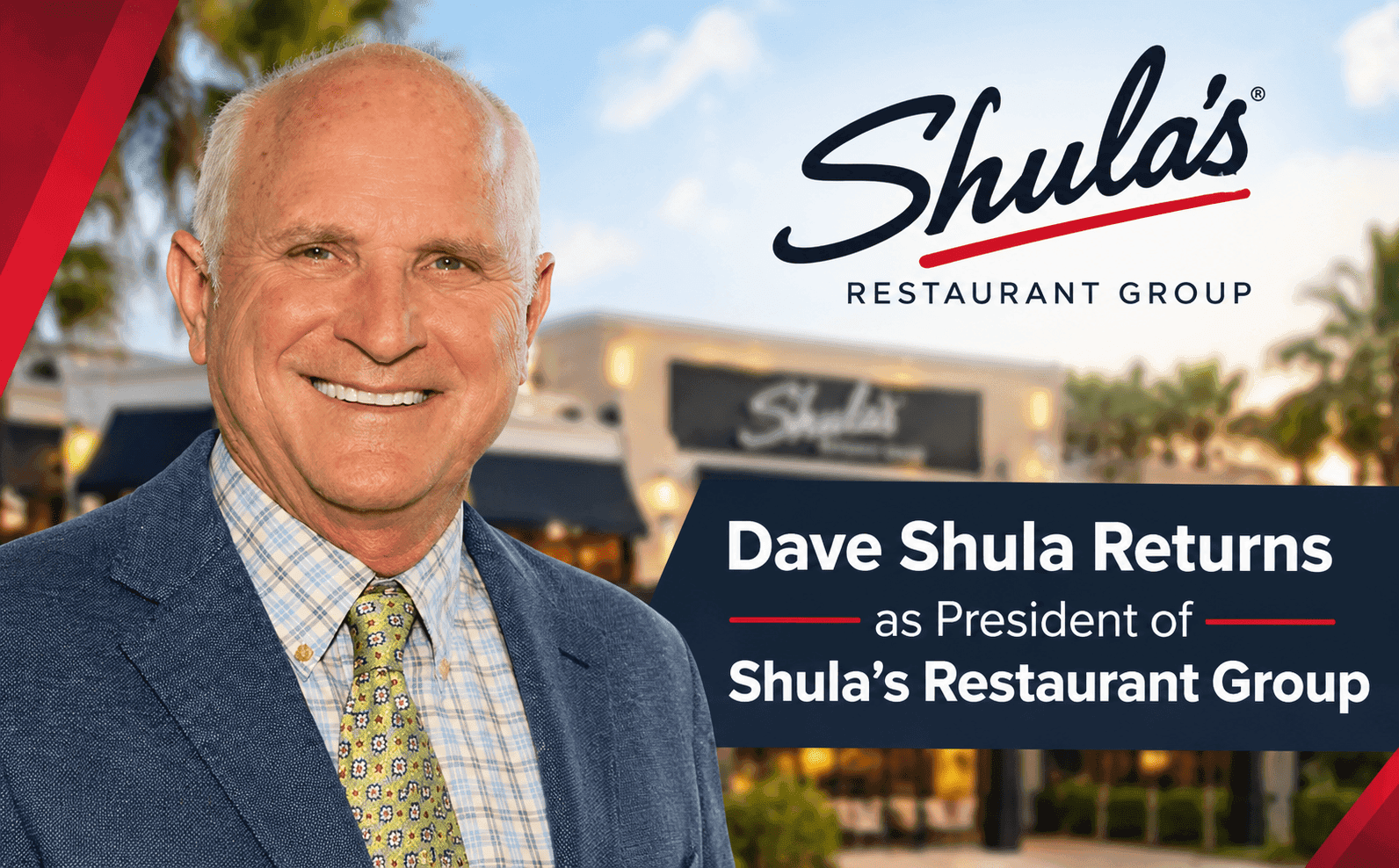
Dave Shula Returns as President of Shula's Restaurant Group
Dave Shula rejoins Shula's Restaurant Group as president, leading growth into Palm Beach Gardens and a 2027 Thomasville, Georgia expansion.
News
Sep 23, 2026
Dave Shula rejoins Shula's Restaurant Group as president, leading growth into Palm Beach Gardens and a 2027 Thomasville, Georgia expansion.
Sep 23, 2026
McDonald's commits $8.5 billion through 2036 to modernize restaurants, boost cash flow by $100,000 per store, and grow chicken and beverage sales.
Sep 23, 2026
WKS Restaurant Group promotes Jay Spongberg to president and COO after he helped grow the company from 65 to 382 restaurants over 16 years.
Sep 23, 2026

Smokey Mo's BBQ names Von Dawson, a Dine Brands veteran, as VP of Franchise Development to lead its Texas expansion strategy.
Sep 23, 2026
.png&w=3840&q=70)
Meritage Hospitality's Chapter 11 filing pulls 5% of Wendy's U.S. stores into bankruptcy, exposing cracks in franchising's bigger-is-safer bet.
Sep 21, 2026

Jack in the Box names Rachel Ruggeri to its board as Michael Murphy retires, amid a CEO transition and deal with investor GreenWood.
Sep 21, 2026
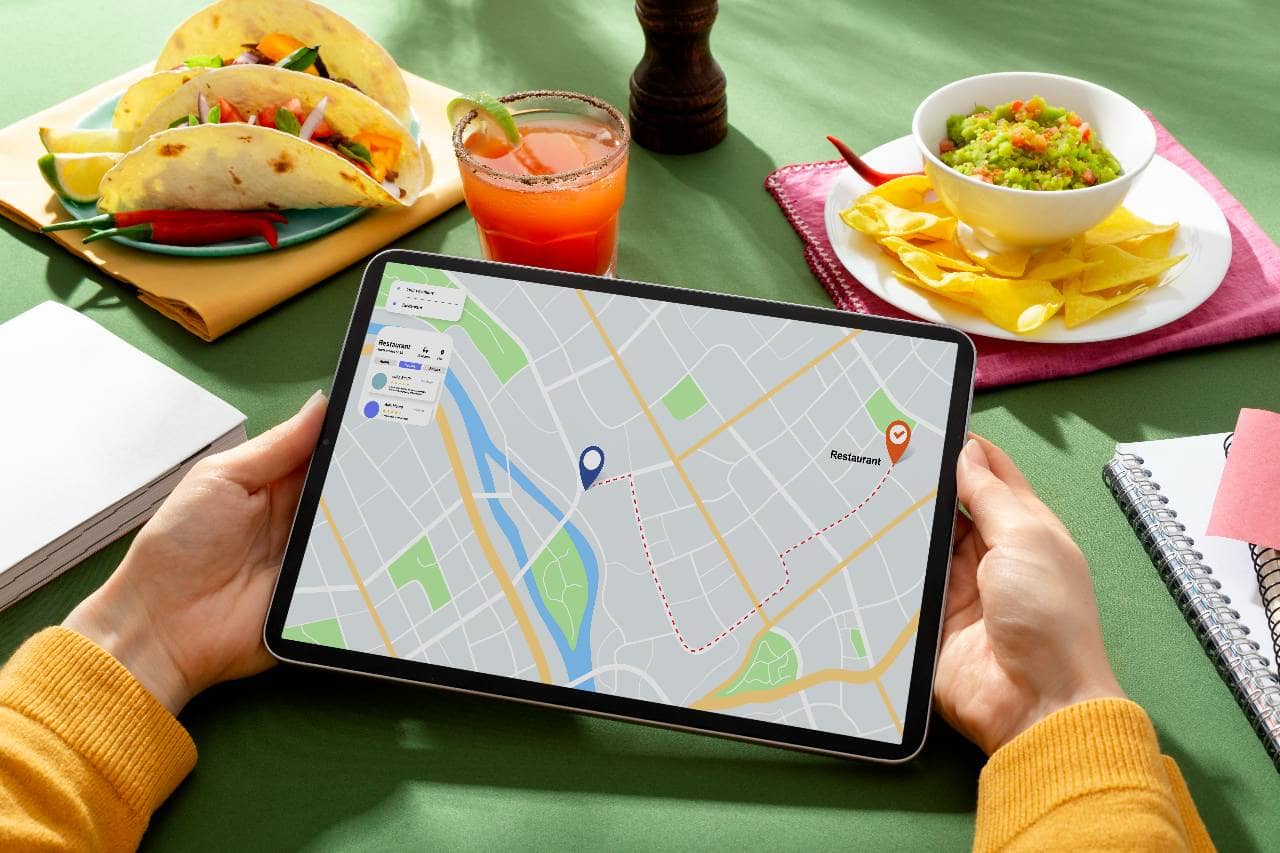
Improve restaurant Google Maps rankings by optimizing your business profile, selecting accurate categories, gathering reviews, adding photos, and strengthening local relevance signals.
Sep 21, 2026

Restaurant inventory tracking helps owners monitor stock, control food costs, reduce waste, improve purchasing, and make informed operational decisions.
Sep 21, 2026

Restaurant owners can significantly reduce restaurant costs by leveraging technology across inventory, labor, procurement, forecasting, and administrative operations for better profit margins.
Sep 18, 2026

Understand how to forecast restaurant revenue and expenses with methods for sales projection, cost scaling, fixed-cost planning, and risk buffering.
Sep 18, 2026

Unlock Exclusive Access To Webinars, Events, And The Latest News For Free!
Savory Fund CEO Clay Dover details how AI speeds openings, training, and prep—powered by voice and tempered with human checkpoints across operations.

Photo by Nicolas Lobos
Walk the floor with a phone and hours of work collapse into minutes. That was Clay Dover’s pitch in Chicago as he laid out how Savory Fund is squeezing time out of openings, training, and daily prep with AI, while keeping people in charge. Dover, appointed CEO in January 2026 after stints at Velvet Taco, Raising Cane’s and Pei Wei, said the last six months have moved from talk to results.
His point: open restaurants faster, speed up training, and auto-build prep and inventory lists simply by “walking around a restaurant talking into a phone.” Savory’s 13 companies generated more than $515 million in annual revenue prior to his appointment, giving him a wide sandbox to test what sticks and what doesn’t.
The National Restaurant Association Show framed those choices cleanly. The show’s format revolved around three questions: one innovation making a difference, one that isn’t ready, and a one-year outlook, a setup that kept the focus on execution over hype. Operators are feeling the squeeze from rising food and labor costs, chronic staff shortages and thin margins, so tools that save labor and trim mistakes are getting a harder look.

Industry data show that 26 percent of restaurant operators are now using AI-related tools at their locations, often for back-of-house tasks such as inventory management and scheduling. The sector is still massive and tight on people, with projected restaurant sales of $1.5 trillion and 15.9 million employees by year-end 2025. Executives like Ben Knorr, vice president of strategic initiatives at the Texas Restaurant Association, note that tight margins and labor gaps are giving AI adoption fresh urgency, from automating marketing campaigns to streamlining online ordering.
So how is it actually working in the field? Operators are leaning on systems that build prep sheets and roll out schedules in minutes, and back-office tools that rip through food costs and leases faster than a traditional team can. A recent analysis found that 69 percent of restaurants report adopting AI in some form, ranging from social-media content to advanced analytics, while 55 percent of global respondents use AI in daily inventory management.

In practice, staff can walk through a dining room and pull real-time training materials, inventory lists or lease review summaries on a smartphone. Inside Savory’s portfolio, those capabilities are already speeding site selection and lease diligence, shrinking comprehensive reviews from days to hours. Dover is clear on the limits. “If you let it go without fact checking it you’re going to have issues.
There still has to be a person involved. AI is not going to take people’s jobs automatically.” He pointed to moments when a single misread instruction multiplied into bigger errors, which is why trainers and opening teams must proof every AI-generated checklist and training module.

Caution is not theoretical. Taco Bell’s drive-thru voice AI, launched in 2024 and paused after inconsistent performance, shows how unchecked deployment can backfire on guest trust and crew morale. When the workflow is disciplined, the math gets compelling. Voice-ordering solutions alone can deliver up to 760 percent annual ROI with payback periods of two to five months by cutting labor costs and order errors.
Savory’s compressed opening timelines and tighter training windows boost revenue potential and lower soft-opening expenses, and Dover links measurable build-out time gains since January directly to integrated AI workflows paired with human review. Beyond Savory, operators are pushing on both the guest and back-of-house fronts. In San Antonio, Mattenga’s Pizzeria uses Owner.com as a “digital storefront” to automate website management, online ordering and marketing outreach.

Yum Brands, which runs more than 61,000 Taco Bell, KFC and Pizza Hut locations, partnered with Nvidia in early 2025 to pilot AI ordering in drive-thrus and apply analytics to improve order accuracy and operational performance. Some pilots have stumbled, but teams are already sharing playbooks for conversational interfaces, predictive maintenance and performance dashboards. With registration for the QSR Evolution Conference in Atlanta now open, that exchange of what works and what does not is set to speed up.
Plenty of questions remain. Definitions of “AI adoption” swing from a basic chatbot to full-bore analytics, which muddies benchmarking across brands. Error propagation remains a real risk. There is also limited longitudinal data on how AI shifts the workforce inside restaurants.

Early studies suggest no significant linear link between AI adoption and job loss across industries, but sector-specific research in foodservice is scarce. Consumer comfort is uneven too. Off-premises surveys show that roughly half of all adults would order via an AI-generated chatbot, with higher comfort among younger demographics, yet real transaction volumes are still nascent. The labor backdrop keeps pressure on, with 77 percent of operators identifying recruitment and retention as significant challenges.
Dover expects the conversation to widen over the next year. He sees operators moving past pure convenience and toward using AI and analytics to decode why guests choose certain brands, whether that is Texas Roadhouse’s rolls and ambiance or First Watch’s brunch experience, then baking those insights into training and menu innovation.

The next edge will come from pairing data literacy with purposeful design to cue the senses, coach staff interactions and spotlight signature items that spark nostalgia and personal ties. Fast is good. Fast with human judgment and a clear brand aim is better.
