.png&w=3840&q=70)
Wendy's Top Franchisee Bankruptcy Exposes Growth Risks
Meritage Hospitality's Chapter 11 filing pulls 5% of Wendy's U.S. stores into bankruptcy, exposing cracks in franchising's bigger-is-safer bet.
Franchising
Sep 21, 2026
Meritage Hospitality's Chapter 11 filing pulls 5% of Wendy's U.S. stores into bankruptcy, exposing cracks in franchising's bigger-is-safer bet.
Sep 21, 2026
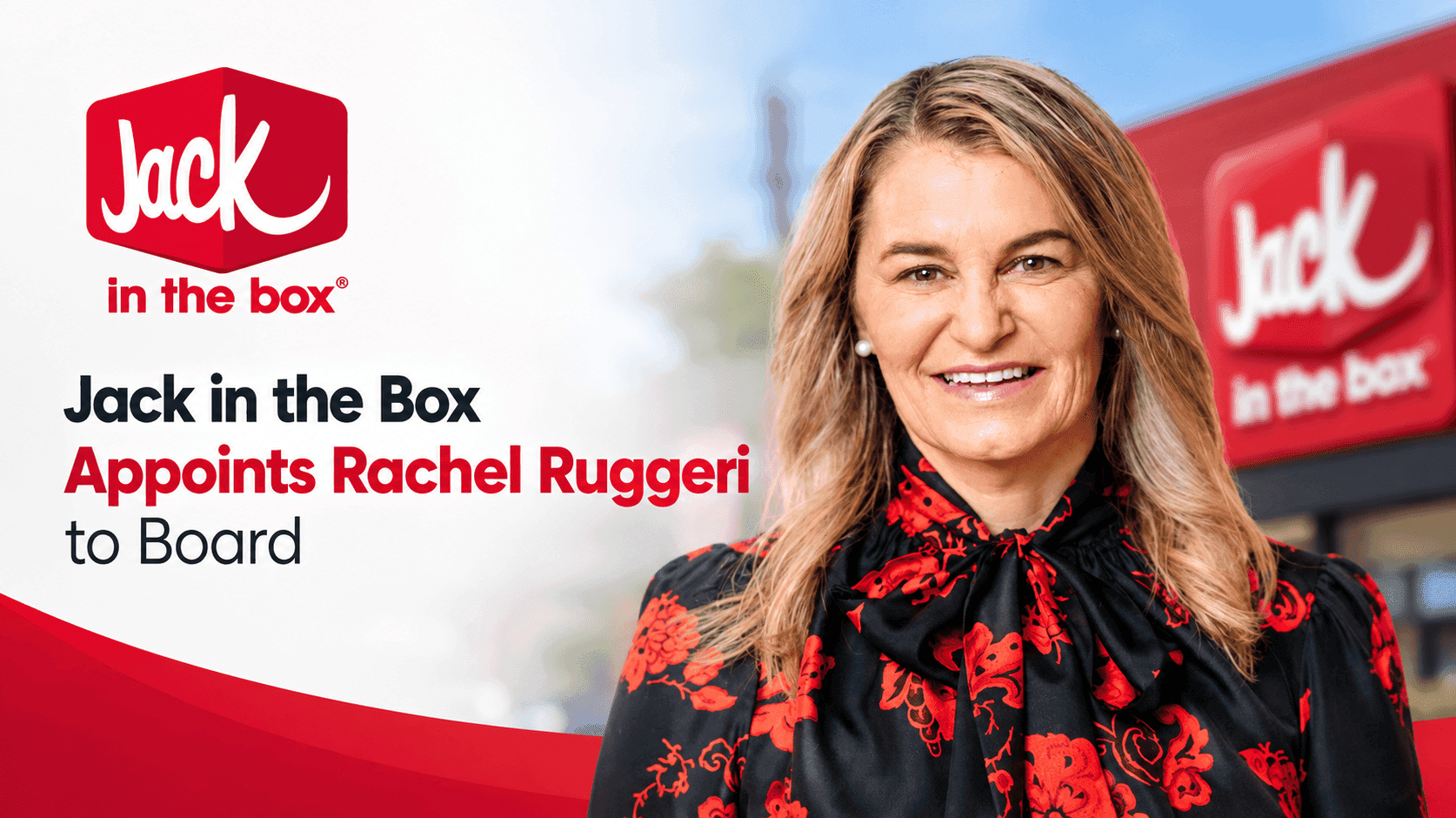
Jack in the Box names Rachel Ruggeri to its board as Michael Murphy retires, amid a CEO transition and deal with investor GreenWood.
Sep 21, 2026

Understand how to forecast restaurant revenue and expenses with methods for sales projection, cost scaling, fixed-cost planning, and risk buffering.
Sep 18, 2026

Restaurant owners can significantly reduce restaurant costs by leveraging technology across inventory, labor, procurement, forecasting, and administrative operations for better profit margins.
Sep 18, 2026

everbowl names Anna Gabele Brand President and Natalie Trzcinski COO, pulling both from Jack in the Box to guide its next growth phase.
Sep 18, 2026

Mountain Mike's Pizza hires Jack in the Box veteran Sheena Dougher as CMO to drive national growth while preserving its regional brand identity.
Sep 17, 2026

From fixed costs to contribution margin, learn exactly how to calculate your restaurant's break even point with confidence.
Sep 16, 2026

DoorDash pays $425M for Wonder's campus dining platform and a stake in Wonder, betting on robotic kitchens and institutional foodservice growth.
Sep 16, 2026

Discover the most common reasons restaurants fail, including inconsistent food quality and pricing mistakes, plus practical ways to avoid them.
Sep 16, 2026
Chipotle names former KFC global CEO Sabir Sami to its board as the chain expands into Mexico, Saudi Arabia, and South Korea.
Sep 15, 2026

Unlock Exclusive Access To Webinars, Events, And The Latest News For Free!
Meritage Hospitality's Chapter 11 filing pulls 5% of Wendy's U.S. stores into bankruptcy, exposing cracks in franchising's bigger-is-safer bet.
There is something almost quietly devastating about watching a giant stumble. Wendy's has had a rough stretch already, leadership turnover, takeover chatter tied to activist investor Nelson Peltz, sliding sales, and the sting of losing its long-held claim to being bigger than Burger King. But nothing this year has landed quite like the news that Meritage Hospitality Group, one of the chain's largest franchisees, has filed for Chapter 11 bankruptcy protection. This is not the kind of paperwork restructuring that happens quietly in the background. It is the largest bankruptcy in the franchise space since NPC International went under in 2020, and it has pulled 5% of all Wendy's U.S. locations into Chapter 11 in one stroke. That is not a hiccup. That is a system suddenly forced to absorb risk it was never quite built to carry gracefully.
The road here was not exotic, and maybe that is what makes it sting more. Wendy's sales fell, and that decline dragged down Meritage's profitability along with it. Thinner margins made debt payments harder and harder to manage, until the company brought in a restructuring expert to sort through what options remained. Chapter 11 became the only real path forward. It is the same familiar story that has played out elsewhere in franchising, eroding sales meeting heavy debt, except here the scale of the operation caught in that spiral means the fallout does not stay tucked into a handful of storefronts. It touches a meaningful slice of Wendy's entire domestic footprint.
For years, franchisors leaned on a comforting assumption: that encouraging operators to build up large numbers of units created financial strength and operational efficiency, a kind of safety in size. Meritage, echoing what NPC International already showed back in 2020, makes clear how false a comfort that can be. When a big operator stumbles, the damage to the parent brand concentrates instead of spreading thin. A crisis that might once have stayed contained to a few dozen locations under a smaller owner now threatens a meaningful share of an entire U.S. system. Franchisee bankruptcies have been accelerating broadly this year, and Meritage may be the clearest sign yet that the distress is systemic rather than isolated, the kind of thing that quietly builds elsewhere long before it becomes public.
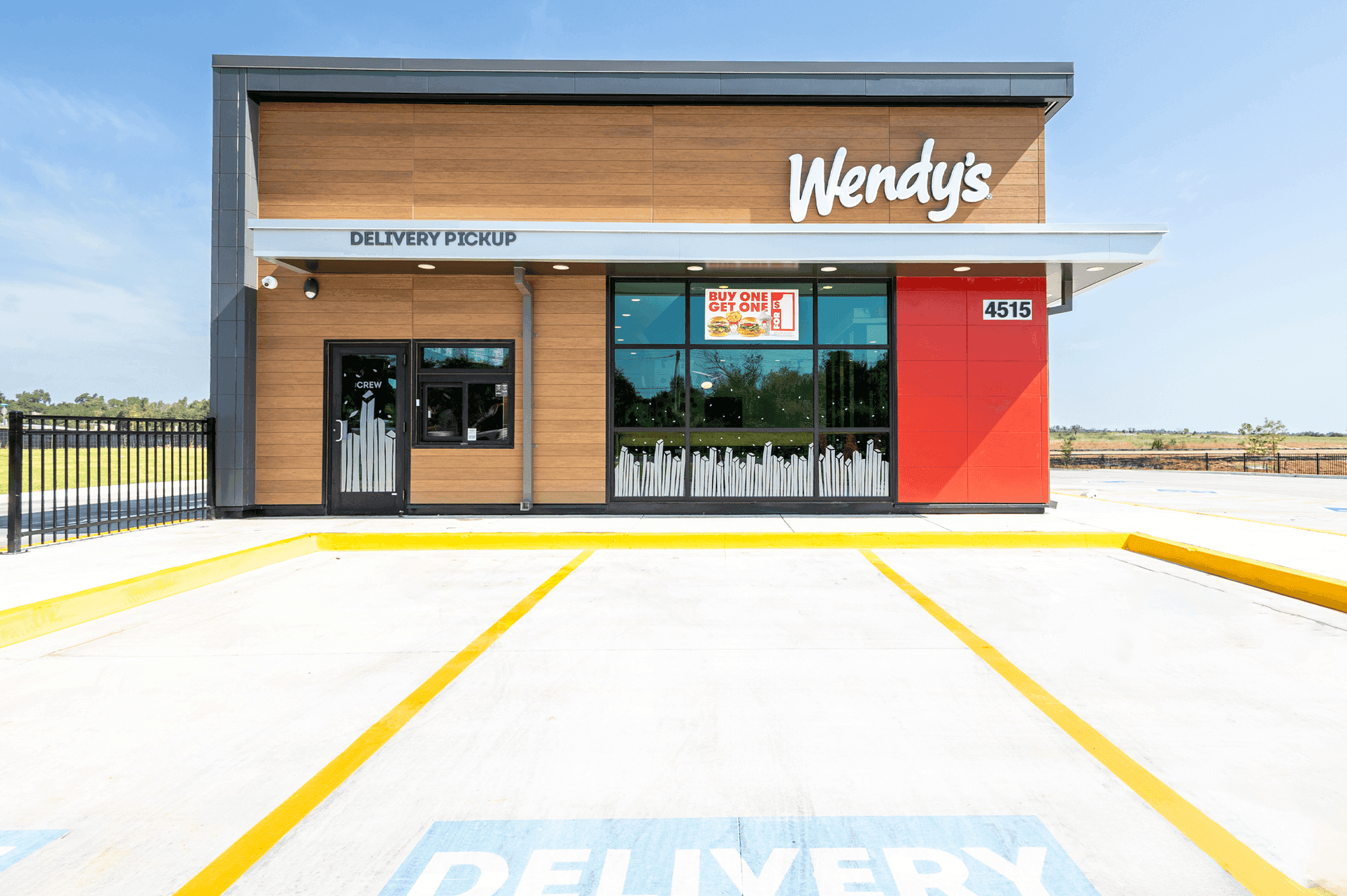
None of this happened in a vacuum. Franchisors across the sector have steadily shifted more financial weight onto their operators over the years, layering on technology fees, mandatory remodel costs, and constant pressure to keep expanding store counts. That burden landed right alongside sharply rising food and labor costs, which fed inflation, which in turn sparked a discount war among fast-food chains that has now dragged on for three years, squeezing franchisee margins even as the bills kept climbing. Many franchisors placed a deliberate bet during this stretch, courting large multi-unit operators on the theory that bigger meant sturdier. Meritage's collapse challenges that theory directly. The scale that was supposed to be a strength becomes, in a downturn, a magnifier of exactly how much can go wrong at once. Franchisee profitability, whether the operator runs five restaurants or five hundred, has to stay central to how these systems are built, because the long-term health of a franchise brand rests on the financial footing of the people actually running the stores.
The unease is not confined to Wendy's. Pizza Hut has recently changed hands entirely, with new private-equity owners financing the acquisition through a whole business securitization structure, a financing approach that raises its own quiet questions about risk down the line. Set beside the Meritage filing, it paints a picture of an industry still trying to figure out how to balance growth ambitions against the financial resilience of the operators actually carrying that growth. Anyone who took on debt to expand quickly during a stretch of rising costs and discount-driven margin compression now looks exposed in ways that were easy to overlook when sales were healthier.
Not every corner of fast food is bending under the same pressure, and that is worth sitting with for a moment. Gas prices are climbing again, which rarely bodes well for discretionary spending, and the Federal Reserve is raising interest rates against conditions apparently strong enough elsewhere to justify it, even as fast food keeps posting weak sales of its own. Restaurant Brands International settled a lawsuit tied to its 2024 acquisition of Carrols. Dave & Buster's has stopped blaming the broader economy for its own troubles. A now-former Domino's franchisee closed 13 locations, an unusually large number for that system, though industry sources expect those restaurants to reopen quickly under new ownership. That closure count stands out precisely because Domino's has historically kept annual closures below half a percent, a track record built on a highly profitable model generating roughly $1.4 million in revenue per store, one that seems to work in nearly any market. Sailormen, the other major franchisee bankruptcy filed this year, is pursuing legal action against a company that walked away from an agreement to take over some of its restaurants. Wendy's and Sailormen are in real distress. Domino's, even with its own isolated stumble, is not. Whatever is shaking franchise systems right now seems to hinge on the specific economics and cost structure of each brand rather than any single storm sweeping over the whole industry.
There is a quieter, stranger thread running underneath all of this too. GLP-1 weight-loss medications are changing how some people eat, though maybe not in the way you'd expect. Karen Pagonis, a GLP-1 user, put it simply in conversation with Lisa Miller: "It hasn't really changed my habits, because you can always take half your meal home or, frankly, my boyfriend usually eats the rest." It is a small, human detail, but it hints at something chains will want to watch closely, whether shrinking appetites shrink visit frequency too, or whether people just adapt through portion splitting and sharing, keeping the seat filled even as the plate empties faster.
Between rising franchisee costs, a three-year discount war, an ownership overhaul at Pizza Hut, a landmark bankruptcy touching 5% of Wendy's stores, and now a shift in appetite itself that nobody fully understands yet, the industry is being asked the same question from several directions at once: whether growth for its own sake was ever the safest bet, or whether brands will keep expanding until the next Meritage forces the conversation anyway.
