
California Penalizes Dickey's for Franchise Disclosure Violations
California shifts to public enforcement strategy against Dickey's for deceptive franchise disclosures, signaling stricter state-level franchise oversight.
Franchising
Sep 10, 2026
California shifts to public enforcement strategy against Dickey's for deceptive franchise disclosures, signaling stricter state-level franchise oversight.
Sep 10, 2026
Paul Brown temporarily steps away from Inspire Brands as Scott Murphy assumes interim CEO role during confidential IPO filing process targeting late 2026.
Sep 10, 2026

Learn how to reduce food waste in restaurants through smarter purchasing, storage, preparation, and service strategies that cut costs.
Sep 9, 2026
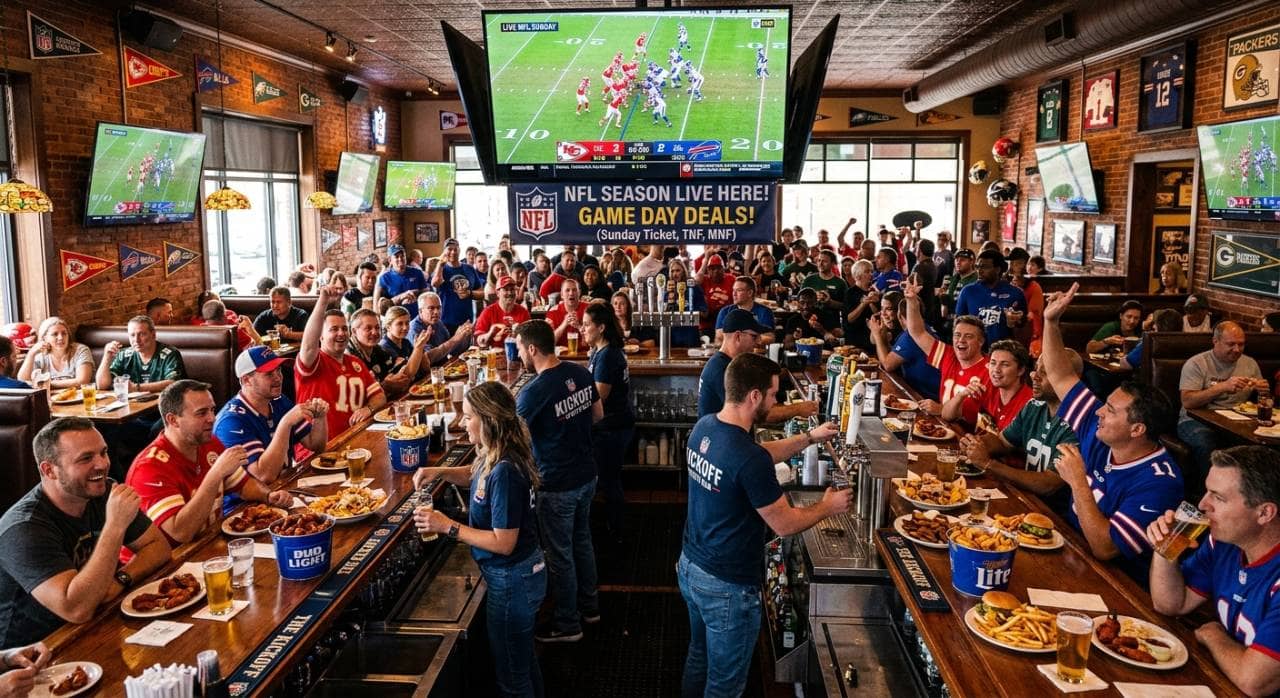
Prepare your restaurant for NFL season with smart menu planning, staffing, marketing, technology, and atmosphere strategies that boost season-long revenue.
Sep 9, 2026
Swig signs franchise agreement for 11 South Denver locations, marking Colorado entry and validating its national expansion strategy.
Sep 8, 2026

Complete guide helping restaurant owners choose essential kitchen equipment - covering cooking, refrigeration, prep, sanitation, ventilation, safety, and long-term maintenance planning.
Sep 7, 2026

QR code menus let restaurants replace paper menus digitally, enabling instant updates, contactless browsing, ordering, and payment through simple smartphone scanning.
Sep 7, 2026

Avoiding common restaurant payroll mistakes - misclassification, tip credit errors, overtime miscalculations - protects businesses from costly penalties, back pay, and compliance risks.
Sep 4, 2026
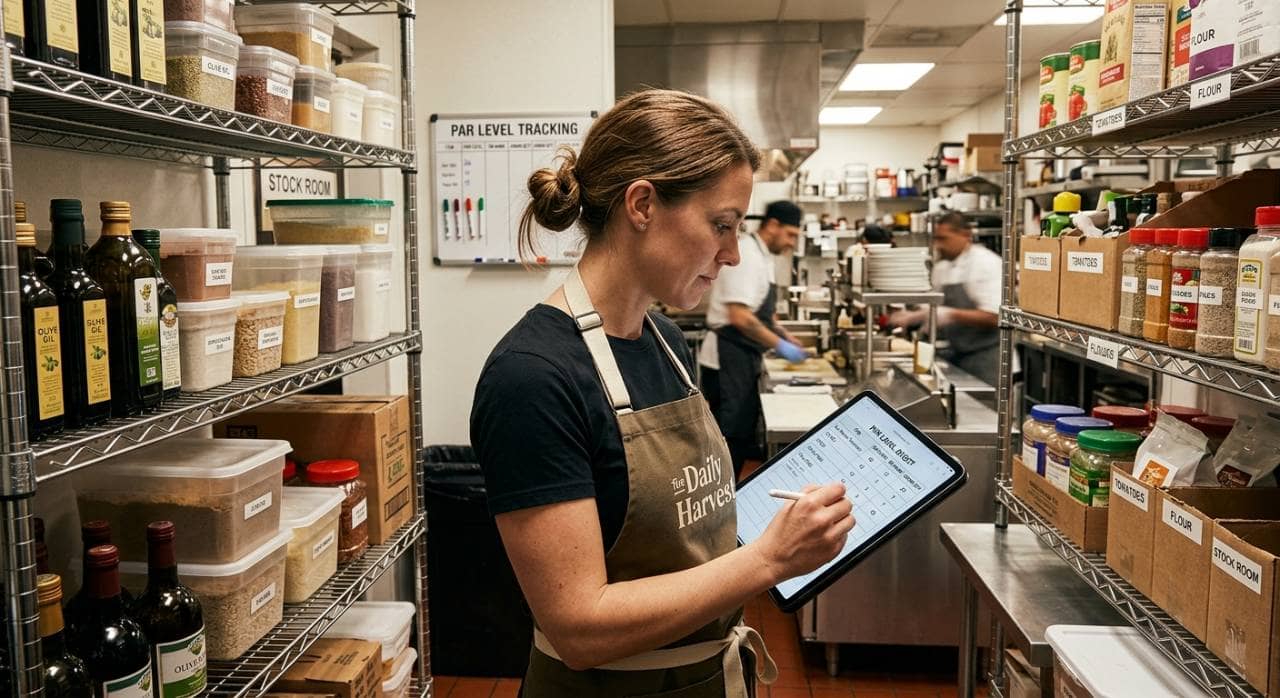
Learn to calculate par levels for restaurant food, beverages, and packaging inventory, preventing stockouts and waste through proper formulas.
Sep 4, 2026
Caribou Coffee appoints Zane Thomas-Rogers as Chief Operations Officer to strengthen execution across its expanding coffeehouse network.
Sep 4, 2026

Unlock Exclusive Access To Webinars, Events, And The Latest News For Free!
Pizza Hut consolidates Jeno’s and Telepizza trademarks in Colombia and Chile under a single LATAM banner, sharpening identity and paving growth.

Photo by P S
At the heart of Pizza Hut's LATAM rebranding lies a quiet, almost surgical reorientation: a single emblem to govern a region once stitched together by multiple marks. Last week, Pizza Hut transferred its Jeno’s and Telepizza trademarks in Colombia and Chile to Food Delivery Brands, S.A., a move that trims the regional mosaic and clarifies the consumer map. The impact is measurable yet measured: roughly 120 Jeno’s and Telepizza restaurants will no longer count toward the company's global unit total, which stood at about 19,750 before the change. With lingering questions about margins and speed, the industry watches a brand's identity crystallize under a single flag: Pizza Hut across LATAM and the Caribbean. What follows is a disciplined pursuit of growth through coherence:
According to industry reporting, the change is framed by a direct, strategic rationale. Kirk Smith, Pizza Hut general manager for Latin America and the Caribbean, described the move as sharpening focus on the core brand across the region. The company acknowledged that the displaced licenses would have a negligible effect on Yum Brands' royalty income, a note that reassures investors while the franchise network absorbs the transition. The practical upshot is a streamlined portfolio that invites faster marketing alignment, unified menus, and a more direct line of support for operators who now speak one brand language rather than several. "This strategic move will enable the Pizza Hut team to focus exclusively on the Pizza Hut brand across the Latin America and Caribbean region, which will better enable our teams and franchisees to accelerate growth.", said Mr. Smith, anchoring the rationale in a concise, future-facing line of thought.
Taken together, the unification promises a clarity that could unlock speed to market and a more efficient allocation of resources. Yet the path to new stores will depend on local market economics, franchisee enthusiasm, and how well supply chains adapt to the single banner.

Why the move now unfolds from years of strategic dialogue between Pizza Hut and Telepizza within a broader master-franchise tapestry. The consolidation traces a 2018 path toward a long-term alliance designed to accelerate growth across markets in Latin America and the Caribbean. At the outset, Telepizza Group assumed management of Pizza Hut's regional supply chain, a setup aligned with the ambition for Telepizza to open as many as 1,300 new stores over the coming decade. The aim, repeatedly cited in company materials, was to unify brand expression and streamline operations while preserving a multi-brand footprint in markets where Telepizza remains active.
Nation's Restaurant News noted that the original alliance was announced in 2018 and included a simple promise to expand significantly in the region. The current move can be read as the articulation, in practice, of that historic plan: a consolidated LATAM banner that concentrates growth under the Pizza Hut name where the market dynamics allow.
This consolidation, then, is not merely administrative. It is a deliberate shaping of the region's identity, designed to accelerate expansion and sharpen the consumer memory of the Pizza Hut experience.

Post-transfer, Food Delivery Brands becomes the owner of the Jeno’s and Telepizza trademarks in Colombia and Chile, while continuing as Pizza Hut's largest master franchisee outside China. The company sub-franchises or directly operates more than 1,500 restaurants under Telepizza, Jeno’s, and Pizza Hut brands, with a heavy emphasis in Spain and Portugal where the Pizza Hut–Telepizza partnership persists. A Pizza Hut spokesperson indicated that the change would not materially affect the existing supply chain structure in LATAM, ensuring stability for franchisees and customers during the transition. Yum Brands continues to franchise over 1,300 Pizza Hut restaurants across LATAM and the Caribbean, consolidating its network under a unified banner. The transfer preserves continuity in supply chain management while enabling brand clarity.
Beyond branding, the operational frame remains intact: continuity in supply chain management is highlighted as the bedrock that supports franchisees and customers during the transition, even as ownership marks shift within the LATAM landscape.
In practical terms, the consolidation creates a unified banner for a broad network, while preserving existing regional strengths, especially the Telepizza footprint in Spain and Portugal, where a separate, multi-brand footprint persists outside LATAM.
On the corporate side, the rhetoric is precise and intended to reassure. Food Delivery Brands' chief financial officer, Jose Luis Renedo, states, "Food Delivery Brands has a long and rich history of operating Jeno’s and Telepizza brands, and we believe this transaction in Latin America is in the best interest of customers and stakeholders of both brands." The NRN report also captured Kurt Smith, Pizza Hut LATAM, with the articulation that the move is a focused investment in the Pizza Hut core across LATAM and the Caribbean: "This strategic move will enable the Pizza Hut team to focus exclusively on the Pizza Hut brand across the Latin America and Caribbean region, which will better enable our teams and franchisees to accelerate growth." Taken together, the leadership voices crystallize a disciplined, growth-forward posture even as brands realign their footprints.
Beyond praise, the reporting also notes a restructuring arc for Food Delivery Brands, with last year's debt-restructuring ties bringing Oak Hill, Fortress, Blantyre, and HIG into full ownership. That financial backdrop helps illuminate how brand moves travel in tandem with ownership shifts, shaping a broader, more focused LATAM footprint for Yum.
The chorus of executive voices thus anchors a practical reality: a realignment pursued with clarity, even as the corporate overlay records its own balance-sheet evolution.

Even as the brand consolidates, questions linger about the longer-term economics and regional dynamics. The immediate effect is a sharpened focus on the Pizza Hut brand across LATAM and the Caribbean, with sub-brand licenses retired and resources redeployed. The supply chain continuity claim from Pizza Hut's spokesperson anchors confidence for existing franchisees, yet market-specific dynamics, competition, regulatory shifts, currency movements, will eventually shape how quickly openings and remodels materialize. The collaboration with Food Delivery Brands in other markets may continue to influence expansion or consolidation strategies, even as LATAM grows more Pizza Hut in name and practice.
The outcomes will depend on franchisee engagement, supply chain resilience, and the pace at which markets respond to a single identity. As LATAM matures under a unified Pizza Hut banner, stakeholders will watch how marketing, menus, and service parity align with growth ambitions.
The narrative moving forward will hinge on the region's appetite for a singular Pizza Hut experience and the resilience of its supply chain in a changing landscape.
