Pills, Pixels and Power Lifts Rewrite Fitness Franchises
GLP-1 meds, wearables and strength training are reshaping fitness franchises as brands blend digital, boutique and big-box strategies for growth.
May 26, 2026
GLP-1 meds, wearables and strength training are reshaping fitness franchises as brands blend digital, boutique and big-box strategies for growth.
May 26, 2026
Dutch Bros and 7 Brew race to expand as coffee QSRs boom. Growth, unit economics, AI-driven labor, and competition shape a widening field.
May 26, 2026
After miscounts and staff backlash, Starbucks is retiring its Automated Counting AI across North America, highlighting the risks of restaurant automation.
May 26, 2026
Smashburger has appointed Kate Savelli as its new chief marketing officer, bringing over two decades of restaurant marketing experience to a brand working to reverse years of unit count decline and push back toward 200 locations nationwide.
May 26, 2026
Starbucks has quietly ended its computer vision inventory tracking system after employees flagged reliability issues, reverting to traditional stock-keeping methods as the chain doubles down on getting supply and availability right across its cafes.
May 26, 2026
Red Robin's restaurant-level margins climbed to their highest point in five years during Q1, with CEO David Pace pointing to meaningful adoption of ChatGPT among managers as a contributing factor in the chain's improving operational performance.
May 26, 2026
Barre3 CEO Sadie Lincoln outlines a women-first, self-funded growth strategy as the brand expands franchises, posts rising AUVs, and enters Chile.
May 25, 2026
CAVA posts 9.7% comps on 6.8% traffic, raises 2026 outlook as value-first menu, tech, and expansion drive gains despite AB 1228 headwinds.
May 25, 2026
Giordano’s ties weekly pizza discounts to AAA’s Chicago gas average, aiming to offset pump pain, drive loyalty redemptions, and defend casual dining traffic.
May 25, 2026
As more states raise minimum wages, QSRs pivot to real-time scheduling, cross-training, and AI tools to protect speed, value, and margins.
May 24, 2026
Unlock Exclusive Access To Webinars, Events, And The Latest News For Free!
After miscounts and staff backlash, Starbucks is retiring its Automated Counting AI across North America, highlighting the risks of restaurant automation.
Photo by Petr Sevcovic
Starbucks will retire its Automated Counting program across North America, a decision announced on May 21, 2026 after only nine months in market. The AI tool, meant to speed stock checks of milks and other beverage products, suffered persistent miscounts and mislabeling that, paired with employee frustration, erased its promised time savings, according to an internal newsletter reviewed by Reuters. The company said it will return to a single, consistent inventory-counting process across all categories, using the same tools and routines applied elsewhere in its supply chain work.
The initiative sat at the center of CEO Brian Niccol’s turnaround push to tackle chronic product shortages he blamed for dragging on sales. After years of testing, Starbucks rolled the system out in September 2025 with a bold claim: computer vision, 3D spatial intelligence and augmented reality could compress counts from over an hour to minutes. Early field data pointed to a behavior shift, with stores using Automated Counting conducting stock checks eight times more frequently than those relying on manual methods.
Barclays analysts projected that better inventory visibility could bolster store-level margins through reduced waste and labor costs.
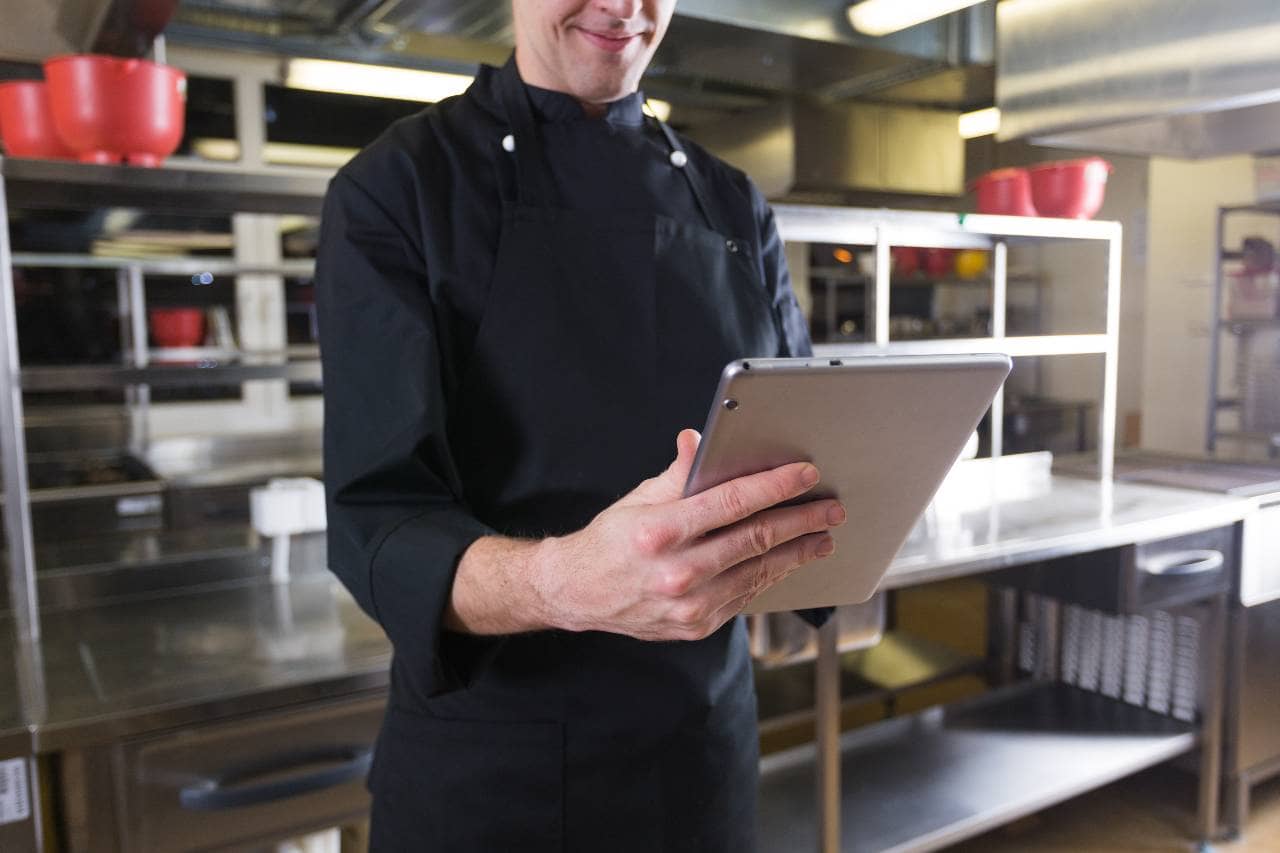
In practice, baristas carried a handheld tablet running NomadGo software that fused camera and LIDAR inputs to scan shelves of syrups, milks and other beverage components.
As workers moved through each section, the app registered quantities in real time, flagging items as “counted” within an augmented-reality overlay. The deployment focused on high-turn beverage categories, leaving other stock counts unchanged. Starbucks framed the approach as a pilot for broader supply chain optimization, with automated counts expected to feed daily replenishments and cut out-of-stock incidents.
Frontline sentiment told another story. One Reddit commenter wrote, “It’s frankly impressive how bad it actually is,” while another said they were “about to punch a wall over it” after repeated misreads of visually similar items. A TikTok video showed the system missing a peppermint syrup bottle, sending staff back to manual tallying.
Inside the company, relief surfaced quickly once the retirement notice landed, with one message calling the move “a huge correction to our processes,” and another thanking leadership for “discontinuing Automatic Counting! The thought behind it was great, but the execution was proving difficult.” Starbucks had fast-tracked the tool to nearly all North American locations in September 2025, and in February told Reuters that pilot stores saw improved product availability, a key performance indicator in Niccol’s “Back to Starbucks” campaign.
The wins did not hold. Error rates forced manual corrections that swallowed efficiency gains. Shares have risen 24% so far in 2026, yet North America operating margins have slipped to 9.9% from 18% two years earlier, a reminder that operational tech can bruise profitability when accuracy wavers.
The reversal lands during a wider reckoning over automation in restaurants. In early May 2026, franchisee Chaac Pizza Northeast filed a $100 million lawsuit against Pizza Hut, alleging its mandatory Dragontail AI delivery-management system caused “slower delivery times, colder product (caused by delays), and reduced customer satisfaction,” and eroded enterprise value across more than 100 locations.
Investment continues regardless: the global retail AI market reached $8.9 billion in 2024 and is expected to hit $31.2 billion by 2028. Even so, adoption remains uneven, with a McKinsey survey finding 61 percent of merchants are ill-prepared to scale AI tools for merchandising and inventory management at retail scale.
Plenty remains unresolved for Starbucks. It is unclear whether standardizing on manual counts will fix stock accuracy or simply reintroduce labor inefficiencies.
The company has not offered post-change metrics on count frequency or error rates, nor has it disclosed a cost–benefit analysis for the Automated Counting trial. NomadGo has signaled plans to update its offering based on user feedback, leaving room for a potential return under a different model. For now, consolidating inventory work under one proven process aims to reduce variability across its 9,000+ stores and simplify training for new hires. Leadership maintains that disciplined automation will remain integral wherever technology clearly adds value. Competitors will be watching, because any algorithm that asks baristas and shift leads to rethink their routines must deliver precision, not promises, if it is to earn a permanent place on the line.