
Olo Launches Consumer App After 23-Year Wait
Olo debuts a consumer ordering app, challenging DoorDash and Uber Eats with lower fees and restaurant-owned customer data.
Delivery
Oct 20, 2026
Olo debuts a consumer ordering app, challenging DoorDash and Uber Eats with lower fees and restaurant-owned customer data.
Oct 20, 2026

Learn how to calculate overtime pay for restaurant employees, apply correct rates, avoid payroll mistakes, comply with labor laws, and control labor costs.
Oct 16, 2026

Learn how to prepare an accurate balance sheet by organizing financial records, valuing assets, recording liabilities, reconciling accounts, and preventing accounting errors.
Oct 19, 2026
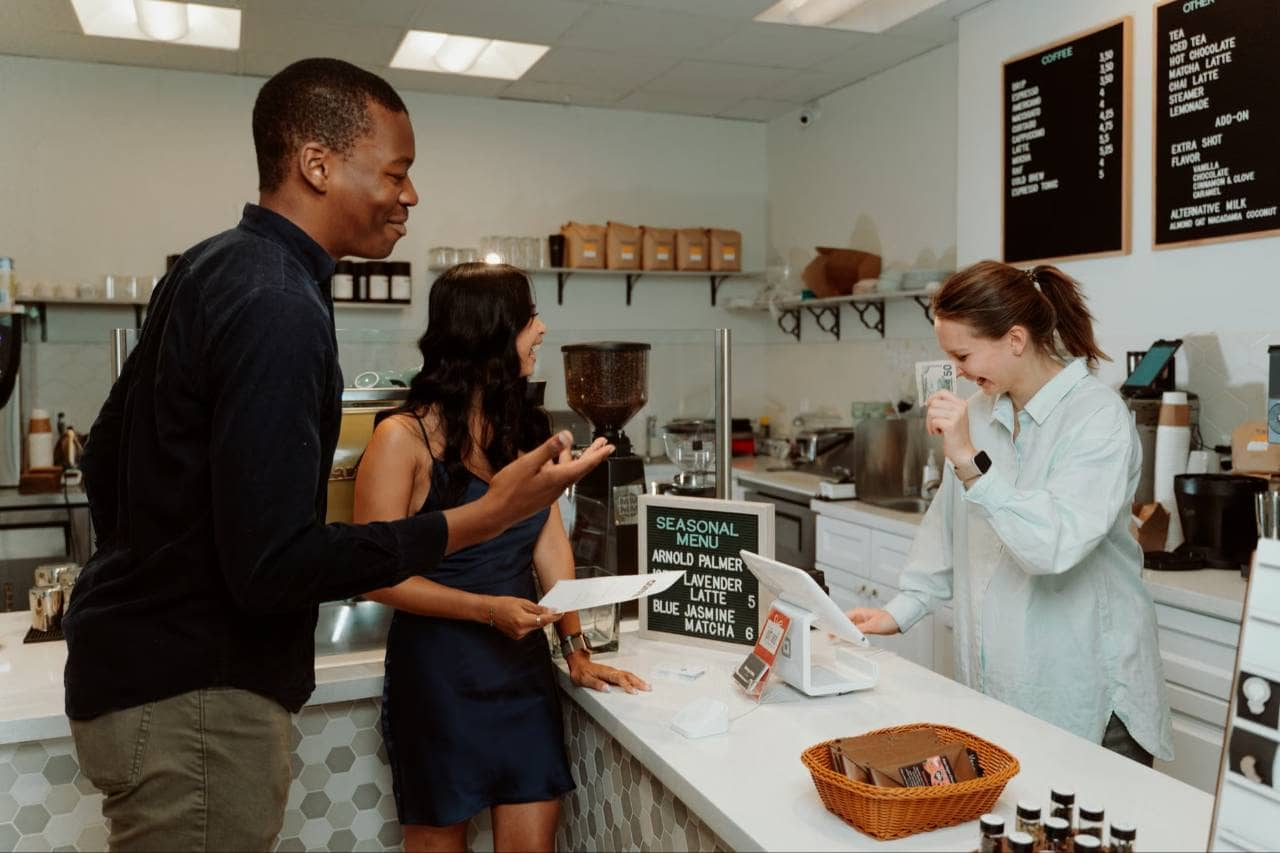
Coffee shops can boost sales by combining happy hours, bundles, limited-time drinks, seasonal menus, loyalty rewards, and friendly upselling, while tracking results and avoiding over-discounting.
Oct 19, 2026
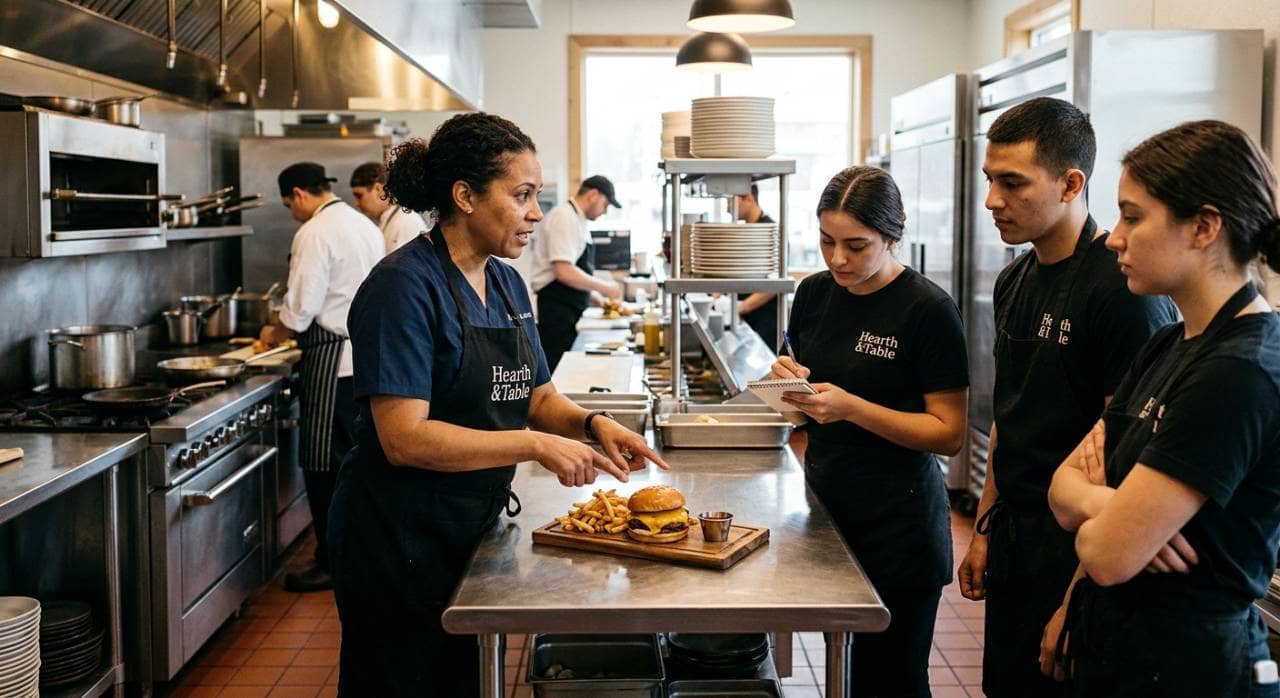
Build a structured training program covering onboarding, roles, service, food safety, and growth to boost consistency, retain staff, and deliver reliably excellent guest experiences.
Oct 16, 2026
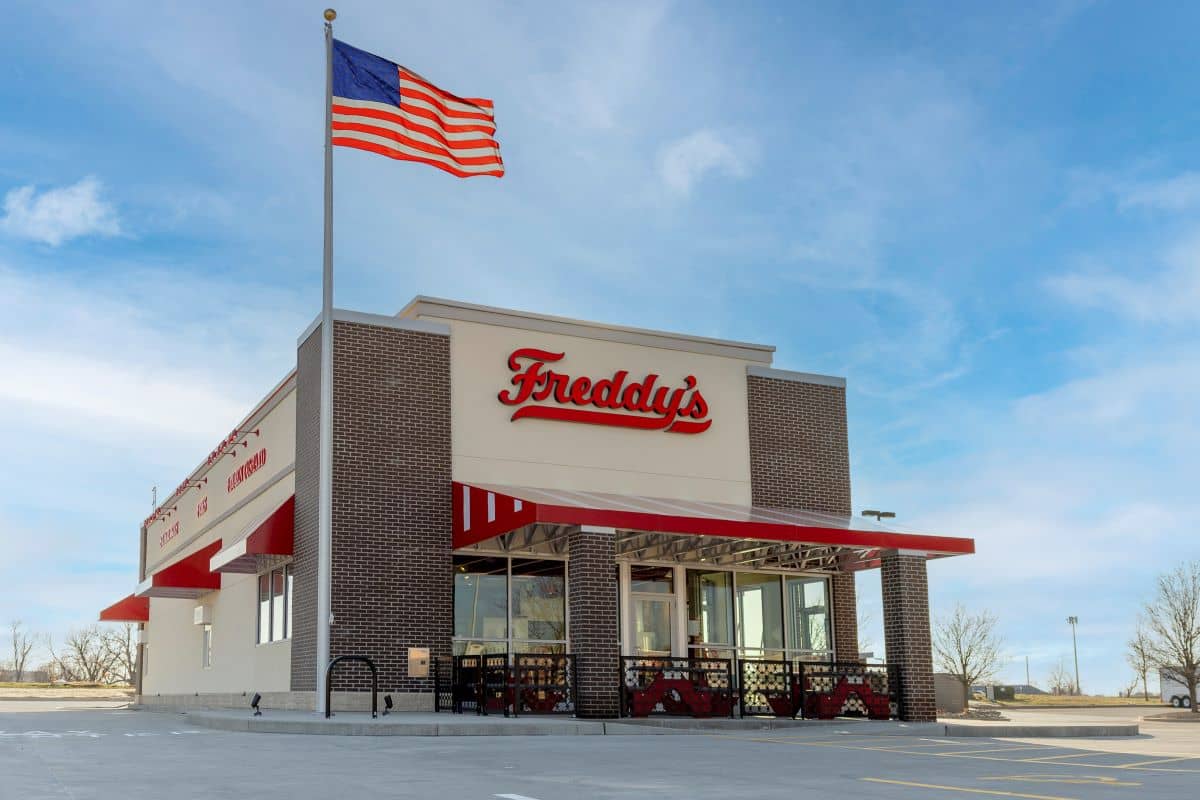
Freddy's celebrates 600 restaurants with a smaller, drive-thru-free format in Beaufort, SC, reshaping its real estate, tech, and pricing strategy.
Oct 16, 2026
Inspire Brands taps Jenna Bromberg as Arby's new CMO while Jeff Baker shifts to lead culinary innovation in a quiet leadership reshuffle.
Oct 16, 2026
Five Guys partners with Full Day Productions and Lost Tribe Creative for On The Line, a docuseries on Prime Video following its global crew competition.
Oct 16, 2026

AI helps restaurant owners streamline back-office management, automate administrative tasks, improve accuracy, control costs, and make smarter business decisions.
Oct 14, 2026
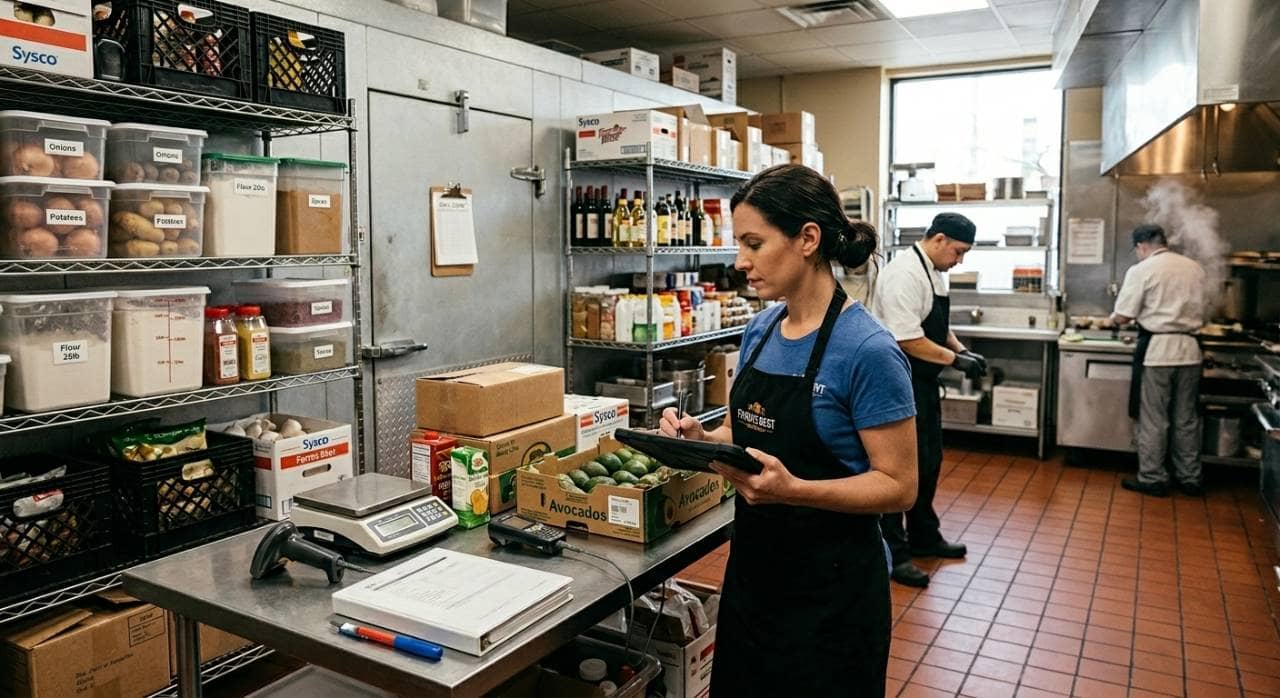
Learn how to forecast restaurant inventory using sales data, demand trends, and stock tracking to reduce food waste, control costs, and improve profitability.
Oct 14, 2026

Unlock Exclusive Access To Webinars, Events, And The Latest News For Free!
Learn to calculate par levels for restaurant food, beverages, and packaging inventory, preventing stockouts and waste through proper formulas.
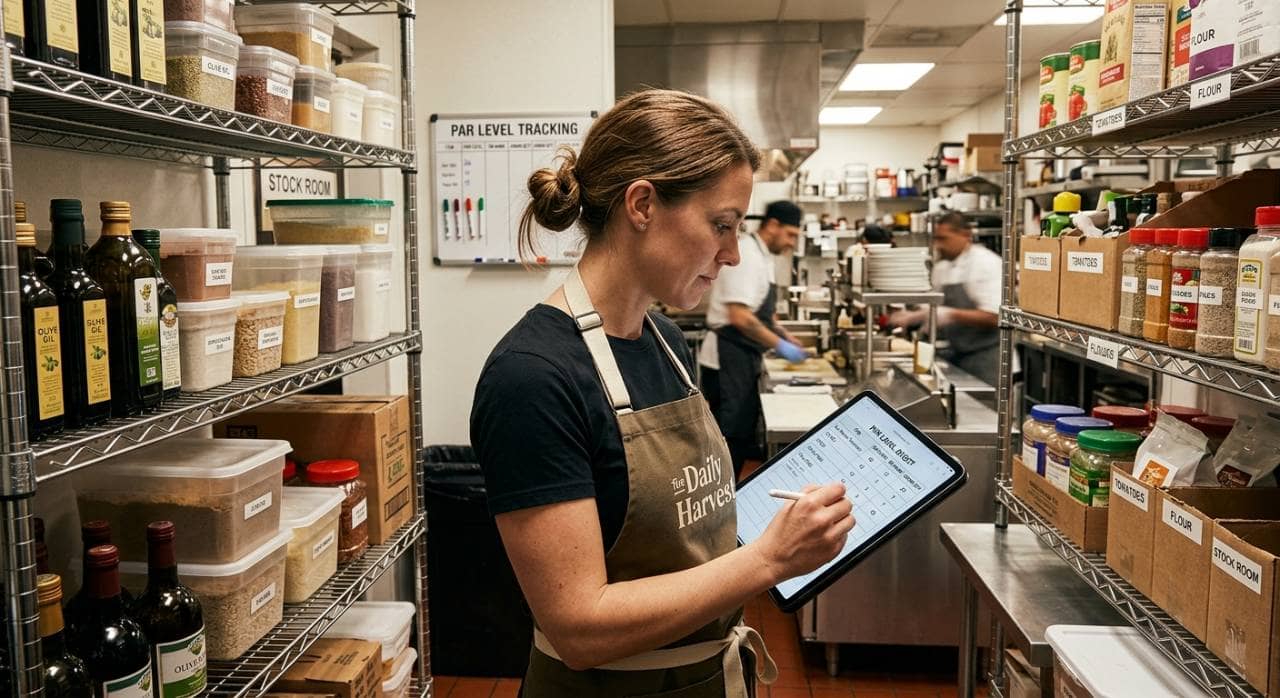
Every restaurant owner has lived through some version of the same headache - a busy Friday night, and suddenly you're out of chicken breasts, or the well vodka runs dry, or there's not a single to-go container left in the back. On the flip side, there's the walk-in freezer stuffed with product that's slowly creeping toward its expiration date, tying up cash that could be going toward payroll or rent. Both problems usually trace back to the same root cause - nobody set a clear par level. A par level is the minimum amount of an item you need on hand at any given time before it's time to reorder. Think of it as a floor, not a ceiling. Once your stock of a given item dips to or below its par level, that's your signal to place a new order. The idea is simple, but the impact of getting it right - or wrong - ripples through nearly every part of the business. Restaurants operate on notoriously thin margins, and inventory is usually one of the largest controllable costs after labor. Par levels sit at the intersection of a few critical business functions - 1. Preventing stockouts. Running out of a menu item mid-service doesn't just lose that one sale - it frustrates guests, puts pressure on staff to manage 86'd items, and can damage repeat business if it happens often. 2. Reducing waste and spoilage. Overordering perishables because "we might need it" leads directly to product that spoils before it's used. That's money thrown in the trash, literally. 3. Freeing up cash flow. Every dollar sitting in unused inventory is a dollar that isn't available for other operating expenses. Lean, accurate par levels keep working capital where it's more useful. 4. Simplifying ordering decisions. Without pars, ordering becomes a gut-feeling exercise that varies by whoever happens to be doing it that week. With pars in place, reordering becomes a routine, almost mechanical process - check stock, compare to par, order the difference. 5. Supporting consistency across shifts and staff. Par levels create a shared reference point. A new kitchen manager doesn't have to guess how much garlic or heavy cream the restaurant typically goes through - the par level tells them. Setting par levels isn't a one-time administrative task to check off a list. It's an ongoing discipline that, once built into daily operations, quietly protects both the guest experience and the bottom line. The rest of this guide walks through exactly how to calculate and apply par levels across food, beverage, and supply categories - so ordering becomes a system, not a guessing game.
There's no universal par level that works for every restaurant, or even for every item within the same restaurant. A par level is only useful if it reflects the actual conditions your business operates under. Before running any calculations, it helps to understand the variables that shape what the "right" number looks like for each item. 1. Sales velocity. This is the starting point for almost every par calculation - how quickly does an item actually get used? A burger joint selling 200 patties a day needs a very different beef par than a fine-dining spot selling 30 steaks a night. Sales velocity isn't static, either - it shifts with the day of the week, time of year, and even the weather. Pulling historical sales data from your POS system is the most reliable way to establish a realistic baseline rather than relying on memory or assumption. 2. Supplier lead time. Lead time is the gap between placing an order and having the product actually available for use. A local produce vendor might deliver the next morning, while a specialty imported cheese could take a week or more. The longer the lead time, the higher your par level needs to be, since you're covering a longer stretch of usage before the next delivery arrives. Any owner setting pars without accounting for lead time is essentially guessing. 3. Storage capacity. Even if a supplier offers a great bulk discount, that doesn't help if there's no room in the walk-in, dry storage, or freezer to hold it. Physical space is a hard constraint on par levels - particularly for restaurants in older buildings or tight urban locations with limited back-of-house square footage. Par levels have to work within the space that's actually available, not the space an owner wishes they had. 4. Shelf life and perishability. Highly perishable items like fresh seafood, dairy, or delicate produce need tighter, lower par levels with more frequent reordering, since holding excess stock just increases the odds of spoilage. Shelf-stable goods like canned products, dry grains, or liquor can carry higher pars comfortably, since the risk of loss from holding extra stock is much lower. 5. Delivery frequency. How often a supplier delivers directly affects how much buffer is needed. A restaurant receiving produce deliveries three times a week can run leaner pars than one that only gets a delivery every ten days. Less frequent deliveries mean each order has to cover a longer stretch of usage, which pushes par levels higher. 6. Seasonal and demand fluctuations. Demand isn't flat throughout the year. A restaurant near a beach town might see summer traffic triple compared to winter. Holiday weeks, local events, or even a new menu promotion can spike usage of specific ingredients well beyond typical averages. Par levels set during a slow season will fall short during a busy one, and vice versa - which is why seasonality has to be factored in rather than treated as an afterthought. Together, these factors form the inputs for the par level formula covered next. Getting a rough sense of each one - sales velocity, lead time, storage limits, perishability, delivery schedule, and seasonal shifts - for every major inventory category is what makes the resulting numbers actually usable, rather than arbitrary.
With the key influencing factors in mind, it's time to turn them into an actual number. While every restaurant's inventory situation has its own quirks, most par level calculations boil down to one core formula - Par Level = (Average Daily Usage x Lead Time in Days) + Safety Stock Breaking this down piece by piece makes it much easier to apply in practice. 1. Average daily usage. This is how much of an item gets used on a typical day. It's best calculated by pulling a few weeks or months of historical sales/usage data and averaging it out, rather than relying on a single day that might not be representative. For a food item, this could mean portions used per day; for a beverage, bottles or kegs; for packaging, units of a to-go container. 2. Lead time in days. This is the number of days between placing an order and having the product ready to use. If a distributor takes three days to deliver, that's the lead time to plug into the formula. Longer lead times require the restaurant to hold more stock to bridge the gap. 3. Safety stock. Safety stock is a buffer added on top of expected usage to account for the unpredictable - a busier-than-normal weekend, a late delivery, or a supplier running short. It's not meant to cover every possible scenario, but it protects against the everyday variability that average numbers alone don't capture. Safety stock is often calculated as a percentage of average usage (commonly somewhere in the 10-20% range, though this varies by item and how variable demand tends to be). 4. A simple worked example. Say a restaurant uses an average of 20 pounds of ground beef per day, and its supplier has a lead time of 2 days. The owner wants to build in a safety stock buffer equal to one day's usage. Average daily usage, 20 lbs Lead time, 2 days Safety stock, 20 lbs (1 extra day's worth) Par Level = (20 x 2) + 20 = 60 lbs This means the restaurant should reorder ground beef whenever stock drops to around 60 pounds, ensuring there's enough on hand to cover both the two-day delivery window and an unexpected surge in demand. This calculation gives a solid mathematical starting point, but it shouldn't be treated as a fixed, permanent number. It's a baseline that needs to be adjusted for the practical realities of each inventory category - perishability, storage limits, minimum order quantities, and so on.

Food inventory is usually the most complex category to set par levels for, since it spans everything from delicate fresh produce to shelf-stable dry goods, each with very different usage patterns and risk profiles. Applying the core formula here means layering in a few food-specific considerations. 1. Separate perishables from shelf-stable items. The first step is grouping food inventory by how quickly it spoils, since this drives how tightly par levels should be managed - - Highly perishable (fresh seafood, dairy, fresh herbs, leafy greens), needs low par levels and frequent reordering. Holding extra "just in case" almost always leads to waste. - Moderately perishable (most produce, fresh meat, eggs), can carry a slightly larger buffer, but still needs regular review since shelf life is measured in days, not weeks. - Shelf-stable (canned goods, dry grains, flour, oils), can comfortably support higher par levels, since the cost of holding extra stock is low and the risk of spoilage is minimal. Applying the same par logic to a case of canned tomatoes and a flat of fresh strawberries leads to bad outcomes on both ends - either wasted perishables or unnecessarily frequent reordering of things that would have been fine to stock up on. 2. Forecast usage from recipes, not guesswork. Rather than estimating usage of a raw ingredient directly, it's more accurate to work backward from menu sales. If a restaurant sells an average of 80 pasta dishes a day, and each dish uses 6 ounces of pasta, that's 30 pounds of pasta needed daily - before accounting for any other menu items that also use it. Building this kind of recipe-based usage sheet for high-volume ingredients (especially ones used across multiple dishes) produces a far more reliable average daily usage figure than eyeballing the walk-in. This is also where POS sales data becomes valuable - cross-referencing which dishes sold with their recipe/portion breakdowns gives an accurate, ingredient-level usage number without manual tallying. 3. Account for prep waste and yield loss. Raw ingredients rarely convert 1-1 into usable portions. A case of whole chickens loses weight in trimming; a crate of tomatoes loses volume in coring and seeding. When calculating average daily usage, it's important to use the raw purchased quantity needed to yield the required portions - not just the finished portion size - or par levels will consistently run short. Building in a yield percentage (based on kitchen prep logs or vendor spec sheets) keeps this accurate. 4. Adjust safety stock based on spoilage risk. For highly perishable items, it's often smarter to keep safety stock low or even minimal, since the cost of an occasional small stockout is usually lower than the cost of regular spoilage. For shelf-stable goods, a slightly larger safety stock buffer is low-risk and can help avoid the disruption of running out of pantry staples that are annoying to reorder on short notice. Because food usage is the most sensitive to menu changes, seasonality, and shifting customer preferences, food par levels typically need more frequent review than packaging or even some beverage categories - a theme this guide returns to in the section on adjusting pars over time.
Beverage inventory follows the same core formula as food, but the practical details differ enough that it's worth treating as its own category. Liquor, beer, wine, and non-alcoholic drinks each have distinct turnover rates, ordering constraints, and storage considerations. 1. Liquor - Spirits are shelf-stable, which makes them more forgiving to hold in slightly higher quantities than perishable food items. That said, not all liquor moves at the same speed. Well liquor used in high-volume cocktails needs a par level based on close tracking of daily pour usage, while slower-moving top-shelf or specialty spirits should be paired down to avoid tying up cash in bottles that might sit on the shelf for months. It's worth calculating par levels separately for "rail" or well items versus premium and call liquors, rather than lumping the whole liquor category together. 2. Beer - Beer pars depend heavily on format. Kegged beer requires attention to how quickly each keg is emptied a popular draft line might turn over a keg every few days, while a niche seasonal tap could last weeks. Bottled and canned beer is easier to manage in bulk since it's shelf-stable, but still benefits from watching sell-through rates by brand, since preferences shift and slow-moving SKUs can quietly accumulate. 3. Wine - Wine sits closer to the liquor model in terms of shelf stability, but par levels should reflect how the wine list is actually used. By-the-glass wines with strong sales velocity need a dependable, closely tracked par level to avoid running out mid-service, while bottle-only or reserve list wines can be held at lower quantities, ordered more selectively, and adjusted based on how the list itself performs over time. 4. Non-alcoholic beverages - Soda syrups, juices, mixers, coffee, and bottled water tend to have steadier, more predictable usage patterns than alcohol, which makes them easier to forecast using straightforward average daily usage. The main variable here is often shelf life for perishable items like fresh juice versus the much longer shelf life of syrups and concentrates. 5. Distributor minimum order quantities - One factor that doesn't come up as much with food is the minimum order quantity many beverage distributors require - often tied to case sizes, pallet minimums, or delivery minimums to avoid extra fees. A calculated par level might suggest reordering 8 bottles of a specific wine, but if the distributor only sells in cases of 12, the effective par level needs to be adjusted upward to align with what can actually be ordered. Ignoring this mismatch leads to either partial orders that don't get filled efficiently or unnecessary rush orders. 6. Slower turnover on premium items - Unlike most food inventory, where slow movement usually signals a spoilage risk, premium beverages age gracefully and can be intentionally held at higher par levels as a strategic inventory choice rather than a liability. The key is distinguishing between a premium item that's a deliberate, slow-moving asset and one that's simply not selling and quietly tying up capital.
Packaging and disposable supplies - to-go containers, napkins, straws, cups, lids, bags, gloves, cleaning supplies - operate under a different logic than food or beverage inventory. These items don't spoil in the traditional sense, which changes how the core formula should be applied. 1. Low spoilage risk changes the safety stock calculation. Since disposables don't expire, the main risk of overordering isn't waste - it's tied-up storage space and cash flow. This means safety stock buffers can generally be set higher for packaging than for perishable food without much downside, since there's little cost to holding a few extra weeks' worth of napkins or take-out bags. The bigger constraint becomes storage capacity rather than shelf life. 2. Bulk ordering changes the economics. Packaging suppliers often offer meaningful discounts for larger case or pallet orders, which can make it worth setting higher par levels than the base formula alone would suggest - as long as storage space allows for it. Unlike food, where holding more inventory increases risk, holding more packaging can sometimes reduce cost per unit while carrying minimal downside, provided the item won't become obsolete (see below). 3. Watch for packaging that can go obsolete. While disposables don't spoil, they can become effectively unusable if a restaurant changes its branding, switches to a different container size, updates its logo, or shifts away from a particular packaging format (say, moving from plastic to compostable containers). Items with custom branding or a specific design are more like a semi-perishable item in this sense - ordering too far ahead of a planned menu or branding change can leave a restaurant with boxes of containers that no longer match what's being served. 4. Base usage on covers and to-go volume, not just sales dollars. Average daily usage for packaging is best tied to volume metrics rather than revenue - number of covers served, number of to-go or delivery orders, or number of transactions - since packaging usage scales with order count, not order value. A restaurant with a high average check but modest order volume needs far fewer to-go containers than one doing high-volume, lower-ticket delivery business. 5. Group by usage tier, similar to food. Not all packaging items move at the same rate. High-turnover items like napkins, straws, and standard cups warrant close tracking and possibly higher par levels given how quickly they're consumed. Lower-turnover specialty packaging (specific catering boxes, seasonal cup designs, or items tied to a limited-time promotion) should be kept leaner, closer to actual anticipated need, to avoid excess stock sitting unused. Because packaging often comes in bulky cases that take up significant shelf or floor space, par levels for this category need to be realistic about what a restaurant's dry storage or back office can actually accommodate - sometimes requiring a tradeoff between the cost savings of a bulk order and the practical reality of where those cases will physically sit until used.
A par level isn't a number to set once and forget. Restaurants are dynamic - menus change, seasons shift, promotions come and go, and customer habits evolve. Par levels that were accurate six months ago can quietly become wrong, leading right back to the stockouts or waste they were meant to prevent. Treating par levels as a living system, not a static setting, is what keeps them useful long-term. 1. Build in a regular review cycle. Rather than waiting for a problem to surface - an item running out repeatedly, or a walk-in cluttered with slow-moving stock - it helps to set a recurring schedule for reviewing par levels. High-velocity, perishable items (fresh food, by-the-glass wine, popular draft beer) benefit from a weekly review, since usage patterns there shift quickly and the cost of being wrong is higher. Slower-moving or shelf-stable categories (packaging, liquor, dry goods) can typically be reviewed on a monthly basis, since their usage tends to be more stable over shorter periods. 2. Adjust for seasonality proactively. Rather than reacting after a shortage or surplus has already happened, it's worth looking ahead at known seasonal patterns - summer patio traffic, holiday catering demand, slower post-holiday weeks - and adjusting relevant par levels in advance. If historical sales data shows a predictable pattern year over year, that pattern should directly inform when and how much par levels shift, rather than relying on staff to notice and react in the moment. 3. Update pars whenever the menu changes. Adding, removing, or modifying menu items has a direct ripple effect on ingredient usage. A new dish featuring a previously low-volume ingredient can suddenly turn that item into a high-turnover one, requiring a higher par level and possibly a shorter reorder cycle. Conversely, removing a dish can leave a par level artificially high for an ingredient that's no longer in regular use. Menu changes should trigger an immediate par level review for any directly affected items, rather than waiting for the next scheduled cycle. 4. Watch for the impact of promotions and events. A planned promotion, a private event, or even local happenings near the restaurant can temporarily spike demand for specific items well beyond normal par levels. For known upcoming events, temporarily raising relevant par levels ahead of time - and then scaling them back down afterward - helps avoid both a mid-promotion stockout and leftover excess once the promotion ends. 5. Let historical data guide adjustments. The most reliable way to know whether a par level needs to change is to look at actual usage and ordering history rather than relying on impression alone. If an item consistently runs low before the next delivery, that's a clear signal the par level is set too low. If an item regularly sits untouched near its expiration or shows up repeatedly in waste logs, that's an equally clear signal it's set too high. Reviewing this data on a consistent basis turns par level adjustment into an evidence-based process rather than a guessing game. Ultimately, par levels work best when reviewing and adjusting them becomes a routine part of how the restaurant operates - built into weekly or monthly manager tasks - rather than a project that gets set up once and left untouched. The next section covers the tools that make this ongoing process easier to manage and more consistent across staff.
Even a well-calculated par level is only useful if it's actually followed day to day. The right tools and systems make it far easier for staff to check stock against par levels consistently, rather than relying on memory or informal habit - which is often where inventory management breaks down in practice. 1. Inventory management software. Dedicated restaurant inventory platforms are built specifically around par-based ordering. Most allow an owner to input par levels for each item, then generate suggested order quantities automatically based on current stock counts. Many also track usage trends over time, flag items that are consistently running under or over par, and support barcode or mobile scanning for faster stock counts. For restaurants managing dozens or hundreds of SKUs across food, beverage, and packaging, this kind of software removes a significant amount of manual work and reduces the chance of human error in day-to-day tracking. 2. POS integration. When inventory software is connected to a restaurant's point-of-sale system, usage data can be pulled automatically based on actual sales, rather than requiring manual entry. This is particularly valuable for the recipe-based forecasting discussed earlier - as menu items sell, the system can deduct the corresponding ingredient quantities from stock in real time, keeping average daily usage figures current without extra effort. This integration also makes it easier to catch discrepancies between expected and actual usage, which can flag issues like over-portioning, waste, or even theft. 3. Manual tracking methods. Not every restaurant is ready for dedicated software, and that's fine - a well-organized spreadsheet can absolutely support a par-based system, especially for smaller operations with a more limited SKU count. A basic setup typically includes columns for item name, par level, current count, and reorder quantity, updated on a consistent schedule (often during a scheduled inventory count). The key with manual tracking is discipline - it only works if counts are taken honestly and consistently, and if the sheet is actually referenced when placing orders rather than treated as a formality. Training staff for consistency Regardless of which system is used, par levels only work if the people doing inventory counts and placing orders understand and follow them. This means - - Clearly documenting par levels somewhere accessible, not just in one manager's head - Training whoever conducts inventory counts to count accurately and consistently, using the same method each time - Making it standard practice to compare current stock against par before placing any order, rather than ordering based on instinct - Assigning clear ownership of the par-based ordering process, so it doesn't fall through the cracks during staff turnover or scheduling gaps Not every restaurant needs the most sophisticated inventory platform on the market. A single-location, counter-service restaurant with a simple menu may do perfectly well with a spreadsheet and a weekly count. A multi-location operation with a large, rotating menu and high SKU count will likely get far more value from dedicated software with POS integration. The right choice depends on the complexity of the inventory itself, the number of people involved in ordering, and how much time can realistically be devoted to manual tracking each week.
