How Much Does It Cost to Open a Coffee Shop in 2026?
Opening a coffee shop in 2026 requires careful cost planning across rent, equipment, labor, technology, menu strategy, marketing, and sustainability.
May 15, 2026
Opening a coffee shop in 2026 requires careful cost planning across rent, equipment, labor, technology, menu strategy, marketing, and sustainability.
May 15, 2026
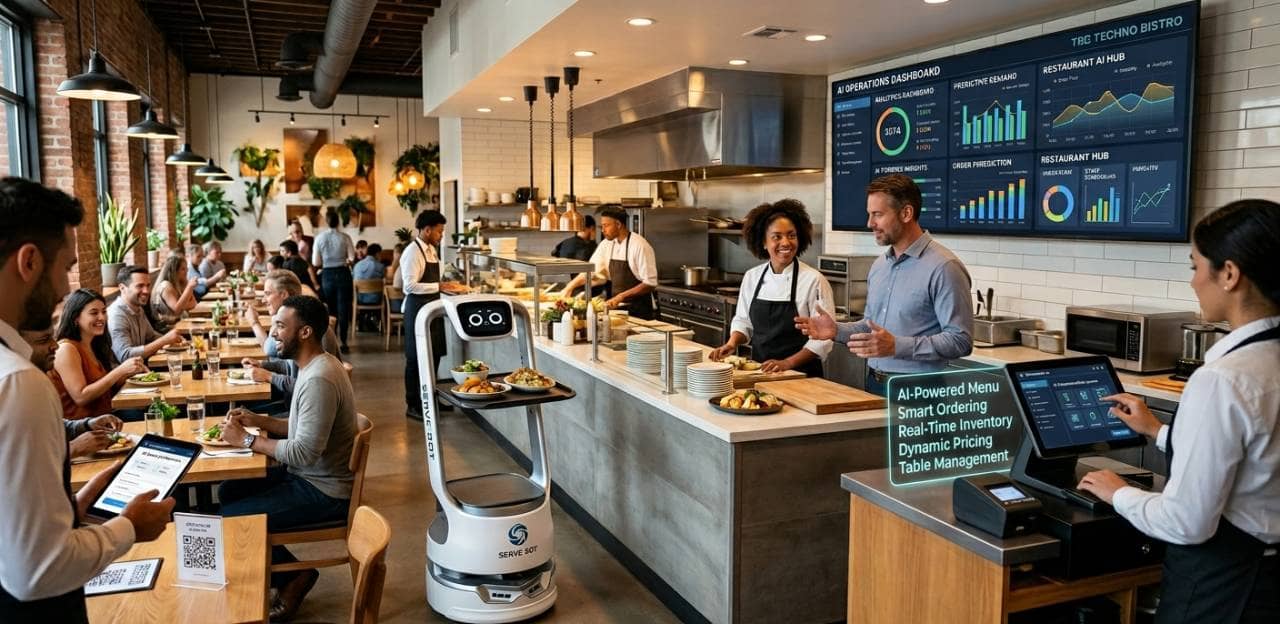
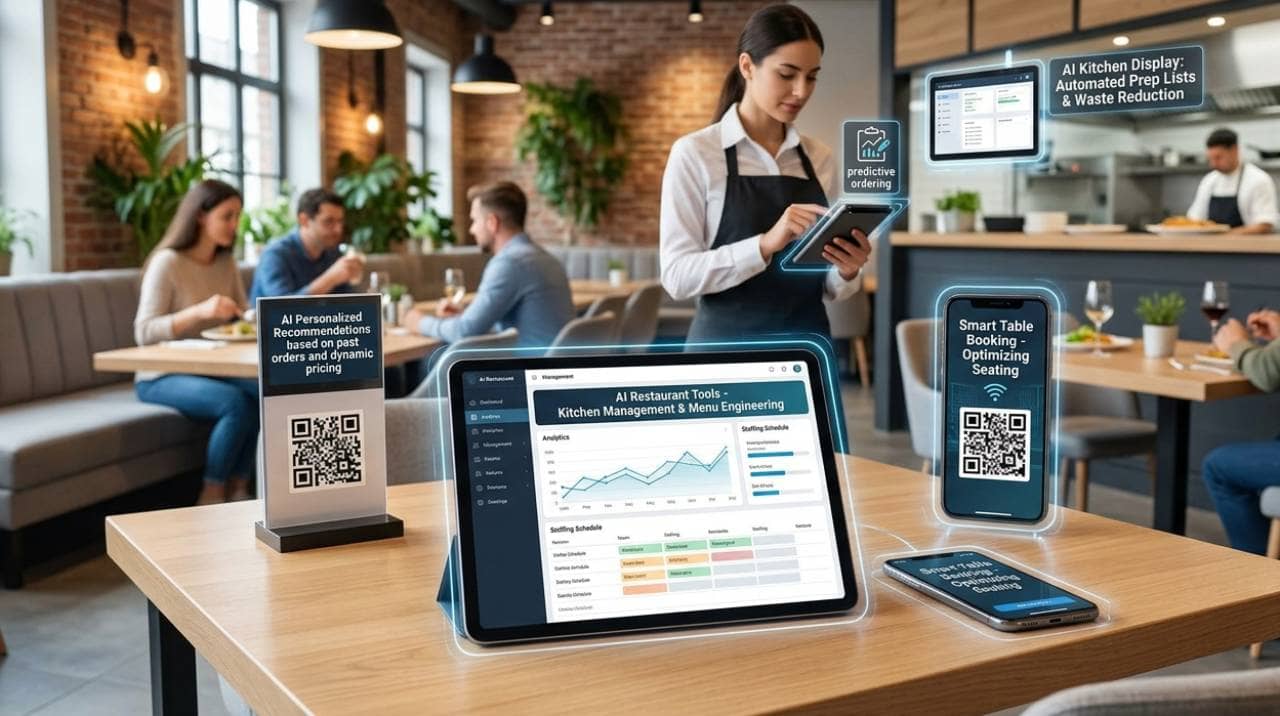
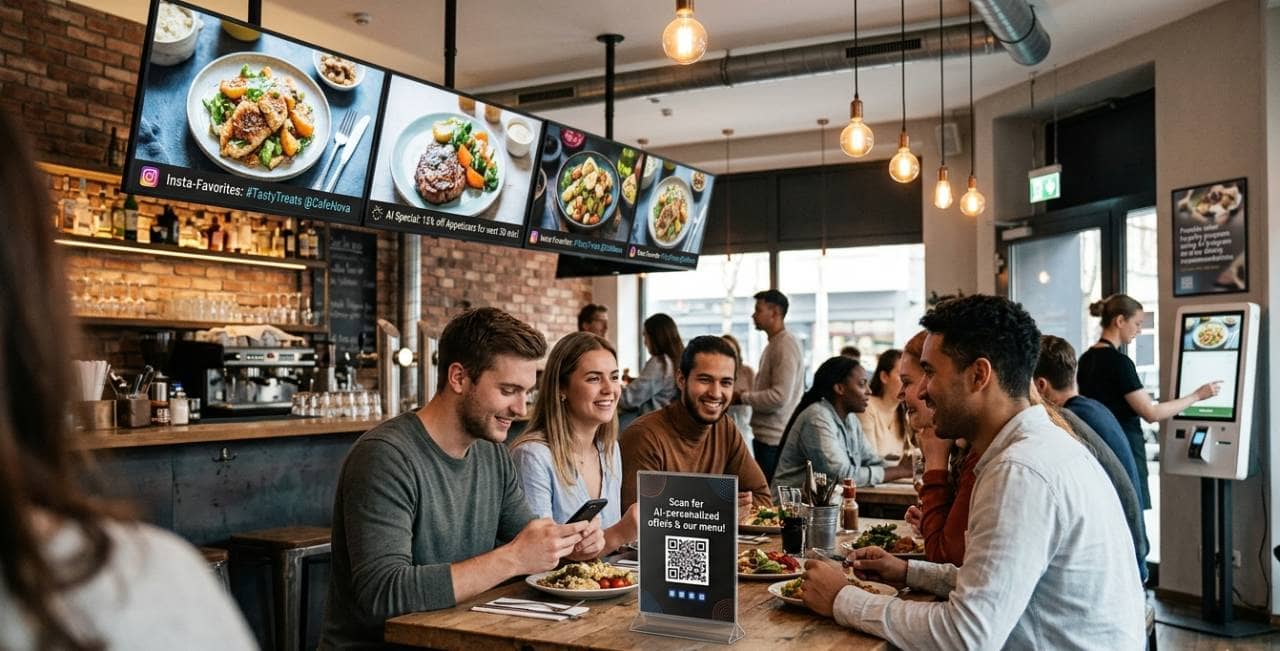
This AI playbook covers restaurant tools for voice ordering, staffing, compliance, menu pricing, inventory, marketing, ChatGPT prompts, and SEO.
May 15, 2026
Hardee’s giant Boddie-Noell inks 31-unit Scooter’s Coffee deal for NC and VA, leveraging drive-thru growth and local roots with rollout over 12–18 months.
May 15, 2026
Wingstop turns match weeks into a multi-sensory festival, aligning bold pop-ups with World Cup energy to build brand affinity and measurable momentum.
May 15, 2026
The parent company behind Dunkin', Buffalo Wild Wings, and Arby's has filed for an IPO a move that could reshape how Wall Street views the restaurant sector.
May 15, 2026
Learn how to develop a memorable restaurant brand identity that stands out in a crowded market, attracts loyal customers, and drives repeat business with actionable strategies and affordable tools.
May 15, 2026
Dirty soda chain Swig is expanding into Colorado through a 10-unit franchise deal, riding a consumer beverage trend that's catching the attention of major QSR players nationwide.
May 15, 2026
Papa Johns has teamed up with Alphabet's Wing for drone delivery of its new sandwich lineup in parts of Charlotte marking the first partnership of its kind between Wing and a national QSR brand.
May 15, 2026
A warm, expert-led look at McDonald’s Q1 results, menu makeover, and the refranchise question shaping its growth.
May 14, 2026
A reflective look at Habit Ranch, its immersive desert activation, and what it signals for brand loyalty and mindful, experiential dining.
May 14, 2026
Unlock Exclusive Access To Webinars, Events, And The Latest News For Free!
This AI playbook covers restaurant tools for voice ordering, staffing, compliance, menu pricing, inventory, marketing, ChatGPT prompts, and SEO.

AI is no longer reserved for large restaurant chains with enterprise budgets, internal IT teams, and complex software contracts. In 2026, artificial intelligence has become more practical, affordable, and accessible for independent restaurant owners. Tools that once felt out of reach are now available for everyday restaurant operations, from answering phone calls to forecasting inventory, building marketing campaigns, managing labor, and analyzing sales patterns.
This shift is important because restaurant owners are operating in a more demanding environment. Food costs remain unpredictable, labor is expensive, guest expectations are higher, and margins are often tight. Owners cannot afford to rely only on guesswork, handwritten notes, disconnected spreadsheets, or systems that do not communicate with each other. Every missed call, incorrect order, wasted ingredient, poor schedule, or delayed report can affect profit.
One of the easiest ways restaurants lose money is by missing phone calls during peak hours. The guest does not know the kitchen is slammed, the host stand is backed up, or the manager is helping the expo line. They only know no one answered. In many cases, that missed call becomes a missed reservation, lost takeout order, catering inquiry, or private event request.
Start by pulling your phone data for the last 30 days. Look at three numbers -
1. How many calls came in?
2. How many calls were missed?
3. What time of day were most calls missed?
If most missed calls happen between 11.30 a.m. and 1.30 p.m. or 5.30 p.m. and 7.30 p.m., you have a revenue leak happening exactly when demand is highest.
A voice AI tool can help by answering calls automatically, collecting basic details, responding to common questions, and routing important requests to the right person. It can handle questions about hours, menu items, reservations, wait times, large parties, catering, and online ordering without pulling staff away from guests in the restaurant.
The real value is consistency. A team member may forget to suggest an add-on during a rush, but AI can be trained to ask every time. If someone orders a sandwich, it can suggest a drink or side. If someone asks about a party of 12, it can collect the date, time, guest count, and contact information.
Track the results weekly. Watch missed call rate, booked reservations, phone order volume, average ticket size, catering leads, and upsell revenue. If those numbers improve, the tool is not just answering phones. It is protecting sales that were previously slipping away.

Labor is one of the hardest costs to manage because it changes every day. Sales volume, employee availability, overtime, call-outs, breaks, shift swaps, and local labor rules all affect the schedule. When owners manage these details with paper notes, spreadsheets, or disconnected systems, mistakes become easy to miss.
Start by reviewing the last 30 to 60 days of labor data. Look at five numbers -
1. Labor cost as a percentage of sales
2. Overtime hours
3. Missed punches or edited timecards
4. Break violations or missed meal periods
5. Schedule changes after the schedule was published
These numbers show where your labor process is creating waste or risk. For example, if overtime keeps happening on weekends, the issue may not be employee performance. It may be poor forecasting, weak schedule planning, or managers reacting too late.
AI-supported labor tools can help owners build smarter schedules by comparing projected sales, historical traffic, employee availability, and labor targets. Instead of copying last week's schedule, managers can schedule based on expected demand. This helps reduce overstaffing during slow periods and understaffing during peak hours.
Compliance is just as important. Break rules, overtime rules, minor labor laws, and scheduling requirements can vary by location. A strong system can help flag missed breaks, long shifts, approaching overtime, or timecard issues before payroll is finalized.
Track progress weekly. Watch labor percentage, overtime, schedule accuracy, break compliance, payroll corrections, and sales per labor hour. The goal is not to cut labor blindly. The goal is to put the right people in the right roles at the right time while protecting the business from avoidable mistakes.
A menu can look profitable on the surface and still quietly drain cash. The problem is that many owners judge menu items by popularity alone. If a burger sells 300 times a week, it may seem like a winner. But if beef costs rise, portions are inconsistent, prep takes too long, and delivery packaging cuts into margin, that "top seller" may not be as strong as it appears.
This is where AI can help owners move beyond guesswork. Instead of asking, "What sells the most?" the better question is, "What sells well and protects margin?"
AI menu tools can review sales data, ingredient costs, recipe costs, item popularity, order modifiers, channel performance, and waste patterns. That gives owners a clearer picture of which items deserve more attention, which prices need to be adjusted, and which dishes may need to be redesigned.
A practical way to think about menu performance is to group items into four categories -
1. High sales, high profit - promote these items heavily.
2. High sales, low profit - review portions, pricing, ingredients, or prep process.
3. Low sales, high profit - improve menu placement, descriptions, photos, or staff recommendations.
4. Low sales, low profit - consider removing, replacing, or simplifying these items.
AI can also help with waste reduction. If the system sees that certain ingredients are moving slowly, it can suggest limited-time specials, bundles, or prep adjustments before those items spoil. For example, if avocados are overstocked, the restaurant could promote a breakfast special, burger add-on, or limited-time appetizer to turn excess inventory into revenue.
The best menu decisions come from combining owner judgment with real numbers. Track contribution margin, food cost percentage, item sales, modifier usage, waste, prep time, and sales by channel. When owners understand which menu items create profit - not just activity - they can price with more confidence and build a menu that supports the business instead of working against it.
Inventory problems rarely look dramatic at first. They usually show up as small issues- a case of lettuce spoils before the weekend, a prep cook over-portions protein, a manager orders too much because last Friday was busy, or the kitchen runs out of a key ingredient during dinner. By themselves, these problems may not seem major. Repeated every week, they quietly weaken profit.
AI can help restaurant owners bring more discipline to back-of-house decisions. Instead of ordering based on habit, managers can use sales history, weather, events, holidays, reservations, delivery trends, and menu mix to forecast what the kitchen will actually need. That matters because inventory is not just about having enough product. It is about having the right amount of product at the right time.
A smarter inventory process should answer questions like -
1. What items are we likely to sell tomorrow?
2. Which ingredients are moving slower than expected?
3. Where are we over-ordering?
4. Which items are creating the most waste?
5. What should we prep by daypart?
AI can also support more accurate counts. Some tools can compare purchase history, recipes, sales, and usage patterns to flag unusual variances. If the system expects 40 pounds of chicken to be used but the restaurant goes through 55 pounds, that is a signal worth investigating. The issue could be portioning, waste, theft, incorrect recipes, or inaccurate counts.
Restaurant owners should track food cost percentage, waste value, stock-outs, inventory variance, vendor spend, and order accuracy. When those numbers are reviewed consistently, inventory becomes more than a weekly task. It becomes a profit-control system.

Marketing often gets pushed aside because restaurant owners are already dealing with staffing, vendors, service issues, invoices, repairs, and customer complaints. The result is usually inconsistent marketing. One week the restaurant posts every day, the next week nothing goes out. One month there is an email promotion, then the customer list sits untouched for months.
AI can help make marketing less dependent on spare time.
Think of it as a support system for three areas - guest retention, local visibility, and content creation.
For guest retention, AI can help identify patterns in customer behavior. Which guests used to visit often but have not returned? Which customers usually order on weekends? Which loyalty members respond to discounts, and which respond better to limited-time items or special events? Instead of sending the same generic promotion to everyone, owners can create more targeted messages based on actual behavior.
For local visibility, AI can help answer common customer questions faster. A website or profile chatbot can respond to questions about hours, gluten-free options, patio seating, catering, reservations, parking, private events, or holiday availability. This matters because customers often make decisions quickly. If they cannot find an answer, they may move on to another restaurant.
For content creation, AI can help build social posts, email ideas, menu descriptions, event promotions, and monthly calendars. A restaurant does not need to start from a blank page every time. Owners can feed AI the concept, audience, location, upcoming events, and promotions, then refine the output so it still sounds like the brand.
The key is not to automate marketing so much that it feels generic. Use AI to create structure, then add the restaurant's personality. Track repeat visits, offer redemptions, email open rates, loyalty signups, website clicks, profile views, and campaign sales. Good marketing should not just create activity. It should bring guests back, fill slower day-parts, and support profitable demand.
ChatGPT is most useful when restaurant owners give it clear direction. If the prompt is too broad, the answer will usually feel generic. If the prompt includes details about your restaurant, your customers, your location, your menu, and your business goal, the output becomes much more useful.
Here are three practical prompts restaurant owners can use.
Prompt 1. Build a 30-Day Restaurant Marketing Calendar
Use this prompt when you need social media ideas, email campaigns, local promotions, or seasonal marketing plans.
Copy and paste this prompt -
"Act as a restaurant marketing strategist. I own a [restaurant type] in [city/state/neighborhood]. My target customers are [describe your ideal customers, such as families, office workers, college students, tourists, young professionals, health-conscious diners, etc.]. My restaurant is known for [signature food, service style, atmosphere, price point, or unique selling point].
Create a 30-day marketing calendar for [month]. Include ideas for social media posts, email promotions, limited-time offers, community outreach, loyalty campaigns, and local events. Focus on helping me increase [specific goal, such as weekday lunch traffic, dinner reservations, online orders, catering sales, repeat visits, or slow-day sales].
For each day, include -
1. The marketing theme
2. The channel to use, such as Instagram, Facebook, email, SMS, Google Business Profile, or in-store signage
3. A short caption or message
4. A promotion idea, if relevant
5. The goal of the post or campaign
6. A simple call to action
Keep the ideas practical for an independent restaurant with a limited marketing budget. Make the tone [friendly, fun, premium, family-friendly, bold, casual, upscale, local, etc.]."
Prompt 2. Act as a Virtual Restaurant Consultant
Use this prompt when you want help with pricing, menu performance, competition, staffing, or overall business strategy.
Copy and paste this prompt -
"Act as a restaurant business consultant. I own a [restaurant type] in [city/state/neighborhood]. My concept is [briefly describe your restaurant, menu, service style, and price range]. My main customers are [describe your customer base]. My biggest current challenge is [describe the problem, such as rising food costs, slow weekday sales, high labor costs, too many menu items, low repeat visits, weak delivery sales, or inconsistent traffic].
Here is more context -
1. Average check size - [$ amount]
2. Best-selling menu items - [list items]
3. Lowest-performing menu items - [list items]
4. Food cost target - [%]
5. Labor cost target - [%]
6. Current sales goal - [goal]
7. Main competitors nearby - [list competitors or types of restaurants]
8. Budget for changes - [$ amount or low/medium/high]
9. Timeline - [30 days, 60 days, 90 days]
Create a practical 90-day action plan. Break it into three phases, first 30 days, days 31-60, and days 61-90. Include recommendations for menu changes, pricing, promotions, labor planning, guest experience, local marketing, and performance tracking.
For each recommendation, explain -
- Why it matters
- What action I should take
- What number I should track
- What result I should expect if it works
Keep the plan realistic for a busy restaurant owner with limited time."
Prompt 3. Create a Gamified Loyalty Program
Use this prompt when you want a loyalty program that feels more engaging than a basic discount card.
Copy and paste this prompt -
"Act as a restaurant loyalty program strategist. I own a [restaurant type] in [city/state/neighborhood]. My brand personality is [fun, premium, family-friendly, neighborhood-focused, fast-casual, health-focused, sports-themed, etc.]. My target customers are [describe your guests]. I want to increase [repeat visits, weekday traffic, online orders, catering orders, average ticket size, referrals, or loyalty signups].
Create a gamified loyalty program that fits my restaurant. Do not rely only on discounts. Include rewards that feel fun, local, and experience-driven.
Please include -
1. A loyalty program name
2. Three to five reward tiers with creative names
3. How customers earn points or status
4. Rewards for each tier
5. Birthday or anniversary rewards
6. Referral rewards
7. Limited-time challenges, such as "Visit 3 times this month" or "Try 2 new menu items"
8. Community-based rewards or events
9. Ideas for promoting the program in-store, online, and through email or SMS
10. Metrics I should track to measure success
Make the program easy for a small restaurant team to explain and manage. The goal is to increase repeat visits without giving away too much margin."
The best way to use these prompts is to make them specific. A pizza shop in a college town should not use the same strategy as a fine-dining seafood restaurant near a tourist district. Add real details whenever possible, including sales goals, slow periods, customer types, menu strengths, and budget limits.
Restaurant search is changing. Customers are no longer only typing "restaurants near me" into Google and scrolling through a long list of links. More people are asking AI tools direct questions, such as -
1. "What is the best taco restaurant near me with happy hour?"
2. "Where can I find a family-friendly pizza place within walking distance?"
3. "Which coffee shop near me has strong Wi-Fi and vegan options?"
4. "What restaurant is good for a birthday dinner tonight?"
This matters because AI tools usually do not show customers 20 options. They often recommend a short list. If your restaurant is not easy for these systems to understand, it may not appear in those answers.
Start with your basic online presence. Your Google Business Profile should be complete, accurate, and specific. Do not just write "great food and friendly service." Use clear language that describes what you actually offer. For example, say "family-friendly Mexican restaurant with outdoor seating, margaritas, catering, and weekday happy hour" instead of using vague descriptions.
Restaurant owners should also claim and update their listings across major search platforms, maps, review sites, and local directories. Make sure your name, address, phone number, hours, menu link, ordering link, and reservation link are consistent everywhere. Inconsistent information makes it harder for both customers and AI tools to trust the business.
Reviews are another major signal. Encourage guests to leave detailed reviews that mention specific items, occasions, and experiences. A review that says "great place" is helpful, but a review that says best brunch spot in downtown Austin for chicken and waffles, mimosas, and patio seating gives search engines and AI tools more useful information.
Your website also needs to be easy to read. Avoid relying only on PDF menus, images, or videos. Use text-based menu descriptions, location pages, catering pages, private event pages, and FAQ sections. Answer the questions customers actually ask, such as parking, reservations, gluten-free options, kids' menus, delivery areas, holiday hours, and group dining.
Track visibility like any other business metric. Watch profile views, call clicks, direction requests, website visits, online orders, reservation clicks, review volume, and keyword performance. AI search visibility is not about tricking algorithms. It is about making your restaurant easier to understand, easier to trust, and easier to recommend.