EEOC Targets Franchises; Applebee’s Operator Pays $270K
EEOC ramps up franchise enforcement, securing settlements and reforms; Applebee’s operator pays $270K amid broader actions across brands.
Jun 12, 2026
EEOC ramps up franchise enforcement, securing settlements and reforms; Applebee’s operator pays $270K amid broader actions across brands.
Jun 12, 2026
Entries due June 22 at 11:59 pm. Winners in September 2026. Criteria include investment, sales, support, and franchisee feedback.
Jun 12, 2026
Daland Corp. revives classic Pizza Hut dine-in in small towns, fueling emotional pull and sales as Yum weighs a sale and closures reshape the brand.
Jun 12, 2026
Creator Jake Shane fronts Panera’s $4.99 Salad Stuffer bundle, linking Mix & Match value to RISE strategy and testing social-led demand.
Jun 12, 2026
Krystal elevates Amanda Hyde to COO, advancing a franchisee-first plan with digital menus, remodels, and SPB’s Playbook to drive growth and trust in 2026.
Jun 12, 2026
How guest behavior, data, and POS analytics turn table-side discoveries into profitable, scalable menu strategy for restaurants in 2026.
Jun 12, 2026
William and Maryjane Ellis ink a six-unit Firehouse Subs deal for San Antonio, backed by incentives, training, and RBI growth plans. First opening in summer 2026.
Jun 12, 2026
Grubhub launches embedded ordering across Eater, Beli, Alexa+, and Bilt to capture high-intent moments and drive demand via trusted channels.
Jun 12, 2026
52-unit chain launches six sandwiches around $10.95 with up to 39g protein as sandwich market growth outpaces fast casual.
Jun 12, 2026
After a strategic slowdown, RealClean expanded from 15 airports in 2 states to 600 across 31 by May 2026, backed by strong unit economics and market demand.
Jun 12, 2026
Square Payroll leads 2026 restaurant payroll rankings despite deposit delays, as operators compare features with Gusto and QuickBooks amid rising costs and tighter margins.
Photo by Shawn
Square Payroll once again topped the 2026 rankings for restaurant payroll software, scoring perfect 5/5 marks for pricing, restaurant-specific features, and reporting, along with an expert score of 5/5. The trade-off shows in usability and scale: an ease of use rating of 3.75/5 and a popularity score of 2.5/5 signal traction with smaller venues rather than large chains.
Operators are making these calls under mounting pressure.
The U.S. restaurant industry is projected to reach $1.1 trillion in 2026, with 88 percent of operators bracing for higher food costs and 87 percent expecting labor expenses to climb. Turnover regularly exceeds 70 percent annually, which turns payroll from an administrative chore into a retention lever. Restaurants juggle variable hours, tipped income, shift differentials, overtime, multi-state taxation, and tip-credit regulations, then try to stay current on minimum wage updates and break time compliance while reconciling data to eliminate errors.
The case for automation is strong: tax filings, new-hire reporting, and both W-2 and 1099 processing, tightly linked with scheduling and time clocks to minimize manual handling.
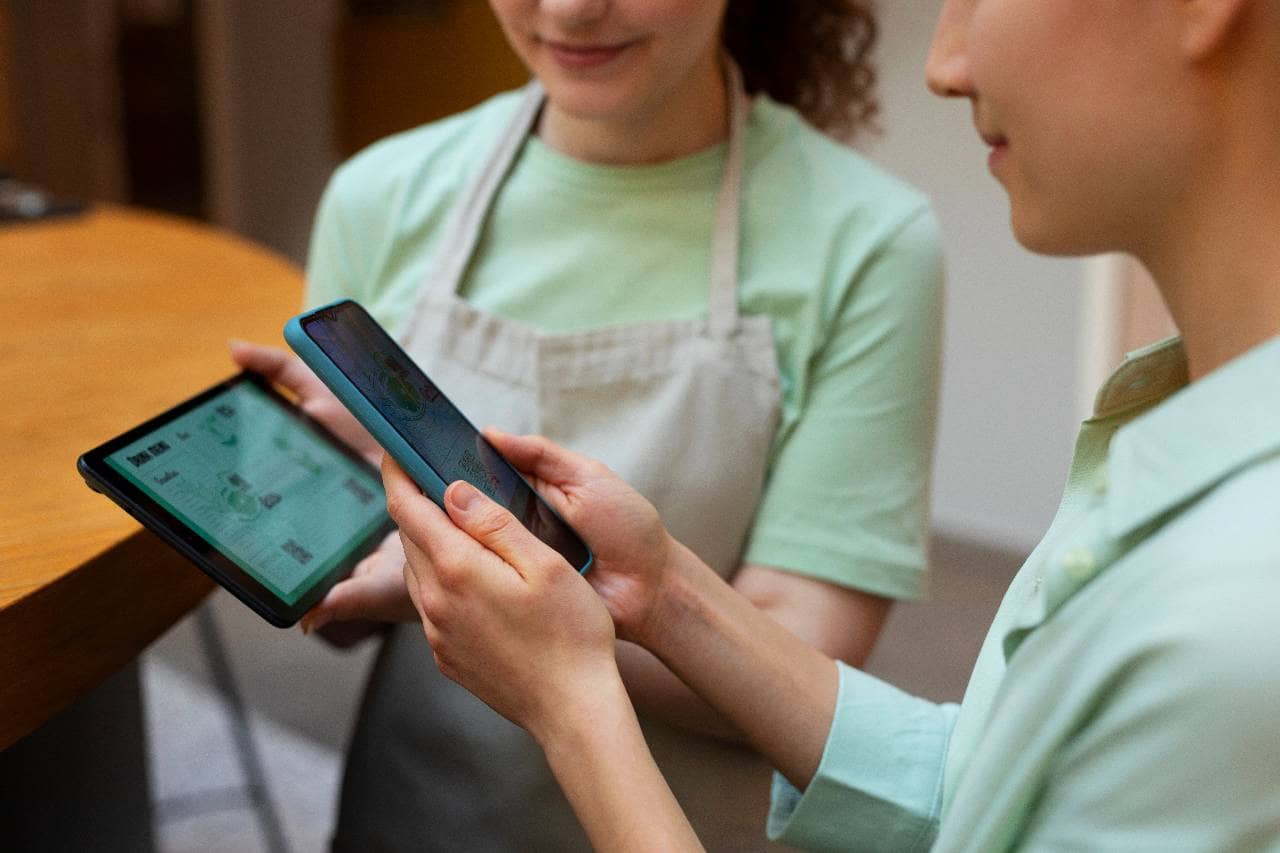
Square’s value proposition sits squarely in that integration story. The platform ties directly into Square POS for real-time data sync, removing CSV exports and reconciliation. New staff can be onboarded in minutes, and employees who hit wage or tax questions have access to a dedicated support line.
The system automates tipped-wage calculations, including FICA tip credit reporting, and surfaces granular reporting on labor costs, tip pools, and overtime. Tax obligations are managed automatically, with federal, state, and local filings handled by Square’s tax engine. Payouts move through multiple rails: a standard four-business-day direct deposit cycle, accelerated same-day or next-day deposits for accounts using Square Payments, and digital payroll cards.
Payouts move through multiple rails: a standard four-business-day direct deposit cycle, accelerated same-day or next-day deposits for accounts using Square Payments, and digital payroll cards. The partner ecosystem expanded to nearly 1,000 integrations in early 2026, spanning Amazon, QuickBooks, Uber Eats, and HotSchedules, and the May 11, 2026 debut of Square for Drive-Thru shows a focus on speed and unified operations for quick-service teams.
Front-of-house and back-of-house voices describe a blend of reliability and friction. One restaurateur recounted the “strangest glitch” during a June 8, 2026 payroll run that delayed wages, a costly stumble on a tight pay cycle.
Another user said adjusting time-clock entries was “obnoxious” and called Square Payroll “a joke,” even while acknowledging its breadth. Competitors draw praise on different fronts. Gusto users point to intuitive onboarding, robust tipped-income reporting, and two-day direct deposits, with select businesses accessing next-day funds through its Premium tier. QuickBooks Payroll earns nods for seamless coupling with QuickBooks Online accounting, advanced reporting, and deposit acceleration features introduced in early 2026, though its higher HR support tiers can carry steep incremental fees.
The market is racing toward more unified, data-driven labor management. The global employee payroll and scheduling segment reached US$770.4 million in 2024 and is projected to grow at an 18.6 percent CAGR through 2030. Restaurant management software overall stood at USD5.93 billion in 2025 and is forecast to swell to USD25.51 billion by 2034 as providers roll out cloud-native platforms, AI-driven demand forecasting, embedded payments, and advanced analytics.
According to GitNexa, AI-powered operations are now mainstream, with platforms using real-time sales and external factors for staffing forecasts and overtime compliance, a shift fueled by operators’ need to optimize labor costs amid tightening profit margins. Questions remain, from Square’s four-day deposit cycle that can frustrate teams needing same-day wages to a feature set oriented toward bars, cafes, and small single-location kitchens rather than multi-unit chains.
Homebase Payroll offers upfront pricing and a free scheduling tier but lacks health insurance options and has limited user feedback. Gusto’s bundles and tiers can confuse buyers, and QuickBooks Payroll can invite ecosystem lock-in and extra costs for full HR compliance. For small staffs, AI-heavy scheduling may be more horsepower than necessary, and the long-term stability of new features across platforms is still unproven.
The choice comes down to fit. Square Payroll appeals to operators who prize POS-native workflows and transparent costs, provided its standard deposit window aligns with cash-flow needs. Gusto stands out for fast deposits and dedicated HR features for operations ready to invest in higher tiers. QuickBooks Payroll suits restaurants embedded in the QuickBooks ecosystem seeking deep accounting integration and accelerated payroll, albeit with tighter vendor lock-in.
The smartest move is to pilot platforms, pressure-test deposit timelines, scrutinize feature roadmaps, and assess support structures. Accurate, on-time pay is nonnegotiable for stable teams, satisfied staff, and sustained growth.