.png&w=3840&q=70)
Wendy's Top Franchisee Bankruptcy Exposes Growth Risks
Meritage Hospitality's Chapter 11 filing pulls 5% of Wendy's U.S. stores into bankruptcy, exposing cracks in franchising's bigger-is-safer bet.
Franchising
Sep 21, 2026
Meritage Hospitality's Chapter 11 filing pulls 5% of Wendy's U.S. stores into bankruptcy, exposing cracks in franchising's bigger-is-safer bet.
Sep 21, 2026
Jack in the Box names Rachel Ruggeri to its board as Michael Murphy retires, amid a CEO transition and deal with investor GreenWood.
Sep 21, 2026
Understand how to forecast restaurant revenue and expenses with methods for sales projection, cost scaling, fixed-cost planning, and risk buffering.
Sep 18, 2026

Restaurant owners can significantly reduce restaurant costs by leveraging technology across inventory, labor, procurement, forecasting, and administrative operations for better profit margins.
Sep 18, 2026

everbowl names Anna Gabele Brand President and Natalie Trzcinski COO, pulling both from Jack in the Box to guide its next growth phase.
Sep 18, 2026

Mountain Mike's Pizza hires Jack in the Box veteran Sheena Dougher as CMO to drive national growth while preserving its regional brand identity.
Sep 17, 2026

From fixed costs to contribution margin, learn exactly how to calculate your restaurant's break even point with confidence.
Sep 16, 2026
DoorDash pays $425M for Wonder's campus dining platform and a stake in Wonder, betting on robotic kitchens and institutional foodservice growth.
Sep 16, 2026
Discover the most common reasons restaurants fail, including inconsistent food quality and pricing mistakes, plus practical ways to avoid them.
Sep 16, 2026
Chipotle names former KFC global CEO Sabir Sami to its board as the chain expands into Mexico, Saudi Arabia, and South Korea.
Sep 15, 2026

Unlock Exclusive Access To Webinars, Events, And The Latest News For Free!
Food handling checklists help restaurants manage receiving, storage, prep, cooking, service, cleaning, training, and daily safety checks.
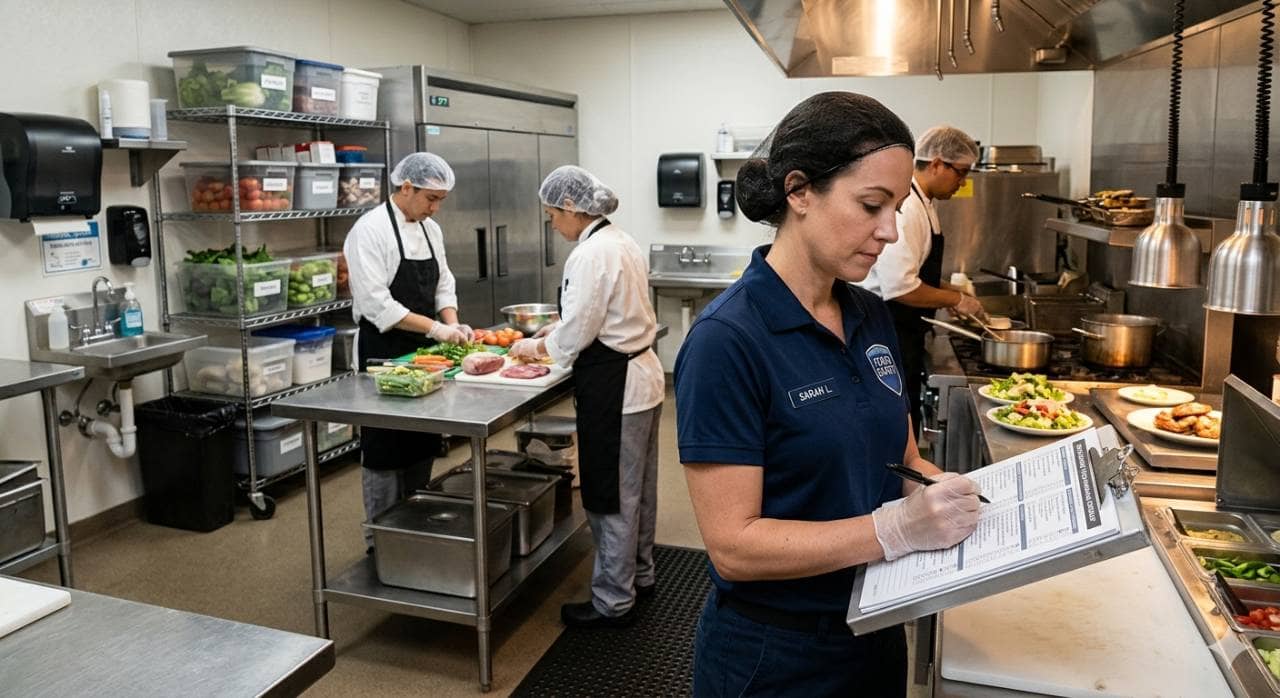
Food handling is one of the most important parts of running a safe restaurant, but it can be easy to overlook during a busy shift. When orders are moving, deliveries are arriving, employees are changing stations, and managers are handling problems, small food safety steps can be missed. That is why restaurant owners need a daily food handling checklist instead of relying only on memory or verbal reminders. A checklist gives every shift a clear standard. It shows employees what needs to be checked, when it should be done, and who is responsible. This includes washing hands, checking food temperatures, labeling products, separating raw and ready-to-eat foods, rotating inventory, and sanitizing prep areas. When these tasks are written down and reviewed, managers can find problems before they become bigger risks. Proper food handling also affects waste, labor, customer trust, and profitability. Poor storage can spoil inventory. Missing labels can lead to expired food being used. Weak temperature control can increase food safety risks. A daily checklist turns food handling into a repeatable routine. It helps train new employees, coach current staff, and inspect operations consistently. For owners, the goal is simple- protect guests, protect the business, and maintain safe kitchen habits every shift.
Receiving is the first point of control in safe food handling. If unsafe, damaged, expired, or incorrect products enter the kitchen, the risk carries into storage, prep, service, and inventory records. Restaurant owners should make sure every delivery is inspected before it is accepted, signed for, or moved into storage. Use this checklist during every delivery 1. Check delivery timing - Confirm that the order arrived during the approved receiving window. Deliveries that sit outside, arrive during peak service, or are accepted without manager oversight can lead to missed temperature checks, rushed inspections, and storage delays. 2. Inspect packaging condition - Look for torn boxes, broken seals, leaking containers, dented cans, damaged vacuum packaging, or signs that products were mishandled. Do not accept food if the packaging suggests contamination or loss of protection. 3. Verify product temperatures - Check refrigerated, frozen, and hot food items immediately. Cold food should arrive cold, frozen items should still be solid, and hot items should remain at safe holding temperatures. Record temperatures when required by your internal process. 4. Look for signs of spoilage - Reject products with unusual odor, discoloration, excessive liquid, mold, freezer burn, slimy texture, or any visible sign that the item may not be safe or fresh. 5. Review expiration and use-by dates - Do not accept items that are expired, close to expiration without approval, missing date labels, or inconsistent with your ordering standards. 6. Match items to the invoice - Confirm that the product name, quantity, case count, weight, brand, and price match the order. This prevents over-ordering, incorrect inventory counts, and unexpected food cost increases. 7. Separate rejected items immediately - Any rejected product should be clearly identified, kept away from accepted food, and documented. Managers should note the reason for rejection and communicate with the vendor quickly. After inspection, food should not sit in the receiving area. Refrigerated and frozen items should be stored first, followed by dry goods. The faster products are stored correctly, the lower the risk of temperature abuse and spoilage.
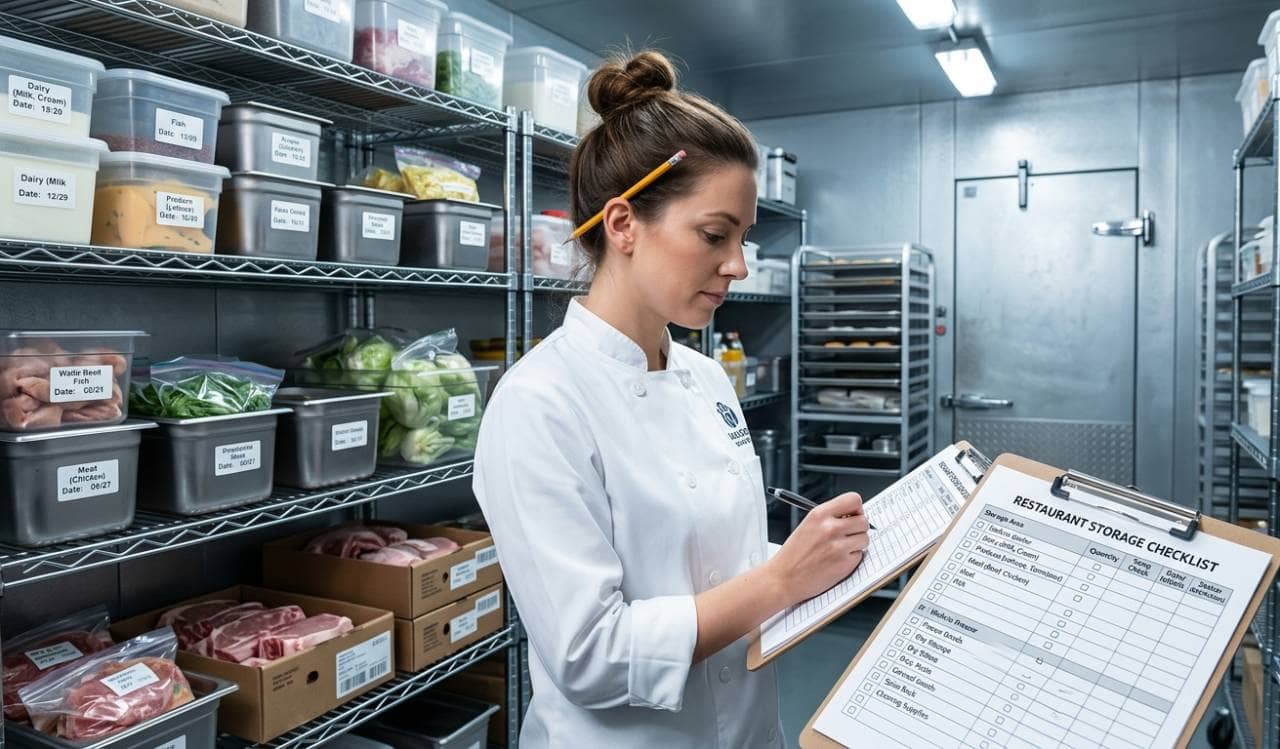
Food storage is where many food handling problems begin. Even if products arrive safely, they can become unsafe if they are stored at the wrong temperature, placed on the wrong shelf, left uncovered, mislabeled, or forgotten in the back of the cooler. Restaurant owners should use a storage checklist every day to protect food quality, reduce waste, and keep inventory under control. Use this checklist for walk-ins, freezers, dry storage, and prep coolers - 1. Check storage temperatures daily - Verify that refrigerators, freezers, and hot holding units are operating at safe temperatures. Managers should review temperature logs and take action if equipment is outside the approved range. 2. Label every prepared or opened item - All opened, prepped, or transferred food should have a clear label with the item name, prep date, use-by date, and employee initials when needed. Unlabeled food creates confusion and increases the risk of expired products being used. 3. Follow FIFO rotation - Use the "first in, first out" method so older products are used before newer ones. Place newer items behind older items and check that employees are not pulling from the wrong stock during prep. 4. Separate raw and ready-to-eat foods - Store raw meat, poultry, seafood, and eggs below ready-to-eat foods to prevent drips or leaks from causing cross-contamination. Raw products should be sealed, contained, and organized by risk level. 5. Keep food covered and sealed - Food should not be left open in coolers, freezers, dry storage, or prep areas. Use clean lids, wraps, or approved containers to protect food from contamination, odors, moisture loss, and pests. 6. Store food off the floor - Food should be stored on approved shelving, not directly on the floor. This improves air circulation, supports cleaning, and reduces pest and contamination risks. 7. Control allergens clearly - Common allergens should be stored, labeled, and handled carefully to prevent accidental contact with other foods. Owners should make sure employees understand where allergen-sensitive items belong and how they should be protected. 8. Inspect for expired or damaged products - Managers should check storage areas for expired items, spoiled food, damaged packaging, broken containers, or signs of leaks. Any unsafe product should be discarded or separated immediately according to restaurant policy. 9. Keep dry storage clean and organized - Dry goods should be stored in sealed containers, away from moisture, chemicals, and cleaning supplies. Shelves should be organized so employees can quickly find products without opening unnecessary cases or moving items around. If a cooler is too warm, food is unlabeled, products are expired, or storage areas are disorganized, managers should document the issue and the action taken. This helps owners identify repeat problems and coach employees before small mistakes become costly.
Food prep is one of the highest-risk points in daily restaurant operations because employees are handling raw ingredients, ready-to-eat foods, utensils, cutting boards, prep tables, and equipment at the same time. A clean-looking kitchen can still have food handling risks if employees skip handwashing, reuse tools, mix raw and cooked foods, or prep items without proper labels. Restaurant owners should use this checklist to make prep safer, more consistent, and easier to inspect. Use this checklist before and during every prep shift - 1. Wash hands before starting prep - Employees should wash hands before handling food, after touching raw products, after using the restroom, after eating or drinking, after touching phones, and after handling trash, chemicals, or dirty dishes. 2. Use gloves correctly - Gloves should be used when handling ready-to-eat foods, but they do not replace handwashing. Employees should change gloves whenever they switch tasks, touch raw food, handle money, clean surfaces, or contaminate the gloves. 3. Sanitize prep surfaces before use - Prep tables, cutting boards, slicers, mixers, knives, and utensils should be cleaned and sanitized before food is placed on them. Managers should verify that sanitizer buckets or spray bottles are properly mixed and available. 4. Separate raw and ready-to-eat foods - Raw meat, poultry, seafood, and eggs should be prepped away from ready-to-eat foods such as salads, garnishes, desserts, bread, and cooked items. Never place ready-to-eat food on a surface that touched raw food unless it has been cleaned and sanitized first. 5. Use separate cutting boards and utensils - Employees should use designated cutting boards, knives, tongs, and containers for different food types. This helps prevent cross-contamination between raw proteins, produce, allergens, and cooked foods. 6. Thaw food safely - Frozen food should be thawed using approved methods, such as under refrigeration, under cold running water, or as part of the cooking process. Food should not be left at room temperature to thaw. 7. Wash produce properly - Fruits and vegetables should be washed before cutting, peeling, or serving, unless they are clearly labeled as pre-washed and ready to use. This reduces the risk of dirt, bacteria, or chemical residue being transferred during prep. 8. Label prepped items immediately - Any food that is cut, cooked, portioned, mixed, opened, or transferred to a new container should be labeled right away. Labels should include the item name, prep date, use-by date, and any internal tracking information required by the restaurant. 9. Control allergen contact - Employees should use clean tools, clean gloves, and separate surfaces when preparing allergen-sensitive orders or ingredients. Common allergens should be clearly identified so staff do not accidentally mix, touch, or store them with other foods. 10. Keep prep batches manageable - Prep only what the restaurant can safely store, hold, and use within the approved time frame. Over-prepping can lead to waste, crowded coolers, poor rotation, and a higher chance of expired food being served. 11. Remove waste and dirty tools quickly - Trash, food scraps, dirty towels, used gloves, and contaminated utensils should not build up around the prep area. Keeping the station clear reduces clutter, improves speed, and lowers contamination risk. Before the rush starts, managers should inspect labels, containers, temperatures, tools, and station cleanliness. This gives the team time to correct problems before orders begin moving quickly.
Cooking and holding are critical steps in food handling because unsafe temperatures can create serious food safety risks. Even when food is received, stored, and prepped correctly, it can become unsafe if it is undercooked, held too long, cooled improperly, or reheated without reaching the right temperature. Restaurant owners should make sure managers and employees treat temperature control as a daily operating standard, not a guess. Use this checklist during cooking, hot holding, cold holding, cooling, and reheating - 1. Use calibrated thermometers - Employees should use food thermometers to verify internal temperatures, especially for poultry, meat, seafood, eggs, reheated foods, and large-batch items. Thermometers should be cleaned, sanitized, and calibrated regularly so readings are accurate. 2. Check internal cooking temperatures - Do not rely only on color, texture, steam, or cook time. Staff should confirm that food reaches the required internal temperature before it is served, held, cooled, or transferred to another station. 3. Record temperatures when required - Managers should use temperature logs for key items, especially high-risk foods. Written or digital records help owners confirm that food handling procedures are being followed and give managers a way to spot repeat issues. 4. Monitor hot holding equipment - Steam tables, warmers, hot boxes, and holding cabinets should keep food at safe hot holding temperatures. If food drops below the approved range, employees should follow the restaurant's corrective action process instead of guessing whether it is still safe. 5. Monitor cold holding equipment - Prep coolers, salad stations, reach-ins, and cold wells should be checked throughout the day. Cold foods should stay cold during service, especially during rush periods when lids are opened often and products are handled repeatedly. 6. Watch holding times closely - Food should not remain on the line longer than the approved time limit. Managers should use timers, labels, or digital tracking to know when food was placed into holding and when it must be used, cooled, or discarded. 7. Cool food safely - Cooked food that will be saved should be cooled quickly using approved methods, such as shallow pans, smaller portions, ice baths, cooling racks, or blast chillers if available. Large containers of hot food should not be placed directly into the cooler without a cooling plan. 8. Reheat food properly - Previously cooked and cooled food should be reheated to the required temperature before it goes into hot holding. Hot holding equipment should not be used as the main method for reheating because it may warm food too slowly. 9. Take corrective action immediately - If food is undercooked, held at the wrong temperature, cooled too slowly, or left out too long, employees should know what to do next. Corrective actions may include continuing to cook, reheating, rapidly cooling, moving food to working equipment, or discarding unsafe product. 10. Inspect equipment performance - Temperature problems are not always employee mistakes. Owners should make sure ovens, fryers, grills, coolers, freezers, warmers, and holding units are maintained properly. Equipment that cannot hold temperature creates daily risk and should be repaired quickly. 11. Train staff on temperature control - Employees are more likely to follow procedures when they understand the purpose. Time and temperature control protects guests, reduces waste, prevents health inspection issues, and helps the restaurant avoid costly mistakes. Managers should not collect temperature logs just to file them away. They should review them for missing entries, unsafe readings, repeated equipment issues, or employees who need more coaching. This turns temperature tracking into useful operational data, not just paperwork.
Service is when food handling standards are most likely to slip. During a rush, employees may move faster, stations may become crowded, tickets may pile up, and managers may focus more on speed than safety. Restaurant owners should use a service checklist to make sure food is handled properly even when the kitchen is under pressure. Use this checklist during dine-in, takeout, delivery, buffet, catering, and self-service operations - 1. Keep service stations clean and organized - Expo lines, pickup shelves, counters, pass-through windows, and service stations should stay clean throughout the shift. Spills, crumbs, used gloves, dirty towels, and food debris should be removed quickly to reduce contamination risk. 2. Use clean utensils for every station - Tongs, ladles, spoons, scoops, and serving tools should be clean, stored properly, and replaced when contaminated. Employees should not use the same utensil for raw, cooked, allergen-sensitive, and ready-to-eat foods. 3. Avoid bare-hand contact with ready-to-eat food - Employees should use gloves, deli tissue, utensils, or other approved tools when handling ready-to-eat items such as bread, garnishes, salads, desserts, cooked proteins, and plated food. 4. Check hot and cold holding during service - Food held on the line should remain within safe temperature ranges. Managers should check holding units during the shift, not just before opening or after closing. Rush periods can cause temperatures to fluctuate because lids, drawers, and coolers are opened more often. 5. Watch food holding times - Items on the line should be tracked by time, label, timer, or digital system. Food that has been held too long should be discarded according to policy. Extending holding times to avoid waste can create greater risk for the business. 6. Protect food from customer contact - For buffets, salad bars, self-service drink stations, and grab-and-go areas, food should be protected with covers, sneeze guards, clean utensils, and regular employee monitoring. Any food touched, spilled into, or contaminated by a guest should be removed. 7. Verify allergen-sensitive orders carefully - Allergen requests should be communicated clearly from order entry to prep, cooking, expo, and service. Employees should use clean gloves, clean tools, and separate surfaces when required. Managers should verify the order before it leaves the kitchen. 8. Keep delivery and takeout orders protected - Takeout and delivery items should be packaged in clean containers, sealed when needed, and stored in the correct pickup area. Hot and cold items should be separated when possible to protect food quality and reduce temperature issues. 9. Prevent cross-contact at the expo line - Expo staff should make sure sauces, garnishes, utensils, and finished plates do not cross-contaminate each other. This is especially important when handling raw garnishes, allergens, gluten-free items, or special dietary requests. 10. Monitor employee hygiene throughout the shift - Employees should continue washing hands, changing gloves, tying back hair, and avoiding food contact when sick or contaminated. Managers should correct hygiene issues immediately, even during busy periods. 11. Remove unsafe food from service right away - If food is dropped, touched by bare hands, held at the wrong temperature, contaminated, or past its approved holding time, it should be removed from service. Staff should know that serving questionable food is never worth the risk. Managers should complete a quick service check during the rush or immediately after peak volume. This should include station cleanliness, holding temperatures, utensil condition, labels, timers, packaging areas, and employee hygiene. A short mid-shift review helps catch problems before they continue into the next service period.
Closing procedures are a major part of safe food handling because the condition of the kitchen at the end of the day affects the next shift. If food is left uncovered, prep areas are not sanitized, expired items stay in storage, or equipment is not checked, the restaurant can carry food safety risks into the next business day. Restaurant owners should use a cleaning and closing checklist to make sure every shift ends with food protected, stations reset, and problems documented. Use this checklist at the end of each shift or business day - 1. Discard expired or unsafe food - Managers should check prepped items, held food, open containers, and leftovers before closing. Any food that is expired, past its holding time, contaminated, unlabeled, or questionable should be discarded according to restaurant policy. 2. Label and store usable leftovers properly - Food that can be safely saved should be cooled, covered, labeled, and stored right away. Labels should include the item name, date, use-by date, and any required employee initials. 3. Cool hot food safely before storage - Large batches of soups, sauces, rice, beans, meats, or cooked items should not be placed into deep containers while still hot. Use shallow pans, smaller portions, ice baths, or cooling racks so food cools safely and evenly. 4. Cover and seal all stored food - Before employees leave, managers should verify that all food in walk-ins, freezers, prep coolers, and dry storage is covered or sealed. Open food increases the risk of contamination, odor transfer, moisture loss, and pest activity. 5. Clean and sanitize prep surfaces - Cutting boards, prep tables, slicers, mixers, counters, and food contact surfaces should be washed, rinsed, and sanitized. Employees should not only wipe surfaces quickly; they should follow the full cleaning process. 6. Wash and store utensils correctly - Knives, tongs, pans, containers, cutting boards, and small-wares should be cleaned, sanitized, dried, and stored in the correct place. Wet nesting or stacking damp containers can create sanitation issues. 7. Empty and clean trash areas - Trash should be removed from prep areas, dish areas, service stations, and restrooms. Trash bins should be cleaned when needed and returned with fresh liners. Overflowing trash can attract pests and create odors. 8. Check floors, drains, and hard-to-reach areas - Food debris should be removed from under equipment, behind prep tables, around drains, and near storage shelves. These areas are easy to ignore but can become major pest and sanitation risks. 9. Store chemicals away from food - Cleaning chemicals, sanitizer bottles, towels, and maintenance supplies should be stored separately from food, utensils, single-use packaging, and prep areas. Chemical storage should be checked before closing. 10. Verify cooler and freezer temperatures - Managers should review cooler and freezer temperatures before leaving. If equipment is running warm, making unusual noise, leaking, or not closing properly, the issue should be documented and escalated immediately. 11. Reset stations for the next shift - Prep stations, service areas, handwashing sinks, sanitizer buckets, gloves, towels, labels, and thermometers should be ready for the next team. A clean reset helps the next shift start safely instead of rushing to fix yesterday's problems. Any discarded food, temperature problem, pest concern, equipment issue, missing label, or cleaning failure should be recorded. This gives owners and managers useful data to spot patterns, coach employees, and prevent repeat problems.
A food handling checklist only works when employees are trained to use it correctly and managers inspect it consistently. Restaurant owners should not treat the checklist as paperwork that gets completed only when an inspection is expected. It should be part of the restaurant's daily routine, just like opening, prep, service, and closing procedures. Use this checklist to train staff, inspect daily operations, and build accountability - 1. Train every employee on basic food handling standards - All employees who touch food, packaging, utensils, dishes, or service areas should understand the basics of safe food handling. This includes handwashing, glove use, temperature control, labeling, storage, allergen awareness, cleaning, and cross-contamination prevention. 2. Explain the reason behind each checklist item - Employees are more likely to follow food handling rules when they understand why they matter. Managers should explain how one missed step can lead to spoiled food, guest illness, failed inspections, waste, complaints, or damage to the restaurant's reputation. 3. Assign clear responsibility by role - Each checklist item should have an owner. For example, cooks may be responsible for line temperatures, prep staff may be responsible for labels, dish staff may be responsible for sanitizer setup, and managers may be responsible for final inspection and sign-off. 4. Use the checklist during onboarding - New employees should be trained with the checklist from their first day. This helps them learn the restaurant's standards early instead of copying bad habits from other employees or guessing what is expected. 5. Schedule refresher training regularly - Food handling training should not happen only once. Owners should schedule refresher training when procedures change, violations are found, new menu items are added, equipment is replaced, or employees show repeated mistakes. 6. Require manager sign-off - A manager should review completed checklists instead of assuming they were done correctly. Sign-offs create accountability and help confirm that food handling tasks were actually inspected, not just checked off quickly. 7. Track repeat issues - Owners should look for patterns in checklist results. If the same cooler has temperature problems, the same station has missing labels, or the same shift skips cleaning tasks, that data shows where more training, maintenance, or supervision is needed. 8. Document corrective actions - When a food handling issue is found, the team should record what happened and what was done to fix it. Corrective actions may include discarding food, relabeling products, retraining an employee, repairing equipment, or updating a procedure. 9. Keep checklists easy to use - A checklist should be clear, practical, and simple enough for employees to follow during real operations. If it is too long, confusing, or disconnected from daily work, employees may rush through it without paying attention. 10. Use digital tools when possible - Digital checklists, temperature logs, alerts, and reporting tools can help owners monitor compliance across shifts or multiple locations. They also make it easier to review trends, find missed tasks, and hold teams accountable. 11. Inspect without waiting for health inspectors - Managers should walk through the kitchen as if an inspection could happen at any time. Daily self-inspections help prevent last-minute scrambling and make food handling standards part of normal operations. Employees follow what managers reinforce. When owners and managers consistently check food handling, correct problems, and recognize good habits, the team understands that food safety is not optional. It becomes part of the restaurant's culture, protecting guests, employees, and the business every day.
