Swig Expands to Denver with 11-Unit Franchise Deal
Swig signs franchise agreement for 11 South Denver locations, marking Colorado entry and validating its national expansion strategy.
Franchising
Sep 8, 2026
Swig signs franchise agreement for 11 South Denver locations, marking Colorado entry and validating its national expansion strategy.
Sep 8, 2026
Complete guide helping restaurant owners choose essential kitchen equipment - covering cooking, refrigeration, prep, sanitation, ventilation, safety, and long-term maintenance planning.
Sep 7, 2026
QR code menus let restaurants replace paper menus digitally, enabling instant updates, contactless browsing, ordering, and payment through simple smartphone scanning.
Sep 7, 2026

Avoiding common restaurant payroll mistakes - misclassification, tip credit errors, overtime miscalculations - protects businesses from costly penalties, back pay, and compliance risks.
Sep 4, 2026
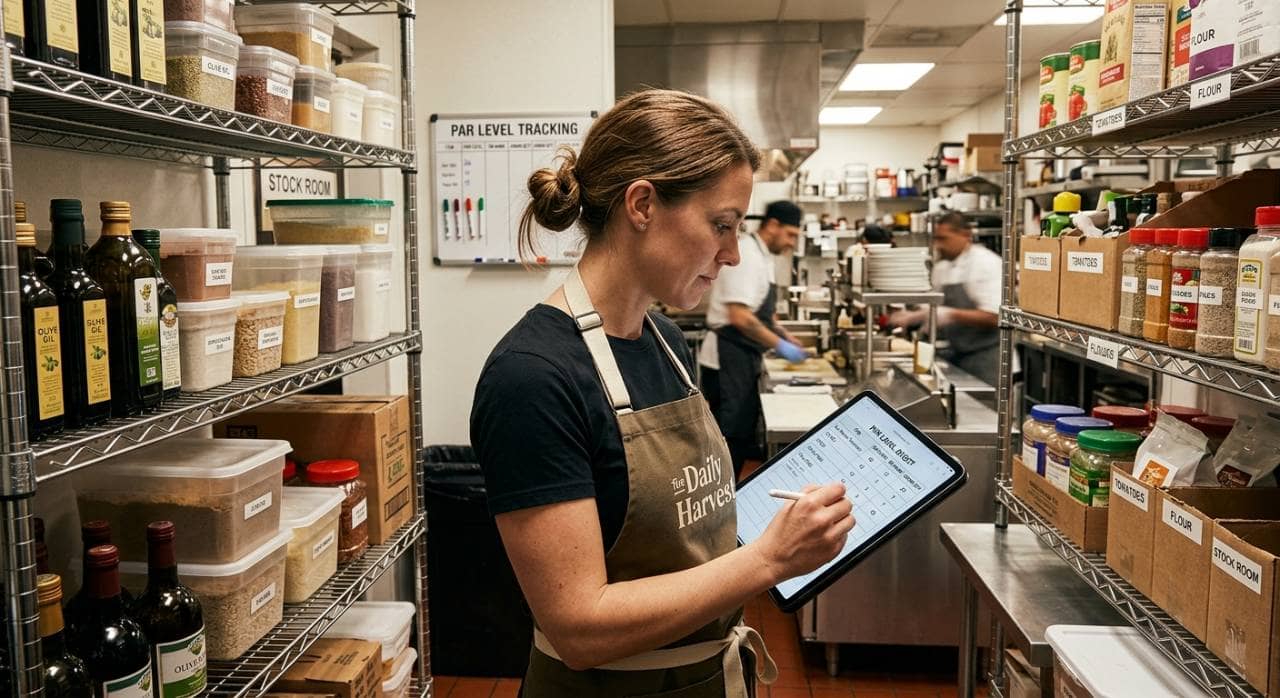
Learn to calculate par levels for restaurant food, beverages, and packaging inventory, preventing stockouts and waste through proper formulas.
Sep 4, 2026
Caribou Coffee appoints Zane Thomas-Rogers as Chief Operations Officer to strengthen execution across its expanding coffeehouse network.
Sep 4, 2026

Compare the top 10 restaurant POS systems in the USA for 2026. Explore features, pricing, pros, cons, and the best POS options for every restaurant type.
Jul 1, 2026

Learn how to handle restaurant payroll yourself, from calculating hours and wages to managing tips, taxes, and final paychecks.
Sep 2, 2026
Restaurant labor management helps owners optimize staffing, control labor costs, improve productivity, monitor overtime, and maintain efficient restaurant operations.
Sep 2, 2026
Angry Chickz enters Illinois with its signature hot chicken concept and ambitious plans for Midwest expansion, setting the stage for new franchise opportunities and community engagement.
Sep 2, 2026

Unlock Exclusive Access To Webinars, Events, And The Latest News For Free!
Learn how to calculate, benchmark, track, and improve restaurant payroll percentage while balancing staffing costs, sales, service, and profitability effectively.

Restaurant payroll percentage measures the share of restaurant sales spent on employee payroll. It helps owners determine whether labor spending is keeping pace with revenue and whether staffing costs remain financially sustainable. For example, if a restaurant generates $100,000 in monthly sales and spends $30,000 on payroll, its payroll percentage is 30%. If payroll rises to $33,000 while sales remain at $100,000, the percentage increases to 33%. That three-percentage-point increase can signal higher wages, overtime, overstaffing, or lower employee productivity. Payroll expenses may include more than hourly wages. Restaurant owners may track - - Hourly employee wages - Manager salaries - Overtime pay - Payroll taxes - Bonuses - Paid time off - Employee benefits Consistency is critical. If one month includes payroll taxes and benefits but another does not, percentage comparisons may be misleading. Owners should also evaluate payroll percentage alongside sales trends. For example, keeping payroll at $30,000 while monthly sales fall from $100,000 to $80,000 increases payroll percentage from 30% to 37.5% without any increase in payroll spending. Tracking restaurant payroll percentage weekly and monthly helps owners identify cost changes, evaluate scheduling efficiency, set payroll budgets, and keep staffing levels aligned with restaurant revenue.
Calculating restaurant payroll percentage helps owners understand how much of their sales revenue is being spent on payroll during a specific period. The calculation can be completed weekly, monthly, quarterly, or annually, but shorter reporting periods often make it easier to identify problems quickly. The basic formula is - Restaurant Payroll Percentage = Total Payroll Costs / Total Restaurant Sales x 100 For example, suppose a restaurant generates $80,000 in monthly sales and spends $24,000 on payroll during the same month. $24,000 / $80,000 x 100 = 30% In this example, the restaurant payroll percentage is 30%, meaning that 30 cents of every sales dollar is being used to cover payroll expenses. The accuracy of the calculation depends on using consistent numbers. Restaurant owners should make sure payroll costs and sales cover the same reporting period. Comparing one month of payroll expenses with several weeks of sales, for example, can produce a misleading percentage. Owners should also decide which payroll expenses they will include. A basic calculation may include employee wages and salaries, while a broader calculation could include overtime, payroll taxes, bonuses, benefits, and other employer-paid labor expenses. Whichever method is used, it should remain consistent over time. Restaurant owners can also calculate payroll percentage by location, department, shift, or daypart. A multi-location operator might discover that one restaurant consistently uses a larger percentage of sales for payroll. Similarly, comparing lunch and dinner periods can reveal whether employee hours are aligned with customer demand. Tracking restaurant payroll percentage regularly makes the metric more useful. Instead of looking at a single number in isolation, owners can compare current results with previous weeks, budgets, sales forecasts, and internal targets. This makes it easier to spot rising payroll costs early and adjust staffing before they have a larger effect on profitability.

A good restaurant payroll percentage is generally one that keeps labor spending sustainable while maintaining enough employees to provide consistent service. As a broad industry reference point, restaurant labor costs often fall around 25% to 35% of sales, with approximately 30% commonly used as a general benchmark. However, restaurant owners should not treat one percentage as the correct target for every operation. Payroll requirements can vary depending on the restaurant's service model, menu complexity, staffing structure, operating hours, local wage rates, and how much work is performed in-house. General payroll percentage ranges may look like this - 1. Quick-service restaurants - around 25% 2. Casual dining restaurants - approximately 25% to 30% 3. Fine-dining restaurants - approximately 30% to 35% These differences reflect how staffing needs change between restaurant concepts. Quick-service restaurants often rely on standardized workflows, limited table service, and streamlined menus, allowing them to generate more sales with fewer labor hours. Full-service and fine-dining restaurants typically require more servers, hosts, bartenders, cooks, bussers, and specialized employees, which can result in a higher payroll percentage. Restaurant owners should use these ranges as reference points rather than strict limits. A restaurant operating at a 32% payroll percentage is not automatically less efficient than one operating at 27%. The higher percentage may support stronger customer service, more complex food preparation, longer operating hours, or a more labor-intensive concept. It is also important to monitor how payroll percentage changes over time. For example, if payroll percentage increases from 28% to 34% while sales decline, owners should investigate whether staffing levels and employee hours are still aligned with customer demand. Ultimately, a good restaurant payroll percentage should allow the business to maintain service standards while leaving enough revenue to cover food costs, rent, utilities, marketing, supplies, and other operating expenses. Restaurant owners should establish their own target based on historical performance, budget expectations, restaurant type, and profitability goals.
A healthy restaurant payroll percentage can vary significantly depending on the type of restaurant being operated. Different concepts require different staffing levels, service standards, kitchen workflows, and employee skill sets, so restaurant owners should compare their payroll percentage with businesses that have a similar operating model. 1. Quick-service restaurants generally operate with lower payroll percentages because they rely on standardized menus, counter service, self-service technology, and high transaction volumes. Staffing is often concentrated around food preparation, order fulfillment, and basic customer service. 2. Fast-casual restaurants may require slightly more labor than quick-service concepts because they often provide more customized meals, higher food preparation standards, and additional guest interaction. Even so, labor requirements are usually lower than those of traditional full-service restaurants. 3. Casual dining restaurants typically have higher payroll needs because they require servers, hosts, bussers, bartenders, line cooks, dishwashers, and managers across multiple shifts. Table service adds labor at the front of the house, while larger menus can increase kitchen staffing requirements. 4. Fine-dining restaurants often operate with some of the highest payroll percentages. These restaurants may employ experienced chefs, multiple kitchen stations, sommeliers, bartenders, hosts, servers, and support staff. Higher service expectations and more complex food preparation naturally increase labor requirements. 5. Cafes, bakeries, and coffee shops can vary widely. A small counter-service cafe may maintain relatively lean staffing, while a bakery producing items from scratch may require substantial back-of-house labor before opening hours. Restaurant owners should therefore avoid comparing payroll percentages across unrelated concepts. A 32% payroll percentage may be high for one quick-service restaurant but completely reasonable for a full-service operation. The more useful approach is to compare restaurant payroll percentage against similar restaurant types, previous periods, budget targets, and sales trends. This gives owners a more accurate picture of whether payroll costs are truly out of line or simply reflect the labor requirements of their restaurant concept.
To calculate restaurant payroll percentage accurately, restaurant owners need to define which payroll expenses are included. Using only hourly wages can understate the true cost of employing staff, while including different expenses from one reporting period to another can make comparisons unreliable. Restaurant payroll costs may include - 1. Hourly wages paid to servers, cooks, hosts, bartenders, dishwashers, and other hourly employees 2. Salaries paid to general managers, kitchen managers, chefs, and other salaried employees 3. Overtime pay generated when employees work beyond standard hours 4. Payroll taxes paid by the employer 5. Bonuses and incentives tied to performance, sales, attendance, or management goals 6. Paid time off, including vacation, sick leave, and other paid absences 7. Employee benefits, such as employer contributions toward health insurance or retirement plans 8. Other employer-paid labor expenses that the restaurant chooses to classify as payroll Restaurant owners should decide whether they want to track a basic payroll percentage based primarily on direct wages or a broader labor percentage that includes payroll taxes and benefits. Either approach can be useful, but consistency is essential. For example, suppose one month includes wages, overtime, payroll taxes, and benefits, while the next month includes only wages and overtime. The resulting percentages would not provide a fair comparison, even if staffing conditions remained unchanged. Owners should also avoid mixing payroll with expenses that belong in other operating categories. Costs such as uniforms, recruiting advertisements, training software, and employee meals may be related to labor but are not necessarily part of payroll itself. Creating a standardized payroll-cost definition makes the metric easier to track across weeks, months, locations, and departments. It also gives restaurant owners a clearer understanding of how much revenue is actually being committed to employees and helps ensure that changes in restaurant payroll percentage reflect real operational trends rather than inconsistent accounting methods.

A high restaurant payroll percentage usually means payroll costs are growing faster than restaurant sales. However, the cause is not always excessive wages. Restaurant owners should look at staffing, scheduling, sales performance, and employee productivity before deciding how to respond. One common cause is overstaffing. When too many employees are scheduled during slow periods, payroll continues to accumulate even when customer demand is low. This can quickly increase payroll percentage, particularly during slower weekdays or dayparts. Excessive overtime can also raise payroll costs. Overtime may result from employee shortages, poor schedule planning, late shift changes, or managers repeatedly relying on the same employees to cover open shifts. Another major factor is declining sales. A restaurant can maintain the same payroll expenses and still experience a higher payroll percentage if revenue decreases. For example, if weekly payroll remains at $15,000 but sales fall from $50,000 to $40,000, payroll percentage rises from 30% to 37.5%. Restaurant owners should also evaluate employee productivity. Inefficient workflows, unclear responsibilities, inadequate training, or poor station organization can require more labor hours to complete the same amount of work. This may increase payroll without generating additional sales. Other factors may include - - Scheduling employees too early or keeping them too late - Failing to adjust schedules when sales forecasts change - Using too many managers or higher-paid employees during certain shifts - High employee turnover that creates repeated training costs and productivity losses - Extended operating hours that generate limited additional revenue Restaurant owners should avoid responding to a high restaurant payroll percentage by immediately cutting employee hours across every shift. Instead, they should determine where the increase is occurring and why. Comparing payroll percentage by week, shift, department, and daypart can help identify specific problem areas. Once the underlying cause is clear, owners can make targeted adjustments that control payroll while still maintaining enough staff to support customer service and restaurant operations.
Improving restaurant payroll percentage does not always mean cutting staff. The goal is to align labor spending more closely with sales while maintaining service quality, food safety, and operational consistency. One of the most effective strategies is to build employee schedules around expected demand. Restaurant owners can use historical sales, reservations, local events, weather patterns, and recent trends to estimate how busy each shift is likely to be. Staffing levels can then be adjusted by day and daypart rather than using the same schedule every week. Owners should also monitor overtime closely. Frequent overtime can increase payroll quickly, especially when it results from poor scheduling, unfilled positions, or employees regularly staying beyond scheduled hours. Reviewing overtime by employee and shift can reveal recurring problems. Another useful metric is sales per labor hour. This shows how much revenue the restaurant generates for each labor hour worked. If labor hours continue increasing without a similar increase in sales, owners may need to review staffing levels, workflows, or employee responsibilities. Cross-training employees can also improve labor efficiency. Employees who can perform multiple roles give managers more flexibility when demand changes. For example, a team member trained in both food preparation and order fulfillment may be able to support whichever area becomes busiest. Restaurant owners can also improve payroll percentage by - - Reducing unnecessary early clock-ins and late clock-outs - Adjusting staffing when sales forecasts change - Staggering employee start and end times - Improving training to increase productivity - Simplifying inefficient kitchen and service workflows - Scheduling higher staffing levels only during peak periods Increasing sales can improve restaurant payroll percentage as well. If payroll remains controlled while revenue grows, payroll represents a smaller percentage of total sales. The best approach is to combine cost control with productivity and revenue improvements. Restaurant owners should make targeted staffing adjustments based on actual demand rather than cutting labor across the board. This helps protect profitability without creating understaffing, slower service, or employee burnout.
