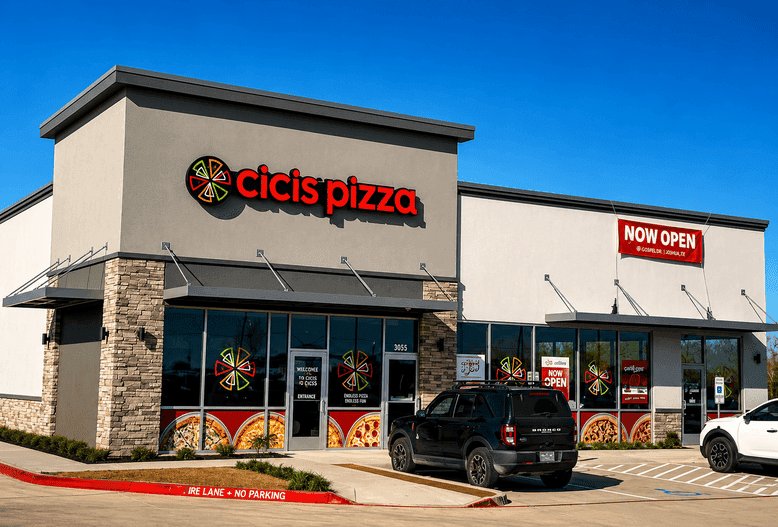
Pizza Hut’s $1.2B China Sale Shakes Up Market
Yum! Brands has finalized a $1.2B deal to transfer Pizza Hut China to Yum China Holdings, signaling big strategic moves for both global franchisors and operators.
Aug 7, 2026
Yum! Brands has finalized a $1.2B deal to transfer Pizza Hut China to Yum China Holdings, signaling big strategic moves for both global franchisors and operators.
Aug 7, 2026
Panera Bread appoints industry veteran Andy Rebhun as Chief Marketing Officer, ushering in a new era of brand growth and consumer engagement.
Aug 7, 2026
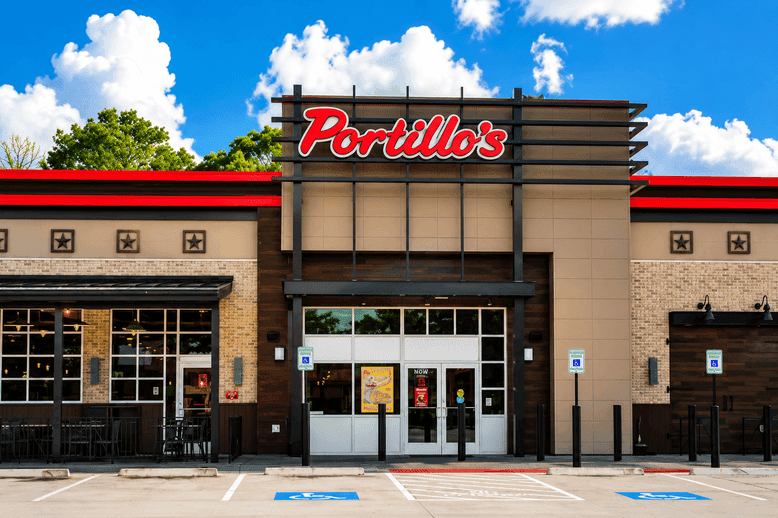
Portillo’s trims 18% of its corporate staff in a bid to refocus resources on restaurant excellence and navigate operational challenges. Discover what the changes mean for the chain’s future.
Aug 7, 2026
Scheduling software helps restaurants save time, control labor costs, improve communication, prevent conflicts, support compliance, and make smarter staffing decisions.
Aug 5, 2026
Portillo’s trims corporate and field roles by 18% in a strategic shake-up to support future growth after soft traffic and sales. Read what this means for multi-unit operators.
Aug 6, 2026
Dutch Bros invests $105 million to acquire Salad and Go’s closed locations, targeting rapid expansion in key southern markets. Learn what this means for multi-unit restaurant owners and operators.
Aug 6, 2026
Salad and Go's bankruptcy and closure offer key lessons on growth, risk management, and market dynamics for restaurant leaders. See what every operator can learn.
Aug 5, 2026
Learn how to calculate prime cost, track food and labor expenses, measure percentages, identify problems, and improve restaurant profitability consistently.
Aug 5, 2026
Portillo’s announces industry veteran Kevin Kalicak as its new CFO and Treasurer, underscoring the brand’s growth strategy and financial vision.
Aug 5, 2026
Skye Anderson will lead McDonald's USA as its new president, stepping in to accelerate growth and revive sales. Learn how her leadership could shape the future of the restaurant industry.
Aug 4, 2026
A warm, expert portrait of how Little Greek Fresh Grill negotiates growth, tech-enabled operations, and market forces on the NRA Show floor.
Photo by Eean Chen
On the NRA Show floor, the air feels like a quiet conversation in a busy café: hopeful, patient, and practical. I move through the booths and the scent of coffee toward a table where Nick Vojnovic, president and majority partner of Little Greek Fresh Grill, speaks in a measured cadence about growth that is steady, not reckless. This Chicago stage, where operators gather to compare menus, labor strategies, and technology, becomes a backdrop for a leadership style that favors discipline over drama. He’s no stranger to big changes across years of shifting markets, and the moment feels intimate, as if we’re sharing a calm moment before the next wave of conversation begins: where does growth begin, and how do we keep it humane?
The narrative centers a Mediterranean fast-casual concept built on gyros and wraps, with skewers offering a range of proteins and Greek salads that invite a lighter, flexible dining experience. Little Greek has grown to near fifty units, anchored in Florida with a Southeastern push. The message from the floor is clear: growth will be deliberate, not reckless, and technology, staff training, and supply-chain awareness are the quiet engines behind guest satisfaction. The NRA Show becomes a hub for practical exchange, an atmosphere in which Little Greek’s measured expansion reads as both philosophy and tactic, whispered through conversations about margins and menu discipline.
Vojnovic’s ascent at Little Greek is a study in steady scale. After leading Beef ‘O’ Brady’s for years, he joined forces in 2011 with Sigrid Bratic to push Little Greek beyond the Tampa Bay area. The partnership anchored a belief that Mediterranean flavors could travel, provided the model stayed disciplined. As the brand moved from a four-store start to a broader footprint, observers watched a deliberate rhythm emerge: assess market readiness, align unit economics, and keep the menu lean enough to stay customizable without drifting into excess. This long arc of thoughtful expansion sits alongside the show’s practical lessons in leadership and execution.
Industry context records a rapid Central Florida uptick after 2015, followed by a Southeast-centric cluster that prioritizes stability over sheer headcount. Today, Little Greek operates in the mid-40s to about 50 locations, with Florida remaining the home base and the Southeast expanding steadily. Third‑party trackers vary in totals, a reminder that estimates shift with timing and methodology. The brand’s own pages emphasize Southeast listings, linking growth to market readiness rather than a coast-to-coast sprint, and the NRA Show framing reinforces a philosophy of measured, resilient scale amid a volatile environment.
At the heart of Little Greek’s playbook is a Mediterranean-inspired menu designed for quick service without sacrificing customization or quality. The lineup centers on gyros and wraps, skewers with a range of proteins, and Greek salads, plus lighter options that appeal to health-forward diners. Leadership and daily operations are portrayed as critical levers: technology-enabled workflows, data-informed scheduling, and thoughtful supply-chain management intersect with guest expectations in real time. External context echoes this approach: labor pressures, wage inflation, and supply-chain volatility push operators toward modular menus and efficiency gains that protect margins while preserving the hospitality feel the brand cherishes.
Industry context is echoed in NRA Show coverage: leaders are investing in technology, leadership development, and agile operations to navigate uncertainty. Gourmet Business, reporting on 2025 NRA Show, underscored how store-level discipline and guest-centric innovations are becoming the mainstream playbook. Little Greek’s Southeastern footprint reinforces its fast-casual positioning, offering a regional growth path that stays true to its roots while embracing scalable systems. The floor conversation, then, becomes a practical blueprint: combine culinary distinctiveness with reliable operations, and let technology do the heavy lifting behind the scenes.
"Growing by up to 50 stores a year was too much, it was a big mistake." This candid line, spoken in a contemporaneous interview, punctures the myth of relentless acceleration and underscores a hard-won lesson about pace and execution in a high-growth brand. The remark surfaces as NRA Show conversations turn toward sustainable scaling, disciplined cadence, and the human sides of expansion. It’s a moment that quietly reframes ambition as a balance between opportunity and feasibility, reminding operators that speed must be tempered by unit economics, culture, and the daily craft of hospitality.
That line lingers as a guide to restraint: growth is a conversation with capability, not a sprint. The takeaway is clear, keep momentum, but protect margin, culture, and guest trust by building with intention rather than urgency.
From the NRA Show floor, three practical ideas emerge for operators watching Little Greek’s path: growth must be disciplined; technology and operations matter as much as menu design; and positioning within a Mediterranean fast-casual niche offers a defensible value proposition when paired with a flexible, regional footprint.
- Growth must be disciplined: Balanced ambition with unit economics and brand experience.
- Tech and operations matter: Efficient labor management, procurement, and digital engagement to sustain margins.
- Defend a regional niche: A Mediterranean fast-casual proposition anchored in the Southeast with a flexible, customizable menu supports durable differentiation.
The takeaway is to stay agile, stay rooted in hospitality, and let smart systems and people do the heavy lifting as you move forward.