
How to Start a Restaurant With No Experience
Learn how to open a restaurant with no experience by planning your concept, budget, location, team, operations, and successful launch.
Business Management
Aug 19, 2026
Learn how to open a restaurant with no experience by planning your concept, budget, location, team, operations, and successful launch.
Aug 19, 2026
Payroll advances help restaurant owners give hourly employees earlier access to earned wages while maintaining accurate records, policies, and compliance.
Aug 19, 2026

Learn the eight essential steps of the restaurant payroll process, from tracking hours and calculating wages to payments and recordkeeping.
Aug 17, 2026

Explore the main types of ordering technology restaurants use to improve accuracy, speed, payments, customer convenience, and operational efficiency daily.
Aug 17, 2026

Discover how restaurant SMS marketing works, from building subscriber lists and creating campaigns to improving engagement and measuring marketing performance.
Aug 14, 2026
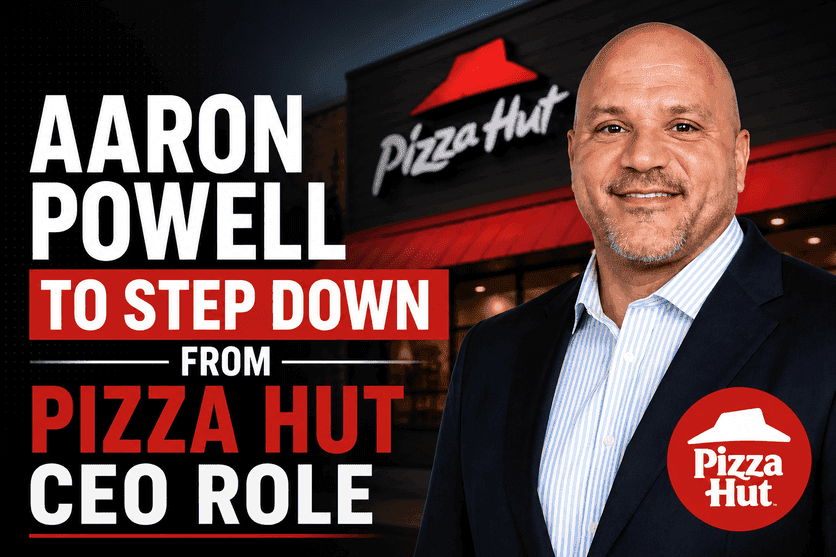
The transition of Pizza Hut's CEO, Aaron Powell, marks a pivotal moment for the chain and offers valuable leadership lessons for restaurant owners. Here’s what this executive change could mean for your business.
Aug 17, 2026
Panera Bread welcomes Andrew Rebhun as its new CMO to spearhead strategic brand growth and transformation, bolstering its vision for 2028.
Aug 17, 2026
Learn how to manage cash flow in your restaurant by tracking finances, controlling costs, forecasting needs, and building cash reserves.
Aug 14, 2026

Increase online orders by simplifying checkout, optimizing menus, improving Google visibility, promoting ordering channels, and encouraging customers to order again.
Aug 12, 2026
Streamline restaurant back office operations by standardizing workflows, automating repetitive tasks, integrating systems, centralizing data, and improving accountability and efficiency.
Aug 12, 2026

Unlock Exclusive Access To Webinars, Events, And The Latest News For Free!
A federal bankruptcy court has signed off on the breakup of Fat Brands across four separate transactions, with most of the company going to lenders through debt-to-equity conversions.

A bankruptcy court has approved the sale of Fat Brands in four separate transactions collectively valued at nearly $1 billion, bringing a complicated and contentious case largely to a close. The proceedings were marked by legal disputes, creditor disagreements, and a power struggle that ultimately pushed the company's founder, Andy Wiederhorn, out of the picture entirely. Fat Brands entered bankruptcy carrying approximately $1.5 billion in debt much of it tied to an aggressive string of acquisitions made in 2020 and 2021, funded primarily through bond sales. What followed was a drawn-out process involving lenders, creditors, and competing legal claims before the court finally gave its approval this week.
The sale breaks Fat Brands into four distinct pieces. Two of the company's 15 operating restaurant chains are being sold outright for cash - Hot Dog on a Stick at $8 million to a buyer called Amazing Brands, LLC, and Elevation Burger at $2.5 million to Tabco International Food Catering, a Kuwait-based company. The remainder of the business is going to lenders through debt-to-equity conversions rather than traditional cash sales. Twin Peaks is being sold separately to an entity known as TWINPKS Bid Co. for $359.5 million in converted debt. The rest of Fat Brands a portfolio that includes Round Table Pizza, Johnny Rockets, Fazoli's, Great American Cookies, Marble Slab Creamery, Pretzelmaker, Hurricane Grill and Wings, Buffalo's Café, Native Grill and Wings, Yalla Mediterranean, and Ponderosa & Bonanza is going to another lender group entity called FBG Bid Co. for $595 million, also in the form of converted debt. One chain, Smokey Bones, has been shut down entirely and is not part of any sale.
Getting to this point wasn't straightforward. The process was complicated by a mediated dispute between lenders, creditors, and company leadership that at one point threatened to derail the entire sale. A deal reached in March ultimately resulted in Andy Wiederhorn the founder who built Fat Brands into a multi-brand conglomerate being forced out along with his family. He was paid $5 million as part of that arrangement. That wasn't the end of the disputes. Disagreements over unpaid management fees surfaced afterward and threatened to push the timeline back further. A settlement reached late last week cleared the path for the court's approval, providing $8 million in cash for the company's estate and establishing a legal process to pursue former management including Wiederhorn to recover funds for lenders.
One of the more contentious elements of the case involved Hot Dog on a Stick. A lender called Insight Capital opposed the $8 million sale price, pointing to a $20.6 million lien it held on the chain. Fat Brands pushed back, arguing that the lien was the result of what it described as a fraudulent transaction a cashless refinancing completed just days before the bankruptcy filing. The company characterized it as a textbook example of fraudulently incurred obligations, and the court moved forward with the sale over Insight Capital's objections.
While the bulk of Fat Brands is headed to lender-controlled entities, Round Table Pizza does have an alternative path if the larger deal falls through. DC Restaurant Group, LLC, has submitted a backup bid of $44 million in cash for the brand. That transaction would only be triggered if the broader FBG Bid Co. deal collapses, but it provides a safety net for one of the more established brands in the portfolio.
The Fat Brands bankruptcy is one of the more significant restructuring cases the restaurant industry has seen in recent years. The outcome most of the company ending up in the hands of lenders through debt conversion rather than traditional buyers reflects just how heavily leveraged the business had become through its acquisition spree. For the brands themselves, the transition to new ownership structures brings uncertainty in the short term. Franchisees across the affected chains will be watching closely to see how the new controlling entities approach operations, investment, and growth strategy. The cases of Hot Dog on a Stick and Elevation Burger, now under new independent ownership, will follow a different path from the larger portfolio, which remains consolidated under lender control for the time being.