



Chipotle's Visit Growth Streak Hits a Margin Wall
Chipotle posted its third straight quarter of transaction growth in Q3 2026, but rising labor and admin costs squeezed margins and earnings.

More Guests, Steady Growth in Digital and Store Expansion
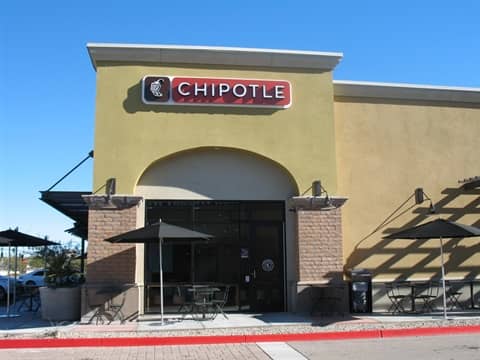
Chipotle got more customers through the door in the third quarter. It just kept less of what they spent.
That tension defines the chain's results for the period ended September 30, 2026. Total revenue climbed 9.6% year over year to $3.3 billion, and comparable restaurant sales rose 2.1%, split between a 1.3% increase in average check and a 0.8% uptick in transactions. The transaction number is the one worth circling: it's the third straight quarter of positive comparable transaction growth, which is the clearest evidence yet that the company's effort to rebuild visit frequency is sticking rather than fading. Digital sales now make up 38.8% of total food and beverage revenue, up from 36.7% a year ago. The company opened 84 company-owned restaurants during the quarter, 53 of them built with a Chipotlane, plus five more international locations run by operating partners.
Margins Slip Even as Sales Climb
Profitability didn't follow the same script. Operating margin fell to 13.7% from 15.9%. Restaurant-level operating margin dropped to 23.3% from 24.5%. Diluted earnings per share declined 6.9%, landing at $0.27 versus $0.29 a year earlier, and net income slid to $339.9 million from $382.1 million. Adjusted net income told the same story, falling to $344.6 million from $389.9 million, while the effective tax rate climbed to 25.6% from 23.1%. By quarter's end Chipotle ran 4,267 company-owned restaurants averaging $3,106 thousand in sales each, alongside 20 partner-operated units.
Boatwright Calls It Proof, Not a Mixed Quarter
CEO Scott Boatwright isn't treating this as a mixed quarter. He's treating it as proof the plan is working. "Three consecutive quarters of positive comparable transaction growth demonstrates that our Recipe for Growth strategy is working," he said. "We're gaining traction with menu and digital innovation, making significant progress on our high-efficiency equipment rollout, and accelerating our global expansion with entry into three new markets this quarter. These achievements reinforce our confidence in the strategy and our ability to execute as we build Chipotle into an iconic global brand."
That framing connects three things investors can actually see in the filing: digital penetration climbing, Chipotlanes multiplying across new builds, and a fresh round of international market entries. The company describes Chipotlanes as pulling double duty, speeding up guest pickup while also lifting new-restaurant sales, margins and returns, which is the logic behind keeping the format central to store openings even as margins compress elsewhere.
Food Costs Ease While Labor and Overhead Climb
The cost structure explains where the squeeze is coming from, and it didn't move in one direction. Food, beverage and packaging costs actually fell to 29.5% of revenue from 30.0%, helped by menu price increases, tariff relief, and a favorable mix of limited-time offerings, though beef and freight inflation along with heavier protein usage ate into some of that gain. Labor costs went the other way, rising to 25.7% of revenue from 25.2%, driven by softer sales volumes, wage inflation, performance bonuses, extra labor tied to promotions, and higher insurance costs. General and administrative expenses jumped to $185.2 million from $146.7 million, pushed up by stock-based compensation, performance bonuses, and outside services tied to corporate initiatives.
None of that stopped the buyback program: Chipotle repurchased $110.0 million of stock during the quarter at an average price of $34.05 per share, leaving $1.6 billion available under existing authorizations, though the company flags that this authorization could be modified, suspended or discontinued at any time.
Separating Transition Costs From the Ongoing Trend
Some of the quarter's adjustments deserve a second look rather than a quiet pass-through into the totals. Non-GAAP reconciliations show $4.3 million in restaurant asset impairment and $1.5 million in stock-based compensation tied to retention equity awards connected to the former CEO's departure, compared with $8.1 million in similar compensation and zero impairment a year earlier. The jump in effective tax rate gets attributed to higher nondeductible expenses and reduced tax credits, though the filing doesn't specify which credits shrank or by how much. Separating these one-time or transition costs from the ongoing trends in labor, food, and administrative spending matters, because only one of those categories is likely to keep showing up on the income statement next year.
Building and Buying Back at the Same Time
The balance sheet reflects a company simultaneously building and buying back. Total assets rose to $9.43 billion from $8.99 billion, cash nearly doubled to $634.2 million from $350.5 million, and leasehold improvements, property and equipment climbed to $3.04 billion from $2.68 billion on continued restaurant buildouts. Total liabilities grew to $6.98 billion from $6.16 billion, while shareholders' equity fell to $2.46 billion from $2.83 billion and retained earnings dropped sharply to $154.5 million from $619.9 million, largely a function of how aggressively the company has been buying back stock.
Nine-month operating cash flow reached $1.92 billion, up from $1.69 billion a year earlier, enough to cover $640.6 million in capital expenditures and $1.46 billion in share repurchases over the same stretch. Nine-month net income came in at $1.05 billion, or $0.82 per diluted share, down from $1.20 billion and $0.89 a year prior.
Guidance Holds Steady as International Push Accelerates
Set against the last several quarters, this result reads as a recovery story that's still finding its footing: a 2.2% comparable sales gain in the second quarter of 2026, a thinner 0.5% rise in the first, and a 2.5% decline in the fourth quarter of 2025 following a modest 0.3% increase the quarter before that. Partner-operated growth has moved faster than almost anything else in the business, climbing from 7 units a year ago to 20 today, a direct reflection of the international push into markets spanning the UK, France, Germany, Mexico, the Middle East and South Korea.
Management reaffirmed full-year 2026 guidance of low single digit comparable sales growth and 350 to 370 new restaurant openings, with roughly 80% of new company-owned locations featuring a Chipotlane, and laid out 2027 plans for 340 to 360 new U.S. and Canada openings plus 15 to 25 more abroad. The company will walk investors through fourth-quarter trends on a call set for October 28, 2026, and that update will say a lot about whether transaction growth can keep outrunning the labor and administrative costs currently working against it.