







McDonald's Ends 30-Year FIFA World Cup Sponsorship
McDonald's is walking away from FIFA after 30 years, citing an overreliance on 'borrowed IP' and a push toward owned marketing platforms.

A 30-Year Partnership Comes to a Close
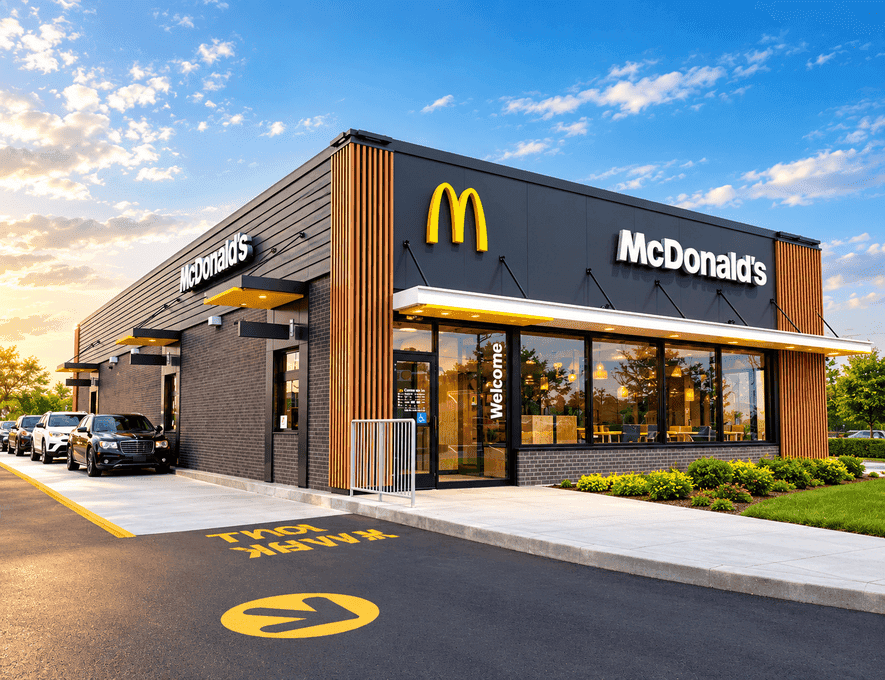
Three decades is a long run for any sponsorship, and McDonald's just let one of its longest end quietly. The company is walking away from the FIFA World Cup after a partnership that began in 1994, confirming the split without ceremony: "As the current agreement reaches its conclusion with this summer's Men's World Cup, so will McDonald's global FIFA World Cup sponsorship." What makes the timing sting is that this summer's tournament was the largest global marketing push in the company's history, stretched across roughly 100 markets. Spending that heavily and then stepping away almost immediately after is not the behavior of a company that got what it paid for.
A Pivot, Not a Breakup
McDonald's has been careful, though, not to let the exit read as a grievance. "For more than 30 years, McDonald's and FIFA have brought fans together around one of the world's biggest cultural moments, and we are proud of the memories and experiences we have created with fans and globally over that time," the company said. That is the language of a brand trying to protect thirty years of goodwill even while quietly closing the checkbook. The split is being framed as a pivot, not a breakup born of bad blood.
Weak Sales Despite Record Marketing Spend
The numbers behind the decision are not dramatic on their own, but they are telling in context. U.S. same-store sales rose just 0.8% in the second quarter, a figure the company itself considered weak given how much marketing noise was happening at once, between the World Cup tie-in and a new value promotion running in parallel. Sales are projected to soften further in the current period. Spending at historic levels and getting a fraction of a percentage point back is the kind of math that forces a hard look at the marketing calendar, and McDonald's leadership appears to have done exactly that.
The CMO Names the Real Issue
Chief Marketing Officer Morgan Flatley put the quiet part out loud in an interview last month, naming the problem the company had been circling: an overreliance on what it internally calls "borrowed IP." "I think we've become overly reliant on borrowed IP," Flatley said. "And I think we need to be very selective and do it a few times versus becoming a frequent piece of our calendar." That single comment does more to explain the FIFA exit than any press release could. It reframes the decision not as a reaction to one disappointing campaign, but as the first visible move in a broader retreat from leasing cultural moments the company doesn't own.
Drawing a Line From FIFA's Turmoil
McDonald's also went out of its way to separate this decision from the mess currently surrounding FIFA's governance, including the power struggle with UEFA that spilled into the tournament itself when U.S. striker Folarin Balogun received a suspended ban that let him play in the final despite a red card that should have kept him out. The company stated plainly that the exit has nothing to do with that turmoil. Drawing that line matters: McDonald's wants this read as a marketing and sales decision, not a reputational flinch from a federation currently stumbling through its own political drama.
Owned Platforms Over Shared Tournaments
None of this means McDonald's is backing out of sports marketing. The company says sport and culture "will remain important ways we connect with our fans as we sharpen our focus on creating distinctive McDonald's experiences that deepen those connections year-round," and the portfolio it's keeping tells its own story.
- Chicago Fire FC: McDonald's is putting its name on the club's Chicago stadium, soon to be McDonald's Park
- Formula 1, Ligue 1, and the All-American Games: continued backing in Latin America, France, and the long-running McDonald's All-American Games
What ties those properties together is control: naming rights, regional deals, and annual platforms the company can shape on its own terms, rather than a single shared tournament split among a hundred markets every four years.
A Broader Shift Across Quick-Service Marketing
The shift also lands amid a wider recalibration across quick-service marketing, with Taco Bell renewing its Pepsi partnership and Wendy's leaning harder into its yellow branding. McDonald's isn't alone in rethinking where sponsorship dollars go during a soft sales stretch, but its FIFA exit is the most visible marker yet of that industry-wide reconsideration. The company hasn't disclosed the financial terms of the original FIFA deal, what return it expected from this summer's campaign, or how long its remaining sports commitments run, so the full shape of the new strategy is still filling in. What's already clear is the direction: fewer borrowed moments, more owned ones, and a marketing calendar built around sustained connection rather than a single tournament's worth of noise.