
The Hidden Cost of Unpredictable Schedules on Employee Retention
Struggling with employee retention? Learn how unpredictable scheduling drives turnover and what you can do to create a more stable workforce.
operations
May 4, 2026
Struggling with employee retention? Learn how unpredictable scheduling drives turnover and what you can do to create a more stable workforce.
May 4, 2026
Photo by on Unsplash
GoTo Foods blends seven iconic brands to push snacking as a growth engine, expanding dayparts, off-premise channels, and co-branding.
May 3, 2026
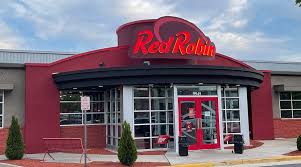
Mark Graff steps in as CFO to anchor Red Robin's First Choice turnaround with disciplined financial leadership.
May 3, 2026
Photo by Graphe Tween on Unsplash
Doinita Leahu redefines hospitality leadership with practical training, mentorship, and people-first systems guiding Vicious Biscuit’s growth.
May 3, 2026
Explore high-traffic Texas markets where restaurants can succeed by matching concepts, customer behavior, visibility, and daily demand.
Apr 30, 2026

Learn how to calculate food cost, control margins, reduce waste, price menu items, and use technology to improve restaurant profit.
Apr 29, 2026

Photo by Unseen Histories on Unsplash
A look at how U.S. brands expand through multi-unit deals, cross-border partnerships, and seasoned operators in 2026.
Apr 29, 2026

Photo by Erik Mclean on Unsplash
McDonald’s unveils six beverages across 14,000 restaurants on May 6, expanding McCafé with Refresher and crafted sodas and a new store-level beverage specialist role.
Apr 29, 2026

Learn how to write a coffee shop business plan that covers concept, location, menu, finances, branding, marketing, and risk planning.
Apr 27, 2026

Explore marketing strategies for food businesses using reviews, professional photos, SEO, social media, partnerships, events, and catering.
Apr 28, 2026
Exploring how new restaurant brands secure growth capital through disciplined planning, clear unit economics, and trusted investor relations.
Photo by mos design on Unsplash
In Nashville, a gathering of rising restaurant brands framed a turning point in access to capital. Nation’s Restaurant News hosted CREATE: The Event for Emerging Restaurateurs, where an Investment Summit connected operators with private capital in a market that feels crowded yet hopeful. Attendees noted that differentiators, robust four-wall economics, and disciplined financial planning were becoming as essential as tantalizing menus. The room carried a quiet consensus: financing is available, but increasingly selective in a rate-sensitive, post-pandemic world. This framing invites another question—how should brands align culinary ambition with a credible growth plan?: The move from concept to scaling, in other words, is now inseparable from a thoughtful capital strategy.
“I think PE puts pressure on restaurants to grow at such a fast rate, then they fail and then your time’s up and they get out. That’s sort of why we’re seeing this mass filing of bankruptcies today,” one participant noted, highlighting the friction between capital speed and operational discipline. Other voices urged founders to build trust and clear communication with investors, insisting that strong governance is a competitive differentiator. Across the panels, leaders stressed that solid operational knowledge must precede expansion, and that trust and honesty are non-negotiable in investor relationships. The takeaway was concrete: the path to growth must be paced by data, not momentum.
Growth pathways were framed as a deliberate trio: franchising, equity investment, and strategic debt. Panels debated when franchising accelerates scale versus when unit economics and brand integrity should guide growth, with some voices arguing robust economics can reduce the need to franchise. Debt, framed as a tool rather than a shortcut, required a credible long-range growth plan and disciplined cash flow. The consensus: robust analytics, documented processes, and leadership depth are prerequisites for sustainable expansion. In this environment, private equity and alternative lenders remain engaged, but on firmer terms and with clearer paths to profitability.
“Never take debt that puts you outside of what you believe is a reasonable payback period.” said Fernandez, underscoring why timing and return horizons matter. The discussions also highlighted that a brand’s growth plan should be anchored in data-driven decisions and aligned incentives, as lenders tighten terms in a higher-rate environment. The big idea: capital is still available, but the rules have grown more conservative, demanding scenario-tested plans and credible forecasts that can weather slower cycles.

Debt and payback emerged as a throughline across panels: debt is a tool when it aligns with a credible growth plan and disciplined cash flow, not a shortcut to rapid scale. Fernandez’s cautionary remark anchored the tone: never exceed a reasonable payback horizon. Higher interest rates tightened margins and invited more stringent lender scrutiny, reminding operators that financing must be folded into a long-term strategy, with clear milestones and risk buffers.
In practice, debt remains a useful instrument when paired with a credible growth vision and disciplined cash management. The consensus was that growth capital is available, but decision-makers are asking for more robust scenarios, more granular forecasts, and stronger governance. The takeaway is a balanced one: pursue capital with patience, plan for contingencies, and measure success by sustainable, long-range impact rather than sheer speed.
Industry context painted a market that remains disciplined but active. Private equity and alternative lenders continue to back brands with proven unit economics and a credible path to profitability, a stance echoed by coverage from Restaurant Dive and other analysts. As macro conditions stabilized, deal activity persisted, yet diligence grew longer and more exacting. The message from sponsors and participants was consistent: growth capital is available, but it travels with patient lanes, rigorous analytics, and transparent governance.
The summit—sponsored by Savory Fund and inKind Capital, with strategic input from The Elliot Group and others—translated the buzz into a framework for action. The ecosystem favors brands that can articulate differentiation, prove scalable unit economics, and demonstrate governance that earns investor trust. For operators, the takeaway is practical: success hinges on thoughtful partnerships and a shared, longer horizon toward profitability.
Gaps and uncertainties remained, even as optimism about capital endured. Only an estimated portion of emerging brands have private equity backing, so many concepts must pursue creative or hybrid financing before scaling with traditional capital. Time constraints, the need to broaden networks, and the challenge of choosing among multiple funding models without a one-size-fits-all answer were all part of the conversation. As observers Govindraj and Kless noted, normalization of alternative financing has accelerated since the pandemic, but higher interest rates and investor selectivity demand rigorous due diligence and a clear, investable growth narrative.
“Taken together, the discussions signal a restaurant investment landscape in transition: a shift toward disciplined growth, rigorous analytics, and stronger collaboration between operators and capital providers.” The broader implication for brands is that differentiation, credible cash flow, and transparent forecasting are no longer optional; they’re the currency of growth. For investors, the frame is similar: seek durable cash flows, align expectations, and practice patience in a market where missteps are costly. The shared conclusion is practical: growth is achievable, but only with plans that can be trusted and sustained.