Swig Expands to Denver with 11-Unit Franchise Deal
Swig signs franchise agreement for 11 South Denver locations, marking Colorado entry and validating its national expansion strategy.
Franchising
Sep 8, 2026
Swig signs franchise agreement for 11 South Denver locations, marking Colorado entry and validating its national expansion strategy.
Sep 8, 2026
QR code menus let restaurants replace paper menus digitally, enabling instant updates, contactless browsing, ordering, and payment through simple smartphone scanning.
Sep 7, 2026
Complete guide helping restaurant owners choose essential kitchen equipment - covering cooking, refrigeration, prep, sanitation, ventilation, safety, and long-term maintenance planning.
Sep 7, 2026

Avoiding common restaurant payroll mistakes - misclassification, tip credit errors, overtime miscalculations - protects businesses from costly penalties, back pay, and compliance risks.
Sep 4, 2026
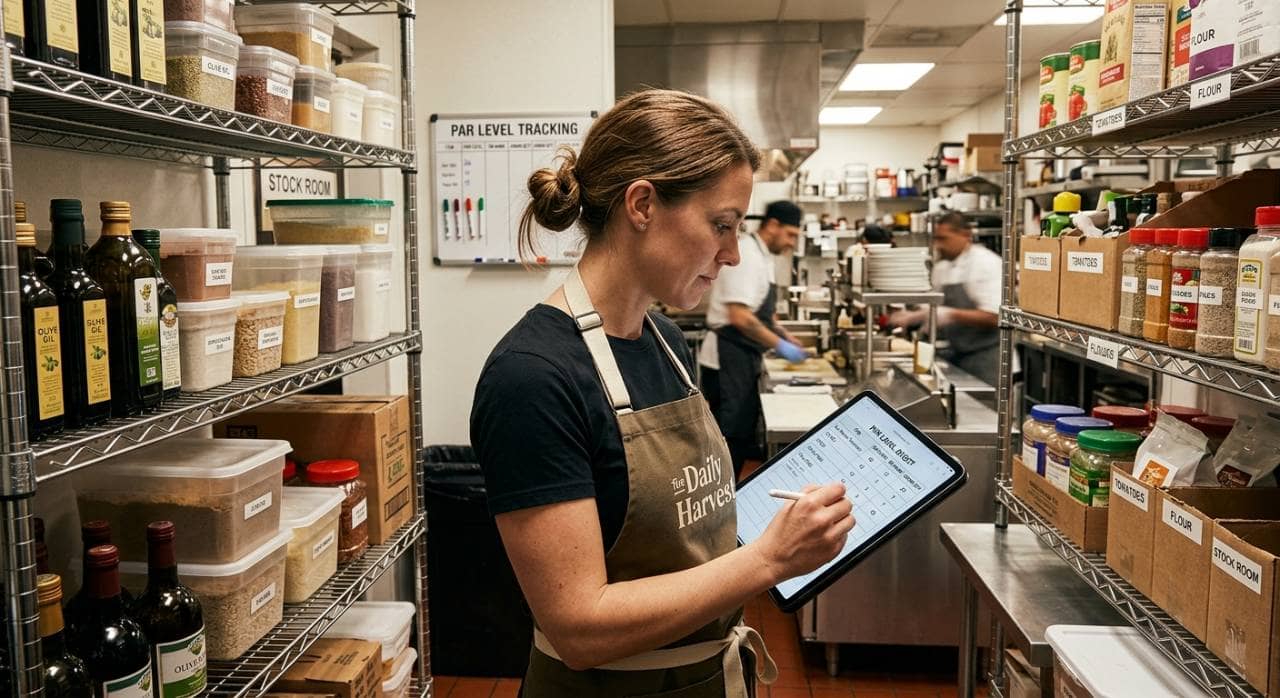
Learn to calculate par levels for restaurant food, beverages, and packaging inventory, preventing stockouts and waste through proper formulas.
Sep 4, 2026
Caribou Coffee appoints Zane Thomas-Rogers as Chief Operations Officer to strengthen execution across its expanding coffeehouse network.
Sep 4, 2026
Compare the top 10 restaurant POS systems in the USA for 2026. Explore features, pricing, pros, cons, and the best POS options for every restaurant type.
Jul 1, 2026

Learn how to handle restaurant payroll yourself, from calculating hours and wages to managing tips, taxes, and final paychecks.
Sep 2, 2026

Restaurant labor management helps owners optimize staffing, control labor costs, improve productivity, monitor overtime, and maintain efficient restaurant operations.
Sep 2, 2026
7 Brew has acquired 73 former Salad and Go locations, surpassing Dutch Bros with a $143M bid, signaling a major shift in the competitive landscape for drive-thru brands.
Sep 2, 2026

Unlock Exclusive Access To Webinars, Events, And The Latest News For Free!
Learn cybersecurity basics for restaurants, protect critical systems, train staff, reduce cyber risks, and respond quickly after an attack.
When restaurant owners hear the word cybersecurity, many assume it is something technical that only matters to large chains or companies with dedicated IT teams. In reality, restaurant cybersecurity is much more practical than that. It means protecting the digital systems, data, and daily operations your business depends on from unauthorized access, fraud, disruption, or theft. In a restaurant, cybersecurity touches far more than just a back-office computer. It includes your point-of-sale system, online ordering platform, payroll software, scheduling tools, inventory system, employee logins, email accounts, Wi-Fi network, delivery integrations, and even the devices managers use every day. If any one of these systems is compromised, the damage can spread quickly across operations. That is why restaurant cybersecurity should not be viewed as only an IT issue. It is an operations issue, a financial issue, and a trust issue. If your POS goes down, service slows or stops. If payroll or employee records are exposed, you may face legal, financial, and morale problems. If customer payment data or loyalty information is affected, guest trust can drop fast. Even a small incident can create real business consequences- lost sales, extra labor, vendor confusion, refunds, downtime, and brand damage.
Restaurant cybersecurity becomes easier to manage when owners understand where the biggest risks usually come from. Most attacks do not begin with something highly sophisticated. They often start with a simple mistake, a weak process, or a gap in access control. In a restaurant environment, where teams move quickly and many systems are connected, those weak points can create serious problems. 1. Phishing Emails and Fake Messages One of the most common risks is phishing. This happens when someone sends an email, text, or message that looks legitimate but is designed to trick an employee into clicking a malicious link, opening an infected attachment, or giving away login credentials. In restaurants, phishing messages may look like they came from a POS vendor, delivery platform, payroll provider, supplier, or even the owner. These messages often create urgency. They may claim an invoice is overdue, a password must be reset immediately, or a bank account needs to be updated. In a busy operation, a manager may respond quickly without slowing down to verify the request. That single action can give an attacker access to critical systems. 2. Weak or Reused Passwords Weak passwords remain one of the simplest ways attackers gain access. If managers or employees use easy passwords, reuse the same password across multiple platforms, or share login credentials, the risk increases significantly. Once one account is compromised, attackers often try the same credentials across other restaurant systems such as payroll, email, online ordering, and reporting tools. Shared passwords create another problem- accountability. If multiple people use the same login, it becomes harder to tell who accessed a system, changed settings, or triggered suspicious activity. 3. Unsecured Wi-Fi and Device Access Many restaurants offer guest Wi-Fi, use tablets or handheld devices, and connect multiple systems to the internet throughout the store. If networks are not secured properly, attackers may look for ways to move from one weak point to another. A poorly protected network can expose business systems to greater risk, especially if guest traffic and internal operations are not separated. Device security also matters. A manager's laptop, an office desktop, or a tablet used for restaurant operations can become an entry point if it is not updated, protected, or restricted appropriately. 4. Outdated Software and Unpatched Systems Cyber attackers often take advantage of software that has not been updated. Restaurants sometimes delay updates because they do not want to interrupt operations, risk compatibility issues, or deal with vendor scheduling. But outdated POS software, operating systems, routers, or back-office tools can leave known vulnerabilities open for attackers to exploit. This is especially risky when restaurant systems are heavily relied on every day. A delayed update may feel harmless until it becomes the exact reason a system is compromised. 5. Third-Party Vendor and Integration Risk Restaurants rely on many outside vendors. POS providers, payroll systems, ordering platforms, delivery apps, payment processors, IT support teams, and loyalty software vendors may all have some level of system access. Every integration adds convenience, but it can also add exposure. If a vendor account is compromised, if remote support access is not controlled carefully, or if a third-party platform has weak security, the restaurant may still feel the impact. Owners need to understand that cybersecurity risk does not stop at the restaurant's own devices. 6. Ransomware and Malware Ransomware is a type of malicious software that can lock systems or data until a payment is demanded. Malware more broadly can disrupt devices, steal information, or create unauthorized access. For restaurants, this can affect POS availability, reporting, office systems, and even communication across locations. Even when the technical details are complex, the business impact is easy to understand- service disruption, lost revenue, recovery costs, and operational chaos. 7. Former Employee or Unauthorized Internal Access Not all cybersecurity risk comes from outside attackers. Sometimes access problems happen internally. If former employees still have logins, if permissions are broader than necessary, or if access is not reviewed regularly, sensitive systems may remain exposed. In restaurants with high turnover, this is a common weakness. The main takeaway is that restaurant cyber risk usually comes from a mix of people, processes, and systems. Owners do not need to master every technical detail, but they do need to recognize where common vulnerabilities appear so they can reduce the chance of a preventable incident.
Not every restaurant system carries the same level of cyber risk. Some tools are more operational than sensitive, while others hold the information that can create the biggest financial, legal, and reputational damage if exposed. For restaurant owners, one of the most important cybersecurity basics is knowing which systems matter most, what data they hold, and who has access to them. 1. Point-of-Sale and Payment Systems Your POS and payment environment should be at the top of the list. These systems process transactions all day, connect with other restaurant tools, and often handle some form of payment-related data. Even if the restaurant uses a third-party payment processor, the POS ecosystem is still critical because it supports checkout, refunds, reporting, and transaction flow. If a POS system is compromised, the damage can go beyond payment exposure. Service can slow down or stop, refunds may be manipulated, discounts may be misused, and managers may lose visibility into sales activity. From a restaurant operations standpoint, the POS is not just a cash register. It is one of the most important systems in the business. 2. Payroll and Employee Records Restaurants also need to protect employee data carefully. Payroll systems may contain Social Security numbers, tax forms, direct deposit details, wage rates, home addresses, and other personal information. HR files may include onboarding documents, identification records, and compliance documentation. If this information is exposed, the consequences are serious. Employees may face identity theft or financial fraud, and the restaurant may face legal, reputational, and trust-related issues. Owners should treat employee records with the same seriousness they apply to financial systems. 3. Online Ordering, Delivery, and Loyalty Platforms Many restaurants now depend heavily on digital ordering and guest engagement tools. Online ordering systems, third-party delivery integrations, mobile apps, and loyalty platforms may store customer names, phone numbers, email addresses, order histories, and login details. Some platforms also connect directly to payment workflows, POS systems, or marketing databases. This makes them important cybersecurity priorities. A breach affecting customer-facing systems can quickly become a trust issue. Guests may not understand whether the problem came from the restaurant, a vendor, or an integration partner. They often just remember that their information was involved. 4. Back-Office and Financial Reporting Systems Back-office tools may not be visible to guests, but they often contain highly sensitive information. Reporting dashboards, accounting software, invoice records, cash management tools, and bank-related processes can reveal business performance, financial controls, and internal decision-making. If attackers gain access here, they may be able to redirect payments, study the business's routines, or manipulate records. For restaurant owners, this is especially important because cyber risk is not only about stealing data. It is also about disrupting the systems used to run the business and make decisions. 5. Email Accounts and Administrative Logins Email is often one of the most overlooked but most important systems to protect. Restaurant email accounts may contain invoices, vendor communications, employee information, reset links, contracts, system notifications, and financial discussions. If an attacker gains control of an email account, they may be able to reset passwords across multiple systems or impersonate the business in communication with staff and vendors. Administrative logins deserve similar attention. Any account with elevated access to POS settings, payroll, reporting, integrations, or user permissions should be tightly controlled. The more powerful the account, the more damage it can cause if misused or compromised. 6. Access Visibility Matters as Much as the Data Itself Protecting data is not just about knowing what information exists. It is also about knowing - - where that data lives - which vendors or systems touch it - who can view it - who can change it - who should no longer have access Many restaurant owners have more exposure than they realize simply because access grew over time without regular review. A system may be secure in theory, but if too many people still have unnecessary permissions, the real risk remains high. The practical takeaway is simple - restaurants should focus first on the systems that handle payments, payroll, employee records, customer information, financial reporting, and high-level administrative access. These are the systems that can do the most damage when compromised and the systems owners need to understand clearly before putting stronger safeguards in place.
Restaurant owners do not need a large IT department to improve cybersecurity. In most cases, the biggest gains come from a set of basic practices that reduce preventable risk. These are not advanced technical projects. They are operational disciplines that help protect the systems the restaurant relies on every day. The goal is simple- make it harder for attackers to get in, limit the damage if something goes wrong, and keep the business running with less disruption. 1. Use Strong, Unique Passwords for Every System Passwords are still one of the most common weak points in restaurant operations. If the same password is used across email, POS, payroll, scheduling, and vendor portals, one compromised account can quickly lead to several more. Strong passwords matter, but unique passwords matter just as much. Each critical system should have its own password, especially systems tied to payroll, payments, reporting, and email. Shared or simple passwords may feel convenient during a busy shift, but they create avoidable exposure. A password manager can help managers store and manage strong credentials without relying on memory or unsafe notes. 2. Turn on Multi-Factor Authentication Wherever Possible Multi-factor authentication, often called MFA, adds another layer of protection by requiring a second step beyond just a password. That second step might be a code from an app, a prompt on a trusted device, or another verification method. Even if someone steals a password, MFA can stop them from getting into the account. For restaurants, MFA should be a priority on email, payroll, POS admin access, banking-related tools, online ordering platforms, and any system that controls user permissions or financial activity. This is one of the simplest and most effective protections an owner can add. 3. Limit Access Based on Job Role Not every employee needs access to every system. One of the best cybersecurity practices is giving people access only to the tools and permissions they need to do their jobs. A cashier does not need the same access as a GM. A shift lead does not need payroll permissions. A former employee should not have any active access at all. Role-based access reduces the chance of accidental changes, misuse, or unnecessary exposure. It also makes investigations easier if something unusual happens because fewer people have access to sensitive areas. 4. Remove Old or Unnecessary Accounts Quickly Access should be reviewed regularly, especially in an industry with frequent turnover. When employees leave, transfer roles, or stop working certain shifts, their access should be updated or removed immediately. Old accounts are one of the easiest gaps for a restaurant to overlook. This applies not only to employee logins, but also to vendor support accounts, temporary credentials, and manager permissions that were never scaled back. A restaurant can do many things right and still stay exposed if former users remain in the system. 5. Keep Software, Devices, and Network Equipment Updated Outdated systems are a common source of cyber risk. Software vendors release updates for a reason, often to fix known security weaknesses. Restaurants should keep POS software, office computers, tablets, routers, operating systems, and back-office tools up to date whenever possible. It is understandable that operators worry about downtime or compatibility, but delaying updates for too long can leave the business open to risks that are already well known to attackers. A practical approach is to create a routine for checking updates and scheduling them during lower-impact times. 6. Back Up Critical Business Data Regularly Backups are essential because cybersecurity is not only about prevention. It is also about recovery. If a system goes down, files are corrupted, or ransomware affects operations, recent backups can help the business restore important information faster. Restaurants should identify what data is most critical to back up, such as payroll records, financial documents, reports, configuration settings, and key operational files. Just as important, owners should know where backups are stored and whether they can actually be restored if needed. 7. Secure Wi-Fi and Connected Devices Restaurants often have multiple internet-connected devices in use at once, including POS terminals, tablets, kitchen display systems, office computers, printers, and guest Wi-Fi. These should not all operate with the same level of access. Guest Wi-Fi should be separated from internal business systems, and device use should be managed carefully. The more connected the restaurant becomes, the more important it is to treat network setup as a security issue, not just a convenience issue. 8. Work With Vendors That Take Security Seriously Restaurants depend on outside vendors for core systems, so basic cybersecurity also means asking better questions of those vendors. Owners should understand who has remote access, how support is handled, how updates are delivered, and what security protections are in place. A weak vendor relationship can create risk even when the restaurant itself is trying to be careful. The main takeaway is that cybersecurity basics are really about consistency. Strong passwords, MFA, role-based access, timely account removal, software updates, backups, secure networks, and vendor oversight are not complicated ideas. But when they are applied consistently, they can significantly reduce the likelihood of a damaging incident.

Even the best restaurant systems can be undermined by weak day-to-day habits. That is why staff training is one of the most important parts of restaurant cybersecurity. In many cases, cyber incidents do not start with a sophisticated technical failure. They start with a person clicking the wrong link, sharing a password, trusting a fake request, or using a system in an unsafe way without realizing the risk. For restaurant owners, this means cybersecurity training is not optional. It is part of protecting daily operations. 1. Help Staff Understand That Cybersecurity Is Part of the Job The first step is making cybersecurity feel relevant. Many restaurant employees do not think of themselves as handling cyber risk, but they do. Managers use email, payroll, scheduling, reporting, and vendor communications. Front-line employees use POS terminals, shared devices, and sometimes apps for timekeeping or scheduling. If staff see cybersecurity as someone else's issue, risky behavior becomes more likely. Training should connect cybersecurity to real restaurant work. Explain that a suspicious email, a fake password reset, or a shared login is not just a technical mistake. It can affect payroll, payments, service, scheduling, and customer trust. When staff understand the operational impact, the training becomes more meaningful. 2. Train Employees to Recognize Phishing and Suspicious Requests One of the most useful things a restaurant can teach is how to slow down and question unusual messages. Employees and managers should know to be cautious when they receive - - urgent password reset requests - invoices or bank change requests that seem unexpected - messages asking for gift cards or payments - links that look slightly unusual - attachments from unknown or unexpected senders - vendor requests that pressure them to act quickly Restaurant teams are busy, and attackers count on that. Training should encourage staff to verify requests before acting, especially when the message involves money, credentials, or sensitive data. A simple internal rule can help - when in doubt, confirm through a separate trusted channel. 3. Set Clear Rules Around Passwords and Shared Access Cybersecurity training should also cover what normal access behavior looks like. Employees should know not to share passwords casually, write them where others can see them, or reuse them across multiple systems. Managers should understand why administrative logins need extra protection and why convenience-based shortcuts can create real risk. If some systems still require shared use, the restaurant should at least define who is allowed to use them, when, and how that access is monitored. The more clearly expectations are set, the less room there is for risky habits to become routine. 4. Train Managers More Deeply Than General Staff Not every employee needs the same level of cybersecurity training. Managers usually handle more sensitive tasks, which means they need more detailed guidance. They may receive vendor emails, approve invoices, manage system permissions, process refunds, or handle payroll-related tools. Because they operate closer to financial and administrative systems, they are often targeted more directly. Manager training should include - - how to verify vendor and payment-related requests - how to respond to suspicious login alerts - how to protect high-level accounts - when to escalate a possible issue - what steps to take if a system appears compromised This does not need to be overly technical. It just needs to reflect the real decisions managers make. 5. Make Reporting Easy and Non-Punitive One of the biggest mistakes restaurants can make is creating an environment where staff are afraid to report a mistake. If someone clicks a suspicious link or notices unusual activity, the restaurant needs to know quickly. Training should make it clear that reporting concerns early is the right move, even if someone is unsure or embarrassed. A team that hides small mistakes out of fear can turn a manageable issue into a much larger incident. A team that reports quickly gives the business a better chance to contain the problem. 6. Repeat Training Regularly Instead of Treating It as One-Time Instruction Cybersecurity training should not happen only during onboarding. Systems change, threats change, and staff turnover is common in restaurants. A short refresher every few months can be far more effective than one long session that people forget. Even simple reminders during manager meetings or shift lead discussions can help keep awareness active. The practical takeaway is that restaurant cybersecurity training should be simple, role-based, and tied to real operational risks. Staff do not need to become security experts. They need to know how to recognize common threats, follow safe habits, and raise concerns quickly. When training is practical and consistent, employees become part of the restaurant's protection strategy instead of one of its biggest vulnerabilities.
A cybersecurity incident can feel chaotic, especially in a restaurant where systems support service, payments, staffing, and communication all at once. When something goes wrong, the first priority is not to panic. The priority is to contain the issue, protect critical systems, and reduce further damage. Restaurant owners do not need to know every technical detail in the moment, but they do need a practical response plan. 1. Stay Calm and Confirm What Is Happening The first step is to slow down enough to understand the problem. A cybersecurity incident may show up as locked systems, failed logins, suspicious transactions, missing reports, strange emails sent from internal accounts, disabled devices, or unusual POS behavior. Do not assume it is a random glitch if the signs suggest unauthorized access or system compromise. Start documenting what was noticed, when it started, which systems seem affected, and who first reported it. That information can help your internal team, vendors, or outside support respond more effectively. 2. Contain the Problem Quickly If a specific device, login, or system appears compromised, act quickly to reduce further exposure. Depending on the situation, that may mean disconnecting an affected device from the network, disabling a user account, pausing remote access, or temporarily separating critical systems from the internet. The goal here is not to solve everything immediately. It is to stop the issue from spreading. In a restaurant environment, containment matters because one compromised account or device can affect POS access, reporting, payroll, vendor communication, or other connected systems. 3. Contact the Right Support Partners Most restaurants will need outside help during an incident. That may include an internal IT contact, managed service provider, POS vendor, payment processor, software partner, or cybersecurity specialist. Contact the parties responsible for affected systems as soon as possible and share the facts you have documented. If payment systems are involved, escalate that quickly. If payroll, employee records, or customer information may be exposed, make sure the appropriate vendors and decision-makers are aware. The sooner the right people are involved, the better your chances of containing the issue without unnecessary delay. 4. Secure Accounts and Change Credentials If there is any chance that accounts were compromised, begin securing access immediately. Change passwords for affected systems, especially email, POS admin accounts, payroll platforms, reporting tools, and vendor portals. Revoke sessions where possible and enable multi-factor authentication if it was not already turned on. This step is especially important for email. If attackers gain control of an email account, they may be able to reset passwords elsewhere or impersonate the restaurant in messages to staff, vendors, or customers. 5. Preserve Evidence and Avoid Making the Situation Harder to Investigate In the middle of an incident, it may be tempting to delete suspicious messages, wipe devices, or start making rapid changes without tracking them. That can make it harder to understand what happened. Preserve relevant emails, screenshots, alerts, timestamps, and user activity if possible. Write down what actions were taken and when. This is important for both technical recovery and business decision-making. The clearer the record, the easier it is to work with vendors, advisors, or legal support if needed. 6. Communicate Carefully Internally and Externally Your team will need guidance, but communication should be controlled and accurate. Staff should know what systems to avoid, what temporary processes to follow, and who is handling the issue. Managers should also know not to speculate or share unverified information. If vendors, customers, or other outside parties may be affected, communication should be handled carefully and based on confirmed facts. The wrong message can create confusion or make the situation worse. The right message should be calm, clear, and limited to what is known. 7. Focus on Business Continuity While Recovery Is Underway Restaurants still need to operate, even during disruption. That means deciding what can continue safely, what needs to pause, and what manual workarounds may be necessary. Some locations may need temporary paper processes, alternate communication methods, or limited-service adjustments while affected systems are addressed. A cybersecurity incident is not only a technical problem. It is an operations problem. Owners should think in parallel about containment and continuity. 8. Review What Happened Before Returning to Normal Once the immediate issue is controlled, the next step is learning from it. What system was affected first? What access weakness made it possible? Was the problem caused by phishing, poor password controls, outdated software, excessive permissions, or a vendor issue? Recovery should include not only restoring systems, but also strengthening the practices that failed. The key takeaway for restaurant owners is that the first response to a cybersecurity incident should focus on containment, support, access control, documentation, and continuity. You do not need a perfect response in the first hour. You need a disciplined one. Fast, organized action can reduce damage and help the restaurant recover with less long-term disruption.
