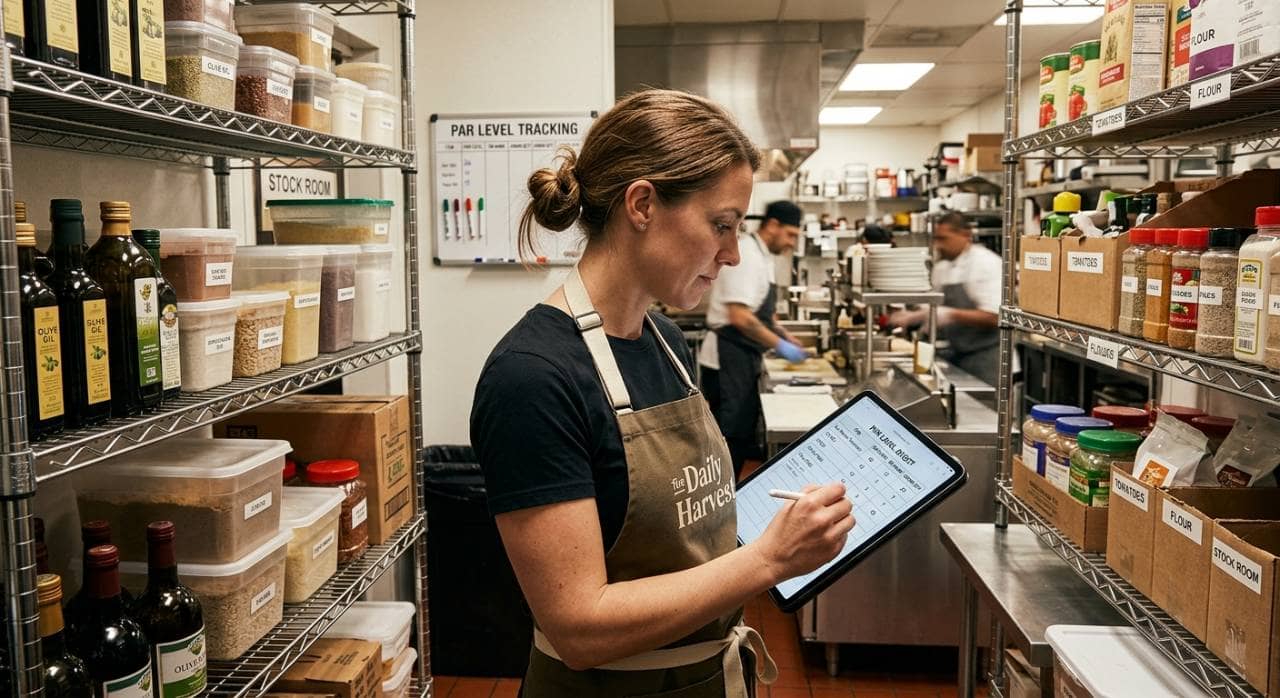
How to Set Par Levels for Restaurant Inventory
Learn to calculate par levels for restaurant food, beverages, and packaging inventory, preventing stockouts and waste through proper formulas.
Back Office
Sep 4, 2026
Learn to calculate par levels for restaurant food, beverages, and packaging inventory, preventing stockouts and waste through proper formulas.
Sep 4, 2026
Caribou Coffee appoints Zane Thomas-Rogers as Chief Operations Officer to strengthen execution across its expanding coffeehouse network.
Sep 4, 2026
Compare the top 10 restaurant POS systems in the USA for 2026. Explore features, pricing, pros, cons, and the best POS options for every restaurant type.
Jul 1, 2026

Learn how to handle restaurant payroll yourself, from calculating hours and wages to managing tips, taxes, and final paychecks.
Sep 2, 2026
7 Brew has acquired 73 former Salad and Go locations, surpassing Dutch Bros with a $143M bid, signaling a major shift in the competitive landscape for drive-thru brands.
Sep 2, 2026
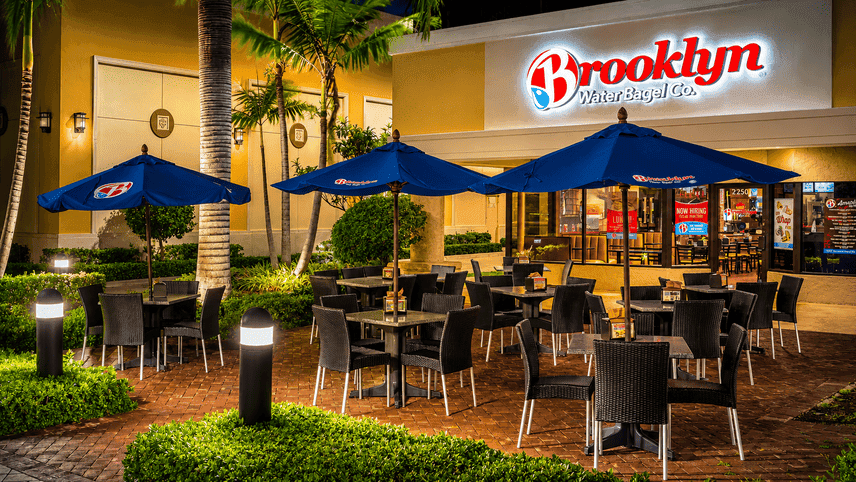
Brooklyn Water Bagel launches its first campus eatery at Nova Southeastern, signaling strategic growth and fresh potential for multi-unit operators seeking new market wins.
Sep 2, 2026
Restaurant labor management helps owners optimize staffing, control labor costs, improve productivity, monitor overtime, and maintain efficient restaurant operations.
Sep 2, 2026
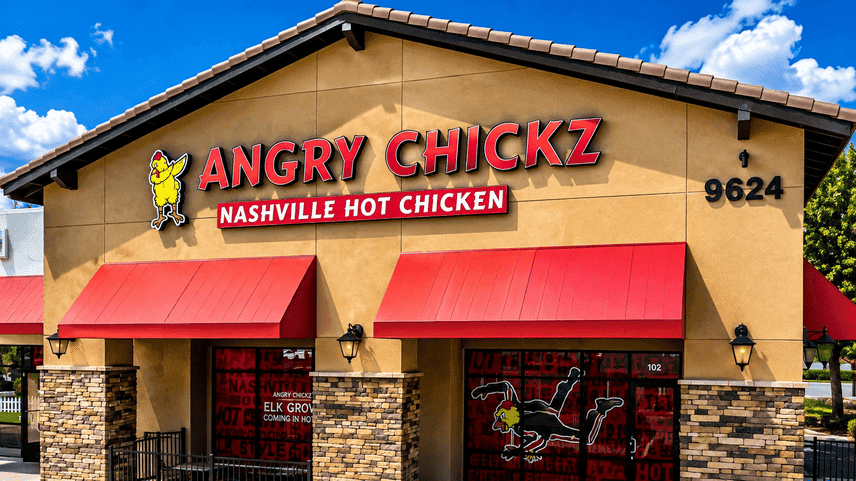
Angry Chickz enters Illinois with its signature hot chicken concept and ambitious plans for Midwest expansion, setting the stage for new franchise opportunities and community engagement.
Sep 2, 2026
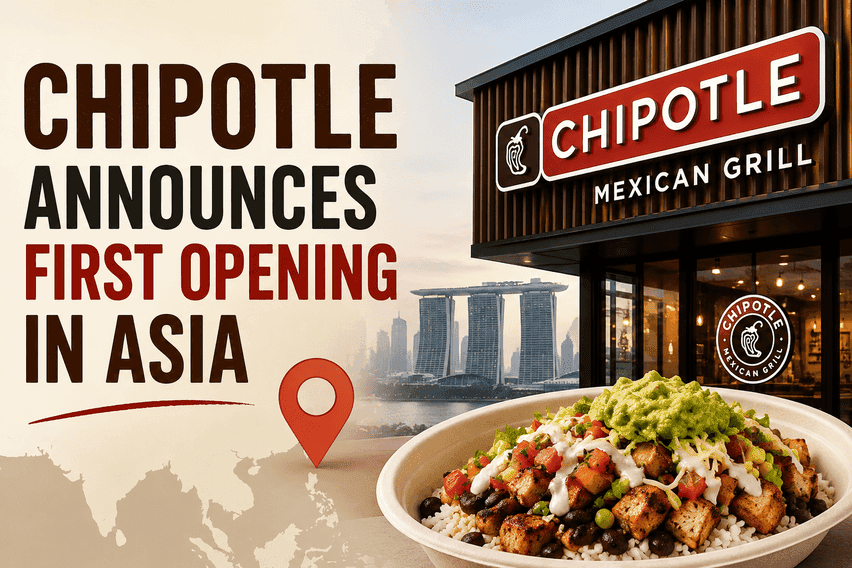
Chipotle makes its highly anticipated entry into Asia with a Seoul opening, partnering with Sangmidang Holdings and setting a template for future international growth.
Sep 2, 2026
Learn how to calculate restaurant cost of goods using inventory, purchases, COGS percentage, variance reviews, and regular tracking for profitability.
Aug 31, 2026

Unlock Exclusive Access To Webinars, Events, And The Latest News For Free!
Digital marketing helps restaurants connect with customers through search, social, content, email, advertising, reviews, and performance tracking for growth online.

Digital marketing for restaurants is the use of online channels to attract new customers, encourage repeat visits, increase orders, and build awareness of a restaurant's brand. Unlike traditional marketing methods such as flyers, newspaper advertisements, or billboards, digital marketing allows restaurant owners to reach customers through the websites, search engines, social platforms, and mobile devices they use every day. For restaurant owners, digital marketing is not limited to posting photos on social media. It includes every online touchpoint that can influence whether a customer discovers, chooses, or returns to a restaurant. A restaurant's digital marketing strategy may include - 1. Website marketing - Creating a fast, mobile-friendly website that clearly displays menus, hours, locations, reservations, and online ordering options. 2. Search engine optimization (SEO) - Improving the restaurant's visibility when customers search for terms such as "restaurants near me," "best pizza nearby," or specific cuisines in their area. 3. Google Business Profile optimization - Keeping location details, opening hours, photos, menu links, and other business information accurate in Google Search and Maps. 4. Social media marketing - Using platforms such as Instagram, Facebook, and TikTok to showcase menu items, promotions, events, and the restaurant experience. 5. Email and SMS marketing - Communicating directly with existing customers about promotions, new menu items, loyalty offers, and restaurant updates. 6. Paid digital advertising - Running search, social media, or display advertisements to reach specific audiences based on location, interests, or online behavior. 7. Online reputation management - Monitoring and responding to customer reviews across platforms such as Google and other restaurant discovery sites. The strongest restaurant digital marketing strategies connect these channels rather than treating them as separate activities. For example, a customer may first discover a restaurant through Google, visit its website to view the menu, follow its Instagram account, place an online order, and later receive an email encouraging another visit. Restaurant owners should therefore think about digital marketing as part of the entire customer journey. The real objective is to turn online attention into measurable business outcomes such as reservations, orders, repeat customers, and higher restaurant sales.
A restaurant website is one of the most important foundations of a digital marketing strategy because it gives owners direct control over how customers experience the brand online. Social media profiles and third-party platforms can help customers discover a restaurant, but the website should serve as the central place where they can find accurate information and take action. A strong restaurant website should make it easy for customers to answer basic questions within seconds. Visitors should quickly be able to find the menu, opening hours, address, phone number, reservation options, and online ordering links. If customers have to search through several pages to find this information, they may leave the site and choose another restaurant. Restaurant owners should focus on several core website elements - 1. Make the website mobile-friendly. Many customers search for restaurants from their phones, especially when deciding where to eat nearby. Pages should load properly on smaller screens, buttons should be easy to tap, and menus should be simple to read. 2. Keep the menu easy to access. Avoid making customers download large files or navigate through complicated menu pages. Include current prices, item descriptions, and relevant dietary information when possible. 3. Use clear calls to action. Buttons such as "Order Online," "Reserve a Table," "View Menu," or "Get Directions" should be easy to find. 4. Optimize website speed. Large images, unnecessary plugins, and poorly optimized pages can slow down loading times and create a frustrating customer experience. 5. Maintain accurate information. Restaurant hours, locations, menu items, promotions, and contact details should be updated whenever changes occur. The website should also support the restaurant's broader digital marketing efforts. Search engine optimization can bring potential customers to the site, social media campaigns can direct users to specific menu or promotion pages, and email campaigns can link directly to reservation or ordering pages. For restaurant owners, the website should not function as an online brochure. It should act as a digital sales channel designed to move customers from interest to action as quickly as possible.

Local SEO helps restaurants appear when nearby customers search for places to eat. Searches such as "Italian restaurant near me," "best burgers in Chicago," or "restaurants open now" often happen when customers are already considering where to dine, making local search an important part of restaurant digital marketing. Google states that local search results are primarily influenced by relevance, distance, and prominence. Restaurants can strengthen relevance by maintaining complete and accurate business information, while prominence can be supported by factors such as reviews and overall online presence. Start With Your Google Business Profile Restaurant owners should claim and verify their Google Business Profile so the business can appear across Google Search and Maps. Each location should include accurate - - Restaurant name, address, and phone number - Opening and holiday hours - Website and menu links - Restaurant category - Photos of food and the location - Ordering or reservation options - Relevant restaurant attributes Accuracy matters because incorrect hours, addresses, or menu information can create friction at exactly the moment customers are deciding where to eat. Treat Reviews as a Local Marketing KPI Reviews deserve particular attention. BrightLocal's 2026 consumer research found that 97% of consumers read online reviews for local businesses, while 41% said they always read reviews when researching businesses, compared with 29% the previous year. Review quality also matters. In the same study, 92% of consumers said star ratings matter, 68% would only use businesses rated at least four stars, and 31% required ratings of 4.5 stars or higher. Additionally, 74% looked for reviews written within the previous three months. Restaurant owners should therefore track metrics such as - 1. New reviews per month - Are customers continuously providing fresh feedback? 2. Average star rating - Is the restaurant maintaining a competitive reputation? 3. Review recency - Are recent customers sharing experiences? 4. Response rate - Are managers consistently responding to customer feedback? Optimize the Restaurant Website for Local Search Local SEO should also extend beyond Google Business Profile. Location pages can target relevant combinations of cuisine, neighborhood, and city keywords. Restaurant owners should keep addresses, phone numbers, hours, and other business details consistent across their website and online listings. Google also supports Restaurant structured data, which can communicate information such as location, cuisine type, opening hours, telephone number, menu URL, and price range to search engines. Effective local digital marketing helps the restaurant appear when nearby customers have strong dining intent and makes it easy for them to move from search to directions, reservations, or online orders.
Social media gives restaurants a direct way to reach customers before they decide where to eat. In April 2026, DataReportal estimated 5.79 billion social media user identities worldwide, representing more than two-thirds of the global population. The typical social media user also visits an average of 6.5 platforms per month and spends approximately 18 hours and 36 minutes per week using social media. For restaurants, the opportunity is especially relevant because food performs naturally in visual and video-based formats. Deloitte Digital's 2025 State of Social research found that 65% of consumers follow food and lifestyle topics on social media, making it the largest community among the consumers surveyed. In addition, 41% of consumers who follow brands on social media follow restaurant brands. Focus on Content That Influences Decisions Restaurant owners should use social media to showcase the experience customers can expect. Content can include - - New and popular menu items - Short videos showing food preparation - Limited-time offers and seasonal menus - Behind-the-scenes kitchen content - Restaurant events - Customer-generated photos and videos - Employee and chef introductions - New location or operating-hour announcements Creator content can also contribute to restaurant discovery. Deloitte found that one in three consumers said a creator recommendation or post had helped them discover a new brand or product during the previous year. Additionally, 83% considered the creators and influencers they follow trusted information sources. Connect Social Activity to Revenue Restaurant owners should avoid measuring success solely by follower counts. Deloitte reported that restaurants experienced an average 9.9% increase in B2C revenue attributed to social media strategies in 2024, while organizations identified as social-first brands reported an average 14.1% increase. Owners should therefore monitor metrics that connect social activity to customer behavior - 1. Engagement rate - Likes, comments, shares, and saves relative to reach. 2. Website clicks - How many social users visit the restaurant website. 3. Ordering clicks - Traffic sent from social platforms to online ordering. 4. Reservation conversions - Reservations generated through social campaigns. 5. Promotion redemptions - Sales connected to social-specific offers or codes. 6. Follower growth - Whether the restaurant is consistently expanding its audience. Platform selection should depend on the restaurant's customers rather than popularity alone. Current global data shows Facebook, YouTube, Instagram, and TikTok all maintain subs
Content marketing helps restaurants stay visible between customer visits by giving people useful, entertaining, or appetizing reasons to engage with the brand. Rather than relying only on promotions, restaurant owners can publish content that answers questions, showcases menu items, highlights the dining experience, and creates opportunities to be discovered through search and social media. Current data shows why a mixed-content strategy matters. HubSpot's 2026 marketing statistics report that short-form video is the leading ROI-driving content format, cited by 49% of marketers, followed by long-form video at 29% and live-streaming video at 25%. Blog posts also remain relevant, 38% of marketers used them in 2025, and small businesses were 23% more likely than average to report ROI from blogging. Website, blog, and SEO collectively remain the top ROI-generating marketing channel in HubSpot's data. Build Content Around Customer Intent Restaurant owners can organize monthly content around several categories - 1. 40% menu and food content - New dishes, best sellers, seasonal items, preparation videos, and ingredient highlights. 2. 25% educational content - Cooking tips, dietary information, pairing guides, or ingredient explanations. 3. 20% restaurant experience content - Chef introductions, behind-the-scenes videos, dining-room features, and events. 4. 15% promotional content - Limited-time offers, loyalty promotions, catering packages, or special menus. These percentages are planning guidelines, not industry benchmarks, and should be adjusted based on performance. Video deserves particular attention. Wyzowl's 2026 research found that 84% of consumers want more video from brands, while 63% prefer short video when learning about a product or service. The research also found that 85% had been convinced to buy a product or service after watching a video. Measure Content Beyond Views Restaurant owners should track website traffic, video views, engagement, shares, saves, menu-page visits, ordering clicks, reservations, and revenue attributed to campaigns. High engagement can indicate interest, but content should ultimately support measurable customer actions. SEO content should also remain customer-focused. Google recommends creating helpful, reliable, people-first content rather than publishing primarily to manipulate search rankings. A strong restaurant content strategy combines searchable information, visual storytelling, and clear calls to action. The goal is to turn consistent content into discovery, engagement, reservations, online orders, and repeat business.
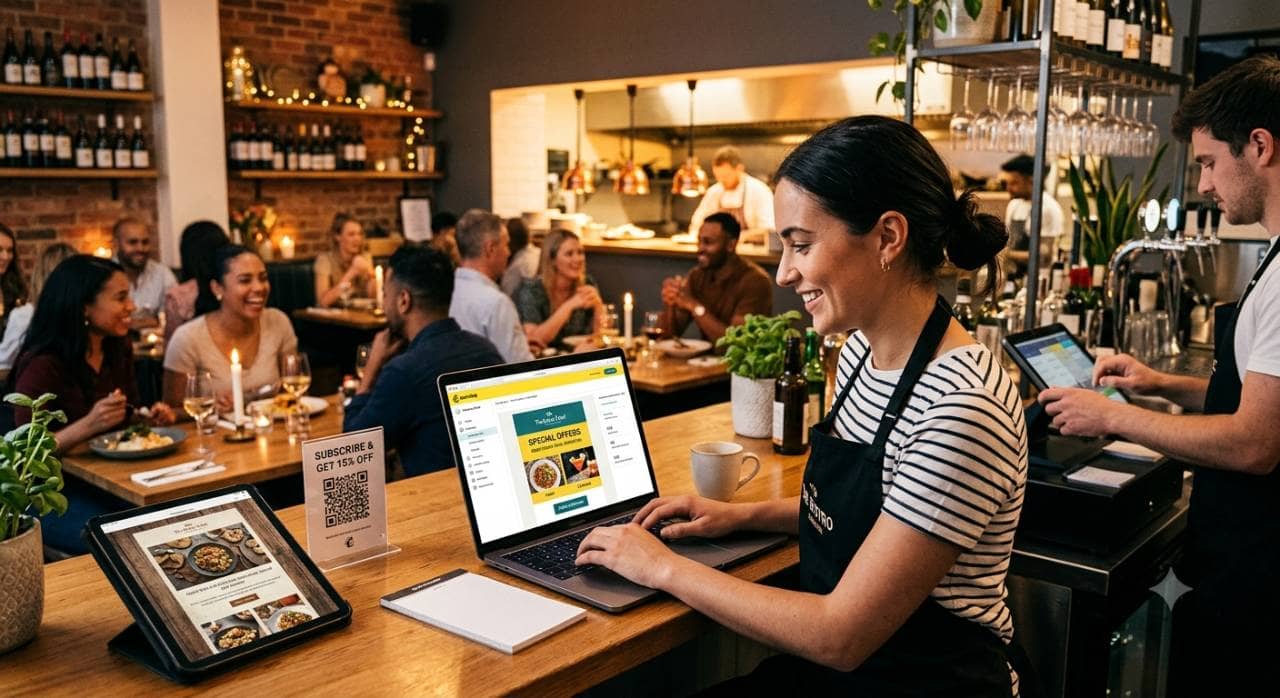
Email and SMS marketing give restaurants direct access to customers who have chosen to hear from them. Unlike social media, where reach depends on platform algorithms, an owned subscriber list lets restaurant owners communicate with past guests about promotions, events, loyalty rewards, and ordering opportunities. The financial potential is significant. Klaviyo cites research showing email marketing can generate about $36 for every $1 spent. Its 2025 consumer research also found that 74% of consumers expect personalized experiences from brands. For restaurants, generic promotions may be less effective than messages based on location, ordering history, loyalty status, or previous engagement. Use Email for Relationship Building Email works well when restaurants need space to communicate more information. Owners can use it for newsletters, seasonal menus, catering promotions, loyalty updates, birthday offers, event announcements, and win-back campaigns. Mailchimp's current benchmark data across users reports an average email open rate of 35.63%, a click rate of 2.62%, and an unsubscribe rate of 0.22%. These are broad benchmarks rather than restaurant-specific targets, but they provide a starting point for evaluating performance. Restaurants should track - 1. Open rate - Whether subject lines generate attention. 2. Click-through rate - How many recipients visit an ordering, reservation, or menu page. 3. Conversion rate - How many recipients complete the desired action. 4. Revenue per campaign - Sales attributed directly to each email. 5. Unsubscribe rate - Whether frequency or content is causing customers to leave. Use SMS for Time-Sensitive Offers SMS is better suited to messages requiring immediate attention. Mailchimp reports that one in three consumers checks texts within one minute, while SMS can achieve open rates of up to 98%. Restaurants can use texts for limited-time promotions, event reminders, loyalty rewards, slow-day offers, or ordering incentives. Klaviyo's research found that 65% of consumers who made an SMS-driven purchase in 2024 bought earlier than planned because of a promotional text. Restaurant owners should collect clear consent before sending marketing texts and provide appropriate opt-out options. Mailchimp specifically recommends explicit consent, audience segmentation, concise messages, appropriate timing, and campaign testing for SMS marketing.
Paid digital advertising can help restaurants reach customers who are actively searching for somewhere to eat or who match specific geographic and behavioral criteria. Unlike organic marketing, which can take time to build visibility, paid campaigns allow restaurant owners to immediately compete for attention on Google, Facebook, Instagram, Maps, and other digital platforms. Search advertising can be particularly valuable because it captures high-intent customers. WordStream's 2026 Google Ads benchmark data reports an average conversion rate of 8.18% across industries. For the Restaurants & Food category, 2025 benchmark data showed an average cost per click of about $2.05, a 7.58% click-through rate, and a 7.09% conversion rate. These figures should be treated as directional benchmarks because actual results vary by market, competition, keywords, and campaign structure. Use Location Targeting to Control Ad Spend Restaurant advertising should usually focus on customers who can realistically visit or order from the location. Google Ads allows advertisers to target geographic areas, while Google Maps advertising is designed to help businesses reach people near physical locations and generate actions such as website visits, calls, and foot traffic. Instead of advertising across an entire city, owners can test campaigns around specific neighborhoods or delivery areas and compare performance. Test Paid Social Campaigns Social advertising can support promotions, new menu launches, events, catering, and customer acquisition. In WordStream's 2025 Facebook advertising benchmarks, Restaurants & Food recorded an 18.25% conversion rate for lead campaigns, one of the highest among the industries measured. Restaurants should track paid advertising using metrics such as - 1. Click-through rate - Percentage of impressions generating clicks. 2. Cost per click - Amount spent for each website or landing-page visit. 3. Conversion rate - Percentage of visitors completing an order, reservation, signup, or other target action. 4. Cost per acquisition - Marketing spend required to generate a customer or conversion. 5. Return on ad spend - Revenue generated for every advertising dollar spent. Restaurant owners should start with controlled budgets, test different audiences and creative, and increase spending only when campaigns produce measurable results. The objective is not simply to generate impressions or clicks. Paid digital advertising should connect spending directly to reservations, online orders, calls, store visits, and revenue, allowing owners to determine which campaigns deserve additional investment.
