









A Complete Guide to Tip Compliance for Restaurant Owners
Learn how to manage tip distribution, follow labor regulations, maintain accurate payroll records, prevent violations, and establish effective tip compliance practices in restaurants.

Overview
Tip compliance is an important part of restaurant operations because it affects employee wages, payroll accuracy, labor costs, and legal responsibilities. Restaurant owners must understand how tips are collected, distributed, reported, and documented to ensure employees receive the money they are entitled to and the business follows applicable labor regulations. When tip practices are poorly managed, restaurants can face wage disputes, costly penalties, payroll discrepancies, and damage to employee trust. Restaurants often have multiple employees earning tips across different roles, shifts, and service periods. Servers, bartenders, bussers, and other eligible employees may participate in tip-sharing arrangements, depending on applicable laws and the restaurant's policies. Without clear procedures, owners may struggle to calculate tip distributions accurately, maintain consistent payroll records, or determine whether their practices meet legal requirements. Tip compliance goes beyond distributing tips correctly. Restaurant owners must also understand minimum wage requirements, tip credit rules, employee tip reporting obligations, recordkeeping standards, and restrictions on how employers can handle employee tips. These requirements can vary significantly between federal, state, and local jurisdictions, making it essential to review the regulations that apply to each restaurant location. Establishing a structured tip compliance process helps restaurant owners reduce payroll errors, prevent disputes, maintain accurate financial records, and create greater transparency for employees. By understanding their responsibilities and reviewing tip-related practices regularly, owners can protect their businesses while ensuring employees are compensated fairly and lawfully.
Restaurant Tip Compliance Requirements
Restaurant tip compliance involves following the laws and regulations governing how tips are earned, collected, distributed, reported, and recorded. Restaurant owners must understand how these requirements apply to their employees, payroll processes, and daily operations to avoid wage violations and maintain accurate financial records. Because tip regulations differ across jurisdictions, businesses must ensure their policies align with the rules applicable to their locations. One important distinction is between voluntary tips and mandatory service charges. Tips are generally payments customers voluntarily provide to employees for service, while service charges are amounts automatically added to a customer's bill. These payments may be subject to different wage, distribution, and reporting requirements. Restaurant owners should clearly distinguish between the two when processing payments and calculating employee compensation. Employers must also understand their responsibilities regarding tip ownership. In general, employee tips belong to employees, and employers cannot improperly retain, deduct, or use those tips for business expenses. However, specific rules governing tip pooling, management participation, and distribution depend on applicable laws and whether the restaurant uses a tip credit. Restaurant owners should pay attention to several key compliance areas - 1. Tip ownership - Ensure tips are handled according to applicable laws and are not improperly retained by the business. 2. Tip distribution - Establish clear procedures for allocating tips among eligible employees. 3. Wage requirements - Verify that employees receive legally required wages, including applicable minimum wage obligations. 4. Reporting and documentation - Maintain accurate records of tips, payroll, employee hours, and distributions. 5. Regulatory requirements - Follow federal, state, and local laws governing tipped employees. Understanding these requirements gives restaurant owners a foundation for building reliable tip management procedures. Rather than relying on informal practices, businesses should establish written policies, train managers, and regularly review how tips are handled throughout their operations.

Tip Pooling, Tip Sharing, and Distribution Rules
Tip pooling and tip sharing are common practices in restaurants where employees contribute a portion of their tips to be redistributed among other eligible team members. These arrangements recognize that customer service often depends on multiple employees working together, including servers, bartenders, bussers, food runners, and other support staff. However, restaurant owners must ensure their tip distribution practices follow applicable regulations and clearly communicate how tips are allocated. Tip pooling typically requires employees to contribute a portion of their tips to a shared pool, which is then distributed among eligible employees according to an established formula. Tip sharing, on the other hand, generally involves an employee voluntarily giving a portion of their tips to another employee who helped provide service. Although the terms are sometimes used interchangeably, restaurant owners should understand how their specific arrangements are treated under applicable laws. Establishing a consistent distribution policy is essential for avoiding disputes and maintaining transparency. Restaurant owners should determine which employees are eligible to participate, how contributions are calculated, when tips are distributed, and whether allocations are based on hours worked, job positions, or another permitted method. These rules should be documented and communicated to employees before implementation. Restaurant owners should pay attention to the following tip distribution practices - 1. Define eligible employees - Determine which roles can participate in tip pools under applicable federal, state, and local regulations. 2. Establish contribution percentages - Clearly explain how much employees contribute and how contributions are calculated. 3. Use consistent distribution methods - Apply the same approved allocation formula across applicable shifts and service periods. 4. Maintain accurate records - Document tip contributions, distributions, employee participation, and any adjustments. 5. Avoid improper deductions - Never deduct amounts from employee tips for business expenses or other prohibited purposes. Proper tip pooling and sharing procedures help restaurants maintain accurate payroll records, reduce disagreements between employees, and promote accountability. Restaurant owners should periodically review their distribution policies to ensure they remain legally compliant as staffing arrangements, job responsibilities, and regulations change.
Tip Credit Rules and Minimum Wage Requirements
Tip credit rules are an important part of restaurant tip compliance because they determine whether employers can count a portion of employee tips toward their minimum wage obligations. In jurisdictions where tip credits are permitted, restaurant owners may be able to pay tipped employees a lower direct cash wage while using eligible tips to make up the difference between that wage and the required minimum wage. However, this arrangement is subject to strict legal requirements and is not permitted everywhere. Under federal law in the United States, employers who take a tip credit must meet specific conditions, including paying the required cash wage, ensuring employees receive enough tips to satisfy minimum wage requirements, and providing proper notice of the tip credit. Employers must also ensure employees retain their tips, except for lawful tip pooling arrangements. State and local laws may impose higher minimum wages, prohibit tip credits entirely, or establish additional requirements. Restaurant owners should pay attention to several areas when managing tip credit compliance - 1. Minimum wage requirements - Verify the applicable minimum wage for tipped employees and ensure employees receive at least the legally required compensation. 2. Tip credit eligibility - Confirm that the restaurant qualifies to use a tip credit and that employees meet the applicable requirements. 3. Employee notifications - Provide required information about tip credits, cash wages, and tip policies before applying the credit. 4. Wage calculations - Accurately calculate direct wages, eligible tips, overtime, and any additional compensation owed. 5. State and local regulations - Review jurisdiction-specific laws that may restrict or eliminate tip credits. Incorrectly applying a tip credit can result in wage shortages, back-pay obligations, penalties, and legal disputes. Restaurant owners should regularly review payroll calculations and wage policies to verify that tipped employees are receiving the compensation they are legally entitled to. Maintaining accurate timekeeping and tip records can also help identify discrepancies before they become larger compliance problems.
Tip Reporting, Payroll, and Recordkeeping Requirements
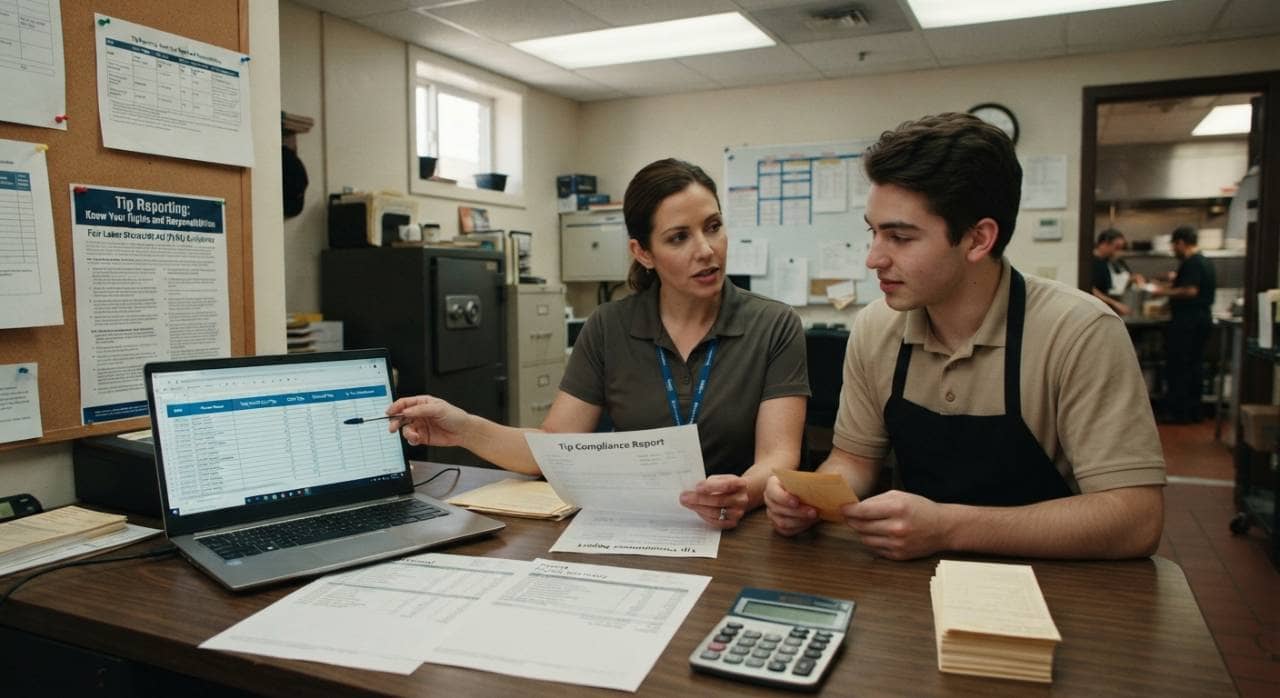
Accurate tip reporting and recordkeeping are essential for maintaining restaurant payroll compliance. Restaurant owners must ensure that employee tips are properly reported, included in wage calculations when required, and documented for payroll and tax purposes. Missing or inaccurate information can create discrepancies in employee earnings, lead to incorrect tax reporting, and make it difficult to verify whether the restaurant follows applicable labor regulations. Employee tip reporting is an important part of this process. Employees generally have tax reporting responsibilities for the tips they receive, while employers must meet applicable withholding, reporting, and payroll obligations. Restaurant owners should establish procedures for employees to report cash and charged tips accurately and consistently. They should also reconcile reported tips against available POS records and other relevant payment information. Payroll calculations must account for tips, direct wages, hours worked, and applicable overtime requirements. Restaurants using tip credits must also verify that eligible tips are sufficient to meet minimum wage obligations. Any shortfall must be addressed through additional employer-paid wages. Restaurant owners should maintain organized records covering several key areas - 1. Employee tip reports - Track employee-reported cash and credit card tips, including any required declarations. 2. POS transaction records - Retain payment records that help verify credit card tips, service charges, and customer transactions. 3. Payroll documentation - Record direct wages, reported tips, tip credits, overtime payments, and applicable deductions. 4. Employee work hours - Maintain accurate timekeeping records to support wage calculations and verify hours worked. 5. Tip distribution records - Document tip pool contributions, allocation methods, and payments made to eligible employees. Regularly reconciling tip reports with POS transactions and payroll records helps restaurant owners identify inconsistencies before processing payroll. It is also important to retain employment and wage records for the periods required by applicable federal and state regulations. By establishing consistent reporting procedures and maintaining complete documentation, restaurant owners can improve payroll accuracy, simplify compliance reviews, and reduce the risk of tip-related wage disputes.

Common Tip Compliance Mistakes
Managing employee tips involves several legal and administrative responsibilities. Even when restaurant owners have established tip policies, mistakes in payroll processing, employee classification, or tip distribution can create compliance problems. Understanding these common errors helps restaurant operators identify weaknesses in their procedures and take corrective action before violations lead to financial penalties or employee disputes. Here are some common tip compliance mistakes restaurant owners should avoid - 1. Including Ineligible Employees in Tip Pools. Federal and state regulations establish restrictions on which employees can participate in tip pools. For example, under federal law, employers, managers, and supervisors cannot keep employees' tips or receive distributions from mandatory tip pools. Restaurant owners should review employee roles and responsibilities before determining tip pool eligibility. 2. Withholding or Improperly Deducting Tips. Employers generally cannot keep employee tips or use them to cover business expenses such as cash shortages, broken equipment, or customer walkouts. Restaurants must ensure that tip deductions and handling practices comply with applicable laws. 3. Incorrectly Calculating Tip Credits. Applying a tip credit without meeting legal requirements can result in minimum wage violations. Common mistakes include failing to provide required employee notices, overlooking jurisdiction-specific restrictions, and not paying additional wages when tips fall short. 4. Failing to Maintain Accurate Records. Incomplete tip reports, missing payroll information, and inaccurate employee work-hour records make it difficult to verify wage calculations. Restaurant owners should maintain organized documentation covering tips, distributions, wages, and hours worked. 5. Applying Inconsistent Tip Distribution Policies. Changing tip allocation methods without clear communication can create employee disagreements and inconsistent payroll practices. Restaurants should establish written procedures that explain contribution percentages, eligibility requirements, and distribution schedules. 6. Overlooking State and Local Tip Regulations. Following federal requirements alone may not be sufficient. States and local jurisdictions can impose stricter rules regarding minimum wages, tip credits, tip pooling, and employee protections. Avoiding these mistakes requires more than establishing a basic tip policy. Restaurant owners should regularly review payroll procedures, train managers, verify employee classifications, and monitor regulatory changes. A consistent review process helps identify potential violations early and keeps tip management aligned with applicable labor requirements.
How to Build a Tip Compliance System for Your Restaurant
Maintaining tip compliance requires consistent procedures, clear employee expectations, and reliable recordkeeping. Restaurant owners should establish a structured system that covers how tips are reported, distributed, calculated, and documented. Instead of addressing compliance issues only when disputes arise, businesses should make tip management part of their regular payroll and workforce management processes. Here are several steps restaurant owners can follow to build an effective tip compliance system - 1. Establish a Written Tip Policy. Create a document explaining how tips are collected, reported, pooled, and distributed. Include employee eligibility requirements, contribution percentages, payment schedules, and procedures for addressing tip-related disputes. Ensure the policy follows applicable labor regulations. 2. Train Managers and Employees. Make sure managers understand their responsibilities for handling tips, reviewing payroll information, and following distribution procedures. Employees should also understand how to report tips, participate in eligible tip pools, and raise concerns about payment discrepancies. 3. Review Payroll and Timekeeping Records. Regularly compare employee work hours, reported tips, direct wages, and payroll calculations. Accurate timekeeping helps verify hours worked and supports proper wage and overtime calculations, particularly when employees work different roles or shifts. 4. Conduct Regular Tip Compliance Audits. Review tip distribution records, payroll reports, employee classifications, and applicable wage requirements. Periodic audits help identify inaccurate calculations, missing documentation, and practices that may violate labor regulations. 5. Use Restaurant Technology to Improve Accuracy. POS, payroll, and workforce management systems can help organize tip information, track employee hours, and reduce manual data entry. Integrating these processes can make it easier to identify discrepancies and maintain consistent records across restaurant locations. 6. Monitor Changes in Labor Regulations. Tip-related requirements can change at federal, state, and local levels. Assign responsibility for monitoring regulatory updates and reviewing restaurant policies whenever new requirements take effect. A reliable tip compliance system should also include a process for investigating employee concerns and correcting payroll errors promptly. Restaurant owners should document policy changes, maintain accessible records, and periodically evaluate whether existing procedures reflect actual restaurant operations. By combining clear policies, employee training, accurate timekeeping, and regular reviews, restaurant owners can make tip compliance a consistent part of daily management rather than an occasional administrative task.