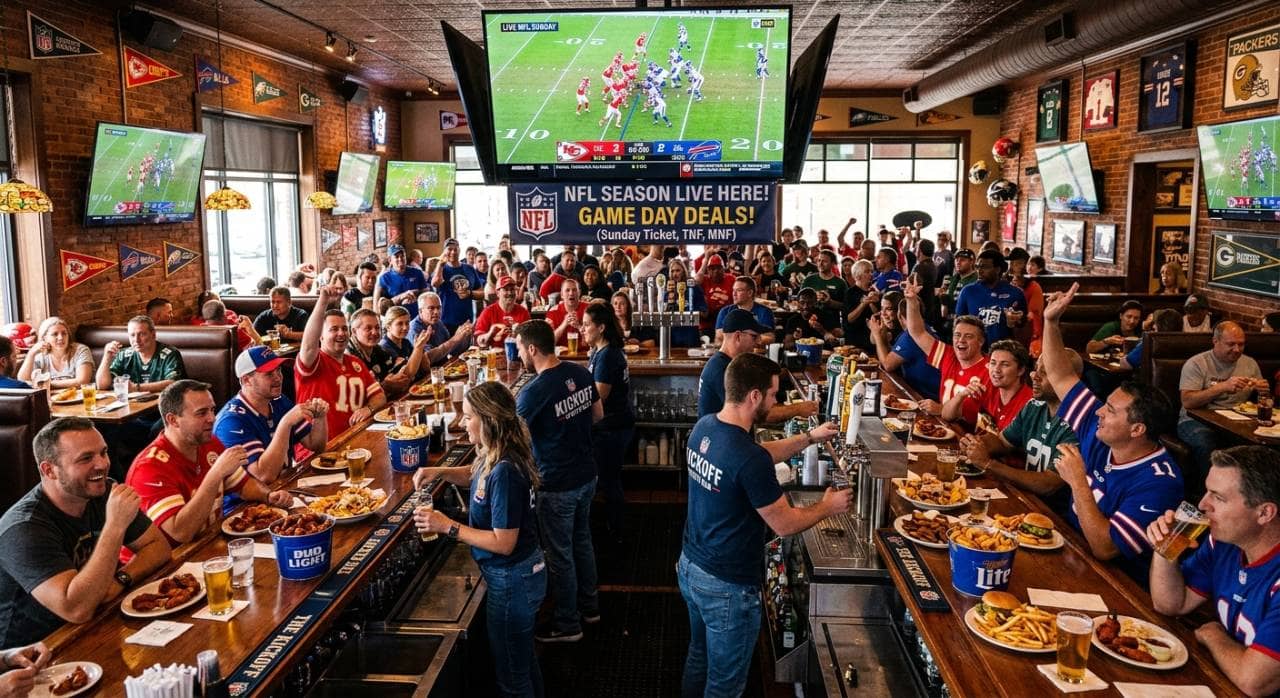
How to Prepare Your Restaurant for the NFL Season
Prepare your restaurant for NFL season with smart menu planning, staffing, marketing, technology, and atmosphere strategies that boost season-long revenue.
Marketing
Sep 9, 2026
Prepare your restaurant for NFL season with smart menu planning, staffing, marketing, technology, and atmosphere strategies that boost season-long revenue.
Sep 9, 2026

Learn how to reduce food waste in restaurants through smarter purchasing, storage, preparation, and service strategies that cut costs.
Sep 9, 2026
Swig signs franchise agreement for 11 South Denver locations, marking Colorado entry and validating its national expansion strategy.
Sep 8, 2026

Complete guide helping restaurant owners choose essential kitchen equipment - covering cooking, refrigeration, prep, sanitation, ventilation, safety, and long-term maintenance planning.
Sep 7, 2026

QR code menus let restaurants replace paper menus digitally, enabling instant updates, contactless browsing, ordering, and payment through simple smartphone scanning.
Sep 7, 2026

Avoiding common restaurant payroll mistakes - misclassification, tip credit errors, overtime miscalculations - protects businesses from costly penalties, back pay, and compliance risks.
Sep 4, 2026
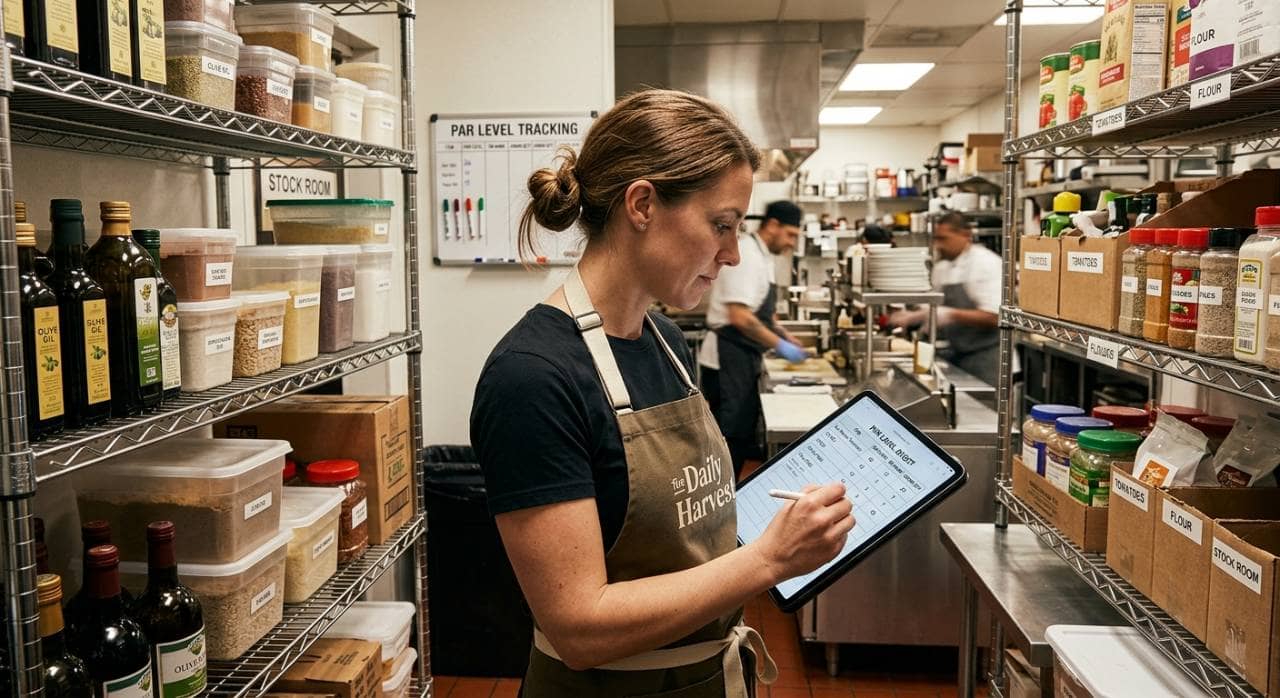
Learn to calculate par levels for restaurant food, beverages, and packaging inventory, preventing stockouts and waste through proper formulas.
Sep 4, 2026
Caribou Coffee appoints Zane Thomas-Rogers as Chief Operations Officer to strengthen execution across its expanding coffeehouse network.
Sep 4, 2026

Compare the top 10 restaurant POS systems in the USA for 2026. Explore features, pricing, pros, cons, and the best POS options for every restaurant type.
Jul 1, 2026

Learn how to handle restaurant payroll yourself, from calculating hours and wages to managing tips, taxes, and final paychecks.
Sep 2, 2026

Unlock Exclusive Access To Webinars, Events, And The Latest News For Free!
A journal of how First Watch blends data-guided engagement and price discipline to sustain visits amid inflation, while expanding through franchising.

Photo by Ali Inay
First Watch begins from a posture of measured care, not reckless exuberance. In the quarter ended June 30, 2024, the Bradenton-based chain posted a marginal 0.3% decline in same-store sales alongside a 4% drop in traffic, a reflection of a consumer environment marked by inflationary pressures and tightened dining-out decisions. Yet the narrative is not one of retreat; it is a demonstration of resilience anchored in a loyal guest base. The leadership frames the moment as part of a broader industry rhythm, retention and disciplined growth taking priority over broad-based, price-cut promotions. The result is a brand intent on sustaining visits with refinement rather than reach-alone.
What, then, shapes the plan moving forward? The answer lies in a balance between discipline and relevance, a balance the company seeks to preserve as guests become increasingly selective about where they dine. The quarter is less a headline about a stumble and more a portrait of a brand choosing to invest in core offerings and in smarter pathways to sustained visits. It is a narrative of calm precision, not bold noise, and it invites the next questions: how will First Watch translate patience into repeat visits and lasting value?

On the earnings call, Chris Tomasso, the chief executive, framed the quarter as part of a larger industry rhythm rather than a standalone stumble: 'Our approach is in stark contrast to the broad-based discounting that many in our industry are deploying.' The emphasis is not a campaign of price cuts but a philosophy of margins preserved through targeted actions. The strategy leans into digital marketing, sharper segmentation, and a belief that value can be meaningful without eroding price integrity. By focusing on core offerings and improving visit quality, the brand seeks to convert cautious spend into repeat visits. In this light, promotions become precise tools rather than general salvos.
The stance signals a broader framework: targeted actions over indiscriminate discounting, and a commitment to granular messaging grounded in a data-driven approach. The emphasis is to sustain relevance with existing guests while protecting profitability. With this mindset, First Watch aims to keep price integrity intact even as digital campaigns sharpen the brand’s voice across channels. The implication is clear: growth is to be earned through precision, not pandering to every demand for lower prices.
A centerpiece of the plan is data-driven engagement. The company has described building a richer customer profile database through opt-in data, with plans to segment by frequency, demographics, and psychographics to deliver more personalized communications. This framework is designed to inform decisions on site selection for new restaurants, targeted marketing, and initiatives to nudge first-time or infrequent guests toward repeat visits. As weekday traffic has posed a more persistent challenge, access to granular data becomes a lever for tailoring messages to different guest groups and times.
The aim is to translate insights into action: smarter site selection, sharper marketing cadence, and messages that feel crafted for a given guest segment. The weekday emphasis is not a niche concern but a strategic priority, where the brand seeks to elevate visits through relevance rather than volume. If the data tells a story, the next pages of the story are written in how the brand speaks to different guest groups when they are most likely to choose breakfast and brunch as a weekday habit.
First Watch demonstrates a compelling rhythm in operations. Total revenues reached $258.6 million, up 19.5% year over year, while net income rose to $8.9 million, or $0.14 per diluted share. The company highlighted improvements in operating margins, with the restaurant-level profit margin rising to 21.9% from 20.9%, and a continued decline in labor turnover for the sixth consecutive quarter. At the store level, the network stood at 538 restaurants across 29 states after opening seven new units in six states during the period.
The results embody more than numbers: they narrate a brand strengthening its operating backbone, margin discipline, labor stability, and a logistics frame that can absorb shifts in traffic while laying groundwork for future expansion. The pace of new openings and the scale of the network signal a coherent growth agenda aligned with a data-driven, profitability-conscious mindset. In short, momentum persists even as the guest room sometimes cools, an elegant reminder that sustainability rests on a well-tuned engine.
A major development arrived in April 2025 when First Watch announced what it described as its largest-ever strategic franchise acquisition. The deal added 15 franchise-owned restaurants and development rights in North Carolina and South Carolina for a total purchase price of about $49 million on a cash-free, debt-free basis, subject to customary adjustments. The package also included one restaurant currently under construction and the corresponding development rights, underscoring a deliberate push to deepen presence in a high-potential corridor. The press release noted the expected close by mid-April 2025, signaling scale in motion through franchise partnerships.
The acquisition broadens the brand’s reach without imposing direct capital risk on its balance sheet, aligning with the data-guided growth model and the discipline that moderated promotions. It marks a strategic step toward acquiring velocity in select markets through partnerships that share the same ethos of margins-first expansion. The NC/SC corridor becomes a proving ground for how franchise collaborations can accelerate entry into high-potential locales while preserving the integrity of the guest experience.

By August 2025, momentum across openings and onboarding remained robust. In Q2 2025, total revenues rose to $307.9 million, a 19.1% rise, while system-wide sales climbed to $346.2 million. Same-restaurant sales grew by 3.5% and same-restaurant traffic by 2.0%. The quarter added 17 system-wide restaurants in eight states, lifting the total to 600 restaurants across 31 states (531 company-owned and 69 franchise-owned). The pace underscores a profound commitment to growth while continuing to scale operating capabilities and supply-chain integration.
These figures are more than a ledger; they reveal a business evolving toward scaled execution, where expansion is matched by an enhanced operating cadence and a tighter integration of procurement, labor, and technology. The footprint is larger and more capable, yet the doctrine remains: grow with discipline, protect margins, and let data steer the journey toward sustainable, guest-centered expansion.
First Watch's leadership laid out forward-looking considerations that hinge on a spectrum of external variables, from consumer spending to franchise dynamics and broader macro conditions. The updates emphasize disciplined execution as unit growth continues and digital engagement scales, with the caveat that results may diverge from plans as conditions evolve. The guiding architecture remains: price discipline, targeted marketing, and selective promotional activity that preserve margin integrity while supporting visits. The balance of 2025 and beyond will be measured by how precisely these elements translate into durable guest visits and resilient profitability.
In this refined era of dining, the art lies in turning data into decision and decision into repeat visits. If the model holds, First Watch will continue to balance growth with margin protection, leveraging its franchise partnerships and digital strategy to sustain momentum even as external headwinds persist. The lesson, elegantly stated, is not to chase every peak but to craft a steady ascent, an assured, data-informed ascent that honors guests and preserves the dignity of the brand.
