.png&w=3840&q=70)

How to Prepare Your Restaurant for the NFL Season
Prepare your restaurant for NFL season with smart menu planning, staffing, marketing, technology, and atmosphere strategies that boost season-long revenue.

Why NFL Season Is a Revenue Opportunity
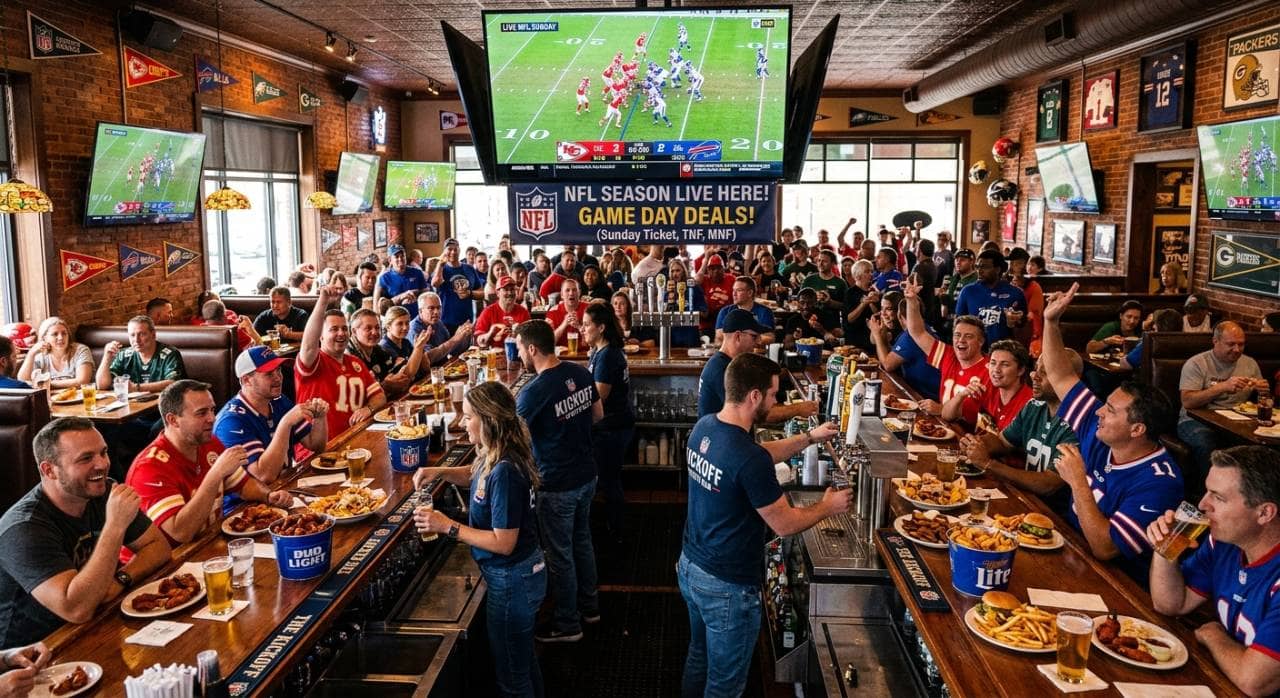
For restaurant owners, NFL season is one of the clearest, most predictable ways to boost sales - if you look at the numbers behind it. Every year, from September through February, millions of fans look for somewhere to watch the game, and a large share of them would rather do that at a restaurant or bar than at home. Unlike a single holiday that comes once a year, this pattern repeats every single week for months, which means restaurants get many chances across the season to capture that demand. For sports bars, pubs, and casual dining spots in particular, this adds up to one of the most reliable stretches of the year for driving both traffic and revenue - as long as the numbers behind it are understood and planned for. What the data typically shows on game days - 1. Higher foot traffic - Sports bars and casual restaurants usually see a noticeable jump in customers on Sundays (and Monday and Thursday nights) compared to a normal weekday. 2. Bigger average checks - Fans don't just order one drink and leave. They tend to stay through the game, ordering food and drinks across multiple quarters, which adds up to a higher spend per visit. 3. Longer dwell time - Customers stay longer on game day than they would during a regular meal, which means more chances to sell food, drinks, and specials during that visit. 4. Repeatable demand - Unlike a holiday that happens once a year, NFL season brings this opportunity back every week for months, giving you many chances to get it right. But the data also shows a risk. Game days are only profitable if your restaurant can keep up. If wait times get too long, the kitchen falls behind, or there aren't enough staff, customers leave and may not come back the next week. In other words, the upside is only real if your operations can support it.
Game-Day Readiness
Before you touch your menu or staffing schedule, take a hard look at the physical space fans will actually be sitting in. A great game-day menu means nothing if half your dining room can't see the screen or hear the play-by-play over the crowd. Start with TV placement and screen count. Walk through your restaurant from every seat - not just the bar - and ask honestly - can this table see a screen without craning their neck? Blind spots are one of the fastest ways to lose repeat game-day customers to a competitor with better sightlines. If you're relying on one or two TVs, consider whether it's worth adding additional screens in underserved sections, even smaller, budget-friendly ones, just to eliminate dead zones. During the playoffs or marquee matchups, you may also need to think about split-screen setups so fans watching different games aren't fighting over the remote. Next, address sound. Game-day crowds are loud, and a restaurant with one shared audio zone often means half the room can't hear the commentary over conversation and kitchen noise. If your layout allows it, consider dividing your space into distinct audio zones - one for the primary game, another for a secondary matchup - so fans aren't straining to follow the action. Closed captioning is a simple, inexpensive fix that helps in packed rooms where audio just won't carry cleanly to every table. Finally, revisit your seating layout with fresh eyes. Game day traffic patterns don't look like a typical Tuesday dinner service. You may need to temporarily reconfigure tables to maximize capacity around high-visibility areas, while still preserving enough room for servers to move quickly during rushes. Consider which tables convert well to high-tops or standing-room areas during peak games, and whether your host stand can handle a surge of walk-ins without creating a bottleneck at the door.
Game-Day Menu Strategy
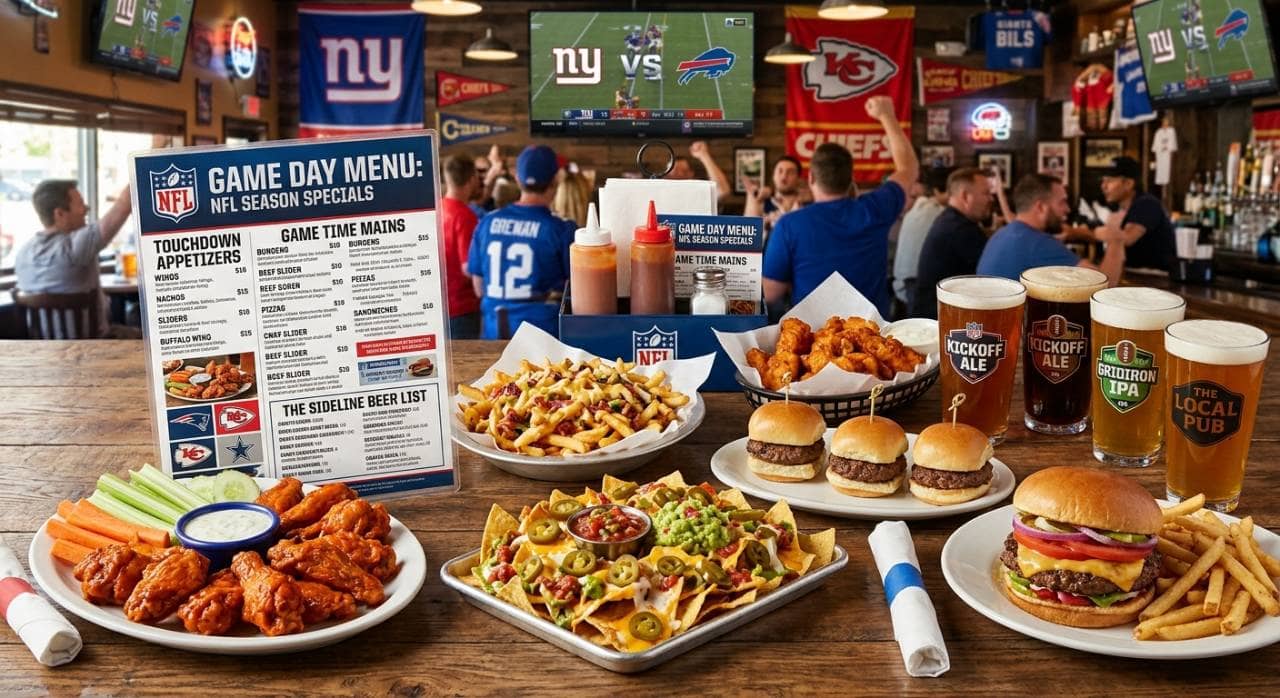
Your regular menu probably wasn't designed for the pace and pressure of a full slate of NFL games. Game day calls for a different approach - one built around speed, shareability, and margin, so your kitchen can keep up when three-quarters of the room orders in the same 15-minute window. 1. Simplify and focus on high-margin, shareable items. Wings, sliders, nachos, loaded fries, and similar handheld or shareable dishes are game-day staples for a reason - they're quick to execute, easy to eat while watching the screen, and typically carry strong margins. Consider building a dedicated game-day menu, or a streamlined subset of your regular menu, that your kitchen can produce quickly and consistently even under pressure. Cutting back on complex, made-to-order items during peak game hours can prevent ticket times from spiraling out of control. 2. Bundle food and drinks into game-day specials. Combo deals - a bucket of wings with a drink pitcher, or a shareable platter priced for a table of four - encourage larger orders and simplify decision-making for fans who don't want to study a menu during kickoff. Some restaurants have success tying limited-time specials to the game itself - discounts triggered by a touchdown, happy-hour pricing extended through overtime, or a free item if the home team scores in the first quarter. These promotions add an element of fun and can be an easy hook for your marketing efforts, but they should be structured so they don't create unpredictable cost spikes for your kitchen. 3. Balance kitchen capacity against demand spikes. Unlike a steady dinner rush, game day tends to surge in waves - a rush right before kickoff, another during halftime, and often another late in the game. Map out your menu with these waves in mind - what can be prepped ahead of time, what needs to be made fresh, and where your kitchen might get overwhelmed if every table orders simultaneously. If halftime is historically your busiest stretch, make sure your simplified menu and prep work are specifically built to handle that 15-20 minute window without falling behind. A well-designed game-day menu isn't about offering less for the sake of it - it's about offering the right things, fast enough, so your team can keep pace with a room full of fans who don't want to miss a play waiting on food.
Staffing Up for Peak Game Days
Game day is one of the few times a year when understaffing or overstaffing by even two or three people can make or break your entire weekend's profitability. Rather than a straightforward list, it helps to think through a series of questions every restaurant owner should be answering before the season kicks off. How do you actually forecast labor needs for a season that isn't uniform? Not every NFL Sunday is the same. A early-season matchup between two mediocre teams will draw a very different crowd than a rivalry game, a primetime slot, or a playoff weekend. Pull up the full schedule as early as possible and flag the games likely to bring in your biggest crowds - big local team matchups, marquee primetime games, and postseason weeks. Staff more conservatively for lower-interest games and go all-in on the ones you know will pack the house. Kickoff time matters too - an early slate of games means an all-day staffing plan, while a single primetime game may only require a shorter, more concentrated push. What happens when your best server calls out an hour before kickoff? This is where cross-training pays for itself. When staff can move fluidly between roles - a bartender who can run food, a host who can bus tables, a server who's comfortable expediting - you build a much more resilient team that can absorb the unpredictability of game day. Cross-training isn't just a backup plan for call-outs; it also means you can shift bodies to wherever the bottleneck is in real time, whether that's the kitchen line during halftime or the host stand during a walk-in surge. Why would your best people want to work the toughest shifts of the season? Long, high-pressure game days ask a lot of your staff, and the restaurants that retain good people through the season are usually the ones that make it worth their while. Consider tip pooling structures that reward the whole team for a smooth service rather than pitting individual sections against each other, or set up bonus incentives tied to specific benchmarks - hitting a sales target, maintaining table turnover speed, or working a full stretch of high-demand games. Even smaller gestures, like a pre-shift meal or first pick of schedule for the following week, can go a long way toward keeping morale up during the grind of a full NFL season.
Marketing and Promotions Before Kickoff
By the time the season actually starts, your marketing work should already be well underway. Waiting until week one to start promoting your game-day offerings means missing the fans who are already deciding, in late summer, where they'll be watching every Sunday. Here's what to have in place before kickoff - 1. Announce your schedule early. As soon as the NFL schedule is released, share it across your social channels - which games you'll be showing, any special setups for split games or overlapping matchups, and key dates like opening weekend or rivalry games. Fans planning their season want to know your restaurant is a reliable option before they lock in other plans. 2. Build anticipation with pre-season content. Use the weeks leading up to kickoff to tease your game-day menu, show off any space upgrades (new TVs, added seating), and remind followers of what worked well last season. A short countdown campaign in the final week before opening Sunday can help convert casual followers into first-week visitors. 3. Create promotions that last the whole season, not just one game. A single-day discount gets people in the door once. A season-long loyalty punch card, a weekly giveaway (jerseys, gift cards, free appetizers), or a running leaderboard tied to attendance gives fans a reason to keep coming back week after week rather than treating your restaurant as a one-off destination. 4. Offer team-specific specials. If your area has a strong local fanbase or a few teams with heavy followings, consider specials tied to those teams' game days -discounts when the home team wins, themed drink specials, or team-colored menu items. This kind of targeted promotion tends to perform better than a generic "watch the game here" message. 5. Partner with local fan communities. Reach out to local NFL fan clubs, alumni associations, or established watch-party organizers in your area. These groups often already have a built-in audience looking for a home base to watch games together, and partnering with them - whether through a reserved section, group discount, or co-hosted event - can deliver a reliably full house without you having to build that audience from scratch. The common thread across all of these - game-day marketing works best when it's planned as a season-long campaign, not a series of one-off posts the morning of kickoff.
Leveraging Technology and Reservations
Even the best-prepared restaurant can get overwhelmed on game day without the right systems in place to manage the crowd. Technology won't replace good planning, but it can absorb a lot of the chaos that comes with unpredictable walk-in surges and fans trying to plan around kickoff. Reservation and waitlist systems are the first line of defense. Game days tend to bring a mix of fans who plan ahead and fans who show up on a whim once they realize their preferred spot is full elsewhere. A digital waitlist lets you manage both groups without a crowd forming at the host stand, and it gives walk-ins a realistic wait estimate so they can decide whether to stay or try somewhere else. For marquee games, consider allowing reservations for larger groups in advance, while holding back a portion of seating for walk-in traffic to avoid alienating loyal regulars who don't always plan that far ahead. Online ordering and pickup options matter more during football season than almost any other stretch of the year, because not every fan wants to watch the game out - some are hosting at home and want restaurant-quality food without the cooking. Making it easy to order wings, shareable platters, or family-style bundles for pickup or delivery opens up a second revenue stream that doesn't compete for your limited seating. This is also a natural extension of the bundled specials discussed earlier in your menu strategy, just packaged for an at-home audience instead of a dine-in one. Digital signage and score-tracking apps help solve one of the most common game-day frustrations - multiple games happening at once, with fans needing to know the score of a game they're not currently watching. A digital display cycling through scores from other games, or an app-based system that lets you manage which screens show which matchups, keeps fans informed without constant "can you check the score of the other game" requests to your servers. This is especially useful during afternoon slates with several games running simultaneously, or during the fantasy football stretch of the season when fans are tracking players across multiple games at once.
Create an Atmosphere That Keeps Fans Coming Back
Menu and staffing get people through the door once. Atmosphere is what makes them tell their friends this is their spot for football season. Here's what goes into building that kind of environment. 1. Decor that signals "this is a football restaurant." Team jerseys, banners, and memorabilia do more than fill wall space - they tell fans, at a glance, that your restaurant takes game day seriously. If your area has a strong following for one or two teams, leaning into that identity can turn your restaurant into the go-to spot for that fanbase specifically. For restaurants that draw fans of multiple, sometimes rival teams, consider designated sections or seating zones so opposing fans can enjoy the game without stepping on each other's toes. 2. Interactive elements that extend beyond just watching. The game itself is only 60 minutes of actual football spread across three hours of broadcast time, which leaves a lot of downtime during commercials and between plays. Prediction contests (who scores next, final score guesses), in-house fantasy football leagues, and trivia during breaks give fans something to engage with beyond just staring at the screen. These small touches also tend to extend visit length and encourage repeat attendance, since fans want to see how their predictions or league standings play out week to week. 3. Reading the room - die-hards versus casual diners. Not every table on a Sunday is there for the same reason. Some fans want to be fully immersed - loud, engaged, tracking every play. Others are there for a casual meal with friends or family and treat the game as background entertainment. The restaurants that do this well tend to zone their space accordingly - a high-energy section near the main screens for die-hard fans, and a calmer area further from the action for guests who want to talk over dinner without shouting over a crowd. Getting this balance right means you're not alienating either group in pursuit of the other. Atmosphere is ultimately the hardest thing for a competitor to copy. Anyone can put wings on a menu or add a TV to the wall - but a restaurant that consistently delivers the right energy, week after week, builds the kind of loyalty that keeps tables full even on a lower-profile matchup.
Post-Game Wrap-Up and Continuous Improvement
Preparing for game day doesn't end when the final whistle blows. The restaurants that consistently perform well throughout the season are the ones that treat every Sunday as a data point in a larger pattern - not a standalone event to move past once the room clears out. The core metrics worth tracking after every game - 1. Sales per game - total revenue compared against a rolling average of your last four to six game days, not just last week, since a single primetime matchup can skew a week-over-week comparison. 2. Table turnover rate - how many times each table sat during the game window, which tells you whether your seating layout and service pace are actually keeping up with demand. 3. Average check size - tracked separately for dine-in versus pickup/delivery, since these two channels tend to behave very differently on game day. 4. Wait times - both the quoted wait at the host stand and the actual wait experienced, since a growing gap between the two is an early warning sign of a system breaking down under pressure. 5. Sell-through rate on game-day specials - what percentage of tables ordered the bundled or discounted items versus off-menu, which tells you whether your specials are actually driving the behavior you designed them for. 6. Customer feedback signals - review volume and sentiment in the 48 hours following a game, plus any recurring complaints or praise your servers are hearing directly at the table. If sell-through on a bundled special drops below what it was tracking at two or three games ago, that's a signal to refresh the offer rather than let it run on inertia. If turnover rate slows significantly during a specific window - say, the 15 minutes after halftime - that points to a staffing or kitchen bottleneck at that exact moment, not a general "we were busy" problem. If wait-time gaps widen during weeks with early kickoffs specifically, that's a scheduling issue tied to a pattern, not a one-off bad day. The value of this approach compounds over a season. A single game's numbers tell you very little in isolation, but four or five weeks of consistent tracking start to reveal real patterns - which kickoff times strain your kitchen, which promotions actually move check size, and which staffing levels hold up under which types of matchups. The tracking habits and systems built here don't need to retire when the Super Bowl ends. The same benchmarks - turnover rate, sell-through, wait-time gaps - apply directly to college football Saturdays, NBA and NHL playoff runs, or any other recurring high-demand event on your calendar. Once you've built a data-driven rhythm for one season of game days, you're carrying forward a system, not just a memory of what worked once.