
How to Forecast Restaurant Revenue and Expenses
Understand how to forecast restaurant revenue and expenses with methods for sales projection, cost scaling, fixed-cost planning, and risk buffering.
Accounting
Sep 18, 2026
Understand how to forecast restaurant revenue and expenses with methods for sales projection, cost scaling, fixed-cost planning, and risk buffering.
Sep 18, 2026

Restaurant owners can significantly reduce restaurant costs by leveraging technology across inventory, labor, procurement, forecasting, and administrative operations for better profit margins.
Sep 18, 2026

everbowl names Anna Gabele Brand President and Natalie Trzcinski COO, pulling both from Jack in the Box to guide its next growth phase.
Sep 18, 2026

Mountain Mike's Pizza hires Jack in the Box veteran Sheena Dougher as CMO to drive national growth while preserving its regional brand identity.
Sep 17, 2026

From fixed costs to contribution margin, learn exactly how to calculate your restaurant's break even point with confidence.
Sep 16, 2026

DoorDash pays $425M for Wonder's campus dining platform and a stake in Wonder, betting on robotic kitchens and institutional foodservice growth.
Sep 16, 2026

Discover the most common reasons restaurants fail, including inconsistent food quality and pricing mistakes, plus practical ways to avoid them.
Sep 16, 2026
Chipotle names former KFC global CEO Sabir Sami to its board as the chain expands into Mexico, Saudi Arabia, and South Korea.
Sep 15, 2026

LeBron James joins Mike's Red Tacos as an investor, backing the birria chain led by Blaze Pizza and Dave's Hot Chicken veteran Bill Phelps.
Sep 15, 2026

Practical payroll compliance checklist for restaurant owners covering wage rules, tips, overtime, taxes, deductions, and recordkeeping to reduce legal risk.
Sep 14, 2026

Unlock Exclusive Access To Webinars, Events, And The Latest News For Free!
Learn how to reduce food waste in restaurants through smarter purchasing, storage, preparation, and service strategies that cut costs.
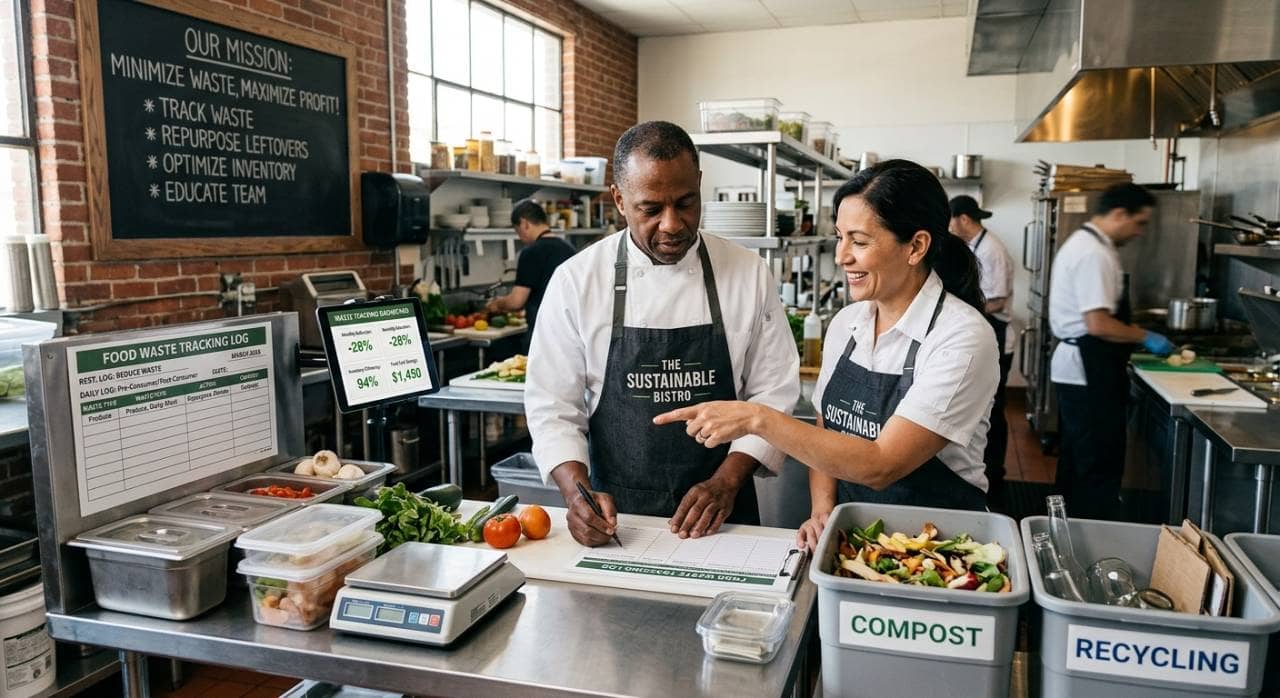
Walk through the back of almost any restaurant kitchen and you'll find it - trim scraps tossed instead of repurposed, a hotel pan of yesterday's special heading to the trash, produce gone soft in the walk-in before anyone got to it. It's easy to write these off as the unavoidable cost of doing business. They're not - and the numbers make that clear. On average, restaurants throw away somewhere between 4% and 10% of the food they purchase before it ever reaches a customer, and total plate waste across the industry runs even higher when you factor in what diners leave behind. For a mid-sized restaurant, that can translate into tens of thousands of dollars a year in ingredients paid for, stored, prepped, and never sold. In an industry where average profit margins often sit in the low single digits, food waste isn't a rounding error - it's frequently the difference between a profitable year and a break-even one. The good news is that food waste is one of the most controllable costs in a restaurant. Unlike rent or labor, which are largely fixed, waste is the direct result of decisions made every day - how much gets ordered, how it's stored, how it's prepped, and how it's portioned and served. Small adjustments at each of these stages compound into meaningful savings without requiring a bigger kitchen, more staff, or a menu overhaul.
Before fixing food waste, it helps to know exactly where it's coming from. Most restaurant waste falls into a handful of recurring categories, and identifying which ones apply most to your operation is the first step toward targeted, effective fixes. 1. Over-ordering and poor demand forecasting. Many restaurants order based on habit or gut instinct rather than actual sales data. Without a clear picture of how much of an ingredient is typically used in a given week, it's easy to over-order "just in case" - especially for perishables tied to a single dish. When demand doesn't match the forecast, the surplus often spoils before it can be used. 2. Spoilage from improper storage. Even correctly ordered inventory can go to waste if it isn't stored properly. Incorrect temperatures, poor airflow, inadequate packaging, or simply losing track of what's in the walk-in can shorten shelf life dramatically. Ingredients pushed to the back of a shelf or bottom of a stack are often forgotten until they're no longer usable. 3. Overproduction. Kitchens frequently prep and cook based on the full menu's potential rather than realistic, data-informed demand. Batch-cooking large quantities of a soup, sauce, or side dish "to be safe" often means excess gets tossed at the end of service rather than sold. 4. Trim waste and inefficient prep techniques. Vegetable peels, meat trim, stems, and bones are commonly discarded rather than repurposed, even though many can be transformed into stocks, garnishes, or secondary dishes. Inefficient knife work or inconsistent prep standards can also increase the amount of usable product lost during breakdown. 5. Plate waste and oversized portions. Portion sizes that exceed what most customers actually eat are a major - and often overlooked - source of waste. If plates are consistently coming back with food left on them, it's a signal that portioning doesn't match consumption patterns. 6. Menu complexity and low ingredient cross-utilization. A large menu with many unique, single-use ingredients increases the risk that any one item won't sell through before it spoils. When ingredients aren't shared across multiple dishes, restaurants end up carrying more inventory risk than necessary. Understanding which of these causes are most present in your kitchen makes it much easier to prioritize where to focus first - which is exactly what the next four sections will help you do.
Waste reduction starts long before food reaches the kitchen - it starts with what you decide to order in the first place. Purchasing decisions set the ceiling on how much waste is even possible downstream, which makes this stage one of the highest-leverage places to make changes. 1. Forecast demand using sales data, not guesswork. Rather than ordering based on intuition or "what we usually get," pull historical sales data from your POS system to identify real patterns - by day of week, by season, and around known fluctuations like holidays or local events. Even a simple spreadsheet tracking weekly usage per ingredient can reveal how much is actually needed versus how much is typically ordered, and where the gap is largest. 2. Build supplier relationships that support flexibility. Locked-in standing orders are convenient, but they can also lock in waste. Talk to suppliers about smaller, more frequent deliveries instead of large weekly drops - this keeps inventory fresher and reduces the amount sitting in storage at any given time. Many distributors are willing to adjust order sizes or delivery frequency once they understand you're trying to tighten purchasing, especially for regular customers. 3. Set and follow par levels. Par levels - the minimum and maximum quantities you should have on hand for each ingredient - take the guesswork out of ordering. When par levels are based on actual usage data and reviewed periodically, they prevent the common trap of over-ordering "just to be safe," which is one of the biggest drivers of spoilage-related waste. 4. Consider imperfect produce and byproduct options. Some suppliers offer "ugly" produce, secondary cuts, or byproducts at a discount - items that are perfectly usable but don't meet standard cosmetic specs. For prep-heavy dishes like soups, sauces, purees, or stocks, these can be a cost-effective way to reduce both waste upstream in the supply chain and your own ingredient costs. Getting purchasing right doesn't eliminate the need for good storage and prep practices, but it does mean you're not fighting an uphill battle from the moment deliveries arrive. The next section covers how to protect that inventory once it's in your kitchen.
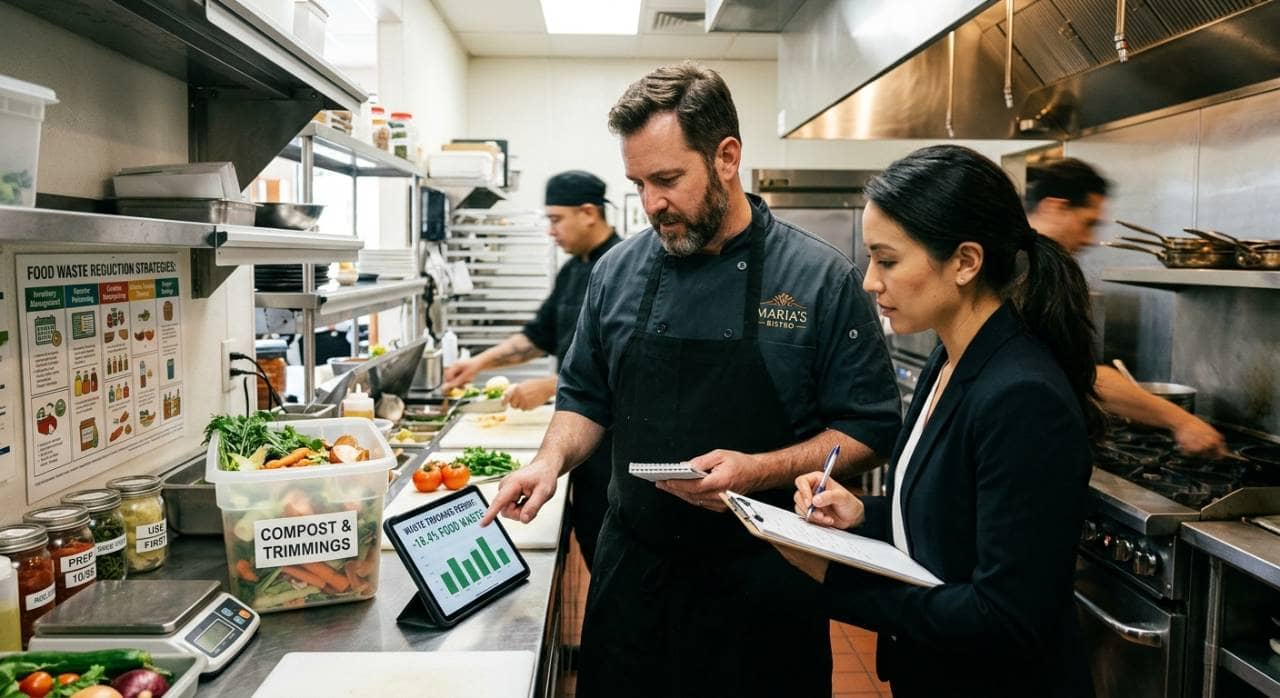
Storage failures are not a minor contributor to restaurant food waste - they are one of the leading causes. Industry data consistently points to improper stock rotation, insufficient inventory monitoring, and incorrect storage conditions as primary drivers of spoilage, sitting alongside overproduction and plate waste as the top sources of loss across the sector. Restaurants waste between 4% and 10% of all food they purchase, with improper stock rotation, insufficient inventory monitoring, and improper storage conditions listed among the leading causes. That range may look narrow, but at the high end it represents one in every ten dollars spent on food walking straight into the trash before a single plate reaches a customer. The financial exposure extends well beyond the cost of the ingredients themselves. Restaurants also absorb the costs of storing, handling, and disposing of wasted food, including labor, transportation, and landfill charges tied to that waste. And once food crosses the line into spoilage, there's rarely a second chance to recover its value - more than 84% of unused food in U.S. restaurants is ultimately disposed of, ending up in landfills rather than being reused. The upside is that storage is also one of the most responsive areas to fix. Adopting "smart storage" systems - labeled containers and first-expired-first-out tagging - has been associated with reductions in spoilage of roughly 15% to 20%. That kind of improvement doesn't require new equipment or a bigger footprint; it requires consistent process. A few practices account for most of that gain - 1. FIFO discipline (First In, First Out) - Rotating stock so older inventory is used before newer deliveries directly targets the stock-rotation failures identified as a leading cause of spoilage above. This only works if it's applied at every delivery, not selectively. 2. Labeling with received and use-by dates - Removes the ambiguity that leads to "is this still good?" judgment calls, and is the practical mechanism behind FIFO and smart-storage tagging systems. 3. Correct temperature zoning - Since temperature deviation is directly linked to accelerated spoilage, routine checks of walk-ins, reach-ins, and dry storage catch drift before it turns into loss. 4. Scheduled inventory audits - Given that insufficient monitoring - not just poor storage conditions - is independently cited as a cause of waste, a recurring audit (weekly at minimum) closes the visibility gap that lets spoilage go unnoticed. Storage is rarely the most visible cause of waste - nothing dramatic happens when a case of spinach quietly turns before anyone gets to it - but the data suggests it's one of the largest levers available, and one of the cheapest to pull.
If storage is where waste quietly accumulates, prep is where it's actively created - and the data backs that up. Kitchen preparation is consistently identified as the single biggest contributor to restaurant food waste, driven by overproduction, peeling and cutting losses, and expired product making its way into dishes before anyone catches it. Unlike spoilage, which happens passively, prep waste is generated by daily decisions at the cutting board and the stove - which makes it one of the more controllable categories once it's measured. The starting point for controlling it is a metric most kitchens don't track but should - trim yield. Trim yield is calculated by weighing an ingredient before and after preparation, then dividing the prepared weight by the original weight. A pound of carrots that yields 14 ounces after trimming, for example, has an 87.5% trim yield. Tracking this number consistently turns an abstract sense of "we probably waste some product in prep" into a concrete figure that can be monitored and improved over time - and small technique changes, like trimming a quarter-inch closer to the root, compound into meaningful savings at volume. The financial upside of tightening prep is well documented. Controlled studies of foodservice kitchens found that implementing standardized portioning and prep planning cut kitchen food waste by as much as 28%, while forecast-based procurement and menu engineering methods have been shown to reduce waste among hospitality operators by roughly 10% to 25%. Both figures point to the same underlying lesson - prep waste isn't primarily a skill problem, it's a planning problem. Kitchens that tie prep quantities to actual sales data, rather than intuition, consistently waste less than those prepping "to be safe." A few practices account for most of that improvement - 1. Cross-utilize ingredients across the menu. Ingredients used in only one dish carry more waste risk than those shared across several, since any single item's sales dip leaves surplus with nowhere to go. 2. Apply root-to-stem and nose-to-tail techniques. Increasing trim yield - using more of each vegetable, protein, or aromatic - directly reduces the volume of usable product discarded during breakdown, and stems, peels, and bones can often be redirected into stocks, broths, or garnishes rather than the bin. 3. Tie batch prep to sales data, not gut feel. Prep lists built on historical sales patterns rather than habit are one of the clearest ways to reduce overproduction, which remains one of the largest single categories of kitchen waste. 4. Standardize recipes and portioning. Inconsistent technique among staff can double the trim rate on the same ingredient; standardized prep procedures narrow that variance and make trim yield predictable enough to track. Prep waste is easy to underestimate because it happens in small increments throughout a shift rather than in one visible event. But because it's driven by decisions the kitchen controls directly - not external factors like customer behavior or supplier quality - it's also one of the categories where disciplined process changes tend to show up fastest in the numbers.
The majority of foodservice waste - a striking 70% - comes from plate waste, meaning food that's served but never eaten, whether at the table or from a buffet line. That reframes the problem - much of service-stage waste isn't about what the kitchen does wrong, but about how much food is put in front of guests relative to what they'll actually consume. The scale of that mismatch is significant. On average, restaurant patrons leave about 17% of their meals uneaten, and separately, roughly 55% of edible leftovers are left behind at the restaurant rather than taken home. Much of this traces back to portion sizing - serving sizes have grown substantially over recent decades, and larger plates tend to push kitchens toward over-serving by default, independent of what a typical guest can finish. In other words, portion creep isn't just a cost issue on the purchasing side - it directly drives what ends up scraped into the trash after a meal. Buffets carry a particular version of this problem. Because food safety regulations generally prevent unsold buffet items from being reused or donated, and because operators need enough food on hand throughout service to maintain the appearance of abundance, buffet-style restaurants tend to rank among the highest food wasters in the industry. A few service-stage adjustments consistently show up as effective in the data - 1. Right-size portions to actual consumption. Since a meaningful share of every plate served already goes uneaten, portioning based on real consumption patterns - rather than perceived value or plate-filling habits - directly reduces the largest single waste category in foodservice. 2. Make takeout the default, not the exception. Given that over half of edible leftovers never leave the restaurant, actively offering doggy bags rather than waiting to be asked has been associated with waste reductions of roughly 10% to 12%, alongside improved guest satisfaction. 3. Offer flexible portion options. Half-portions, smaller plate sizes, or build-your-own formats give guests more control over how much they're served, addressing the portion-size driver behind plate waste directly rather than after the fact. 4. Manage buffet volume deliberately. Smaller trays refilled more frequently, rather than large trays kept topped up throughout service, reduce the amount of food exposed to the time and safety constraints that make unsold buffet items unrecoverable. Unlike purchasing, storage, and prep - where the kitchen controls nearly every variable - service-stage waste is shaped by guest behavior as much as operational decisions. That makes it somewhat less predictable, but the data suggests it also responds well to structural nudges - smaller defaults, easier takeout, and portioning calibrated to what people actually eat rather than what looks generous on the plate.
Every strategy covered in this guide depends on the same underlying condition - someone has to actually track whether it's working. Right now, most restaurants don't. Only about 32% of U.S. restaurants have a formal food waste reduction policy in place, which means the majority are managing one of their largest controllable costs without a structured process behind it. The return on changing that is substantial. For every $1 a restaurant invests in food waste reduction efforts, the average return is approximately $14, driven largely by reduced purchasing costs once waste is identified and addressed. That ratio holds up because waste tracking tends to be self-reinforcing - measuring waste makes it visible, and visibility is what drives the behavior change that produces the savings in the first place. The scale of impact from tracking specifically - separate from any other operational change - is well documented. Studies using AI-based and manual waste-tracking systems in hospitality settings have reported waste reductions ranging from 25% to 70% in hotels and around 54% in restaurants and bistros, largely attributed to the effect of raising staff awareness once waste is being actively measured. In other words, the simple act of logging what goes in the bin - what item, how much, and why - appears to change behavior on its own, before any other intervention is layered on top. Staff training is the other half of the equation, and it shows up consistently as a factor operators already rely on - 72% of establishments in one industry audit reported using staff training as a waste-reduction measure at least occasionally. Training tends to be most effective when it's specific and recurring rather than a one-time orientation topic - covering concrete skills like standardized portioning, proper storage handling, and how to use whatever tracking tool the restaurant has adopted. A few practices show up repeatedly as the foundation of a functioning waste-reduction culture - 1. Log waste consistently, not sporadically. A simple waste journal - recording item, quantity, and cause at the point of disposal - is what converts vague impressions of waste into the kind of pattern data that drives real decisions about purchasing and prep. 2. Review the data on a set schedule. Weekly review of waste logs surfaces recurring problem items and processes, turning isolated incidents into identifiable, fixable patterns rather than one-off surprises. 3. Make training specific and recurring. Periodic refreshers on portioning, storage, and prep technique keep waste reduction active rather than letting it fade after an initial rollout. 4. Set a measurable reduction target. Restaurants that track a clear waste percentage against food purchases have a concrete benchmark to improve against, rather than treating "less waste" as an abstract goal. 5. Feed the data back into earlier stages. Waste patterns identified through tracking should inform purchasing par levels and prep quantities directly - closing the loop between what this guide's earlier sections cover and what's actually happening on the ground. None of this requires a major technology investment to get started - a notebook and a consistent habit can produce real results. But the data is consistent on one point - restaurants that measure their waste reduce it, and those that don't tend to keep losing the same money in the same places, quietly, month after month.
