




How AI Can Help Improve Restaurant Operational Efficiency
Discover how AI helps restaurants improve operational efficiency through smarter forecasting, inventory management, employee scheduling, automation, and data-driven decision-making.

The Role of AI in Restaurant Operational Efficiency
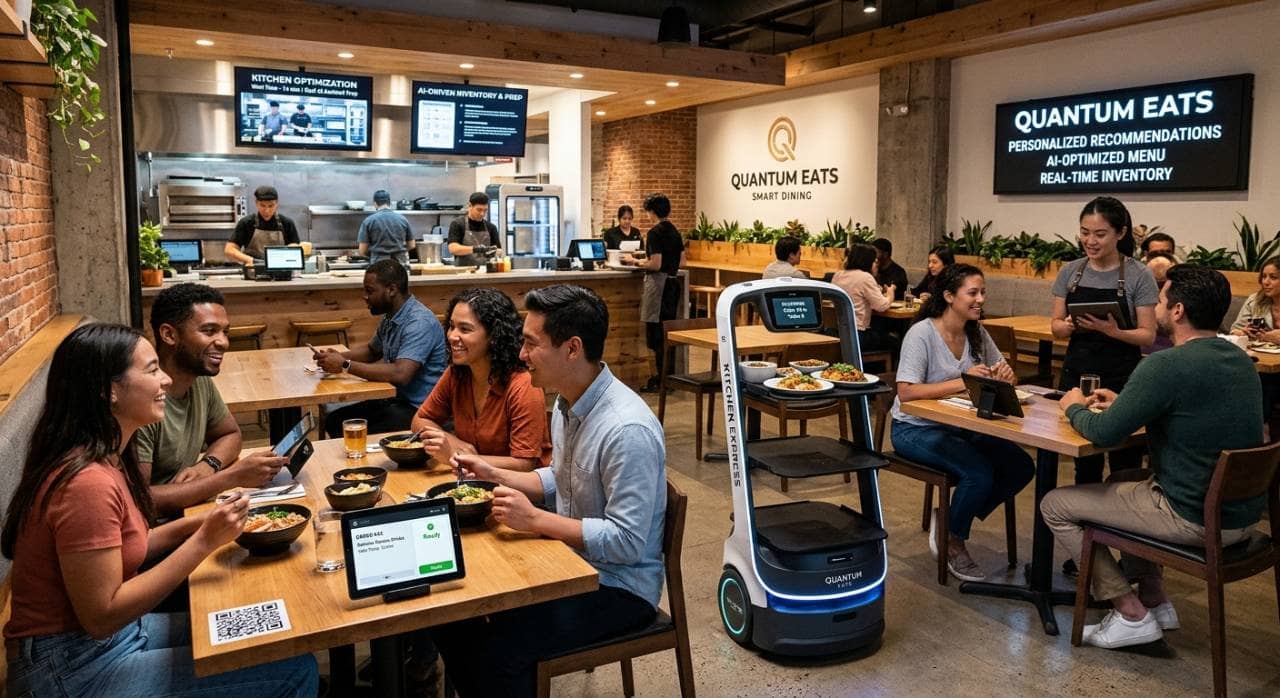
Running a restaurant efficiently requires coordinating multiple activities, from managing employees and monitoring inventory to processing orders and controlling operating costs. When these responsibilities rely heavily on manual work, restaurant owners and managers can spend significant time handling administrative tasks instead of focusing on customers, employees, and business performance. Artificial intelligence (AI) offers new ways to simplify these responsibilities, automate repetitive processes, and make better operational decisions. AI helps restaurants analyze large amounts of operational data, recognize patterns, and generate recommendations that support everyday management. For example, AI-powered forecasting tools can predict customer demand, helping managers determine how much food to order and how many employees to schedule. Inventory management tools can identify purchasing patterns and potential stock shortages, while AI-assisted administrative tools can summarize reports, organize information, and reduce repetitive paperwork. These capabilities can help restaurants address several common operational challenges - 1. Reduce food waste - Use demand predictions to estimate ingredient requirements and avoid unnecessary purchases. 2. Control labor costs - Analyze customer traffic and sales patterns to make more informed staffing decisions. 3. Save administrative time - Automate routine reporting, documentation, and other repetitive responsibilities. 4. Improve kitchen productivity - Use demand insights to plan food preparation and coordinate kitchen activities. 5. Make better decisions - Analyze operational data to identify inefficiencies and areas that require attention. However, adopting AI does not automatically make a restaurant more efficient. Its effectiveness depends on having reliable data, choosing appropriate technology, and integrating automated processes into existing workflows. Restaurant owners must also maintain human oversight to ensure that AI-generated recommendations align with actual business needs. Understanding how AI can support different areas of restaurant management is the first step toward identifying opportunities to improve productivity, reduce operational expenses, and create more consistent processes.
Demand Forecasting
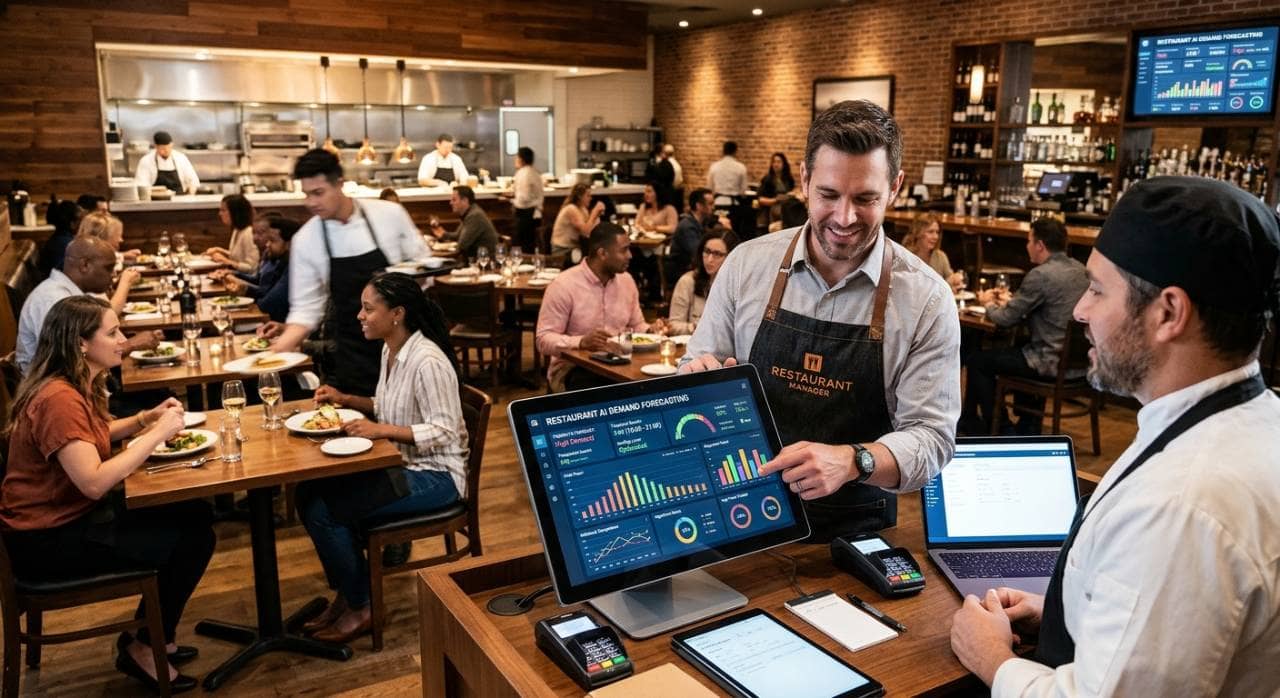
Accurately predicting customer demand helps restaurant owners make better decisions about staffing, purchasing, food preparation, and daily operations. However, relying on intuition or manually reviewing past sales can make forecasting difficult, especially when customer traffic changes due to seasonality, weather, local events, or shifting customer preferences. AI-powered forecasting tools help address these challenges by analyzing historical and real-time data to identify patterns and estimate future demand. AI forecasting systems can process information from multiple sources, including POS transactions, sales history, seasonal trends, and customer purchasing behavior. By recognizing patterns across this information, these tools can generate predictions that help managers prepare for expected changes in restaurant activity. Here are several ways AI-powered forecasting can improve restaurant operations - 1. Predict customer demand - AI analyzes historical sales, purchasing patterns, and seasonal fluctuations to estimate how many customers a restaurant may serve during specific days and hours. These predictions help managers prepare for busy periods and avoid allocating unnecessary resources during slower shifts. 2. Improve purchasing decisions - Demand forecasts help restaurant owners estimate how much inventory they need for upcoming service periods. Managers can use these insights to plan supplier orders, reduce excess stock, and avoid running out of popular ingredients. 3. Plan food preparation - AI can estimate which menu items are likely to sell more frequently, helping kitchen teams determine preparation quantities and allocate ingredients more effectively. 4. Anticipate staffing requirements - By analyzing expected customer traffic and sales volume, AI forecasting tools can help managers determine appropriate staffing levels for different shifts. 5. Identify changing sales patterns - AI can detect fluctuations in product demand, customer preferences, and purchasing behavior. These insights help restaurant owners adjust operational plans and respond to changing business conditions. For example, if sales data indicates that a restaurant consistently experiences higher demand for certain menu items on weekends, an AI forecasting tool can use that information to estimate ingredient requirements and preparation quantities for upcoming weekends. Managers can use these predictions to coordinate purchasing, kitchen preparation, and employee schedules before demand increases. AI forecasting is most effective when supported by accurate and regularly updated data. Restaurant owners should ensure that sales, inventory, and operational records are reliable so that forecasting tools can generate useful predictions. Managers should also review AI recommendations against actual business conditions rather than treating forecasts as guaranteed outcomes. By using AI to anticipate demand instead of relying exclusively on historical averages or guesswork, restaurants can allocate resources more effectively, reduce unnecessary expenses, and improve day-to-day operational efficiency.
Smarter Demand Planning for Inventory and Purchasing
Managing restaurant inventory requires keeping track of ingredient quantities, monitoring expiration dates, planning purchases, and ensuring essential supplies are available when needed. When these activities rely on manual counts and spreadsheets, mistakes can lead to overordering, stock shortages, and unnecessary food waste. AI-powered inventory management tools help restaurants streamline these processes by analyzing purchasing patterns, monitoring stock levels, and predicting future ingredient requirements. AI can use information from POS transactions, inventory records, supplier orders, and historical consumption to identify how ingredients move through restaurant operations. By analyzing this information, restaurant owners can make more informed purchasing decisions and maintain better control over food costs. Here are several ways AI can improve restaurant inventory management - 1. Predict ingredient requirements - AI analyzes historical consumption and expected customer demand to estimate how much of each ingredient a restaurant will need. This helps managers plan purchases more accurately and avoid ordering excessive quantities. 2. Monitor inventory levels - AI-powered systems can analyze inventory records and identify when stock levels are approaching predefined thresholds. Automated notifications help managers recognize potential shortages before they affect kitchen operations. 3. Identify potential food waste - By comparing purchasing patterns, ingredient usage, and sales data, AI can help identify unusual consumption levels and ingredients that may be purchased in quantities greater than actual demand. 4. Improve purchasing decisions - AI-generated recommendations can help managers determine when and how much to reorder based on expected demand, current stock, and purchasing patterns. 5. Recognize inventory discrepancies - AI can help flag differences between expected and recorded ingredient usage, allowing managers to investigate potential portioning inconsistencies, recording errors, or unexplained losses. For example, if a restaurant regularly sells fewer seafood dishes during certain weekdays, AI-powered inventory tools can identify this demand pattern and recommend adjusting seafood purchases accordingly. This helps prevent excess ingredients from remaining unused and potentially expiring before they can be sold. AI can also support more consistent inventory monitoring by reducing the amount of manual analysis required from restaurant managers. However, these systems still depend on accurate inventory counts, purchasing records, recipe information, and sales data. Managers should regularly verify physical stock levels and review automated recommendations to account for unexpected changes in demand. The goal of AI-powered inventory management is to maintain the right amount of stock without tying up unnecessary money in excess ingredients. By improving purchasing accuracy, identifying potential waste, and monitoring inventory activity, restaurants can control food costs and make daily operations more efficient.
Optimizing Staff Scheduling and Labor Management
Managing restaurant employees involves balancing staffing requirements, labor costs, employee availability, and customer demand. When managers create schedules manually, they may struggle to predict how many employees are needed for each shift. Overstaffing can increase labor expenses, while understaffing can slow service, increase employee workloads, and negatively affect the customer experience. AI-powered workforce management tools can help restaurant owners make more informed scheduling decisions by analyzing historical sales, customer traffic, labor data, and demand forecasts. Instead of relying entirely on intuition, managers can use these insights to determine appropriate staffing levels and allocate employees more effectively. Here are several ways AI can improve restaurant scheduling and labor management - 1. Forecast labor requirements - AI analyzes historical sales, customer traffic, and expected demand to estimate how many employees are needed during specific shifts. This helps managers align staffing levels with anticipated business activity. 2. Optimize employee schedules - AI-assisted scheduling tools can recommend shift arrangements based on predicted demand, employee availability, and labor requirements. Managers can use these recommendations to create more balanced schedules. 3. Control labor costs - By identifying periods when staffing levels consistently exceed operational needs, AI can help managers recognize opportunities to adjust schedules and reduce unnecessary labor expenses. 4. Identify scheduling patterns - AI can analyze historical scheduling and labor information to identify recurring understaffing or overstaffing. These insights help managers improve future scheduling decisions. 5. Reduce administrative work - Automated scheduling recommendations and labor reports can reduce the time managers spend reviewing employee availability, adjusting shifts, and calculating staffing requirements. For example, an AI-powered workforce management system can analyze a restaurant's historical sales and identify that weekday lunch periods typically require fewer employees than weekend dinner shifts. Based on these patterns, the system can recommend different staffing levels for each period, helping managers allocate labor according to expected demand. AI can also support better labor monitoring by analyzing attendance records, scheduled hours, and actual hours worked. Managers can use this information to identify scheduling discrepancies, monitor overtime trends, and make adjustments when operational requirements change. However, AI-generated scheduling recommendations should account for more than projected customer demand. Employee availability, qualifications, applicable labor laws, required breaks, and individual scheduling constraints must also be considered. Managers should review automated recommendations before publishing schedules to ensure they are practical and appropriate. By combining AI-driven demand forecasting with workforce management technology, restaurants can improve scheduling accuracy, reduce administrative workloads, and maintain more consistent staffing levels. This allows managers to control labor expenses while ensuring employees are available when restaurant operations require them.
Automate Administrative Tasks
Restaurant managers handle numerous administrative responsibilities every day, including reviewing reports, organizing documents, tracking expenses, preparing employee communications, and monitoring operational performance. Although these tasks are necessary, completing them manually can consume valuable time that could otherwise be spent managing employees, supervising service, and improving restaurant operations. AI-powered administrative tools can help reduce this workload by processing information, generating summaries, organizing documents, and assisting with repetitive office tasks. By automating parts of these processes, restaurant owners and managers can spend less time on paperwork and more time addressing operational priorities. Here are several ways AI can simplify restaurant administrative tasks - 1. Generate operational reports - AI tools can analyze restaurant data and create summaries of sales, labor costs, inventory activity, and other performance indicators. Managers can use these summaries to identify important trends without manually reviewing multiple reports. 2. Organize invoices and expenses - AI-powered document processing can extract information from invoices, categorize expenses, and organize financial records. This can reduce manual data entry and simplify expense tracking. 3. Draft employee communications - AI writing assistants can help managers prepare staff announcements, shift instructions, training materials, and internal communications more quickly. 4. Summarize business information - AI can process lengthy documents, operational reports, and internal updates to highlight important information that requires management attention. 5. Assist with document management - AI-powered tools can help categorize digital documents, extract relevant information, and make business records easier to organize and retrieve. 6. Simplify routine planning - Managers can use AI assistants to create task lists, prepare meeting agendas, organize operational priorities, and draft recurring administrative materials. For example, a restaurant manager who needs to review weekly sales and labor performance can use an AI-assisted reporting tool to summarize the available information and highlight significant changes. Instead of manually reviewing multiple reports, the manager can start with a consolidated overview and investigate the areas that require attention. AI can also help standardize administrative processes across multiple restaurant locations. Managers can use AI-assisted tools to prepare consistent internal communications, organize recurring reports, and maintain more structured documentation. However, restaurant owners should ensure that sensitive business and employee information is handled securely. AI-generated reports, financial classifications, and employee communications should also be reviewed by authorized staff before being used for important business decisions. Automating administrative responsibilities allows restaurant managers to redirect their time toward activities that directly support restaurant performance. By reducing repetitive paperwork and simplifying information management, AI can help improve productivity and make daily operations easier to manage.

Improve Kitchen Operations and Food Preparation
Kitchen efficiency directly affects restaurant service speed, food quality, labor productivity, and customer satisfaction. When kitchen teams struggle to coordinate orders, estimate preparation quantities, or manage ingredient availability, delays and unnecessary food waste can become common operational problems. AI-powered kitchen technology can help address these challenges by analyzing order patterns, predicting demand, and providing insights that support better food preparation and workflow management. AI can process information from POS systems, kitchen display systems, inventory records, and historical sales to help restaurant managers understand kitchen activity and identify opportunities to improve productivity. Here are several ways AI can improve kitchen operations - 1. Optimize food preparation quantities - AI can analyze historical sales and demand forecasts to recommend how much food the kitchen should prepare for upcoming service periods. This helps reduce overproduction and ensures popular menu items are available when customers order them. 2. Improve order prioritization - AI-assisted kitchen systems can analyze incoming orders and help kitchen teams organize preparation workflows. This can support better coordination during busy service periods and help reduce order delays. 3. Identify kitchen bottlenecks - By analyzing order preparation times and kitchen performance data, AI can help identify menu items or preparation processes that consistently cause delays. Managers can use these insights to adjust workflows and allocate resources more effectively. 4. Support recipe consistency - AI-powered tools can help organize recipe information, standardize preparation instructions, and monitor ingredient requirements. This helps kitchen employees follow consistent procedures across different shifts. 5. Improve portion control - AI-assisted analysis of ingredient usage and recipe requirements can help identify inconsistencies in food portions. Managers can use this information to investigate excessive ingredient consumption and improve food cost control. 6. Coordinate kitchen inventory - By connecting demand forecasts with inventory information, AI can help kitchen teams understand which ingredients need replenishment and which menu items may require preparation adjustments. For example, a restaurant experiencing higher demand for certain menu items during dinner service can use AI-generated sales predictions to estimate preparation requirements before the shift begins. Kitchen managers can use these recommendations to organize ingredient preparation, assign responsibilities, and ensure sufficient supplies are available. AI can also help restaurant owners evaluate kitchen performance by analyzing preparation times, order volumes, and recurring delays. These insights make it easier to identify processes that need improvement rather than relying solely on employee observations. Using AI to improve kitchen operations helps restaurants coordinate food preparation, identify workflow inefficiencies, and make better use of ingredients and employee time. When integrated with existing kitchen and restaurant management systems, these tools can support faster service, more consistent food preparation, and better operational control.
Automating Routine Tasks Across the Operations
Restaurant operations involve numerous recurring tasks that must be completed consistently to maintain service quality, food safety, and operational standards. These responsibilities include checking equipment, completing cleaning schedules, monitoring inventory, reviewing daily sales, and ensuring employees follow established procedures. When managers rely on manual tracking and reminders, important tasks can be overlooked, particularly during busy shifts. AI-powered automation tools can help restaurants manage these responsibilities by monitoring operational information, generating reminders, identifying incomplete tasks, and highlighting potential problems. Rather than requiring managers to manually review every activity, automated systems can help identify tasks that need attention and provide better visibility into daily operations. Here are several ways AI can automate routine restaurant tasks - 1. Generate daily operational summaries - AI can collect information from restaurant management systems and generate summaries covering sales performance, labor activity, inventory levels, and outstanding tasks. Managers can review these summaries to understand daily operations more quickly. 2. Monitor inventory and stock levels - AI-powered tools can analyze inventory records, identify ingredients approaching minimum stock levels, and generate notifications when replenishment may be necessary. 3. Automate task reminders - AI-assisted task management tools can help schedule recurring responsibilities, such as cleaning, equipment inspections, and opening and closing procedures. Automated reminders help employees stay aware of their assigned responsibilities. 4. Identify incomplete operational tasks - AI can analyze digital checklist information and flag missing entries or unfinished assignments. Managers can use these notifications to follow up and ensure important responsibilities are completed. 5. Flag unusual business activity - AI can analyze sales, labor, and inventory information to identify unexpected changes or irregular patterns. These alerts help managers investigate potential problems before they become larger operational issues. 6. Simplify routine reporting - AI can automatically organize operational information and prepare recurring reports, reducing the time managers spend collecting and reviewing data. For example, a restaurant can use digital task management technology to organize daily cleaning and equipment inspection responsibilities. AI-assisted tools can help managers identify overdue assignments, highlight incomplete checklist items, and generate notifications when follow-up is needed. This makes it easier to monitor routine responsibilities across different shifts. For restaurants operating multiple locations, automated task management can also support greater consistency. Managers can establish standardized procedures, assign recurring responsibilities, and monitor task completion across locations without relying entirely on manual communication. However, automation should not eliminate employee accountability or management supervision. Restaurant owners should ensure that employees understand their responsibilities and that important activities, particularly food safety inspections and equipment checks, receive appropriate human verification. AI-powered automation helps restaurants maintain consistent operating procedures while reducing the administrative effort required to monitor routine activities. By automating reminders, reporting, and task monitoring, restaurant owners can improve accountability, identify operational problems, and give managers more time to focus on higher-priority responsibilities.
How to Implement AI Technology in Your Restaurant
Adopting AI technology requires more than purchasing new software. Restaurant owners must identify operational challenges, evaluate available tools, and determine how artificial intelligence can support existing workflows. A thoughtful implementation process helps ensure that AI investments address actual business needs rather than introducing unnecessary complexity. Here are several steps restaurant owners can follow when implementing AI technology - 1. Identify operational inefficiencies Start by evaluating restaurant operations to determine where employees and managers spend the most time and where recurring problems occur. Common areas to examine include inventory management, employee scheduling, food preparation, administrative work, and daily reporting. Identifying these challenges helps restaurant owners determine which AI applications could deliver the greatest operational benefits. 2. Prioritize AI applications based on business needs Not every restaurant needs the same AI capabilities. A restaurant struggling with food waste may benefit more from AI-powered inventory forecasting, while another experiencing scheduling difficulties may prioritize AI-assisted workforce management. Focus on technologies that address the most significant operational problems first. 3. Evaluate software features and integrations Before choosing an AI-powered solution, examine whether it integrates with existing restaurant technology. Consider compatibility with POS systems, inventory management software, accounting platforms, and workforce management tools. Connected systems allow information to flow between different operational areas, reducing duplicate data entry and improving visibility. 4. Evaluate usability and implementation costs Choose technology that restaurant managers and employees can understand and use without extensive technical training. Consider subscription fees, implementation expenses, employee training requirements, and ongoing maintenance costs. Compare these expenses with the potential time savings, productivity improvements, and cost reductions. 5. Train employees and establish clear procedures Employees need to understand how AI tools fit into their daily responsibilities. Provide training on using the technology, interpreting recommendations, responding to automated alerts, and identifying situations that require management attention. Establish clear procedures for reviewing AI-generated information and handling errors. 6. Monitor performance and measure results After implementing AI technology, regularly evaluate whether it is improving restaurant operations. Track relevant performance indicators, such as food waste, labor costs, inventory discrepancies, order preparation times, administrative hours, and task completion rates. Use these measurements to identify areas where additional adjustments may be necessary. Important Factors to Consider When Choosing AI Restaurant Technology Beyond implementation, restaurant owners should evaluate several factors before committing to an AI-powered solution - 1. Integration capabilities - Look for solutions that connect with existing restaurant systems to reduce fragmented information and manual processes. 2. Scalability - Consider whether the technology can support additional locations, employees, and operational requirements as the restaurant business grows. 3. Data security - Review how the provider collects, stores, processes, and protects sensitive business and employee information. 4. Human oversight - Ensure managers can review automated recommendations, correct inaccurate information, and make final decisions when necessary. The most effective approach is to implement AI gradually, starting with the operational challenges that consume the most time or create the highest costs. By choosing appropriate technology, training employees, and measuring performance, restaurant owners can use AI to streamline daily responsibilities, improve productivity, and build more efficient restaurant operations.