Create an Effective Employee Scheduling Process
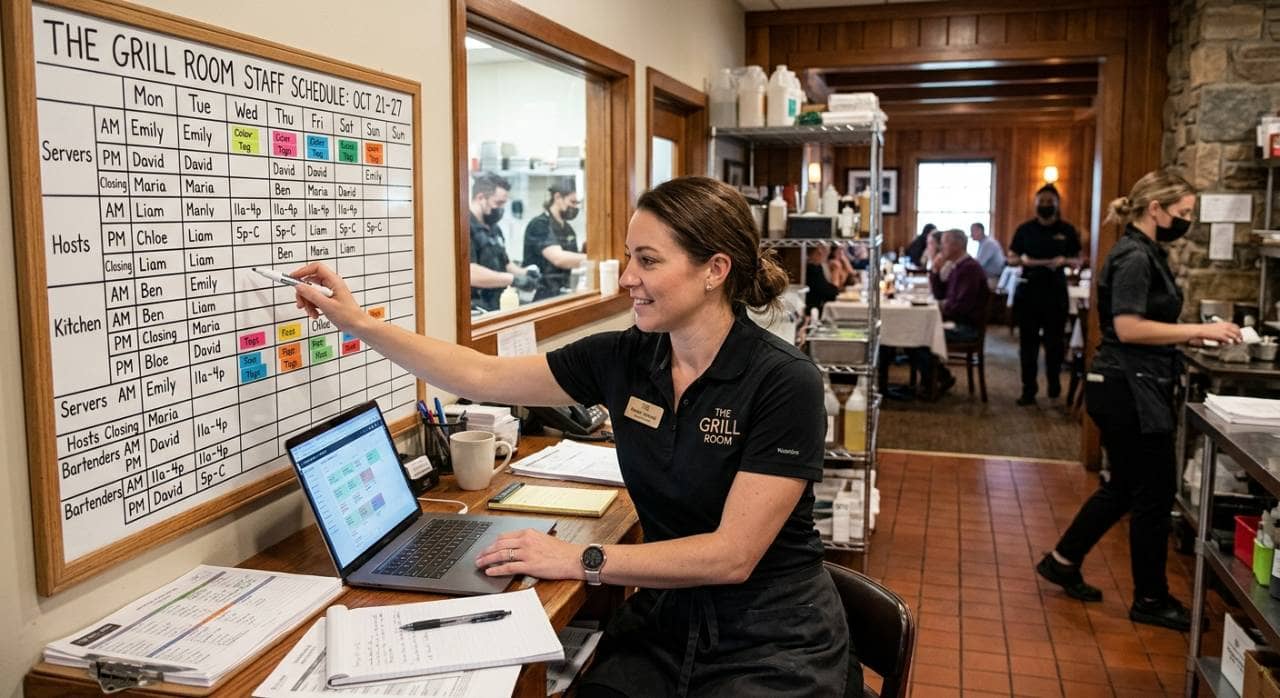
An effective employee scheduling process gives restaurant owners a consistent way to plan staffing, create schedules, communicate assignments, and make adjustments. Rather than creating each schedule from scratch, restaurants can establish a repeatable workflow that managers follow each week.
Start by reviewing expected business demand and staffing requirements. Look at historical sales, upcoming events, operating hours, and other factors that may affect customer volume. Then review employee availability, approved time-off requests, roles, and required coverage.
A basic scheduling process can follow these steps -
1. Review expected demand - Identify busy and slow periods and determine the staffing required for each shift.
2. Check employee availability - Review current availability, time-off requests, and scheduling restrictions.
3. Assign employees to shifts - Match employees to positions based on availability, skills, and operational requirements.
4. Review the schedule - Look for coverage gaps, scheduling conflicts, excessive labor hours, and other issues.
5. Publish the schedule - Give employees access to the completed schedule and make sure they know when and where they are expected to work.
6. Manage schedule changes - Establish a clear process for call-outs, shift swaps, availability changes, and other adjustments.
7. Review actual results - Compare scheduled labor with actual hours worked and evaluate whether staffing levels matched business demand.
8. Improve future schedules - Use labor, sales, attendance, and operational data to identify patterns and make future schedules more effective.
Consistency is important throughout the process. Employees should understand when schedules are created, when availability and time-off requests are due, how schedule changes are handled, and where they can access their assignments.
Restaurant owners should also periodically evaluate whether the scheduling process is producing the desired results. If certain shifts are consistently understaffed, labor hours regularly exceed expectations, or managers spend excessive time making schedule adjustments, the process may need to be changed.
A structured workflow helps turn employee scheduling from a repetitive administrative task into a more organized part of restaurant operations. By combining demand planning, employee availability, proper coverage, technology, and regular review, restaurant owners can create a scheduling process that adapts to changing business needs.









.png&w=3840&q=70)